
Choosing the best door lock router jig means looking beyond the lock bore. A good door-prep kit can also help you route hinge recesses and fit a latch faceplate, keeping several steps aligned with one setup. The five options below combine lock-installation guides with adjustable hinge jigs, but they differ in their stated materials, hinge-range details, and use instructions. Check that the kit matches your door, hardware, and router before you begin.
Table of Contents
Quick Comparison
| Product | Key Features | Best For | Availability Note |
|---|---|---|---|
| Vorhixa All-in-One Door Prep Kit | Aluminum hinge jig, lock guide, latch mortise tool | One kit for common door-prep tasks | Listed as available |
| Buhobha Aluminum Hinge and Lock Kit | Anodized aluminum jig with adjustable depth | Users who want clear hinge and door-fit specifications | Listed as available |
| PARBTG All-in-One Router Jig | 6061 aluminum construction and hinge depth control | Repeated wood-door installation and repair work | Listed as available |
| TreVark Door Hinge and Lock Kit | 6061 aluminum jig with lock and latch accessories | Buyers prioritizing a metal hinge guide | Listed as available |
| Cusvivid Door Hardware Kit | Aluminum jig, lock template, latch tool, and hole saw kit | Shoppers comparing a broad accessory bundle | Listed as unavailable; check current listing |
Our Picks: Best Door Lock Router Jig reviews
1. Vorhixa All-in-One Door Prep Kit: Best for a Broad Range of Door Work

The Vorhixa set combines three door-prep jobs: hinge mortising, lock-hole drilling, and latch-plate recess routing. That makes it a practical choice if you are fitting a new wood door or replacing hardware and would rather coordinate the main steps with one kit.
Its hinge jig is made from aluminum alloy and has silicone anti-skid pads on both sides. The listed hinge range runs from 2.5 to 5 inches and covers square-corner hinges as well as 1/4-inch and 5/8-inch radius corners. For the lock guide, the stated fit covers 1-3/8-inch and 1-3/4-inch-thick doors with 2-3/8-inch or 2-3/4-inch backsets.
The useful distinction here is that the set includes a dedicated latch installation tool, not just a lock-boring guide. A latch plate needs a shallow, neat recess at the door edge, so having that step accounted for can make the kit more complete for a full hardware installation. As with any router template, careful clamping and setup still matter; the jig does not remove the need to measure and check your hardware.
Pros:
- Combines hinge, lock, and latch preparation in one set.
- Aluminum construction and silicone pads support a stable setup.
- Lists compatibility with several common hinge sizes and corner styles.
- Includes a hole saw kit, bits, and a manual.
Cons:
- The supplied details do not specify compatibility with every router model.
- Its many functions may be more than you need for a single lock-bore job.
Verdict: Choose the Vorhixa if you want one kit for hinges, lock bores, and latch plates and your door and hardware match its stated size ranges.
2. Buhobha Aluminum Hinge and Lock Kit: Best for Clearly Stated Setup Limits
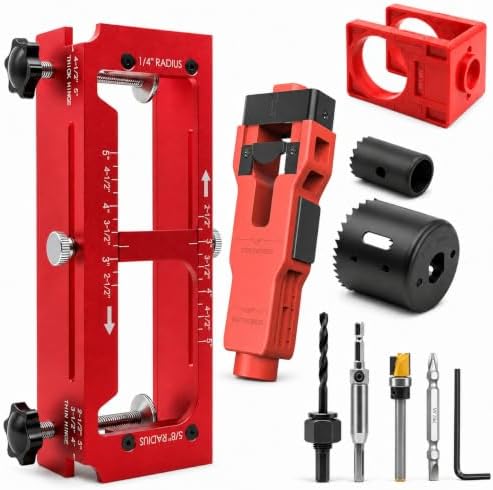
The Buhobha kit includes an adjustable hinge template, a lock-installation guide, and a latch mortise tool. Its product details are especially clear about an important limitation: the hinge jig is designed for door leaves, not door jambs. If you are preparing a door slab, that distinction helps you judge whether the set fits your project.
The hinge guide is described as CNC-machined anodized 6061 aluminum, with silicone contact pads and an adjustable depth setting. It is intended for hinges from 2.5 to 5 inches, including square-corner, 1/4-inch-radius, and 5/8-inch-radius styles. The listing notes that square corners may need light chisel finishing, a useful reminder if you expect the router to leave every corner fully finished.
The lock guide is specified for wood doors that are 1-3/8 or 1-3/4 inches thick, with either a 2-3/8 or 2-3/4-inch backset. The included accessory list names hole saws, an arbor with pilot drill, a router bit, a self-centering bit, and a screwdriver bit. That is a helpful starting bundle, though you should confirm the parts and your own tools are suitable for the hardware and router you plan to use.
Pros:
- Clearly states that the hinge jig is for door leaves, not jambs.
- Lists hinge sizes, corner styles, door thicknesses, and backsets.
- Includes guides for hinges, lock holes, and latch plates.
- Adjustable depth and silicone pads support repeatable positioning.
Cons:
- Square hinge corners may need light chisel work.
- The hinge jig is not intended for door jambs.
Verdict: The Buhobha is a strong fit if you are working on a wood door leaf and value clearly stated size limits and setup guidance.
3. PARBTG All-in-One Router Jig: Best for a Stated 6061 Aluminum Build

PARBTG’s kit is another combined door-prep system, with a hinge template, lock-installation guide, latch mortise tool, and drilling accessories. The hinge jig is described as anodized 6061 aluminum, with silicone pads intended to help stabilize the template and protect the door surface.
The adjustable hinge template is listed for 2.5- to 5-inch hinges, including square, 1/4-inch-radius, and 5/8-inch-radius styles. A built-in depth control is intended to help make consistent recesses. The product details say the jig is for the door leaf only, not the jamb, so it is not the right match if you need a template specifically for cutting hinge pockets into a jamb.
For lock installation, the kit is specified for standard 1-3/8- and 1-3/4-inch-thick wood doors and 2-3/8- or 2-3/4-inch backsets. It also includes hole saws, an arbor with pilot drill, and a self-centering hinge bit. These details make it a well-rounded option for a door project involving multiple hardware locations, but the lock and latch templates should still be checked against your exact hardware before cutting.
Pros:
- Specifies anodized 6061 aluminum construction.
- Includes hinge, lock, and latch preparation tools.
- Lists common hinge types, door thicknesses, and backsets.
- Depth control is designed to support consistent hinge recesses.
Cons:
- The hinge jig is for the door leaf, not the jamb.
- Its broad accessory set may be unnecessary if you only need to bore a lock hole.
Verdict: Consider the PARBTG if you want a metal all-in-one set for wood-door work and do not need to route hinge recesses in the jamb.
4. TreVark Door Hinge and Lock Kit: Best for an Aluminum Hinge Guide

The TreVark set combines a hinge mortising jig with lock-boring and latch-plate tools. Its hinge guide is listed as 6061 aluminum, and the product description says it is designed for the door leaf only, not the jamb. That makes it a potential match for fitting hardware to a door slab, provided the rest of your setup matches the kit.
The hinge range is listed as 2.5 to 5 inches and includes square corners and 1/4- and 5/8-inch-radius hinges. For locks, the guide is specified for 1-3/8- and 1-3/4-inch-thick doors with 2-3/8- or 2-3/4-inch backsets. The set also names two hole saw kits, an arbor with pilot drill, a router bit, a self-centering hinge bit, and a latch installation kit.
One point to check before buying is the wording around jamb use: although one part of the product description refers to a “door jamb hinge jig,” it also explicitly says the jig is for the door leaf, not the jamb. Treat the leaf-only note as the key limitation and confirm the instructions if your work involves both parts of a door assembly.
Pros:
- Lists 6061 aluminum construction for the hinge jig.
- Includes tools for hinge, lock, and latch preparation.
- States common hinge sizes, door thicknesses, and backsets.
- Provides a broad accessory set for multi-step door work.
Cons:
- The hinge jig is specified for the door leaf, not the jamb.
- The description’s jamb wording makes it important to verify the intended setup.
Verdict: The TreVark is worth considering for door-leaf work if its listed dimensions fit your hardware, but do not rely on it for jamb routing without confirming the instructions.
5. Cusvivid Door Hardware Kit: Best to Compare for Its Broad Accessory Bundle

The Cusvivid set brings together an aluminum hinge jig, lock-installation template, latch tool, and hole saw kit. Its listed hinge range is 2.5 to 5 inches, with support for square-corner hinges and 1/4- and 5/8-inch-radius hinges. The lock guide is specified for 1-3/8- and 1-3/4-inch-thick doors with common 2-3/8- and 2-3/4-inch backsets.
The product details describe silicone pads intended to help hold the jig in place and protect the door surface. That can be useful when positioning a template, but it does not replace secure clamping and careful alignment. Before choosing this kit, compare the included bits and hole saws with your hardware instructions and verify that the tools suit your router and work method.
The supplied product information lists this option as unavailable. That status can change, so check the listing before making it part of your plan. If it remains unavailable, the Vorhixa, Buhobha, PARBTG, and TreVark kits offer similar combinations of hinge, lock, and latch preparation in the supplied product selection.
Pros:
- Combines hinge, lock, and latch tools in one set.
- Lists a broad hinge range and common lock-door dimensions.
- Aluminum construction and silicone pads are specified.
- Includes a hole saw kit, bits, and manual.
Cons:
- Listed as unavailable in the supplied product information.
- The product details do not specify compatibility with every router model.
Verdict: The Cusvivid has a useful all-in-one feature set, but check its current availability and confirm tool compatibility before choosing it.
How to Choose a Door Lock Router Jig
Match the Kit to Your Door-Prep Tasks
Start by listing the work you need to do. A lock-installation guide helps position the lock bore, while a hinge jig routes hinge recesses and a latch mortise tool creates a pocket for the latch faceplate. If you are preparing a door from scratch, an all-in-one kit may reduce the number of separate templates you need. If you only need a lock bore, a large hinge-and-latch bundle may be more than necessary.
Check Door Thickness and Lock Backset
Compare your door with the jig’s stated thickness and backset range before ordering. The kits in this guide list fit for 1-3/8- and 1-3/4-inch-thick wood doors and 2-3/8- or 2-3/4-inch backsets. Those dimensions are common, but do not assume your door or lock matches them. Check the hardware instructions and measure your door first.
Confirm Hinge Size and Corner Shape
Hinge templates are not one-size-fits-all. These kits list coverage for hinge lengths from 2.5 to 5 inches and for square, 1/4-inch-radius, and 5/8-inch-radius corners. Check the hinge itself, including its corner style, before choosing a jig. Some square-corner installations may still need light chisel work to finish the recess corners.
Find Out Whether the Jig Works on the Door or Jamb
Some product descriptions specify that the hinge jig is for the door leaf only, not the jamb. This matters if your project includes cutting hinge mortises into both parts of the frame-and-door assembly. Read the use instructions carefully, especially when the listing uses ambiguous wording about jambs.
Consider the Jig Material and Contact Pads
Several options use aluminum, and some specifically identify 6061 aluminum. A rigid template can help maintain alignment during repeated cuts, while silicone pads are intended to improve grip and reduce the chance of marking the door. These features do not make setup foolproof: keep the jig properly secured and make a careful test cut when practical.
Check the Included Bits and Router Requirements
Accessory bundles may include a router bit, self-centering bit, hole saws, arbor, and pilot drill. The exact kit contents differ, and the supplied descriptions do not confirm compatibility with every router. Check the product instructions and your router’s requirements before starting, and make sure the included cutters are suitable for your hardware and material.
Think About How Often You Will Use It
For a single door, ease of setup and a clear fit with your hardware may matter more than the number of accessories. For repeated installations, a metal guide with adjustable settings and a broad hinge range may be more useful. In either case, choose based on your actual door dimensions and tasks rather than the longest feature list.
Frequently Asked Questions
Can one kit handle the lock bore, latch plate, and hinges?
The kits featured here are described as combining a lock-installation guide, a latch mortise tool, and a hinge jig. Check each listing’s included accessories and size limits, since the exact contents and fit details differ.
Do these jigs fit every door lock?
No. The listed lock guides are intended for common door thicknesses and backsets, but you should compare those measurements with your door and lock hardware. A mismatch can lead to holes in the wrong position or size.
Can I use a hinge jig on a door jamb?
Some listings explicitly limit the hinge jig to the door leaf, not the jamb. Follow the product instructions and confirm the intended use rather than assuming the same jig works on both parts.
Will the jig leave square hinge corners fully finished?
Not always. One kit notes that square corners may need light chisel finishing. Check the instructions for your chosen jig and plan for any hand finishing the hinge shape requires.
Are the router and all cutting tools included?
The product details list accessories such as router bits, hole saws, and pilot drills, but they do not say that a router is included. Check the package contents and make sure your tools are compatible before beginning work.
Which option is the best fit for a full door installation?
The Vorhixa, Buhobha, PARBTG, and TreVark kits all list hinge, lock, and latch preparation. Choose among them based on the stated door and hinge dimensions, whether you need a door-leaf or jamb jig, and the accessory details that best match your project.
Final Recommendation
For a broad door-prep kit, the Vorhixa is a practical starting point because its listed functions cover hinge mortising, lock drilling, and latch-plate recesses. The Buhobha is a good alternative if you want clear setup limits and a stated door-leaf-only hinge jig, while the PARBTG and TreVark also offer metal all-in-one sets with common fit ranges. The Cusvivid has a similar feature mix, but its supplied listing status is unavailable. Before buying any option, verify your door thickness, backset, hinge dimensions, router requirements, and whether the jig is intended for the door leaf, jamb, or both.
