
A good doormat for a composite deck needs to scrape off dirt without creating a new problem beneath it. Since some mat materials can trap moisture or may not suit every decking surface, check your deck maker’s care instructions before choosing one. The options below include rubber and polypropylene designs, with different approaches to scraping, drainage, and cleanup.
Table of Contents
Quick Comparison
| Doormat | Best for | Material and details |
|---|---|---|
| Ottomanson Waterproof Rubber Outdoor Doormat | Scraping dirt at busy entrances | All-rubber construction with raised ridges; low profile |
| BEHERO Outdoor Entrance Rubber Floor Mat | Large entryways and easy cleanup | 34 × 22.5 inches; textured, low-profile design |
| Millennium Mat Clean Step Outdoor Rubber Scraper Mat | A straightforward rubber scraper mat | Outdoor rubber scraper mat; listing details are limited |
| Durite Recycled Tire-Link Welcome Mat | Drainage and smaller entryways | 17 × 25 inches; open weave; 5/8-inch thick |
| Yimobra Indoor Outdoor Mat | Scraping debris with a polypropylene surface | 29.5 × 17 inches; Y-pattern grooves and rubber border |
Our Picks: Best Door Mats For Composite Decking reviews
Ottomanson Waterproof Rubber Doormat: A Low-Profile Scraper

This all-rubber outdoor mat uses raised ridges to help scrape dirt and debris from shoes. Its low-profile design is intended to fit beneath doors, making it a practical option where a taller mat could interfere with the door swing.
The rubber construction and scraping pattern suit a front or garage entry that sees regular foot traffic. It is also a simple shape to shake out or rinse. On a composite deck, however, an all-rubber mat deserves a little extra care: check the decking maker’s guidance, and lift the mat regularly so moisture and debris do not sit beneath it.
Compared with the open-weave Durite, the Ottomanson has a more closed, ridged surface. That may be preferable if your priority is scraping shoes, while an open design may suit an entry where drainage is the bigger concern.
Pros:
- Raised ridges help scrape debris from shoes.
- Low profile is designed for door clearance.
- All-rubber construction suits outdoor, high-traffic entryways.
Cons:
- The listing does not provide dimensions, so check the size before ordering.
- Its rubber material may not suit every composite deck; check the deck maker’s care guidance.
Verdict: Choose the Ottomanson if you want a low-profile rubber scraper and are comfortable checking its fit and compatibility with your deck.
BEHERO Outdoor Rubber Mat: A Roomier All-Weather Option

The BEHERO mat measures 34 × 22.5 inches, giving it more coverage than the smaller Durite and Yimobra options. Its description highlights multiple scraping textures and grooves to catch mud, sand, gravel, and other debris. It is intended for outdoor entrances, porches, and patios.
The low-profile design is meant to avoid interfering with door movement, and the mat can be shaken, vacuumed, or hosed off. Those cleanup options are useful for a busy entrance, although the mat’s size may make it less convenient to move than a compact choice.
The description calls it an interlocking mat and also describes a rubberized anti-slip bottom. For use on composite decking, confirm that the mat’s construction and backing are suitable for your specific deck. As with any mat outdoors, lift it to clear debris and allow the area beneath it to dry.
Pros:
- Its 34 × 22.5-inch size covers a relatively wide entry area.
- Textured grooves are designed to capture dirt and grit.
- Can be shaken, vacuumed, or hosed off.
- Low-profile construction is intended to keep door clearance in mind.
Cons:
- Its rubberized backing calls for a compatibility check with your decking.
- The larger size may take more effort to lift and clean than a compact mat.
Verdict: The BEHERO is a good candidate if you want broad coverage and a textured surface, provided its backing works with your composite deck.
Millennium Mat Clean Step: A Simple Outdoor Rubber Scraper

The Millennium Mat Clean Step is identified as an outdoor rubber scraper mat. That makes it a straightforward option to consider if you want a rubber surface for an entry rather than a fabric-topped mat.
The available product information does not give dimensions, thickness, backing details, or cleaning instructions. Those details matter on a composite deck: you need to know whether the mat fits your doorway and whether its material and underside are acceptable for your decking. Check the product listing for those specifics before buying.
Unlike the Ottomanson, whose description calls out raised ridges and a low profile, the information provided for this mat is sparse. It may still suit shoppers who want a basic rubber scraper, but it is harder to compare confidently without confirming the details.
Pros:
- Designed as an outdoor rubber scraper mat.
- A simple material choice for shoppers seeking a rubber entry mat.
- Could suit an entry where a basic scraper design is preferred.
Cons:
- Available details do not specify its dimensions or thickness.
- Backing and cleaning information should be confirmed before use on a deck.
Verdict: Consider the Millennium Mat only after confirming its size, backing, and care details for your intended spot.
Durite Recycled Tire-Link Mat: An Open-Weave Drainage Design

The Durite is made from recycled tires and has an open herringbone weave. Its open construction is designed to let water and debris pass through rather than sit on a solid surface. The mat measures 17 × 25 inches and is 5/8 inch thick.
This smaller mat can work for a compact entrance or an area where drainage is a priority. It can be shaken, vacuumed, or hosed off, and it rolls up for storage. Its thickness is worth checking against your doorway: unlike the low-profile Ottomanson and BEHERO designs, this mat may not fit every door clearance.
Because it is made from recycled tire material, check your composite decking manufacturer’s guidance before placing it on the deck. Its open weave can help with water management, but the mat still needs to be lifted now and then to clean beneath it and let the surface dry.
Pros:
- Open herringbone weave is designed to manage water and debris.
- Compact 17 × 25-inch size suits smaller entryways.
- Can be shaken, vacuumed, or hosed off.
- Rolls up for storage.
Cons:
- Its 5/8-inch thickness may not work with every door clearance.
- Recycled tire material may not be approved for every composite deck.
Verdict: Pick the Durite if you value an open, drain-through design and have enough clearance for its thicker profile.
Yimobra Indoor Outdoor Mat: A Compact Polypropylene Scraper
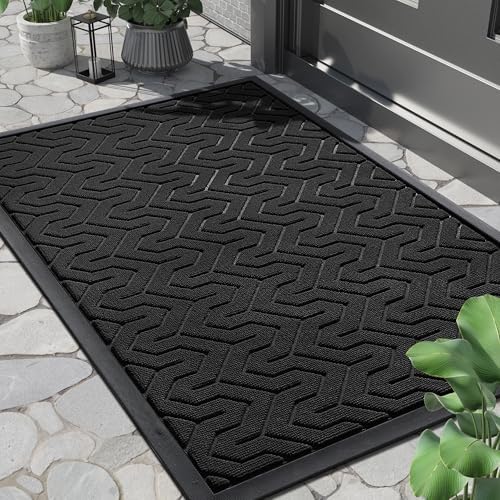
The Yimobra measures 29.5 × 17 inches and uses a polypropylene surface with deep Y-pattern grooves. The grooves are intended to scrape away dirt and debris, while the product description also identifies a reinforced rubber border and an anti-slip base.
This size may suit a narrower entry better than the BEHERO. The mat can be shaken or vacuumed when dry and rinsed with a hose for wet dirt. Its polypropylene surface sets it apart from the all-rubber and recycled-tire options, but the rubber border and base still make it important to check compatibility with your deck.
The Yimobra is a practical fit if you want a grooved surface and a smaller footprint. If you need water to drain through the mat, the Durite’s open weave is the clearer match; if you want a wider mat, consider the BEHERO instead.
Pros:
- Y-pattern grooves are designed to trap dirt and debris.
- Compact 29.5 × 17-inch size fits narrower entry areas.
- Can be shaken, vacuumed, or hosed off.
- Polypropylene surface offers an alternative to an all-rubber mat.
Cons:
- The rubber border and base may not suit every composite deck.
- Its smaller width offers less coverage than the BEHERO.
Verdict: Choose the Yimobra if you want a compact, grooved mat, but verify that its rubber parts are suitable for your decking.
How to Choose a Doormat for Composite Decking
Check Your Decking Maker’s Care Guidance
Start with the instructions for your specific composite decking. Mat materials and backing can vary, and not every surface has the same care recommendations. If the guidance is unclear, ask the decking maker whether rubber, recycled tire material, or a mat with a rubber backing is suitable. Avoid assuming that a mat labeled outdoor-safe is automatically suitable for every deck.
Think About Moisture and Airflow
A mat can hold dirt and moisture against the deck, especially if it is left in one place for long periods. An open-weave mat, such as the Durite, is designed to let water and debris pass through. A solid or ridged mat may offer a different kind of scraping surface. Whichever style you choose, lift it regularly to clean underneath and let the deck dry.
Measure the Doorway and Entry Area
Measure the space where the mat will sit, then check the product dimensions. A wider mat can cover more of a busy entrance, while a compact option may fit a narrow step or doorway. Also consider how much room the door needs to swing open. The Durite is 5/8 inch thick, while the Ottomanson and BEHERO are described as low profile; check the actual product details for any mat where clearance is tight.
Match the Surface to the Dirt You Need to Catch
Raised ridges and grooves are designed to scrape dirt from shoe soles. An open weave is more focused on letting water and loose debris pass through. Think about what usually reaches your deck—mud, grit, or rainwater—and choose a surface that matches that need. No doormat can replace occasional cleaning of the entry and the area beneath the mat.
Choose a Size You Can Maintain
A larger mat can cover more of the entry, but it may take more effort to lift, rinse, and dry. A smaller mat is easier to move but may leave parts of a busy doorway uncovered. Choose a size you can comfortably lift for regular cleaning, especially if you plan to keep it outside through wet weather.
Plan for Cleaning and Care
Check the mat’s care instructions before using a hose or cleaning product. Several options here can be shaken or hosed off, and some can also be vacuumed. Let the mat and the deck beneath it dry before putting it back. Regularly clearing trapped leaves, grit, and moisture helps keep the entry easier to maintain.
Frequently Asked Questions
Can I use a rubber doormat on composite decking?
It depends on the decking product and the mat. Check the deck maker’s care guidance before placing a rubber mat on the surface. If you cannot confirm compatibility, contact the manufacturer before use.
Is an open-weave mat better for a composite deck?
An open weave is designed to let water and debris pass through, which may help with drainage. It still needs to be lifted and cleaned so dirt and moisture do not collect beneath it. Follow your decking maker’s instructions when choosing a mat material.
How often should I lift a doormat from my deck?
Lift it regularly to remove leaves and grit and to let the surface beneath it dry. Check the area more often after rain or when dirt has collected around the entry.
Which option is best for a narrow doorway?
The Yimobra measures 29.5 × 17 inches, while the Durite is 17 × 25 inches. Compare those dimensions with your available space and door swing before ordering. The Durite is also 5/8 inch thick, so check clearance carefully.
Which mat offers the most coverage?
The BEHERO measures 34 × 22.5 inches, making it the largest of the options here with stated dimensions. Measure your entry to make sure that size fits without blocking the door or walk path.
How should I clean an outdoor doormat?
Follow the product’s care instructions. The mats described here can be shaken or hosed off, and some can be vacuumed. After cleaning, allow the mat and the deck beneath it to dry before replacing it.
Conclusion
For a low-profile scraper, the Ottomanson is a practical place to start; for wider coverage, consider the BEHERO. The Durite stands out for its open weave, while the Yimobra offers a smaller grooved surface. Before choosing any of them, check your composite deck’s care guidance, confirm the mat’s dimensions and backing, and plan to lift it regularly for cleaning and drying.
