
The best electric ladder towel rail for your bathroom depends on more than how many bars it has. You’ll also want to check its voltage, mounting style, temperature control, and whether it can connect safely to your home’s electrical system. The five options below range from a compact four-bar rail to larger 14-bar models, but their listed specifications vary, so confirm the details before you buy.
Table of Contents
Quick Comparison: Best Electric Ladder Towel Rail
| Product | Notable features | Best for | Important check |
|---|---|---|---|
| APUM Gold 4-Bar Towel Warmer | 304 stainless steel; plug-in; wall-mounted | Smaller spaces and simple setup | Four bars offer less hanging room |
| BYFSRUS 10-Tube Heated Towel Rail | 88W; listed 50°C constant temperature | Buyers who need more hanging space | Listed voltage is 220–240V |
| DFEDHF Thermostatic Ladder Rail | Listed 45W; stated 50–55°C temperature | Compact bathrooms where low power is a priority | Material details in the listing conflict |
| WUBYING 14-Bar Heated Towel Rack | 304 stainless steel; plug-in or hardwired options | Households needing a larger rail | Confirm electrical setup before installation |
| DFEDHF 14-Bar Heated Towel Rack | 304 stainless steel; plug-in or hardwired options | A larger-capacity alternative | Confirm voltage and connection details |
Our Picks: Best Electric Ladder Towel Rail reviews
APUM Gold 4-Bar Towel Warmer: A Simple, Compact Rail

The APUM is a wall-mounted, four-bar towel rail made from 304 stainless steel with a polished finish. Its listing describes a plug-in design for a standard 120V outlet, which makes it the clearest electrical match among these picks for many US homes. It is also designed to take the place of a conventional towel bar, so it may work well where floor space is limited.
The product description says it begins warming a towel in about five minutes and is designed to run continuously. Treat that timing as a manufacturer claim, not a guarantee: results can depend on towel size and room conditions. The listing also recommends adding a timer or switch for more control, especially in a home with children. That control is not described as built in.
Four bars make this a smaller-capacity choice than the 10- and 14-bar rails below. It may suit one or two towels, but it is less flexible for a busy household or for drying several items at once. The polished steel look is simple, though the gold finish may not suit every bathroom.
Pros:
- 304 stainless steel construction
- Plug-in design listed for 120V
- Wall-mounted form can save floor space
Cons:
- Four bars provide less hanging capacity than larger models
- Timer or separate switch may need to be added
Verdict: Choose the APUM if you want a compact, plug-in rail and its four-bar capacity fits your needs.
BYFSRUS 10-Tube Rail: More Room, With a Voltage Caveat
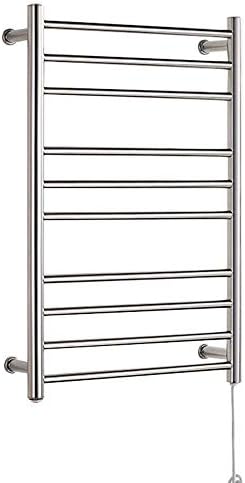
This ladder-style rail has 10 tubes and a polished stainless steel finish. Its listed power is 88W, and the description gives a constant temperature of 50°C and a warm-up time of about five minutes. A larger number of tubes can offer more places to drape towels than the APUM’s four bars, although the listing does not give enough clear dimension information to judge its exact fit.
The key concern for US shoppers is the stated 220–240V voltage. That does not match the 120V specification listed for the APUM, so do not assume this model can plug into a standard US outlet. Check the product’s exact electrical requirements and consult a qualified electrician before buying or installing it. The manufacturer also calls for qualified electrical installation.
The listing gives an IP56 rating and describes the rail as waterproof and corrosion-resistant. Those are product claims; confirm they meet your bathroom’s needs and local electrical rules rather than relying on the rating alone. Compared with the APUM, this model offers more tubes but requires more careful electrical verification.
Pros:
- 10 tubes offer more hanging positions than a four-bar rail
- 88W power and a listed 50°C temperature
- Polished stainless steel construction
Cons:
- Listed 220–240V voltage may not suit a standard US electrical setup
- Qualified installation is specified
Verdict: Consider the BYFSRUS only if its voltage and installation requirements are confirmed as compatible with your home.
DFEDHF Thermostatic Rail: A Low-Wattage Option to Verify
The DFEDHF is a wall-mounted ladder rail with a thermostatic heating system. Its description lists 45W of power and says it can reach 50–55°C in about two to three minutes. Those figures may appeal if you are looking for a low-wattage rail, but they are manufacturer-provided specifications rather than a promise of real-world heating time.
There is an important inconsistency in the listing: the title describes a stainless steel, chrome-plated rail, while the description says the product is made from space aluminum. The same description mentions carbon-fiber heating. Because the material information is unclear, confirm the actual construction and finish with the seller before purchasing.
The listing also makes broad claims about safety testing, insulation, and energy use. It does not provide enough detail here to assess those claims or establish the product’s electrical compatibility with a US home. Compared with the BYFSRUS, it lists lower wattage and a faster warm-up, but the unclear material and missing voltage information make it harder to evaluate.
Pros:
- Listed 45W power draw
- Thermostatic temperature range is provided
- Wall-mounted design can suit limited floor space
Cons:
- Material description conflicts with the product title
- Voltage and connection details are not clear in the supplied specifications
Verdict: This rail may be worth considering for its stated low power, but confirm its material and electrical specifications before making a decision.
WUBYING 14-Bar Rack: A Larger Rail With Two Mounting Options

The WUBYING is a 14-bar heated towel rack made from 304 stainless steel. Its listing describes two installation choices: a plug-in cord or hardwiring, with the cord running through the rail or concealed at the wall brackets. Having both options may help you plan around your bathroom layout, but you should confirm which configuration is included and what voltage it requires.
The built-in thermostat is listed as maintaining a temperature of 113–122°F, and the description says towels warm in about 15 minutes. The thermostat may help limit the rail’s temperature, but the listing does not describe a timer. If scheduled shutoff is important to you, ask whether one is included rather than assuming it is.
With 14 bars, this model offers more hanging positions than the APUM and BYFSRUS. That can be useful for a household with several towels, but you still need enough wall space and suitable electrical access. The listing also states an IP56 rating; verify installation requirements and local code with a qualified professional, particularly if you choose hardwiring.
Pros:
- 14 bars provide substantial hanging capacity
- 304 stainless steel construction
- Plug-in and hardwired installation options are described
Cons:
- Voltage details need confirmation before purchase
- Large rail may not suit a small wall area
Verdict: The WUBYING is a strong candidate if you need a larger rail and can confirm the correct electrical configuration for your bathroom.
DFEDHF 14-Bar Rack: A Similar High-Capacity Alternative
This DFEDHF model is also described as a 14-bar rack made from 304 stainless steel. Its listed features closely match the WUBYING: a choice of plug-in or hardwired installation, a built-in thermostat, and a stated operating range of 113–122°F. The description says it takes about 15 minutes to warm a towel.
Because the supplied specifications are nearly identical to the WUBYING’s, the available information does not show a clear performance advantage for one over the other. Compare the exact product details, included hardware, cord arrangement, and electrical requirements before choosing. The description says mounting parts are included, but it does not settle the voltage question for a US installation.
Like the WUBYING, this is a better fit for buyers who want more hanging room than a small four-bar rail can provide. Its size and hardwired option may call for more planning than a simple plug-in towel bar. The listed IP56 rating is not a substitute for checking local code or getting qualified installation advice.
Pros:
- 14-bar design offers room for multiple towels
- 304 stainless steel construction
- Thermostat and two installation methods are listed
Cons:
- Voltage and exact electrical setup should be confirmed
- Specifications closely resemble the WUBYING model, with no clear distinction in the supplied data
Verdict: Choose this DFEDHF if its confirmed configuration and included hardware suit your project; compare it closely with the similar WUBYING rail first.
How to Choose an Electric Ladder Towel Rail
Check voltage and wiring first
Electrical compatibility should be your first check, not an afterthought. The APUM listing specifies 120V, while the BYFSRUS specifies 220–240V. The other listings do not make the voltage clear in the supplied details. Confirm the exact voltage, plug type, and wiring method for the model you’re considering. If you plan to hardwire a rail, use a qualified electrician and follow local electrical codes.
Choose enough bars for your household
A four-bar rail can work for one or two towels, while 10- and 14-bar designs offer more hanging positions. Bar count alone does not tell you how many towels will fit comfortably, though. Check the rail’s full dimensions and spacing, then compare them with your towels and available wall area.
Look for temperature and timer controls
A thermostat can help maintain a set temperature, as listed for the BYFSRUS, WUBYING, and DFEDHF models. A timer gives you another way to limit how long the rail runs, but the product details here do not confirm built-in timers for those models. The APUM description suggests adding a timer or switch separately. Verify which controls are included before buying.
Compare materials and finish carefully
Several models list 304 stainless steel, which can be a practical choice for a bathroom. Still, check that the finish and material in the product details match what you expect. The DFEDHF thermostatic rail has conflicting material information, so ask for clarification. Consider how the finish will look with your fixtures and how easy the rail will be to clean.
Plan the installation location
Wall-mounted rails keep the floor clear, but they need a suitable wall and access to the correct power source. Measure the space before ordering, including clearance around the rail and room for towels to hang. Decide whether you want an exposed plug-in cord or a concealed hardwired connection, and confirm that the product supports your preferred setup.
Treat heating and waterproof claims as specifications to verify
Warm-up times and temperature ranges are stated by the manufacturers and may not reflect every bathroom or towel. Likewise, an IP rating is only one part of choosing bathroom electrical equipment. Confirm the product’s full instructions, intended installation conditions, and suitability for your location rather than relying on a single claim in a listing.
Frequently Asked Questions
Can I plug any electric towel rail into a standard US outlet?
No. Check the voltage and plug requirements for the exact model. The APUM listing specifies 120V, while the BYFSRUS lists 220–240V. The other supplied descriptions do not clearly state voltage, so confirm compatibility before purchase.
How many bars do I need?
That depends on how many towels you want to warm or dry at once and how much wall space you have. The APUM has four bars, the BYFSRUS has 10 tubes, and the WUBYING and DFEDHF models have 14 bars. Check the rail’s dimensions and spacing as well as its bar count.
Do these towel rails include a timer?
The supplied product details do not clearly confirm a built-in timer for these models. The APUM description recommends installing a timer or on/off switch separately. Check the product information or ask the seller if timed operation matters to you.
How quickly will a towel warm up?
Listed times vary from about two to three minutes for one DFEDHF model to around 15 minutes for the WUBYING and 14-bar DFEDHF. These are manufacturer claims, and actual results may vary with towel size and room conditions.
Can a towel rail also heat the bathroom?
The product descriptions focus mainly on warming or drying towels. One listing says the rail can also be used for heating, but the supplied details do not establish that it can replace a bathroom heater. Choose a dedicated heater if you need reliable room heating.
Should a hardwired towel rail be installed by an electrician?
Yes. The BYFSRUS listing specifically says to use a qualified electrician, and hardwiring requires attention to the home’s electrical system and local codes. Even for a plug-in model, follow the manufacturer’s installation instructions and confirm the rail is suitable for its intended location.
Final Recommendation
For a compact rail with a clearly stated 120V plug-in setup, the APUM is the most straightforward option in this group, provided four bars are enough. If you need more capacity, the 14-bar WUBYING and DFEDHF models offer more hanging positions, but confirm their voltage and connection details before ordering. The BYFSRUS’s listed 220–240V requirement makes electrical compatibility a key concern for US buyers, while the other DFEDHF model needs clarification about its materials. In every case, verify the specifications and installation requirements before making your choice.
