
Choosing an EPA-certified wood stove starts with matching its heating capacity to your space, then checking the firebox size, installation needs, and certification details. The options below range from a compact cast-iron stove for smaller rooms to larger models designed for spaces up to 2,500 square feet. Product descriptions do not confirm EPA certification for every model, so check the manufacturer’s current documentation before buying.
| Wood Stove | Listed Heating Area | Log Capacity | Standout Feature |
|---|---|---|---|
| Comfort Glow Cast Iron Wood Stove | Up to 900 sq. ft. | Up to 22 inches | Cast iron body and cooking surface |
| Comfort Glow CGWS2500 Plate Steel Stove | Up to 2,500 sq. ft. | Up to 21 inches | Secondary combustion and glass viewing window |
| US Stove US1100E-L | Up to 1,200 sq. ft. | Up to 18 inches | Up to 68,000 BTUs and two base options |
| Ashley Hearth AW2020-P | Up to 2,000 sq. ft. | Up to 21 inches | Up to 89,000 BTUs; no electricity required |
| Ashley Hearth AW2520E-P | Up to 2,500 sq. ft. | Up to 21 inches | Up to 112,800 BTUs and 2.7 cu. ft. firebox |
Important: Heating-area figures are manufacturer-stated estimates, not guarantees for every home. Insulation, layout, climate, and stove placement can affect results. Check the exact model’s certification and installation requirements, and consult local building and fire codes before installing a wood stove.
Table of Contents
Our Picks: Best Epa Approved Wood Stoves reviews
1. Comfort Glow Cast Iron Wood Stove: Compact Heat with a Cooktop

This Comfort Glow model is the smallest stove in this group by stated heating area. Its cast-iron construction is designed to retain heat, and its firebox accepts logs up to 22 inches long. The flat top adds a practical feature for warming food or cooking, which may be useful in a cabin or during an outage.
The listed heating area is up to 900 square feet, making it a better match for a smaller home, cabin, or defined living space than for a large open floor plan. The product description identifies it as EPA certified, but you should still confirm the certification applies to the exact model and installation configuration you plan to use. Its 6-inch flue collar is a compatibility detail, not a complete chimney system; venting and installation components are separate considerations.
Compared with the larger steel stoves here, this model favors a compact footprint and cooking utility over a high stated heat output. The supplied details do not give a BTU rating, so there is less information for comparing its output directly with the other options.
Pros:
- Listed as EPA certified.
- Cast-iron construction and a cooking surface.
- Accepts logs up to 22 inches.
- Designed for smaller spaces and off-grid use.
Cons:
- Listed heating area is limited to up to 900 square feet.
- The product details do not provide a BTU output.
Verdict: Choose this stove if you want a compact, cast-iron option with a cooktop for a smaller space, and verify its certification and installation requirements before purchase.
2. Comfort Glow CGWS2500: Plate Steel Heat for Larger Spaces

The CGWS2500 is a plate-steel indoor stove with a cast-iron door and a glass window for viewing the fire. Comfort Glow lists it for spaces up to 2,500 square feet and says its firebox accepts logs up to 21 inches. Secondary combustion is included in the product description as a way to reduce emissions.
There is an important certification distinction: the supplied product information describes clean-burn technology but does not explicitly state that this model is EPA certified or meets EPA guidelines. If EPA certification is a requirement for your purchase, confirm the model’s current certification documentation before treating it as a qualifying option. This is especially important because the other listings in this guide make a more direct certification or EPA-guideline claim.
The stated heating area makes it one of the larger-capacity choices, but the listing does not provide a BTU figure or more detail about installation components. Its steel body and viewing window may suit someone seeking a straightforward larger-room stove, provided the certification and venting details check out.
Pros:
- Listed for heating spaces up to 2,500 square feet.
- Accepts logs up to 21 inches.
- Secondary combustion is designed to reduce emissions.
- Includes a glass window for viewing the fire.
Cons:
- The supplied description does not explicitly confirm EPA certification.
- No BTU output is listed in the supplied product details.
Verdict: Consider this model for its stated capacity and secondary-combustion design only after verifying EPA certification and installation requirements for the exact stove.
3. US Stove US1100E-L: A Flexible Mid-Size Stove with Two Base Options

The US1100E-L is listed to produce up to 68,000 BTUs and heat spaces up to 1,200 square feet. Its 1.3-cubic-foot firebox takes logs up to 18 inches. A secondary-combustion system is intended to improve heat output while reducing wood use and emissions, without a catalyst.
This model includes both adjustable legs and a pedestal base, so you can choose between two looks and setups. Other useful details include a removable ash pan, firebrick-lined interior, and a cast-iron door with air-washed ceramic glass. The listing says it meets all EPA guidelines while burning cordwood.
Plan for freight delivery: the product information says it ships by LTL carrier and requires a valid phone number or email for delivery arrangements. It is designed for a standard 6-inch chimney connector and chimney system, which are not included. For mobile-home or transportable-building installation, the listing specifies a separate fresh-air intake kit.
Pros:
- Listed to meet EPA guidelines while burning cordwood.
- Up to 68,000 BTUs and a stated heating area of 1,200 square feet.
- Includes both adjustable legs and a pedestal base.
- Removable ash pan and firebrick-lined interior.
Cons:
- Accepts logs up to 18 inches, shorter than several other models here.
- Freight delivery is required; chimney components are not included.
Verdict: This is a sensible mid-size choice if its 1,200-square-foot rating fits your space and you value a choice of base styles and a removable ash pan.
4. Ashley Hearth AW2020-P: Practical 2,000-Square-Foot Heating

The Ashley Hearth AW2020-P is listed for spaces up to 2,000 square feet, with a stated output of up to 89,000 BTUs. Its 1.6-cubic-foot firebox accepts logs up to 21 inches. The product description says it meets all EPA guidelines when burning cordwood and uses secondary combustion to support heat output while reducing wood consumption and emissions.
It operates without electricity, which can be valuable during a power outage or in an off-grid setup. The package includes adjustable legs and a pedestal base, plus a removable ash pan with an ash port. A firebrick-lined interior and cast-iron door with air-washed ceramic glass round out the main features.
The optional circulator blower is sold separately and requires electricity, so it is not necessary for basic operation but will not help during an outage unless power is available. The listing specifies LTL freight delivery and a standard 6-inch chimney connector and chimney system, which are not included. A separate fresh-air intake kit is specified for mobile-home or transportable-building installations.
Pros:
- Listed to meet EPA guidelines while burning cordwood.
- Up to 89,000 BTUs and a stated heating area of 2,000 square feet.
- Does not require electricity to operate.
- Includes two base options and a removable ash pan.
Cons:
- The optional blower requires electricity and is sold separately.
- Freight shipping is required; the chimney system is not included.
Verdict: Choose the AW2020-P if you need a cordwood stove for a medium-to-large area and want heat that does not depend on electricity.
5. Ashley Hearth AW2520E-P: The Largest Listed Firebox and Heat Output
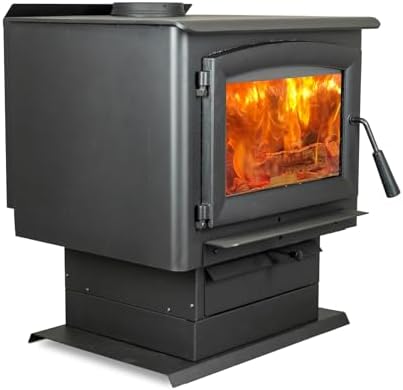
The AW2520E-P is listed for heating up to 2,500 square feet and producing up to 112,800 BTUs. Its 2.7-cubic-foot firebox is the largest stated in this group, though it accepts logs up to 21 inches—the same listed maximum as several smaller models. The product description says it meets all EPA guidelines while burning cordwood and uses secondary combustion without a catalyst.
Like the AW2020-P, it runs without electricity and includes both adjustable legs and a pedestal base. The removable ash pan, built-in ash port, firebrick lining, and cast-iron door with air-washed ceramic glass are useful details for daily operation. Its larger stated output makes it a stronger candidate for a large space, but a stove that is too powerful for your home can be a poor fit. Match its capacity to your layout and heating needs rather than relying on the maximum area alone.
The optional 100 CFM circulator blower is sold separately and requires electricity. The listing also notes freight delivery, a separate chimney system, and a fresh-air intake kit requirement for mobile-home or transportable-building installations.
Pros:
- Listed to meet EPA guidelines while burning cordwood.
- Highest stated output in this group, at up to 112,800 BTUs.
- Large 2.7-cubic-foot firebox and removable ash pan.
- Operates without electricity and includes two base options.
Cons:
- Its high stated capacity may be more than a smaller or well-insulated home needs.
- Freight shipping is required, and the chimney system is not included.
Verdict: The AW2520E-P is the strongest fit here for a large space that needs substantial cordwood heat, provided its capacity suits your home and you plan for freight delivery and separate venting components.
How to Choose an EPA-Approved Wood Stove
Confirm the exact model’s EPA status
Marketing terms such as “clean burn” or “secondary combustion” do not, on their own, confirm EPA certification. Look for documentation for the exact model and fuel type. The product details here explicitly identify some stoves as EPA certified or as meeting EPA guidelines, while the Comfort Glow CGWS2500 description does not make that claim. Check the manufacturer’s documentation and applicable local rules before buying.
Match the stove’s capacity to your home
Use the listed heating area as a starting point, not a promise. A stove’s performance depends on factors such as insulation, ceiling height, room layout, and climate. An oversized stove may be harder to operate comfortably, while an undersized unit may not keep up with your needs. Consider the area you actually want to heat and ask a qualified installer for help if you are unsure.
Compare firebox size and log length
Firebox capacity and maximum log length affect how much wood the stove can hold. The models here accept logs from 18 to 22 inches, and listed firebox sizes range from 1.3 to 2.7 cubic feet where provided. Check that your typical firewood length fits; do not assume that a larger heating-area rating automatically means longer logs will fit.
Think about construction and daily handling
The Comfort Glow compact model uses cast iron, while the larger Comfort Glow model is plate steel with a cast-iron door. The Ashley and US Stove options include firebrick-lined interiors and removable ash pans. Consider which features matter most in your routine, including ash removal, glass visibility, and whether a pedestal or leg base better suits your room.
Plan the chimney and installation before ordering
A stove is only one part of a safe installation. Several listings specify a standard 6-inch chimney connector and chimney system, but note that these components are not included. Confirm clearances, floor protection, venting needs, and any fresh-air requirements with the manufacturer and a qualified installer. Follow local building and fire codes.
Check delivery and power needs
The US Stove and Ashley listings specify LTL freight delivery, which can involve scheduling and contact details for the carrier. The Ashley stoves operate without electricity, but their optional blowers require power. Consider the delivery process and whether you want a blower before making a choice, especially if the stove is intended for backup or off-grid heating.
FAQs
What does EPA certification mean for a wood stove?
It indicates that a stove has been certified under applicable EPA emissions requirements for its specified use. Check documentation for the exact model and fuel type instead of relying only on broad terms such as “clean burning.”
Are all five stoves in this guide explicitly listed as EPA certified?
No. The Comfort Glow cast-iron model is described as EPA certified, and the US Stove and Ashley listings say they meet all EPA guidelines while burning cordwood. The Comfort Glow CGWS2500 description mentions secondary combustion and reduced emissions but does not explicitly state EPA certification, so verify its status before buying.
How much space can these stoves heat?
The listed estimates range from up to 900 square feet for the compact Comfort Glow cast-iron stove to up to 2,500 square feet for the Comfort Glow CGWS2500 and Ashley AW2520E-P. Actual results depend on your home and installation.
Do these stoves include a chimney?
The supplied details for the US Stove and Ashley models say the standard 6-inch chimney connector and chimney system are not included. Check the full product documentation for the other models and confirm that the entire venting setup is suitable for your installation.
Which stove is best for a power outage?
The Ashley AW2020-P and AW2520E-P descriptions state that the stoves operate without electricity. Their optional blowers do require electricity. The other product descriptions do not provide the same explicit statement about operation during an outage.
What does freight shipping mean for these products?
The US Stove and Ashley listings specify LTL freight delivery. That may require coordinating a delivery window with the carrier, and the listing asks for contact information. Check the seller’s delivery terms before ordering.
Final Recommendation
For a smaller space, the Comfort Glow cast-iron stove stands out for its stated EPA certification, compact heating range, and cooking surface. For a mid-size area, the US Stove US1100E-L offers a removable ash pan and two base options. If you need more heat and want a stove that operates without electricity, consider the Ashley AW2020-P or AW2520E-P based on your home’s needs. Whichever model you choose, verify certification for the exact stove, check local installation requirements, and plan for the chimney system before purchase.
