
Faux stone panels can give the wall behind a wood stove a stone-like look without the weight and labor of masonry. But appearance alone is not enough for this location: panels made from PVC, polyurethane, or foam may not be suitable for the heat near your stove. Follow the stove manufacturer’s clearance instructions and local building rules, and use a panel behind the stove only if its manufacturer confirms it is appropriate for that exact use and installation.
Of the options below, the modified-clay KASARO panels are the most promising candidate based on the listed fire-retardant material description. That does not make them a certified stove-wall assembly or a substitute for required clearances. Treat every option as decorative until you verify its suitability with the manufacturer.
Table of Contents
Quick Comparison
| Product | Material and coverage | Best fit | Important note |
|---|---|---|---|
| CONCORD WALLCOVERINGS Wild Boulder Panels | PVC; 20 panels cover 57.7 sq. ft. | Large decorative accent walls | Confirm suitability for a wood-stove area before use. |
| iPormis PU Faux Stone Panels | PU; six panels, each 44.9 × 11.9 in. | Deep, layered stone texture | The listing describes the surface as flame-retardant; that does not establish safe stove clearances. |
| KASARO Grey PU Wainscoting Panels | PU; four panels cover 28.4 sq. ft. | Textured cement-stone look | No stove-specific heat rating is provided. |
| KASARO MCM Cement Grey Panels | Modified clay; four panels cover 31 sq. ft. | Large-format modern stone design | Described as fire-retardant, but not as a certified wood-stove wall system. |
| UPP Gemstone Foam Panels | EPS foam; nine panels | Lightweight decorative projects away from stove heat | Foam construction makes stove-area use a poor choice unless the manufacturer explicitly approves it. |
Our Picks: Best Faux Stone Panels Behind Wood Stove reviews
1. CONCORD WALLCOVERINGS Wild Boulder PVC Panels: A Big, Multicolor Accent
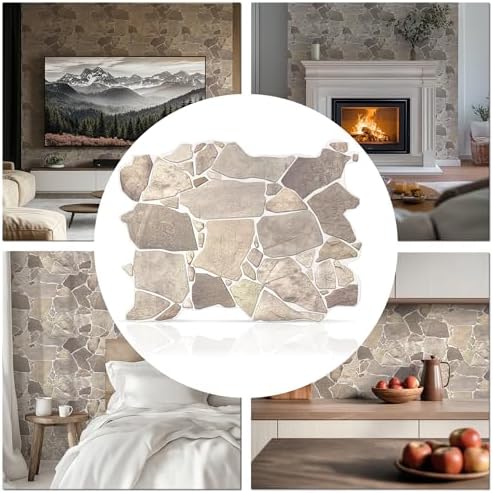
This 20-panel set uses lightweight PVC with a raised Wild Boulder pattern in grey, beige, and brown. The stated coverage is 57.7 square feet, making it a practical option for a broad accent wall or another large decorative area. Interlocking edges are intended to create a joined finish, and the panels can be cut to fit a layout.
The listing highlights waterproof, washable, and impact-resistant construction. Those features may help with routine cleaning, but they do not answer the key question for a wood-stove wall: whether the material and installation are suitable at the temperatures and clearances in your setup. The product description mentions use around fireplaces, but that wording is not proof that it is appropriate behind a wood stove.
Compared with the larger PU and modified-clay panels below, these have a more irregular, multicolor boulder look and a larger stated pack coverage. Choose them for a decorative project only after getting clear stove-area approval from the panel manufacturer. Do not rely on a decorative panel as a heat shield.
Pros:
- Large stated coverage per pack
- Waterproof and washable PVC surface
- Interlocking design and cut-to-fit format
- Grey, beige, and brown tones suit a rustic stone look
Cons:
- No stove-specific heat or clearance guidance is provided
- PVC construction should not be assumed safe near stove heat
Verdict: A versatile decorative wall option, but use it behind a wood stove only if the manufacturer confirms it is suitable for your exact installation.
2. iPormis PU Faux Stone Panels: Deep Texture in a Long Panel

These six polyurethane panels measure 44.9 by 11.9 inches each and have a deep, layered stone appearance. Their long shape may help create a continuous horizontal pattern, while the 3D surface gives a wall more visual depth than a flat faux-stone finish. The panels can be trimmed for edges and other custom layouts.
The listing describes the panels as moisture-resistant, UV-resistant, and flame-retardant, and says they can be attached with adhesive, screws, or both depending on the surface and application. Those are product claims, not a stove-clearance specification. A flame-retardant description does not mean a panel is noncombustible, nor does it establish that the panel can be installed within the clearances required for your stove.
These may suit someone looking for a realistic rock-wall effect in a general accent-wall project. They offer more explicit fastening options than some adhesive-focused choices here. However, the listing does not provide total coverage for the pack or a stove-specific installation approval, so confirm both before planning a stove-wall project.
Pros:
- Deep 3D stone texture
- Long panel format can reduce the number of horizontal joints
- Can be cut to fit edges and custom layouts
- Listing describes adhesive, screws, or a combination for attachment
Cons:
- No total pack coverage or stove-specific heat guidance is stated
- Flame-retardant wording does not prove suitability at a wood stove’s required clearance
Verdict: Consider these for a textured wall outside the stove’s heat zone; for the wall behind a stove, get written installation guidance from the manufacturer first.
3. KASARO Grey PU Panels: Cement-Stone Texture for a Compact Feature Wall

This set contains four polyurethane panels measuring 43.3 by 23.6 inches, with stated coverage of 28.4 square feet. The grey finish and raised cement-like texture give it a more modern, architectural appearance than the irregular boulder pattern of the CONCORD set. The larger panel size can also make it easier to plan a feature wall with fewer individual pieces.
KASARO describes the panels as lightweight and moisture-resistant, with adhesive installation and trimming for a closer fit. The listing focuses on accent walls and wainscoting and does not give a stove-specific heat rating. Because these are PU panels, do not infer from their stone appearance that they behave like real stone or can replace a code-compliant heat shield.
This is a reasonable pick for a smaller decorative wall where the grey finish fits your room. Its coverage is stated more clearly than the iPormis set, but the material and missing stove-specific instructions remain important limitations for placement behind a wood stove.
Pros:
- Clear stated coverage of 28.4 square feet
- Large panels create a bold, dimensional finish
- Lightweight PU construction is easier to handle than masonry
- Panels can be trimmed to fit a layout
Cons:
- No wood-stove heat rating or clearance instructions are provided
- PU is not a substitute for a verified noncombustible wall assembly
Verdict: Choose these for a grey decorative feature wall, not as a stove-wall solution unless the manufacturer confirms the intended use and installation details.
4. KASARO MCM Cement Grey Panels: The Strongest Material Candidate

These four modified-clay panels measure 47.2 by 23.6 inches each and are listed to cover 31 square feet. Their cement-grey finish and geometric 3D pattern create a clean, modern stone effect. The larger format can speed up coverage and reduce the number of seams compared with smaller panels.
The product description calls the panels lightweight, flexible, moisture-resistant, and fire-retardant, and identifies them for interior and exterior use. Among the options in this list, modified clay makes this the most promising material candidate for a stove-wall project. Still, “fire-retardant” is not the same as noncombustible or approved for a wood stove. The listing does not provide a stove-specific rating, tested wall assembly, or required clearances.
For a stove area, ask the manufacturer for documentation that covers the actual use, mounting method, and distance from the stove. Check that information against the stove manual and local code before buying. If approval is not clear, use these panels elsewhere and choose a code-compliant wall protection system for the stove.
Pros:
- Modified-clay construction is a more promising candidate than PVC, PU, or foam
- Listing describes the material as fire-retardant and moisture-resistant
- Four large panels cover a stated 31 square feet
- Flexible format and interlocking design are intended to ease installation
Cons:
- No stove-specific certification or clearance guidance is provided
- Fire-retardant wording alone does not establish a safe stove installation
Verdict: This is the first option to investigate for a stove-wall project, but buy it for that purpose only after confirming its suitability with the manufacturer and your local requirements.
5. UPP Gemstone Foam Panels: Lightweight Texture for Areas Away from Stove Heat

This nine-pack uses lightweight EPS foam to create a stacked-stone look. The panels are designed to be cut and shaped, and the listing describes them as moisture-resistant with some insulating effect. Those qualities may make them convenient for a decorative DIY project where low weight and easy shaping matter.
Foam is the main concern for a wall behind a wood stove. The product description does not provide a stove-specific heat rating or say that the panels are suitable for installation near a stove. Moisture resistance and insulation claims do not establish heat safety. Of the five choices here, this is the least appropriate starting point for a stove-wall project.
Consider this set for a decorative area well away from the stove, subject to the product instructions. If you want stacked stone behind a stove, look for a product with explicit documentation for that exact use rather than relying on a stone-like surface or general-purpose claims.
Pros:
- Lightweight EPS foam panels are easy to handle
- Can be cut and shaped for a custom arrangement
- Stacked-stone appearance adds surface texture
- Listing describes moisture resistance
Cons:
- No stove-area heat guidance is provided
- Foam construction makes it a poor choice near a wood stove without explicit manufacturer approval
Verdict: Keep these for a decorative wall away from stove heat; do not install them behind a wood stove unless the manufacturer specifically approves that use.
How to Choose Faux Stone Panels for a Wood-Stove Wall
Start with the stove’s clearance requirements
Read the installation manual for your exact stove model before choosing a wall finish. It specifies the clearances and conditions the appliance requires. Local building rules may add requirements. If you are unsure how those instructions apply to your room, ask your local building official or a qualified stove installer before doing the work.
Verify the panel material and heat suitability
A faux-stone appearance does not make a panel behave like natural stone. Check the exact material, product documentation, and any stated limits for heat exposure. Ask the manufacturer whether the panel is approved for installation behind your type of wood stove, and request details about the tested assembly and permitted clearances. General claims such as “fire-retardant” or “for fireplaces” do not by themselves answer those questions.
Do not treat decorative panels as a heat shield
A decorative covering and a stove heat shield serve different purposes. Do not assume that an attractive stone-pattern panel reduces required clearances or protects a combustible wall. If your setup needs wall protection, use a system that meets the stove manual and local code, including the required construction and mounting details.
Measure the wall and plan for cuts
Measure the area you intend to cover, then compare it with the stated coverage and panel dimensions. Leave room in your plan for cuts around corners, edges, and other obstacles. Larger panels can mean fewer seams, while smaller or interlocking panels may offer more layout flexibility. Confirm the pack coverage before ordering, especially where the listing does not state a total.
Check the mounting method and wall surface
Installation methods vary. Some products describe adhesive installation; others also mention screws. Confirm that the attachment method is appropriate for your wall and the panel manufacturer’s instructions. Near a stove, the adhesive, fasteners, backing, and wall beneath the panel all matter, so do not change the specified assembly without professional guidance.
Choose a texture and color that suit the room
Grey cement-style panels tend to create a more modern look, while multicolor or irregular stone patterns can feel more rustic. Deep relief adds shadow and texture but may need more attention during cleaning. Think about how the panel color will work with the stove, floor, and surrounding finishes, while keeping safety and installation requirements ahead of appearance.
FAQs
Can faux stone panels go directly behind a wood stove?
Only if the panel manufacturer explicitly approves the product and installation for that use, and the complete setup meets the stove manual and local requirements. Do not assume a panel is safe because it is described as stone-look, flame-retardant, or suitable for fireplace decor.
Are fire-retardant panels the same as noncombustible panels?
No. “Fire-retardant” does not by itself mean a material is noncombustible or approved for a particular clearance. Check the product’s technical documentation and confirm the proposed installation with the manufacturer and relevant local authority.
Which option in this list is the best candidate to investigate first?
The KASARO MCM Cement Grey panels are the first option to investigate because the listing identifies modified clay and describes the material as fire-retardant. That is not proof of suitability behind a wood stove. Get stove-specific documentation before considering installation.
Can faux stone panels replace a required heat shield?
No. A decorative panel should not be treated as a heat shield unless the manufacturer provides documentation for that specific function and the complete assembly meets the stove requirements and local code.
How much panel coverage do I need?
Measure the wall area you plan to cover and compare it with the stated coverage for each pack. Account for cutoffs and layout needs. For products without a stated total coverage, use the individual panel dimensions or ask the manufacturer before ordering.
Are foam faux-stone panels suitable behind a wood stove?
The UPP panels are made from EPS foam, and the supplied product information does not say they are suitable behind a wood stove. Treat them as a decorative option away from stove heat unless the manufacturer explicitly confirms otherwise.
Final Recommendation
For a wood-stove wall, prioritize verified heat suitability, required clearances, and local code over the look of the panels. The KASARO MCM panels are the most promising option to ask the manufacturer about, but the available product details do not establish that they are approved behind a stove. If you cannot get clear documentation for the panel and the full installation, do not use it there; choose a compliant wall-protection system and place decorative faux stone elsewhere.
