
Wooden bowls need an oil that can soak into the wood without leaving a strong taste or smell. For most food-prep bowls, food-grade mineral oil is a simple, non-curing choice; walnut oil is an alternative if you prefer an oil that cures to a longer-lasting finish. Below, we compare five options by formula, size, and the kind of care they suit best.
Table of Contents
Quick Comparison
| Product | Type | Size | Best for |
|---|---|---|---|
| Kate Naturals Food-Grade Mineral Oil | Mineral oil | 8 oz | Everyday bowl and utensil care |
| Sanco Industries NSF Certified Mineral Oil | Mineral oil | 128 oz | High-volume or frequent use |
| Goddard’s Butcher Block Oil | White mineral oil | 8 oz | Small kitchens and food-prep wood |
| HOWARD Butcher Block Conditioner | Mineral oil with vitamin E | Not specified | Bowls and other unfinished wood items |
| Rowdy Rooster Refined Walnut Oil | Refined walnut oil | 9 fl oz | A curing finish for wood care |
Our Picks: Best Food Safe Oil For Wooden Bowls reviews
Kate Naturals: An Easy Everyday Mineral Oil for Bowls

Kate Naturals is a food-grade mineral oil made for wooden kitchen items, including salad bowls and utensils. Its colorless, odorless, and tasteless formula is a practical match for bowls used to serve food, where you want to avoid adding a noticeable scent or flavor.
The oil is described as lightweight and readily absorbed, with no greasy residue when applied as directed. For care, wash and dry the bowl first, rub in a small amount with a clean cloth, let it absorb for 15–20 minutes, then wipe away any excess. The product directions suggest repeating the process monthly.
The 8-ounce bottle is a reasonable size for occasional home use, and the oil is also listed for bamboo, teak, acacia, olive wood, and hardwood. Compared with the large Sanco container, it takes up less storage space. One limitation is that this is a non-curing mineral oil, so it will need to be reapplied as part of ongoing wood care.
Pros:
- Food-grade mineral oil described as odorless and tasteless
- Suitable for wooden bowls, utensils, and several wood types
- Simple application process with a stated absorption time
- Compact 8-ounce bottle for home use
Cons:
- Requires reapplication as the wood dries with use
- Not a curing finish
Verdict: Choose Kate Naturals if you want an easy-to-apply mineral oil in a home-friendly size for routine bowl care.
Sanco Industries: A Bulk Mineral Oil for Frequent Use
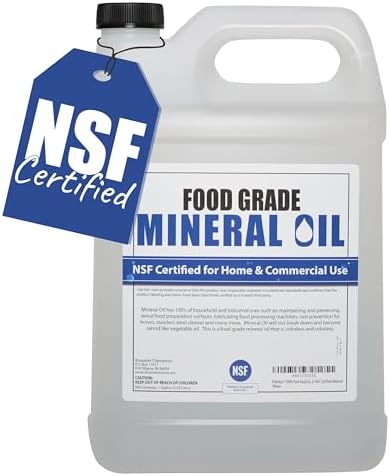
Sanco Industries offers a gallon of food-grade mineral oil for conditioning wooden bowls, utensils, cutting boards, and chopping blocks. Its colorless, odorless, and tasteless formula is designed for food-prep surfaces. The product is also described as NSF certified and made in the USA.
The main advantage is the large supply. It may suit a busy kitchen, a household with many wooden items, or someone who would rather buy one container for repeated use. The description also notes uses beyond wood care, including rust prevention for knives and care for stainless steel appliances.
The trade-off is the size: 128 ounces is far more than many households need for a single bowl, and it calls for more storage space than the smaller bottles here. As with other mineral oils, this is a conditioning oil rather than a curing finish, so it does not replace periodic maintenance.
Pros:
- Large 128-ounce supply for frequent or multiple uses
- Described as food safe, colorless, odorless, and tasteless
- Suitable for bowls, utensils, and other food-prep wood
- NSF certified, according to the product description
Cons:
- Bulk size may be inconvenient for occasional bowl care
- Needs reapplication because it is mineral oil, not a curing finish
Verdict: Pick Sanco Industries if you maintain many wooden kitchen items and have room to store a gallon; for one or two bowls, a smaller bottle is easier to manage.
Goddard’s: A Straightforward White Mineral Oil

Goddard’s Butcher Block Oil is made from 100% natural white mineral oil, according to its product description. It is intended for wooden kitchen items such as salad bowls, utensils, bamboo boards, and butcher-block counters. The formula is described as odorless and tasteless.
Application is simple: shake the bottle, pour a small amount onto the wood, and wipe with a clean, dry cloth or paper towel. The product is also described as made in the USA and certified Kosher by the Orthodox Union. That combination may appeal if you want a clearly identified mineral-oil product with those credentials.
At 8 ounces, it is closer in scale to Kate Naturals than to Sanco’s gallon container. The supplied description does not give a specific absorption time or maintenance schedule, so use the product label for those details. Like other mineral oils in this list, it conditions wood but does not cure into a durable sealed finish.
Pros:
- 100% natural white mineral oil, according to the description
- Listed for wooden salad bowls, utensils, and food-prep surfaces
- Odorless and tasteless formula
- Made in the USA and Kosher certified, as stated by the maker
Cons:
- No absorption time or regular maintenance interval is provided in the description
- Needs periodic reapplication like other mineral oils
Verdict: Goddard’s is a good fit if you want a small bottle of white mineral oil for bowls and other kitchen wood, with straightforward wipe-on application.
HOWARD: Mineral Oil Conditioner with Vitamin E

HOWARD’s butcher block conditioner is a food-grade mineral oil formula with vitamin E. The product description lists wooden bowls, utensils, cutting boards, and other unfinished wood among its uses. Its purpose is to help condition wood and reduce drying and cracking.
This option stands out from the plain mineral oils because the formula includes vitamin E. It is described as tasteless and odorless, which makes it suitable for kitchen items that come into contact with food. The available product information does not specify a bottle size or give detailed application steps, so check the label before use.
HOWARD may be a useful choice if you want one conditioner for several unfinished wood items, rather than a product aimed only at bowls. However, the supplied description does not establish that it cures into a hard finish. If you want a longer-lasting cured coating, the walnut oil below is the clearer match.
Pros:
- Food-grade mineral oil with vitamin E
- Listed for wooden bowls, utensils, and cutting boards
- Described as tasteless and odorless
- Designed to condition unfinished wood and help prevent drying
Cons:
- Product details provided do not specify the container size
- Not described as a curing finish
Verdict: Choose HOWARD if you want a mineral-oil conditioner with vitamin E for a range of unfinished kitchen wood, and confirm the package directions for your bowl.
Rowdy Rooster: Refined Walnut Oil for a Curing Finish

Rowdy Rooster’s refined walnut oil is a food-grade wood treatment intended for kitchen items and cutting boards. Unlike the mineral oils above, the product description says this oil cures, creating a more durable finish. It is also described as enhancing the natural color of the wood.
The 9-fluid-ounce bottle is intended for wood finishing and conditioning, so it may suit someone who wants a finish that lasts longer than a non-curing oil. The product is made in the USA, according to its description. It is not the best fit for everyone: the oil contains refined walnut, and the manufacturer advises people with nut allergies to consult a physician before use.
Compared with mineral oil, this is the more specialized choice. It may take more care to apply as a finish, and the product details provided do not give a curing time or step-by-step directions. Follow the package instructions, especially before putting a treated bowl back into food use.
Pros:
- Food-grade refined walnut oil for wooden kitchen items
- Cures to a more durable finish, according to the description
- Designed to enhance the wood’s natural color
- Made in the USA, as stated by the maker
Cons:
- Contains refined walnut oil; people with nut allergies should take note
- Curing time and detailed application directions are not included in the supplied description
Verdict: Consider Rowdy Rooster if you want a curing finish and have no concern about walnut oil, but choose mineral oil for the simplest routine bowl maintenance.
How to Choose Food-Safe Oil for Wooden Bowls
Choose a formula made for food-contact wood
Look for a product clearly described as food-grade or food safe and intended for kitchen wood. Mineral oil is a common choice for bowls and utensils because it is described as colorless, odorless, and tasteless in several options here. Do not assume that any oil you have at home is suitable; use a product labeled for food-contact surfaces.
Decide between a non-curing oil and a curing finish
Mineral oil conditions wood but does not cure into a hard finish, so you will need to reapply it as part of regular care. Refined walnut oil is described as curing to a more durable finish. That can appeal if you want a lasting coating, but it also makes application directions and curing instructions important. Follow the label for the product you choose.
Match the bottle size to how much wood you maintain
An 8- or 9-ounce bottle is more manageable if you are caring for a few bowls and utensils. A gallon can make sense if you regularly treat many kitchen items, but it takes more room to store and may be excessive for occasional use.
Check for ingredients that matter to you
Most options here are mineral-oil based. Rowdy Rooster uses refined walnut oil, and its description advises people with nut allergies to consult a physician before use. Check the product label for the complete ingredient information and consider your household’s needs before applying any oil to a shared serving bowl.
Consider the bowl’s existing finish and condition
Oil is best suited to unfinished or oil-finished wood that can absorb it. A sealed, painted, or lacquered bowl may not absorb oil as intended, so check the bowl maker’s care instructions before treating it. If the wood is cracked or has a damaged coating, oil is not a repair for structural damage.
Use a simple, careful application routine
Start with a clean, dry bowl and apply only the amount directed on the product label. Wipe away excess oil rather than leaving a wet or sticky surface. Allow any curing oil to finish curing as directed before using the bowl for food. Oil conditions wood; it does not replace washing the bowl after use.
Frequently Asked Questions
What is the best type of oil for wooden bowls?
For straightforward routine care, food-grade mineral oil is a practical option because it is described as odorless and tasteless and is listed for wooden bowls. If you want a curing finish, a food-grade refined walnut oil may be an alternative, subject to its label directions and allergy considerations.
Can I use ordinary cooking oil on a wooden bowl?
It is better to use an oil specifically labeled for food-contact wood. The mineral oil products here are described as not becoming rancid like vegetable oil. Check the label rather than assuming a cooking oil is suitable for maintaining a wooden bowl.
How often should I oil a wooden bowl?
It depends on the bowl, how often you use it, and the oil. Kate Naturals suggests monthly application in its product description. For other products, follow the package directions and reapply when the wood looks dry rather than relying on one schedule for every bowl.
How do I apply oil to a wooden bowl?
Wash and dry the bowl, then apply a small amount with a clean cloth if the product directions call for that method. Let the oil absorb for the stated time, then wipe off any excess. For a curing oil, follow the maker’s full directions before using the bowl for food.
Can I oil a sealed or lacquered wooden bowl?
Not unless the bowl maker says it is suitable. A sealed finish may prevent oil from soaking into the wood, and applying oil to the surface may leave residue. Check the bowl’s care instructions first.
Is mineral oil better than walnut oil for bowls?
Neither is best for every need. Mineral oil is a simple, non-curing conditioner that needs periodic reapplication. The walnut oil listed here is described as curing to a more durable finish, but it contains refined walnut oil and has an allergy warning.
Final Recommendation
For most people caring for wooden bowls at home, Kate Naturals is the most straightforward pick: it is a food-grade mineral oil in a manageable bottle, and its directions include a clear application method. Choose Sanco Industries if you need a bulk supply, Goddard’s for a small bottle of white mineral oil, HOWARD for a conditioner with vitamin E, or Rowdy Rooster if you specifically want a curing finish and have considered the walnut allergy warning.
