
The best garnish tools for chefs depend on the finish you want: precise citrus twists, carefully placed plate details, or decorative fruit and vegetable carvings. A focused tool can make prep more controlled, but a large kit is only useful if its pieces match the work you do. Below, we compare five options by their tool selection, materials, handling, care needs, and best use.
Table of Contents
Quick Comparison: Best Garnish Tools For Chefs
| Product | Best For | Standout Features | Care Note |
|---|---|---|---|
| BURLIHOME 12-Piece Carving Tool Set | Fruit and vegetable carving | Carving knives, melon ballers, corers, zester, and peeler | Described as dishwasher safe; dry after washing |
| Bonigour Professional Plating Tool Set | Detailed plate presentation | Precision tweezers, offset spatula, and plating spoons | Follow care guidance supplied with the set |
| A Bar Above Channel Knife | Citrus ribbons and twists | Stainless steel blade and slip-resistant handle | Described as dishwasher safe |
| Viski Channel Knife | Bar and kitchen citrus garnishes | Curved stainless steel blade and walnut handle | Hand care is a sensible choice for the wood handle |
| Mercer Culinary 8-Piece Garnishing Kit | Classic all-around garnishing tasks | Peeling knife, zester, melon ballers, corer, and storage roll | Hand-wash and dry; listed as unavailable in the supplied product information |
Our Picks: Best Garnish Tools For Chefs reviews
BURLIHOME 12-Piece Set: Best for Fruit and Vegetable Carving

This set is aimed at cooks who want to shape produce, rather than simply add a sprig or citrus peel to a plate. Its listed tools include six detailed carving knives, melon ballers, an apple corer, a V-shaped knife, a lemon zester, and a peeler. That mix gives you options for scooping, peeling, coring, and making decorative cuts.
The tools are described as solid 304 stainless steel, with polished handles and silicone grips. The added grip may help with control during slower, detailed work, while the range of blade shapes gives you more room to experiment with apples, carrots, cucumbers, and melons. The set is also described as dishwasher safe, though drying the tools after washing is a practical way to keep them ready for storage.
The main tradeoff is that this is a specialized collection. If your garnish work mostly involves placing herbs or making simple citrus twists, many of the carving pieces may see little use. Compared with the Bonigour set, it is more focused on shaping produce than arranging delicate items on a finished plate.
Pros:
- Broad range of tools for carving, scooping, peeling, and coring
- Stainless steel construction with silicone-grip handles
- Suited to decorative fruit and vegetable work
- Described as dishwasher safe
Cons:
- May be more than you need for basic garnish tasks
- Several specialized tools require practice to use well
Verdict: Choose the BURLIHOME set if you want a varied starting kit for carved produce and decorative food displays.
Bonigour Plating Set: Best for Precise Plate Presentation

The Bonigour kit is built around placement and finishing, not carving. It includes several fish-bone and precision tweezers, an offset spatula, a petite saucier spoon, and a slotted bowl, along with a kitchen towel and storage bag. That selection can help when you need to position small ingredients, spread or adjust a component, or add sauce with more control.
The tools are described as 18-8 stainless steel with a titanium-plated finish. The tweezer tips have micro-serrations intended to help grip delicate or slippery foods. This focus on fine handling makes the kit a stronger fit for composed plates than a basic peeler-and-zester set. Its multiple tweezer shapes also give you a choice of angles for different tasks.
This is a more specialized choice, and the set does not include the carving knives, melon ballers, or corer found in broader garnish kits. Its range may be most useful to cooks who regularly plate small components and less useful for someone who mainly prepares citrus or carved vegetables. The product description lists the included pieces, so check the listing to confirm the configuration before ordering.
Pros:
- Several tweezer shapes for different placement angles
- Includes an offset spatula and two plating spoons
- Micro-serrated tips are designed to grip delicate items
- Comes with a storage bag and kitchen towel
Cons:
- Does not cover common carving tasks such as coring or melon balling
- May be excessive for simple home plating
Verdict: Pick the Bonigour set if fine placement and controlled finishing matter more to you than general-purpose garnish prep.
A Bar Above Channel Knife: Best for Fast Citrus Twists

A channel knife is a focused tool for cutting narrow strips of citrus peel. A Bar Above’s version has a stainless steel blade and an angled cutting design intended to make ribbons and twists. It can suit cocktail service, but citrus peel can also add aroma and a clean finishing detail to desserts, seafood, and other dishes.
The product description highlights a slip-resistant handle for control and says the tool is dishwasher safe. That combination is useful for repeated prep, though a channel knife still has a learning curve: pressure and peel thickness affect the result. This model is a practical choice when you want a dedicated citrus tool without buying a larger carving or plating kit.
Its narrow purpose is also its main limitation. It will not replace a zester for fine zest or tweezers for arranging ingredients. Compared with the walnut-handled Viski, this option emphasizes a grip designed for repeated use and a work-focused look rather than a wood-handled bar-tool style.
Pros:
- Designed to cut citrus peels into ribbons and twists
- Stainless steel blade with an angled design
- Slip-resistant handle is intended to support control
- Useful for cocktails as well as food presentation
Cons:
- Limited to channel-cutting and similar citrus work
- Does not include other garnish tools
Verdict: Choose A Bar Above if citrus twists are a regular part of your drink or plate presentation and you want a single-purpose tool.
Viski Channel Knife: Best for a Bar Cart or Citrus Prep

Viski’s channel knife pairs a curved stainless steel blade with a walnut wood handle. It is designed to cut citrus peel into decorative ribbons for cocktails, but the same style of peel can also finish desserts, salads, and seafood. Its compact format is easy to store with bar tools or in a kitchen drawer.
The wood handle and double rivets give this tool a different feel and look from the molded or slip-resistant handles on some alternatives. The product description presents it as both a garnish tool and a citrus-prep gadget. Since it has a wood handle, gentle hand-washing and prompt drying are sensible care choices, even though the description does not specify a cleaning method.
This is a straightforward pick for citrus ribbons, not a complete garnishing kit. It does not provide the broader prep options of the BURLIHOME or Mercer sets, and it is less suited to repeated high-volume work if you need a more explicitly slip-resistant handle. Consider it when style and a simple citrus function matter more than versatility.
Pros:
- Curved stainless steel blade for citrus ribbons
- Walnut handle offers a distinctive bar-tool look
- Useful for drinks and several kitchen applications
- Compact for a home bar or kitchen drawer
Cons:
- Only handles a narrow range of garnish tasks
- Wood handle calls for careful cleaning and drying
Verdict: Choose the Viski channel knife if you want a compact citrus tool with a wood handle for a home bar or kitchen.
Mercer Culinary 8-Piece Kit: Best for Classic Garnish Prep
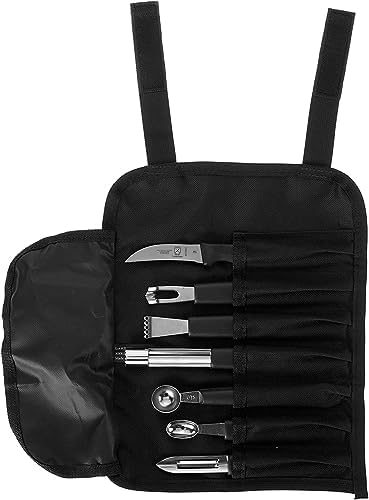
The Mercer kit brings together several familiar garnish tools: a peeling knife, citrus zester, vegetable peeler, channel knife, oval and double melon ballers, and an apple corer. It also includes a storage roll. For cooks who want a mix of citrus prep, produce shaping, and basic carving tools, this selection covers more tasks than either single channel knife.
The tools are described as having professional-grade stainless steel blades and molded polypropylene handles designed to resist slipping, including when hands are wet. Mercer recommends hand-washing with mild soap, rinsing, and drying thoroughly. That care routine takes more effort than a dishwasher-safe set, but it gives you a clear method for looking after the tools.
The supplied product information lists this kit as unavailable, so check the current listing before planning to buy it. If it is not offered, the BURLIHOME set is the closest broad alternative in this group, while the two channel knives are more focused picks. Mercer’s kit is not the choice for precise plate placement, since it does not list tweezers or a plating spatula.
Pros:
- Includes tools for citrus, peeling, coring, and melon shaping
- Storage roll helps keep the tools together
- Molded handles are described as slip resistant
- Hand-washing instructions are clearly provided
Cons:
- Listed as unavailable in the supplied product information
- Requires hand-washing rather than dishwasher cleaning
Verdict: Consider the Mercer kit if it is available and you want a traditional assortment of garnish tools with a storage roll.
How to Choose Garnish Tools for Chefs
Start with the kind of garnish you make most
Match the tool to the work you do often. For citrus ribbons, a channel knife is the direct choice. For carved produce, look for carving knives, a peeler, corer, and melon baller. For arranging small ingredients or refining a composed plate, precision tweezers and an offset spatula are more useful than a broad carving set.
Choose a focused tool or a multi-piece kit
A single-purpose tool takes up little space and can be easier to learn, but it will not cover other prep jobs. A multi-piece kit gives you more options, though some pieces may rarely leave the drawer. If you are building a station from scratch, make a short list of the garnishes you serve before choosing a large set.
Consider grip and control
Detailed cuts and careful placement call for steady handling. Look at the handle material, shape, and any stated grip features. A slip-resistant handle can be useful when your hands are damp, while a fine tweezer tip can help hold small or delicate foods. For carving, a comfortable grip matters more when the work takes time.
Check materials and cleaning instructions
Stainless steel is common across these tools, but handles and finishes differ. Some products are described as dishwasher safe, while Mercer recommends hand-washing and thorough drying. A wood handle, such as the one on the Viski, is best treated gently. Follow the care instructions for the specific tool so it stays clean and ready to use.
Think about storage and kitchen workflow
Small garnish tools can be easy to misplace, especially when a set includes several similar pieces. A storage roll or bag can help keep them together. Also consider where you will use them: a bar station may need a channel knife close at hand, while a plating station may benefit more from keeping tweezers and a spatula within reach.
Balance precision with practice
Specialty tools can make a task possible, but they do not remove the need for technique. Channel knives work best with steady pressure, and carving tools take practice to produce consistent shapes. If you are new to garnishing, choose a tool that serves an immediate need and add more specialized pieces as your skills and menu develop.
Frequently Asked Questions
What garnish tools should a chef start with?
Start with tools that fit your menu. A peeler and zester cover common citrus and produce prep, while a channel knife is useful for decorative citrus ribbons. If you plate delicate components, precision tweezers may be a better first addition.
What is the difference between a zester and a channel knife?
A zester is generally used to remove fine strips or small pieces of citrus peel. A channel knife cuts a longer, narrow strip of peel that can be shaped into a ribbon or twist. The tools serve different purposes, so one does not fully replace the other.
Which option is best for detailed plate presentation?
The Bonigour set is the most focused on plate placement, with several tweezer styles, an offset spatula, and plating spoons. It is less suited to carving produce or making melon balls.
Which set is better for fruit and vegetable carving?
The BURLIHOME set is designed for that work and lists multiple carving knives along with a V-shaped knife, peeler, corer, and melon ballers. Mercer’s kit also includes several produce tools, but the supplied product information lists it as unavailable.
Can a channel knife be used for food as well as cocktails?
Yes. The A Bar Above and Viski descriptions both present their channel knives for citrus garnish in drinks and for food uses such as desserts, seafood, or other dishes. Their main function is still cutting narrow strips of citrus peel.
Are garnish tools dishwasher safe?
Care instructions vary. The BURLIHOME and A Bar Above descriptions say their tools are dishwasher safe, while Mercer recommends hand-washing and thorough drying. For tools with wood handles, gentle hand-washing is a sensible approach.
Final Recommendation
For a broad set of fruit and vegetable carving tools, the BURLIHOME kit is the most versatile match in this group. Choose Bonigour if you focus on precise plate arrangement, or select A Bar Above or Viski if citrus twists are your main need. The Mercer kit offers a useful mix of classic tools, but check its listing because the supplied product information shows it as unavailable.
