Choosing a heat gun for electronics and shrink tubing is about control, not simply maximum heat. A compact tool with a focused airflow can make small wire and craft jobs easier to manage, while a high-powered model offers more range but can overheat nearby parts if you use it too close. Our picks include four heat guns and one heat-shrink tubing kit that can pair with them.
| Product | Type | Standout feature | Best for |
|---|---|---|---|
| SEEKONE 350W Mini Heat Gun | Mini heat gun | Two temperature settings | Small jobs that benefit from a choice of heat levels |
| Ginsco 580-Piece Heat Shrink Tubing Kit | Tubing kit | Assorted sizes and colors | Wire organization and insulation projects |
| QWORK 300W Mini Heat Gun | Mini heat gun | Compact design with a stand | Light-duty detail work and crafts |
| haisstronica Dual Temperature Mini Heat Gun | Mini heat gun | Two heat settings and reflector nozzle | Controlled heat-shrink work at a bench |
| SEEKONE 1800W Variable-Temperature Heat Gun | Full-size heat gun | Variable temperature and four nozzles | Projects that need a wide temperature range |
Table of Contents
Our Picks: Best Heat Guns For Electronics And Shrink Tubing reviews
SEEKONE 350W Mini Heat Gun: Two Settings for Small, Precise Jobs

This 350-watt mini heat gun offers two settings: 500°F and 842°F. Its compact shape and focused airflow suit small tasks where a large heat gun may feel awkward. The included nozzle helps direct hot air, and the retractable stand offers a way to set the tool down for hands-free work.
For shrink tubing, the lower setting gives you a less aggressive starting point than the higher one. Work gradually and keep the airflow moving, especially near wires, connectors, and heat-sensitive components. The tool also has built-in overheat protection and a nozzle safety shield, but those features do not remove the need to handle it carefully.
Its two settings are useful, but it does not offer the fine temperature adjustment of the full-size SEEKONE model below. It is a better fit for small repairs, 3D-print finishing, and shrink tubing than for jobs that need precise, continuously adjustable heat.
Pros:
- Two temperature settings for different tasks
- Compact, lightweight design for detail work
- Includes a nozzle and retractable stand
- Built-in overheat protection
Cons:
- Only two heat settings, rather than variable temperature control
- The higher setting can be too intense for delicate nearby materials
Verdict: Choose this mini heat gun if you want a compact tool with two useful heat levels for small projects, but use extra care around sensitive electronics.
Ginsco Heat Shrink Tubing Kit: A Handy Assortment for Wire Work
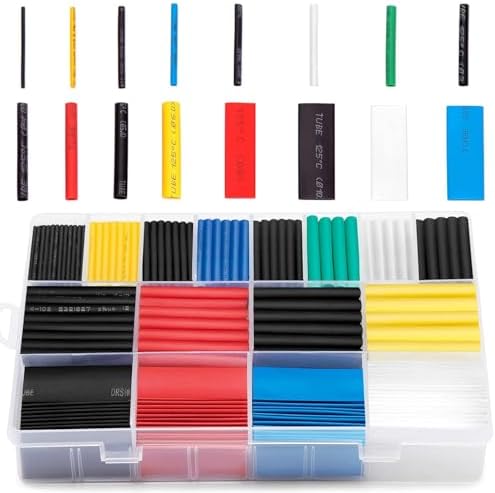
This is a tubing kit, not a heat gun. It includes 580 pieces of 2:1 heat-shrink tubing in 11 sizes and six colors, arranged in a divided plastic organizer. The tubing shrinks to about half its original diameter, making the assortment useful for cable repairs, insulation, and color-coding wires.
Pick a tube that fits over the connection before it shrinks, then position it over the joint and apply heat evenly. The product instructions suggest keeping the nozzle about two inches away and heating at an angle. A heat gun with a controllable, focused airflow can make the job easier; the tubing itself does not include one.
The many sizes and colors are helpful if you handle different wire diameters or want a tidy way to sort connections. Since this is an assortment rather than a single-size roll, you may have unused pieces in sizes that do not match your projects.
Pros:
- 580 pieces in 11 sizes and six colors
- 2:1 shrink ratio for a range of cable sizes
- Comes in a divided organizer
- Useful for insulation, wire organization, and color-coding
Cons:
- Does not include a heat gun
- An assortment may leave you with sizes you do not need
Verdict: Pick this kit if you need a broad selection of tubing for wire projects; pair it with a heat gun that gives you enough control for the size and location of the connection.
QWORK 300W Mini Heat Gun: A Lightweight Choice for Detail Work

The QWORK is a 300-watt, pencil-style mini heat gun that reaches 390°F (200°C). Its compact grip is intended for controlled work on crafts, resin, paint drying, and shrink tubing. A retractable stainless steel stand helps keep the hot tool stable when you need to set it down.
Its modest listed temperature may be a useful match for light-duty tasks, but the supplied details do not list multiple settings or adjustable temperature control. In everyday use, some owners describe a short warm-up period before the tool reaches a point where tubing shrinks effectively. Moving the nozzle closer or holding it in one spot for too long can overheat tubing, so start at a safe distance and adjust gradually.
The manufacturer advises using it for no more than 10 minutes at a time and keeping it 3–5 cm from the target surface. That makes it less suited to extended work sessions. Compared with the two-setting mini guns, it has a lower listed heat output and fewer stated controls.
Pros:
- Lightweight, compact design for close control
- Reaches a listed temperature of 390°F (200°C)
- Includes a retractable stand for tabletop use
- Suitable for shrink tubing and a range of craft tasks
Cons:
- No adjustable temperature settings are listed
- Recommended for use in sessions of up to 10 minutes
Verdict: The QWORK is a sensible option for occasional, light-duty shrink-tubing and craft work if you value a small grip and stand more than adjustable heat.
haisstronica Dual-Temperature Mini Heat Gun: Focused Heat with a Reflector Nozzle

This 350-watt corded mini heat gun has two settings: 482°F and 752°F. It comes with a reflector nozzle designed to direct heat around shrink tubing and wire connections, which can be useful when you want to warm tubing more evenly around a joint.
A metal stand supports hands-free use at a workbench, and the 5.9-foot cord provides room to position the tool near your work area. The manufacturer lists overload protection to help guard against overheating during normal use. The lower temperature is the more cautious starting point for small tasks, but neither setting makes the tool automatically safe for nearby sensitive electronics.
Some users report that the tool heats quickly and works well on heat-shrink splices. One noted that the small metal shield can loosen during use, so check the accessory and work on a surface that can tolerate heat. Unlike the SEEKONE mini gun, this model has a lower maximum temperature but a reflector nozzle and a stated cord length.
Pros:
- Two heat settings for different materials and tasks
- Reflector nozzle is designed for shrink-tubing work
- Includes a metal stand for bench use
- Overload protection is listed
Cons:
- Two fixed settings offer less adjustment than a variable-temperature tool
- The included metal shield may need attention during use
Verdict: Consider this model for bench-based shrink-tubing work if a reflector nozzle and two heat levels suit your needs, while keeping the hot accessory clear of surfaces that could be damaged.
SEEKONE 1800W Variable-Temperature Heat Gun: The Most Adjustable Pick

This full-size, 1800-watt heat gun has variable temperature control from 122°F to 1202°F, plus two airflow modes. It includes four nozzles: a deflector, two concentrators, and a reflector. That combination makes it the most adaptable pick here for users who work on a mix of shrink tubing, crafts, and other heating tasks.
Variable control offers more flexibility than the fixed settings on the mini models, but the gun’s high maximum temperature and strong output call for a careful touch. For small wire connections or nearby electronics, use the lowest practical setting, keep the airflow moving, and shield parts that should not be heated. The nozzle options can help direct or spread heat, but they do not prevent accidental damage.
Owners commonly value the ability to adjust temperature and change nozzles for different jobs. The trade-off is size and power: at nearly two pounds, it is heavier than the mini tools, and its output is more than many small heat-shrink tasks require. Choose it for versatility, not simply because its maximum temperature is higher.
Pros:
- Variable temperature control across a wide listed range
- Two airflow modes
- Includes four nozzle attachments for different heat patterns
- Useful for shrink tubing and a range of other heating projects
Cons:
- Heavier and more powerful than the mini heat guns
- High heat output can damage nearby components or materials if misused
Verdict: Choose the SEEKONE 1800W if you need broad temperature control and multiple nozzles for varied projects; for occasional small electronics work, a mini tool may be easier to manage.
How to Choose a Heat Gun for Electronics and Shrink Tubing
Choose heat control that matches the task
For small tubing and delicate work, a lower setting or variable temperature control can help you apply heat gradually. Fixed two-setting tools are straightforward, but give you fewer choices. A high maximum temperature is not automatically an advantage when you are working near plastic connectors, insulation, or other heat-sensitive parts.
Consider the size of your work area
A compact mini heat gun is easier to hold near small wire joints and in tight spaces. A full-size model can handle a broader range of heating tasks, but may feel less convenient for fine work. Think about how much clearance you have around the wire and whether you can keep the tool moving without heating nearby parts.
Look at nozzle options and airflow
A focused nozzle can direct heat toward a small area, while a reflector nozzle is designed to help distribute heat around tubing. Some heat guns include multiple nozzle types; others come with a single nozzle or no stated attachments. Choose a setup that fits the shape of your work, and remember that a nozzle guides heat rather than eliminating the risk of damage.
Match the tubing to the wire and connection
Check the tubing diameter before shrinking it. It needs to fit over the connection before heating and then shrink snugly around the joint. An assorted kit offers several sizes and colors, while a single-size product may be a better fit if you already know what your project requires. The Ginsco kit listed here has a 2:1 shrink ratio.
Plan for safe handling
Heat guns and their nozzles can become hot during use. Keep the air outlet clear, set the tool on a stable surface or its stand, and work in a ventilated area away from flammable materials. Keep heat moving and avoid directing hot air at electronics or wiring that should not be warmed. Follow the tool’s instructions, including any limits on continuous use.
Decide whether you need a mini or full-size tool
A mini heat gun can be a practical fit for short sessions and close-up work. A full-size model with variable heat and several nozzles makes more sense if you also plan to handle tasks that need a wider range of heat and airflow. If shrink tubing is your main use, prioritize control and ease of positioning over raw wattage.
FAQs
Can you use a heat gun on electronics?
It can be used for tasks such as shrinking tubing on wires, but hot air can also damage nearby components, insulation, or plastic. Use the lowest practical heat, keep the nozzle moving, and shield parts that should not be heated. For sensitive electronics, follow the equipment maker’s repair guidance.
What temperature should I use for heat-shrink tubing?
The right setting depends on the tubing and the heat gun. Start at a lower setting when available, warm the tubing evenly, and increase heat only as needed. Avoid holding the nozzle in one place, since excessive heat can damage tubing or nearby materials.
Is a mini heat gun better for small wire repairs?
A mini tool can be easier to position around small connections and in tight spaces. It is not automatically safer, though. Choose a model with heat control that suits your task, maintain a safe distance, and protect nearby parts from hot air.
Do I need a reflector nozzle for shrink tubing?
No. A reflector nozzle is designed to direct heat around tubing and can be useful for wire connections, but it is not required. A suitable heat gun with a controlled airflow can also shrink tubing when used carefully.
What does a 2:1 shrink ratio mean?
A 2:1 ratio means the tubing can shrink to about half of its original diameter when heated. The Ginsco kit listed here uses this ratio. Check the size of the connection and tubing before starting to make sure the tubing can fit over the joint.
Can a hair dryer shrink heat-shrink tubing?
A hair dryer is not listed as a substitute for these tools, and the heat it produces may not be suitable for every type of tubing. Use a heat gun intended for the task and follow the tubing instructions for best results.
Final Recommendation
For most small shrink-tubing jobs, the SEEKONE 350W Mini Heat Gun is a balanced choice because it offers two heat settings in a compact design. The haisstronica is worth considering if you want a reflector nozzle for bench work, while the QWORK suits occasional light-duty projects. Choose the variable-temperature SEEKONE 1800W for a broader range of heating tasks, and add the Ginsco kit if you need assorted tubing sizes and colors. Whichever tool you choose, use controlled heat and take care around sensitive electronics.