
Paint for a high-traffic area needs to do more than look bright: it should suit the surface, application method, and time you can keep the area closed. These traffic and striping paints are made for jobs such as parking lots, warehouse floors, driveways, and safety zones—not ordinary interior walls. Our picks include brush-and-roller paint, bulk coating, and spray cans, with different trade-offs in coverage, drying time, and application conditions.
Table of Contents
Quick Comparison
| Product | Type | Standout detail | Best for |
|---|---|---|---|
| INSL-X Acrylic Latex Traffic Paint | Water-based acrylic latex | Brush, roller, or line-marker application | Flexible line-marking jobs |
| Gorilla High-Performance Traffic & Zone Marking Paint | Water-based acrylic latex | Five-gallon size; heavy-traffic formula | Larger marking projects |
| Fox Valley Super Supreme Traffic Striping Paint | Solvent-based aerosol | 12-pack with a fast-drying formula | Smaller jobs and touch-ups |
| DIB Latex Traffic and Zone Marking Paint | Latex traffic paint | Made in the United States | Shoppers comparing latex options |
| Aervoe 720 Traffic Striping Paint | Solvent-based aerosol | Dries to the touch in five minutes | Quick line marking |
Our Picks: Best High Traffic Area Paint reviews
1. INSL-X Acrylic Latex Traffic Paint: A Flexible Choice for Line Marking

INSL-X is a white, acrylic latex traffic paint for interior or exterior line marking. You can apply it with a brush, roller, or hand or automatic line marker, making it a versatile option when a spray can is not the right fit. The product is intended for traffic lanes, parking lots, warehouses, and highways.
The listed coverage for a four-inch line is 680 to 960 feet per gallon. It dries to the touch in about 30 minutes, though that does not mean the marked area is ready for vehicle traffic at that point. Apply it only when the air or surface temperature is above 50°F, and check the product label for surface preparation and application instructions.
This is a practical pick if you want one gallon for a line-marking project and need more than one way to apply the paint. Its main limitation is that the available details do not specify a vehicle-ready time. Plan your work area accordingly, and do not treat touch-dry time as permission to reopen a lane.
Pros:
- Can be applied by brush, roller, or line marker
- Suitable for interior and exterior line marking
- Listed coverage of 680 to 960 feet for a four-inch line per gallon
- Traffic beads can be added while the coating is wet for reflective marking
Cons:
- Requires air or surface temperatures above 50°F
- Touch-dry time does not state when vehicle traffic can resume
Verdict: Choose INSL-X if you want a flexible, brush- or marker-applied latex paint and can follow its temperature and curing instructions.
2. Gorilla High-Performance Traffic Paint: A Bulk Option for Busy Areas
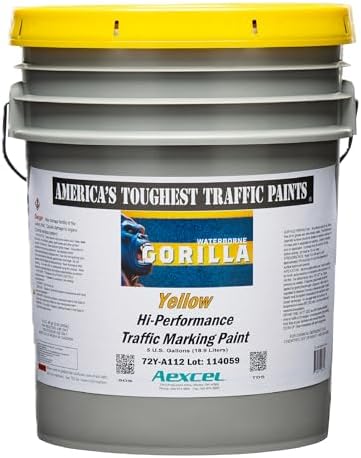
This yellow, water-based acrylic latex paint comes in a five-gallon container and is formulated for traffic and zone marking. Its description positions it for heavy-traffic areas where conventional waterborne striping paints may not hold up as well. Cleanup is with mild detergent and water, and the paint is described as non-flammable.
The listed application rate is one gallon for about 320 linear feet of a four-inch line at a 15-mil wet film thickness. At 77°F, the stated maximum dry time without pickup is 20 minutes, but the minimum wait for vehicle use is two hours. These are different milestones, so follow the longer wait when reopening an area to vehicles.
Application conditions matter: the surface should be above 60°F, relative humidity should be below 80%, and no precipitation should be forecast for 24 hours after application. That makes this a better fit for a planned, larger project than for a quick repair in uncertain weather. The product description also lists low VOC content and says it does not contain lead, chromium, or cadmium.
Pros:
- Five-gallon size suits larger marking jobs
- Formulated for heavy-traffic areas
- Water-based cleanup with mild detergent and water
- Provides a separate stated wait time for vehicle use
Cons:
- Requires a surface temperature above 60°F and controlled humidity
- Needs at least two hours before vehicle use, with no precipitation forecast for 24 hours
Verdict: For a sizable project in suitable weather, this is the most clearly specified bulk option, but its five-gallon format and application conditions may not suit small or urgent jobs.
3. Fox Valley Super Supreme: A 12-Pack for Spray-On Striping

Fox Valley’s green traffic striping paint comes in a pack of twelve 18-ounce aerosol cans. It is a solvent-based marking paint intended for parking lots, sidewalks, driveways, warehouse floors, factory floors, pavement, and concrete. The spray-can format can be convenient for marking shorter sections or keeping supplies on hand for repeated jobs.
The product description says the formula dries in under 10 minutes and is designed to resist weather and heavy traffic. It also describes adhesion to various surfaces, but does not give a specific coverage distance per can. For a project that needs a precise line length, you may want to confirm expected coverage before buying.
Compared with gallon products, aerosol cans trade broad application flexibility for a ready-to-spray format. They may be easier to manage for spot marking, but a 12-can pack is still a substantial quantity, and solvent-based paint calls for careful handling. Follow the label for surface preparation, ventilation, and use.
Pros:
- Pack of twelve cans is useful for recurring marking work
- Fast-drying formula is listed as drying in under 10 minutes
- Made for several pavement and industrial marking applications
- Available in green for color-coded markings
Cons:
- Specific coverage per can is not provided
- Solvent-based formula may not be the right choice for every job or application setting
Verdict: Pick Fox Valley when you want a multi-can spray format for repeated or smaller marking jobs and can work within the limits of the listed coverage information.
4. DIB Latex Traffic Paint: A Basic Option with Few Published Details

DIB’s product is identified as latex traffic and zone-marking paint, with the listing noting that it is made in the United States. That puts it in the same broad category as the other water-based latex options in this guide, but the supplied product details do not specify the color, container size, application method, coverage, or drying time.
That lack of detail makes it harder to match the paint to a particular job. Before choosing it, check the current product information for surface compatibility, application instructions, temperature limits, and how long the area must stay closed. Those details are especially important for busy parking lots or warehouse lanes.
Unlike the more fully described picks here, DIB cannot be compared confidently on coverage or reopening time. It may be worth considering if its current listing provides the specifications you need, but shoppers who want a clearly stated application plan have better-documented choices in INSL-X or Gorilla.
Pros:
- Identified as latex traffic and zone-marking paint
- Made in the United States, according to the listing
- Could suit shoppers specifically seeking a latex marking product
Cons:
- Available product details do not state coverage or drying time
- Application method, color, and surface guidance are not provided in the supplied information
Verdict: Consider DIB only after confirming the missing specifications for your project; otherwise, choose a paint with clearer coverage and application guidance.
5. Aervoe 720 Traffic Striping Paint: A Fast-Drying Yellow Aerosol

Aervoe 720 is a traffic-yellow, solvent-based aerosol paint for striping. Its precision spray tip is designed to produce lines from two to four inches wide, which can help when you need consistent markings without setting up a brush or roller. The paint is listed for asphalt, concrete, masonry, and factory floors, but not turf.
The description states that it dries to the touch in five minutes and is designed to resist heavy vehicle traffic, oil drips, and gasoline spills. Touch-dry time is not the same as a full cure or permission to reopen an area, so follow the product label before allowing traffic back onto the marked surface.
This is the quickest-drying option in the group by its stated touch-dry time, and it is convenient for line work where the specified width fits the job. The trade-off is that an aerosol can may be less practical than a gallon for extensive striping. The listing also says the paint is lead-free and VOC compliant.
Pros:
- Dries to the touch in a stated five minutes
- Spray tip is designed for two- to four-inch lines
- Listed for asphalt, concrete, masonry, and factory floors
- Designed to resist traffic, oil drips, and gasoline spills
Cons:
- Not recommended for turf
- Aerosol format may be less practical for large areas than bulk paint
Verdict: Aervoe is a strong choice for quick, narrow-to-medium yellow line marking when aerosol application suits the job and you can follow the label’s reopening guidance.
How to Choose High-Traffic Area Paint
Match the paint to the surface and job
Start by identifying what you are marking: asphalt, concrete, masonry, a factory floor, or another surface. Product descriptions do not always cover every substrate, so check the label before applying paint. Also confirm whether you need a traffic line, a zone marking, a safety stripe, or a reflective marking. For example, INSL-X allows traffic beads to be dropped into the wet coating for reflective marking.
Choose the application format that fits the area
Brushes, rollers, and line markers give you options for applying gallon paint, while aerosols offer a ready-to-spray approach. A larger container can make sense for a broad project, while cans may be easier to use for touch-ups or shorter lines. Think about how much area you need to cover and whether you need precise line widths before choosing a format.
Compare coverage, not just container size
Look for coverage information stated in a useful form, such as line length at a specified width. INSL-X lists coverage for a four-inch line, and Gorilla provides a listed rate for the same line width at a stated wet film thickness. The Fox Valley and DIB details provided here do not give comparable coverage figures, so check the product listing or label if estimating materials is important.
Plan around drying and reopening time
Dry-to-touch time does not always tell you when vehicles can use the area. Gorilla lists a 20-minute maximum dry time without pickup at a specified temperature, but calls for at least two hours before vehicle use. For other products, the available information may not state a vehicle-ready time. Keep the area closed until the label says it is safe to reopen.
Check temperature, humidity, and weather rules
Application conditions can affect whether a project is practical on a given day. INSL-X calls for air or surface temperatures above 50°F. Gorilla requires a surface above 60°F, relative humidity below 80%, and no precipitation forecast for 24 hours. Check each paint’s label for its own limits rather than assuming one product’s conditions apply to another.
Consider cleanup and handling
Water-based products such as the acrylic latex options list water-based cleanup, while solvent-based aerosol paints have different handling needs. Read the label for directions on application, ventilation, storage, and cleanup. Choose the formula that fits both your work setting and the way you plan to apply it.
Frequently Asked Questions
Is traffic paint the same as ordinary wall paint?
No. The products in this guide are intended for line marking or traffic and zone marking on surfaces such as pavement and industrial floors. They are not presented as ordinary interior wall paints.
Which paint is best for a large parking lot?
Gorilla’s five-gallon size and listed line coverage make it a candidate for larger jobs. INSL-X also provides a stated coverage range for a four-inch line. Compare the required amount, application equipment, and reopening time before choosing.
Can I drive over paint as soon as it is dry to the touch?
Not necessarily. A touch-dry surface may not be ready for vehicle traffic. Gorilla, for example, lists a minimum two-hour wait for vehicle use even though its maximum no-pickup dry time is shorter under specified conditions. Follow the product label.
Which option dries fastest?
Aervoe lists a five-minute dry-to-touch time, while Fox Valley says its formula dries in under 10 minutes. These times do not necessarily mean the area is ready for vehicles, so check the relevant label for reopening instructions.
Can traffic paint be applied with a roller?
INSL-X is specifically described as suitable for brush, roller, hand line-marker, or automatic line-marker application. For other products, confirm the recommended application method on the label.
Can I use traffic striping paint on grass?
Do not assume that a pavement-marking product is suitable for turf. Aervoe is specifically listed as not recommended for turf. Check the label for any paint you plan to use on grass.
What should I do if a product does not list coverage or drying time?
Check the current product listing and label for those details before starting. Coverage and reopening guidance help you estimate materials and keep people and vehicles away until the marking is ready.
Final Recommendation
For a versatile latex paint with clearly stated four-inch line coverage and several application methods, INSL-X is a solid all-around option. For a larger project, Gorilla offers a five-gallon format and specific vehicle-use guidance, but it requires careful attention to weather conditions. If speed and aerosol convenience matter most, consider Aervoe for compatible surfaces and line widths. Whichever you choose, confirm surface compatibility and follow the label’s application and reopening instructions.
