
Choosing the best hot water heater for well water starts with more than heater size. Well water can contain sediment, iron, or minerals that lead to buildup, so a heater should match your hot-water needs and your water quality. None of the models below is described as having built-in well-water treatment; testing your water and choosing suitable pretreatment may help protect the heater and plumbing. These picks range from a larger storage tank to compact under-sink units and a gas model, so the right choice depends on where you need hot water and how much you use.
Table of Contents
Quick Comparison
| Product | Type | Notable feature | Best suited for |
|---|---|---|---|
| VEVOR 18-Gallon Electric Water Heater | Storage tank | 18-gallon capacity and adjustable temperature | Hot-water needs at a kitchen or other point of use |
| xwdzswgs 3,000W Under-Sink Tankless Heater | Electric tankless | Compact 110V design with LED display | A single sink with modest hot-water demand |
| xwdzswgs 3,000W Digital Tankless Heater | Electric tankless | Digital display and listed flow-based temperature rise | Point-of-use installation where space is limited |
| VEVOR 100,000 BTU Gas Water Heater | Gas instant heater | Smart temperature control and multiple listed protections | Homes that can support a compatible gas and vent setup |
| UTank 3.5-Gallon Under-Sink Heater | Plug-in storage tank | Stainless-steel tank and LED temperature display | One sink that needs a small reserve of hot water |
Our Picks: Best Hot Water Heater For Well Water reviews
1. VEVOR 18-Gallon Electric Water Heater: Best Larger Point-of-Use Tank

This VEVOR is a storage-style electric heater with a stated 18-gallon capacity and a 1,600-watt immersion element. It is a different kind of solution from the small under-sink units in this guide: the tank holds a larger reserve, which may suit a busy kitchen or another location with repeated hot-water use.
The product details list an enamel-coated inner tank, a corrosion-resistant tank design, foam insulation, an LED heating display, and a rotary temperature control. The control range is listed as 86°F to 167°F. A higher maximum setting is not a reason to use water at that temperature at the tap; set the heater with scald prevention in mind and follow the installation and safety instructions.
For a home on a well, the tank’s capacity does not address water quality. If your water has sediment, iron, or scale-forming minerals, consider a water test and treatment selected for those specific issues. This model may be worth considering when you want stored hot water near a point of use, but its size and electrical requirements should fit your installation plan.
Pros:
- Stated 18-gallon storage capacity
- Adjustable temperature control and LED display
- Insulation is designed to help retain heat
- More stored water than the compact under-sink options here
Cons:
- Requires room for a larger tank than a compact point-of-use unit
- Does not include well-water filtration or softening
Verdict: Choose this VEVOR if you need a larger stored supply near a kitchen or similar point of use and have suitable space and electrical service.
2. xwdzswgs 3,000W Under-Sink Tankless Heater: Best for a Small Sink

This compact, 110-volt electric tankless unit is intended for point-of-use hot water, such as at a sink. Its description lists 3,000 watts of power, an LED display, and a stated temperature rise of 82°F at 0.3 gallons per minute or 131°F at 0.5 gallons per minute. Those figures are tied to low flow rates, so this is not a whole-house replacement.
The manufacturer also states that it is not suitable for showers, which commonly need at least 1.8 gallons per minute. That makes the intended use especially important: it may help deliver hot water at a nearby sink, but it should not be chosen for simultaneous household demand. The compact wall-mounted design can be useful where a tank would take up too much room.
Well-water conditions still matter in a tankless heater. Sediment can affect water flow, while mineral buildup can require maintenance. The product information does not specify a well-water treatment system, so check the water and the heater’s manual for compatible filtration and maintenance needs. Confirm the wiring, circuit, and installation requirements with the instructions and a qualified professional.
Pros:
- Compact design for under-sink or other point-of-use placement
- On-demand operation without a storage tank
- LED display with Fahrenheit and Celsius selection
- Listed protections include dry-boil and overheat protection
Cons:
- Not intended for showers or higher-flow uses
- Actual outlet temperature depends on flow rate and incoming water temperature
Verdict: Consider this model for a single low-flow sink, not as the main hot-water source for a home or a shower.
3. xwdzswgs Digital 3,000W Tankless Heater: Best Compact Display Controls

This is another compact 110-volt, 3,000-watt tankless heater designed for point-of-use installation. Its listed temperature rise is 82°F at 0.3 gallons per minute and 131°F at 0.5 gallons per minute. Like the other small electric tankless option here, its described flow rates make it a better fit for a sink than for a shower or several fixtures at once.
The unit has a digital display and is described as having protection against dry boiling, overheating, and inactivity. Its output temperature varies with flow: a higher flow can mean a lower outlet temperature. That trade-off is important in a well-water home, where the incoming water temperature and the pump system’s flow can affect what you get at the tap.
The product details call for vertical installation and identify wiring and circuit requirements. Because electrical needs and local rules matter for a fixed water heater, read the full instructions and have the installation checked by a qualified electrician or plumber as appropriate. As with the other models, this heater does not itself remove sediment, iron, or dissolved minerals from well water.
Pros:
- Small format for a point-of-use location
- Digital display and adjustable temperature setting
- Listed safety functions include overheat and dry-boil protection
- On-demand heating avoids storing a tank of hot water
Cons:
- Not suitable for showers according to the product description
- Installation is vertical only and has specific electrical requirements
Verdict: This is a reasonable candidate for a low-flow sink if its installation requirements match your setup; choose a higher-capacity system for whole-home use.
4. VEVOR 100,000 BTU Gas Heater: Best Gas Option for Compatible Installations

This VEVOR gas model is listed at 100,000 BTU per hour and is described as an instant water heater with a 4.3-gallon figure in its product title and specifications. It has a digital display, touch controls, and smart temperature control. The stated temperature accuracy is within one degree Fahrenheit, according to the product description.
The listed safety features include protection related to leakage, flameout, dry burning, overheating, timeout, pipe damage, high temperature, wind pressure, and freezing. It uses a standard half-inch NPT connector, and the product information describes an indoor unit with a vent outlet. A gas appliance needs the correct fuel supply, venting, and installation for your home; confirm compatibility before buying and use a qualified installer.
For a well-water home, a gas heater may be an option when gas and venting are already available, but it still does not treat the water. If your water has hardness or sediment, choose pretreatment based on a water test and follow the heater maker’s maintenance guidance. Compared with the electric point-of-use models, this is the only gas option in the group, but it also brings added fuel and venting considerations.
Pros:
- Gas-fired design rated at 100,000 BTU per hour
- Digital display and touch controls
- Product description lists multiple safety protections
- May suit an installation where compatible gas and venting are available
Cons:
- Requires suitable gas supply and venting
- Does not include well-water treatment
Verdict: Pick this model only if its fuel, venting, and installation requirements suit your home and the manufacturer confirms it meets your hot-water demand.
5. UTank 3.5-Gallon Under-Sink Heater: Best Plug-In Mini Tank
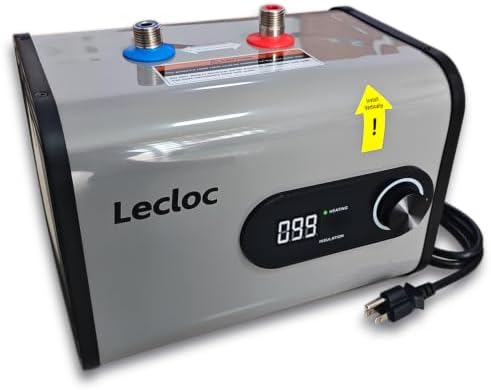
The UTank is a small storage heater for placement under a sink. Its listed capacity is 3.5 gallons, and it uses a 1,500-watt, 120-volt heating element. A 53-inch cord, LED temperature display, and large control knob are included in the product description. Unlike a tankless model, it keeps a small amount of hot water ready for use.
The inner tank is listed as 304 stainless steel, with a flame-retardant foam insulation layer and a rust-resistant casing. It can be shelf- or floor-mounted, but its stated dimensions are about 14.9 inches wide, 10.8 inches deep, and 11.4 inches high. Measure your available cabinet space and account for plumbing access before choosing it.
This mini tank can be a practical way to get hot water close to one sink, but the limited capacity is not a substitute for a whole-house heater. The product details list an overheat cutout, IPX4 waterproofing, and a two-year warranty. For well water, check whether sediment or mineral buildup could affect the unit and whether your planned water treatment is suitable.
Pros:
- Small 3.5-gallon reserve for a single point of use
- 120-volt plug-in design with a 53-inch cord
- LED temperature display and large adjustment knob
- Product description lists a two-year warranty and overheat cutout
Cons:
- Limited capacity compared with a full-size storage heater
- Requires a careful space check before purchase
Verdict: Choose the UTank for a nearby sink that needs a small ready supply of hot water, not for multiple fixtures or whole-home demand.
How to Choose a Water Heater for Well Water
Test Your Water Before Choosing Treatment
Well water varies from one home to another. A water test can help identify issues such as sediment, iron, or hardness. These problems call for different treatment approaches, so avoid assuming that one filter or softener will solve every issue. Choose treatment based on the test results and confirm that the heater manufacturer allows the planned setup.
Match the Heater to the Amount of Hot Water You Need
Think about whether you need hot water at one sink or across the whole home. Small point-of-use heaters can be useful for one fixture, but the two 3,000-watt electric models in this guide are described for low flow and are not suitable for showers. A storage tank provides a reserve, while an instant heater’s output depends on its capacity and the flow rate. Check manufacturer sizing guidance for your household and fixtures.
Check the Well Pump and Water Flow
Tankless heaters need an adequate flow of water to operate as intended. Well systems also rely on a pump and pressure tank, so consider how the system behaves when water is flowing at the heater. Compare the heater’s required flow and pressure with your well system specifications. If those details are unclear, ask a plumber familiar with well systems before buying.
Consider Sediment, Scale, and Maintenance
Sediment can collect in plumbing and equipment, while hard water can leave mineral scale on heating surfaces. The right solution depends on what is in your water. Ask a water-treatment professional whether a sediment filter, softener, or other treatment makes sense for your test results. Also check the heater’s instructions for cleaning, flushing, and inspection needs; treatment does not remove the need for maintenance.
Confirm the Power, Fuel, and Installation Requirements
Electric models need an appropriate circuit and correct wiring, and gas models need a compatible fuel supply and venting. Product descriptions do not replace the installation manual or local code. Confirm voltage, amperage, mounting orientation, connections, clearances, and vent requirements before purchase. Use a qualified installer when the work involves fixed wiring, gas lines, or venting.
Choose Storage or Tankless Based on Your Routine
A storage heater keeps a reserve of hot water, which can be useful when demand comes in bursts. A tankless model heats water on demand, but its output may be limited by flow rate and incoming water temperature. A small under-sink tank is a middle ground for one fixture. Compare the product’s actual capacity and output with how you use hot water rather than choosing by size or style alone.
Set a Safe Temperature
Water that is too hot can cause scalds, especially for children, older adults, or anyone with reduced sensitivity. Follow the heater’s instructions and local guidance for a safe setting. If the heater is set hotter to support storage or other needs, consider appropriate temperature controls and scald protection at fixtures.
Frequently Asked Questions
Is a special water heater required for well water?
Not always. The key is to understand your well water and choose a heater that matches your demand and installation. A heater does not automatically filter sediment, remove iron, or soften hard water, so suitable pretreatment may be needed.
Can I use a tankless heater with well water?
Yes, if the heater’s flow and pressure requirements match your well system and its water-quality requirements are met. Check the manual for minimum flow, maintenance, and treatment guidance. A tankless unit may be affected by scale or sediment if the water is not properly managed.
Will a 3,000-watt, 110-volt heater run a shower?
The two 3,000-watt models listed here are described as unsuitable for showers. Their stated temperature-rise figures are at low flow rates, so treat them as point-of-use options for a sink rather than shower heaters.
Should I install a filter before the water heater?
That depends on the results of a water test and the heater manufacturer’s instructions. Sediment filtration may help with particles, but it does not necessarily address dissolved minerals or other water-quality concerns. Select treatment for the specific problem rather than installing a generic filter by default.
Which option in this guide is best for a single sink?
The UTank is a small storage option with a 3.5-gallon capacity. The compact xwdzswgs tankless models are alternatives if you prefer on-demand heating and their low-flow output suits your use. Compare cabinet space, electrical requirements, and the amount of hot water you need.
Can the VEVOR 18-gallon heater provide hot water for a whole house?
The product details describe an 18-gallon tank for family needs and point-of-use applications, but they do not establish that it can meet every whole-house demand. Confirm sizing with the manufacturer or a qualified plumber based on your household, fixtures, and usage patterns.
Final Recommendation
For a larger stored supply near a kitchen or similar location, the VEVOR 18-gallon electric heater is the most substantial tank option in this group. For one sink with limited space, the UTank offers a small ready reserve, while the compact xwdzswgs models are intended for low-flow point-of-use use. Choose the VEVOR gas model only when its fuel and venting needs fit your home. Whichever option you consider, test your well water, confirm installation requirements, and select any treatment based on the specific water-quality issues found.
