
When you’re preparing a house for sale, paint can make rooms look cleaner, brighter, and easier for buyers to picture as their own. Soft beige and other restrained neutrals are flexible choices for many interiors, but the right shade depends on your natural light, flooring, and fixed finishes. The paints below offer several neutral options, plus practical finishes for trim and accent areas. Always test a sample on your wall before committing: the same color can look different from one room to another.
Table of Contents
Quick Comparison
| Product | Color and sheen | Best suited for | Coverage listed |
|---|---|---|---|
| EVOLVE Interior Paint & Primer – Beach Beige | Beach Beige, satin | High-use rooms and moisture-prone areas | 300–400 sq. ft. per gallon |
| EVOLVE Interior Paint & Primer – Coconut Cream | Coconut Cream, semi-gloss | Trim, doors, and other hard-wearing surfaces | 300–400 sq. ft. per gallon |
| EVOLVE Paint & Primer – Beach Beige | Beach Beige, eggshell | Living rooms, dining rooms, and hallways | 300–400 sq. ft. per gallon |
| EVOLVE Interior Paint & Primer – Natural Beige, 5 Gallons | Natural Beige, flat | Larger wall projects and low-traffic rooms | 300–400 sq. ft. per gallon |
| EVOLVE Signature Collection – Sage Green | Sage Green, semi-gloss | A restrained accent or selected trim | 300–400 sq. ft. per gallon |
Our Picks: Best Interior Paint Colors For Selling A House reviews
1. EVOLVE Beach Beige Satin: A Versatile Neutral for Busy Rooms

This one-gallon acrylic latex paint pairs a paint-and-primer formula with Beach Beige, a warm neutral that can work in many common living spaces. Its satin sheen has a soft luster, making it a practical option when you want walls to look polished without the stronger shine of semi-gloss.
The listed coverage is 300–400 square feet per gallon, though actual coverage can vary with surface condition, color changes, and application. EVOLVE describes the finish as stain- and scrub-resistant and suitable for high-use or moisture-prone areas such as kitchens, bathrooms, entryways, and children’s rooms. That flexibility may help if you want one wall color to carry through several connected spaces.
Satin reflects more light than eggshell or flat paint, so it may show wall bumps and patching more clearly. Prep carefully, and check Beach Beige against your floors and cabinets before painting a whole room. This is a sensible pick for sellers who want a neutral wall color with a more durable finish for everyday areas.
Pros:
- Beach Beige offers a restrained, broadly usable neutral look.
- Satin finish is positioned for busy and moisture-prone rooms.
- Paint-and-primer formula may reduce the need for extra coats on suitable surfaces.
- Available in several sheens and sizes within the product line.
Cons:
- Satin can highlight wall flaws more than a flat finish.
- One-coat coverage is not guaranteed for every wall or color change.
Verdict: Choose this Beach Beige satin paint if you want a warm neutral for high-use rooms and are comfortable with a little sheen.
2. EVOLVE Coconut Cream Semi-Gloss: A Hard-Wearing Choice for Trim

This semi-gloss paint-and-primer comes in a one-gallon size, with Coconut Cream listed as the selected color. Semi-gloss is reflective and durable, so it is often a better fit for trim, doors, and other surfaces that get frequent handling than for every wall in a home.
EVOLVE describes the formula as stain- and moisture-resistant, with low odor and low VOC content. The product information lists coverage at 300–400 square feet per gallon. Some users report that it can apply smoothly and cover well, while another found the paint unusually thick and difficult to spread. That difference is a good reason to stir thoroughly, follow the can’s directions, and try a small area first.
Its shine can draw attention to trim details, but it may also make dents and uneven spots easier to see. For a sale-ready refresh, use it selectively where a wipeable, reflective finish makes sense rather than automatically coating every wall with semi-gloss.
Pros:
- Semi-gloss finish suits trim, doors, and high-touch areas.
- Paint-and-primer formula is designed to help with coverage.
- Described as stain- and moisture-resistant.
- Low-odor and low-VOC features are listed in the product details.
Cons:
- The glossy finish can emphasize surface flaws.
- Some users find the paint thick, which may make application less easy.
Verdict: Pick Coconut Cream semi-gloss for trim and other hard-wearing areas, but test its consistency and avoid using the shiny finish indiscriminately on walls.
3. EVOLVE Beach Beige Eggshell: A Balanced Finish for Main Living Areas
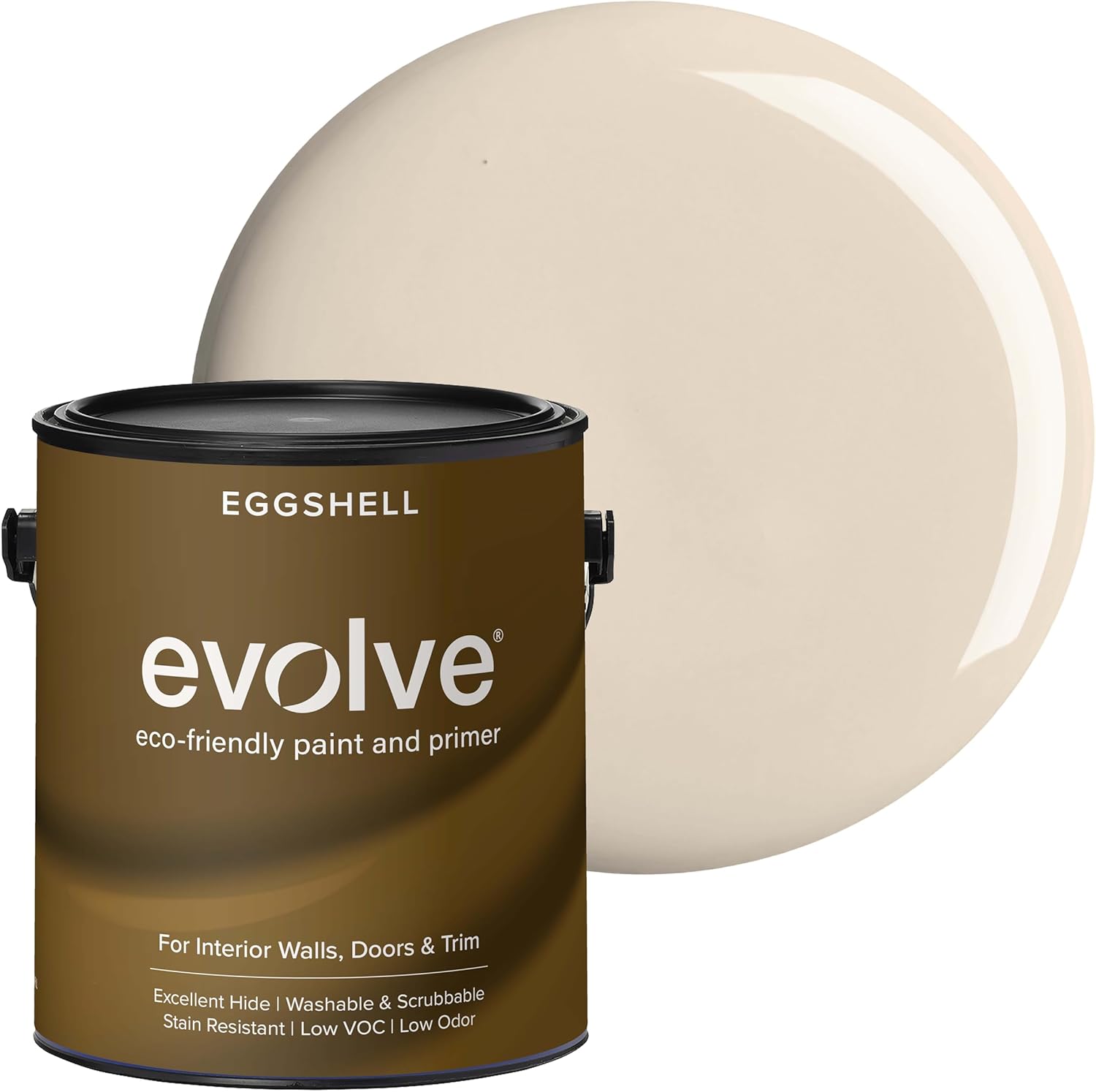
This Beach Beige option has an eggshell finish, giving it a subtle glow between flat and satin. The softer sheen can be a useful middle ground for living rooms, dining rooms, and hallways: it looks less reflective than satin while offering more cleanability than a traditional flat finish.
The paint-and-primer formula is listed for interior surfaces, with coverage of 300–400 square feet per gallon. EVOLVE describes the finish as washable and stain-resistant, and says it is designed to perform in moisture-prone spaces as well. For a home being prepared for sale, eggshell can help create a consistent look across common areas without the stronger shine of semi-gloss.
Beach Beige is a warm neutral, so compare it with your flooring, counters, and natural light before deciding it suits the whole house. A light beige may look more golden in warm light or more muted in a shaded room. It is still worth planning for primer or additional coats if the existing wall color is dark, stained, or uneven.
Pros:
- Eggshell sheen balances a soft appearance with practical cleanability.
- Beach Beige is a versatile warm neutral for shared living spaces.
- Paint-and-primer formula is designed to support coverage.
- Listed as washable and stain-resistant.
Cons:
- Warm beige may not suit every floor, fixture, or lighting condition.
- Coverage depends on the wall, so one coat may not be enough.
Verdict: This is the strongest all-around choice in the group for sellers seeking a soft, neutral wall color with a practical sheen for main living areas.
4. EVOLVE Natural Beige Flat: A Five-Gallon Option for Broad Wall Coverage

This five-gallon container of Natural Beige paint and primer is intended for larger projects. The flat finish has little shine, which can help disguise minor wall imperfections and create a quiet, even look in bedrooms, living rooms, and other lower-traffic areas.
EVOLVE lists coverage at 300–400 square feet per gallon and describes this flat finish as easy to touch up. The large container may be convenient if you are painting several rooms in the same color, but consider your actual wall area before buying. A five-gallon pail is less flexible if you only need one room or decide to change shades after testing.
Flat paint is less reflective, but it may be harder to clean than a higher-sheen option in busy hallways, kitchens, or children’s rooms. The Natural Beige shade is another warm neutral, so check it beside the home’s fixed finishes. For a property refresh, this is most appealing when you need a lot of paint for consistent walls and can limit it to areas where a flat finish makes sense.
Pros:
- Five-gallon size is suited to painting multiple rooms or larger areas.
- Flat finish can help hide small surface imperfections.
- Touch-ups are described as easy.
- Natural Beige offers a subdued neutral appearance.
Cons:
- Large container may be excessive for a small project.
- Flat paint may be less practical on walls that need frequent cleaning.
Verdict: Choose the five-gallon Natural Beige option when you have a larger, coordinated wall project and want a low-sheen finish for lower-traffic rooms.
5. EVOLVE Signature Sage Green Semi-Gloss: A Colorful Accent Option

This one-gallon paint from EVOLVE’s Signature Collection is a more noticeable choice than the beige options. Sage Green can bring color into a room, but when selling a home, it is usually safer to use a distinctive shade selectively—for example, on a small feature area—rather than throughout the main living spaces.
The product has a semi-gloss finish and is described as a paint-and-primer with strong hiding power and stain resistance. Its reflective sheen is intended for trim, doors, and cabinetry, where a polished surface can suit the material. The listed coverage is 300–400 square feet per gallon, though actual results depend on the surface and application.
This is not the most broadly neutral pick in the group, and semi-gloss can make flaws more visible. Consider it if you want a measured accent or have a particular feature that suits sage green. If your priority is a consistent, buyer-friendly wall color throughout the home, one of the beige eggshell or satin options is a more cautious choice.
Pros:
- Sage Green provides an alternative to an all-neutral palette.
- Semi-gloss is designed for trim, doors, and cabinetry.
- Paint-and-primer formula is designed to help hide existing color.
- Stain-resistant finish is described as durable for interior use.
Cons:
- The green shade is less universally neutral than beige.
- Semi-gloss may highlight uneven surfaces and imperfections.
Verdict: Use Sage Green semi-gloss for a carefully chosen accent or suitable trim, not as your default color for every room you are preparing to sell.
How to Choose Interior Paint for a House You’re Selling
Start with a flexible color, not a trend
For most shared spaces, choose a restrained shade that works with the home’s existing floors, counters, and cabinets. Beige can add warmth, while other soft neutrals may feel brighter or cooler depending on the room. The goal is a clean, cohesive backdrop, not a promise that one color will appeal to every buyer.
Test the shade in each room
Paint a sample on more than one wall and look at it in daylight and after dark. North-facing rooms, shaded corners, and warm bulbs can shift how a color appears. Compare the sample with permanent finishes such as flooring and countertops before committing to multiple gallons.
Match the sheen to the surface
Flat paint has little reflection and can soften the look of imperfect walls, but it may be less convenient where cleaning is frequent. Eggshell is a middle-ground choice for many living spaces. Satin offers more sheen and is positioned for busy or moisture-prone areas, while semi-gloss is often a practical fit for trim and doors. Higher sheen can also draw attention to dents and uneven patches.
Check the walls before choosing a paint-and-primer
A paint-and-primer formula can help simplify a repaint, but it does not remove the need for sound preparation. Clean the walls, fill holes, sand rough spots, and use a separate primer when the surface or color change calls for it. Stains, repairs, and a dramatic change from a dark shade to a light one may need extra steps or coats.
Estimate how much paint you need
The listed coverage for these paints is 300–400 square feet per gallon. Treat that as an estimate rather than a guarantee: porous surfaces, texture, repairs, and color changes can affect how far a gallon goes. Measure the areas you plan to paint and follow the label’s directions. A five-gallon pail can suit a larger project, but it may be more paint than needed for a single room.
Keep the whole home visually consistent
Using one or two related neutrals in connected rooms can make a home feel more cohesive. You do not have to paint every surface the same color; use a different sheen for trim or a restrained accent where it makes sense. Avoid adding several strong colors just before listing, since a simpler palette is easier for buyers to imagine with their own furnishings.
Frequently Asked Questions
What interior paint colors are usually safest when selling a house?
Soft, restrained neutrals are a practical starting point because they can work with many styles of furniture and finishes. The best shade still depends on the home’s lighting, flooring, and fixed materials, so test samples before painting.
Is beige a good color choice for selling?
Beige can create a warm, neutral backdrop, but undertones matter. Compare a sample with your flooring and cabinets, and check it in different light. A beige that looks balanced in one room may appear too yellow or too gray in another.
Which sheen should I use on interior walls?
Eggshell is a versatile middle ground for many living spaces. Flat can help disguise minor flaws in low-traffic rooms, while satin may suit busier or more moisture-prone areas. Semi-gloss is generally more useful for trim, doors, or cabinetry than for every wall.
Can paint-and-primer cover a wall in one coat?
It may provide strong coverage on a suitable surface, but one coat is not assured. The existing color, wall condition, and surface porosity can all affect the result. Plan for additional coats if needed and follow the product label.
Should I paint the whole house one color before listing?
Not always. A coordinated palette can help the home feel connected, but different rooms may need different sheens or shades. Consider the layout and finishes, and keep any color changes restrained and intentional.
Is sage green too bold for a home going on the market?
It is more distinctive than beige, so use it selectively if you want a broad, neutral presentation. A small accent or suitable trim may be easier to work with than painting several main rooms in a stronger color.
Final Recommendation
For a broadly useful wall color, the EVOLVE Beach Beige Eggshell is the most balanced pick here: it combines a warm neutral shade with a moderate sheen suited to many main living spaces. Choose the Beach Beige Satin for busier areas where a more durable sheen is useful, or the five-gallon Natural Beige Flat if you have a larger project and want a low-sheen finish. Whichever option you choose, test the color in your home and prepare the walls well before painting.