
Interior wall sound insulation can mean two different things: reducing noise that passes through a wall or improving how sound behaves inside a room. The panels below are designed mainly to absorb echoes and reverberation. They can make speech, music, and calls sound clearer, but they are not a substitute for construction changes when you need to block noise from a neighbor or another room.
Our picks cover several styles and thicknesses, from thin self-adhesive PET panels to thicker foam designed for echo control. Compare coverage, attachment method, and intended use before choosing. For serious sound isolation, you may need added wall mass, sealed gaps, or other building work.
Table of Contents
Quick Comparison
| Product | Material and Style | Coverage | Best For |
|---|---|---|---|
| NEPIS Self-Adhesive Brick Acoustic Panels | Polyester, 0.36-inch brick design | About 20 sq. ft. | Quick, decorative echo treatment |
| Saiqiang 1-Inch Acoustic Foam Panels | Wedge-style foam | Not specified | Studios, offices, and small listening spaces |
| SD SODOCT 2-Inch Pyramid Acoustic Foam | Flame-retardant foam, pyramid design | 24 sq. ft. | More substantial echo control |
| Junwisun Self-Adhesive PET Felt Panels | 14.3 lb/ft³ PET felt, brick design | About 12 sq. ft. | Neat, low-profile wall treatment |
| BangXyth 2-Inch Self-Adhesive Foam Panels | High-density PU foam, wedge style | About 12 sq. ft. | Thick foam with peel-and-stick setup |
Our Picks: Best Interior Wall Sound Insulation reviews
1. NEPIS Self-Adhesive Panels for Simple, Decorative Echo Control

NEPIS uses thin, 0.36-inch polyester panels with a raised brick pattern. The 20-piece set covers about 20 square feet, and the backing is self-adhesive, so the panels can be placed without adding separate tape or spray adhesive. The listing describes the material as odorless and non-toxic polyester.
The main practical appeal is straightforward installation combined with a more finished look than plain foam. These panels may help soften reflections in a home office, media room, or recording corner. The product listing claims a high NRC, but that figure should not be taken to mean the panels will stop sound from traveling through a wall. Their thin profile is better suited to room acoustics than sound isolation.
Compared with the thicker foam options here, NEPIS offers more coverage per pack and a lower-profile design. The trade-off is less material depth, so it may not be the first choice if you want a substantial treatment for a room with strong echo.
Pros:
- Self-adhesive backing avoids separate installation tape.
- About 20 square feet of coverage per pack.
- Raised brick style can add a decorative texture.
- Polyester construction is described as odorless and non-toxic.
Cons:
- At 0.36 inch thick, it is much thinner than the foam alternatives.
- Designed for sound absorption, not blocking noise through a wall.
Verdict: Choose NEPIS if you want broad, low-profile coverage and easy application for reducing room echo, not if your main goal is to keep neighboring-room noise out.
2. Saiqiang 1-Inch Foam for Studios and Shared Rooms

This 12-pack contains 1-inch wedge-style acoustic foam panels intended to manage reflections in spaces such as podcast rooms, vocal booths, offices, gaming areas, and home theaters. The listing says the panels arrive vacuum-packed and may need 24 to 48 hours to expand. It also describes installation with construction adhesive or nano double-sided tape, with tape included.
The wedge shape gives the wall a familiar studio-treatment look, while the one-inch depth makes this a middle-ground option: more substantial than the thin NEPIS panels, but not as thick as the two-inch choices. It may suit a small workspace where echo and speech clarity are the main concerns. The listing also describes the foam as fire-resistant and non-toxic, but check the product details for the specific safety information that matters for your room.
One limitation is that the supplied product information does not state the pack’s total coverage area. Measure your planned layout and confirm the dimensions and quantity before buying. As with other foam panels, this product is for managing reflections rather than creating a soundproof barrier.
Pros:
- One-inch wedge profile offers more depth than very thin wall panels.
- Listed for studios, calls, gaming, offices, and media rooms.
- Installation tape is described as included.
- Vacuum packaging makes the panels compact for shipping.
Cons:
- Total pack coverage is not specified in the supplied product details.
- Panels need time to expand after unpacking.
Verdict: Saiqiang is a reasonable fit for a small creative or work space where you want wedge-style echo treatment, provided you verify the coverage before planning your layout.
3. SD SODOCT 2-Inch Pyramid Foam for More Substantial Treatment

SD SODOCT’s set includes 24 pyramid-shaped foam panels that are two inches thick and cover 24 square feet. The listing says the pyramid design increases surface area and is intended to absorb sound reflections. It also describes the foam as flame-retardant and suitable for studios, podcast rooms, gaming setups, conference rooms, and home theaters.
The added thickness makes this one of the more substantial acoustic treatments in the group. It may be a better match than thin felt or polyester panels for a room where reflections are a noticeable problem. Keep in mind that the pyramid profile changes the wall’s look and adds depth, so consider the room’s layout before covering a large area.
Installation requires construction adhesive or nano double-sided tape, neither of which is included according to the listing. That gives you some flexibility in choosing an attachment method, but adds a step and a separate purchase. The product description also clearly notes that the foam is not intended to isolate a room from outside noise.
Pros:
- Two-inch thickness offers a deeper treatment than the thinner options.
- Pack covers 24 square feet.
- Pyramid texture adds a distinctive studio-style appearance.
- Listed as flame-retardant foam.
Cons:
- Adhesive or mounting tape must be sourced separately.
- Does not provide full sound isolation from other rooms or outside.
Verdict: Pick SD SODOCT when your priority is thicker, broad-coverage echo control and you are comfortable selecting and applying your own mounting adhesive.
4. Junwisun PET Felt Panels for a Clean Brick-Pattern Finish
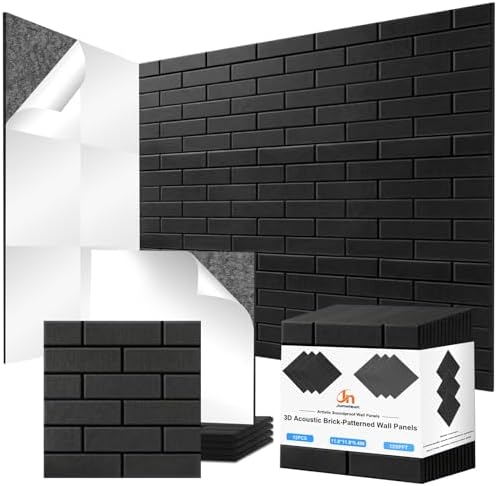
Junwisun’s 12-pack uses 14.3 lb/ft³ PET felt with a raised brick design. The self-adhesive backing is made for clean, flat surfaces, and the listed coverage is about 12 square feet. The product description also identifies the panels as flame-retardant polyester fiber and says they are non-toxic and odorless.
This is a useful choice if you want acoustic treatment that looks more like a wall finish than traditional wedge foam. The felt construction and modest pack size may work well in a home office, studio, or vocal booth where you want to treat a specific section of wall. Its thin profile means you should set realistic expectations: it is intended to reduce echo and reverberation, not stop sound transmission through a shared wall.
Compared with NEPIS, Junwisun offers a denser PET felt specification but covers less area per pack. Compared with the thicker foam products, it has a flatter, more understated appearance. As with any peel-and-stick panel, check that the surface is suitable for adhesive before installing the full set.
Pros:
- Self-adhesive backing supports direct installation on clean, flat surfaces.
- Brick pattern offers a more finished wall appearance than basic foam.
- About 12 square feet of coverage per pack.
- Listing specifies flame-retardant PET felt construction.
Cons:
- Coverage is limited compared with larger packs.
- Thin felt panels are not a solution for blocking sound through a wall.
Verdict: Junwisun suits shoppers who prefer a neat felt finish and want to treat a smaller area without dealing with separate adhesive.
5. BangXyth 2-Inch Self-Adhesive Foam for Thick, Quick-Apply Coverage

BangXyth combines two-inch-thick PU foam with a self-adhesive backing. The 12-pack is listed as covering about 12 square feet, and the wedge-style panels are designed for rooms such as home theaters, gaming spaces, and offices. The product description gives a density of 2.50 lb/ft³ and says the panels can be trimmed to fit a custom layout.
The thick profile and peel-and-stick setup make this a practical option if you want a deeper foam treatment without buying separate tape or spray adhesive. The listing says the panels expand quickly after unpacking. It also describes them as non-toxic and says they provide heat insulation, but they should still be chosen primarily for their stated acoustic purpose and not treated as a replacement for building insulation.
With about 12 square feet of coverage, this pack is better suited to a focused treatment area than a whole room. The wedge look is also more prominent than the brick-style felt panels. Most importantly, the product reduces reflections; it does not provide the wall mass or sealed construction needed to reliably block noise between rooms.
Pros:
- Two-inch foam depth for a more substantial acoustic treatment.
- Self-adhesive backing makes installation straightforward.
- About 12 square feet of coverage per pack.
- Panels can be trimmed for a custom fit, according to the listing.
Cons:
- Coverage is modest for larger rooms.
- Wedge foam changes the room’s appearance and does not block sound through walls.
Verdict: BangXyth is a good match for a small, targeted area where you want thick, self-adhesive foam to manage echo with minimal installation steps.
How to Choose Interior Wall Sound Insulation
Decide whether you need echo control or sound blocking
Start by identifying the problem. If voices sound harsh in a mostly bare room, or recordings pick up a lot of reflection, acoustic panels can help absorb sound inside that room. If you can clearly hear a neighbor through the wall, foam and felt panels are unlikely to solve the main issue. Blocking sound usually calls for changes to the wall itself, such as added mass, better sealing, or a more involved construction approach.
Match panel thickness to the room and intended use
Thicker panels provide more material for sound absorption and may suit rooms with stronger reflections. In this group, the two-inch SD SODOCT and BangXyth panels are the thickest options, while the one-inch Saiqiang panels sit in the middle. NEPIS is only 0.36 inch thick, and Junwisun is described as PET felt without a thickness in the supplied details. Thickness alone does not tell the whole story, so consider the product’s stated use and your room’s needs.
Calculate coverage before you order
Measure the wall area you plan to treat and compare it with each pack’s stated coverage. NEPIS covers about 20 square feet, SD SODOCT covers 24 square feet, and Junwisun and BangXyth each cover about 12 square feet. The Saiqiang product information provided here does not state total coverage, so check its listing before deciding how many packs you need. Also consider whether you want to treat a small reflection point or a wider section of wall.
Check the attachment method and your wall surface
Self-adhesive panels are convenient, but they work best on clean, flat surfaces that can accept adhesive. If you rent, have delicate paint, or may want to remove the panels later, consider the surface carefully before sticking them up. Some products require construction adhesive or separate tape, while others include adhesive backing. Follow the product’s installation instructions and test a small area if you are unsure about the finish.
Consider the material, look, and placement
Pyramid and wedge foam has a noticeable studio-style appearance, while brick-pattern PET or polyester panels can look more like decorative wall treatment. Think about how the panels will fit with your room and whether they will interfere with doors, outlets, or wall-mounted items. Placement matters too: a carefully positioned treatment may be more useful than covering a wall without a plan.
Review safety details and product claims carefully
Several listings describe their materials as flame-retardant, non-toxic, or odorless. Treat those as product claims and check the specific listing for the standards and details relevant to your space. Do not assume that acoustic foam replaces required building materials or provides meaningful thermal insulation just because a listing mentions heat insulation.
Frequently Asked Questions
Do acoustic panels soundproof an interior wall?
No. These panels are mainly designed to absorb sound reflections inside a room. They may reduce echo and make speech or recordings clearer, but they do not create a soundproof barrier between rooms.
What is the difference between sound absorption and sound insulation?
Sound absorption reduces reflections within a space, helping control echo and reverberation. Sound insulation, often called sound isolation, aims to reduce how much sound passes through a wall, floor, or ceiling. The products in this guide focus primarily on absorption.
Which option covers the largest area?
Based on the supplied product details, SD SODOCT covers 24 square feet per pack, followed by NEPIS at about 20 square feet. Always check the current product listing to confirm pack size and coverage before ordering.
Are self-adhesive panels easy to install?
They can be quick to apply when the wall is clean, flat, and suitable for adhesive. Products that need separate construction adhesive or tape require an extra step. Consider the possibility of paint damage before applying any adhesive to a finished wall.
Do thicker panels always work better?
Thickness is one factor, but it does not guarantee a better result for every room or sound problem. The panel’s material, placement, coverage, and your goal all matter. Thicker foam can be useful for room echo control, but it still does not replace construction work for blocking sound through a wall.
How much of a wall should I cover?
There is no single coverage amount for every space. Begin by identifying where reflections are most noticeable, then plan a layout that fits your room and the pack’s stated coverage. For recording or listening spaces, you may want to consider the room’s overall acoustics rather than covering a wall at random.
Final Recommendation
For broad, low-profile coverage, NEPIS is the most practical starting point. If you want thicker foam for a focused echo-control area, consider SD SODOCT for its listed 24-square-foot coverage or BangXyth for its peel-and-stick setup. Junwisun is the better fit for a smaller, felt-style wall treatment, while Saiqiang offers a one-inch wedge option for creative and work spaces. Choose any of these for managing sound inside a room—not as a stand-alone fix for noise passing through an interior wall.
