
A Japanese wooden bath bucket is made for scooping and pouring water during a bath or shower—not for leaving full of water between uses. The options here include natural-wood Yamako buckets and Japanese cypress or Sawara wood models, with some listings offering more detail than others. Compare the wood, dimensions, construction, and care instructions before choosing, and check the product page for current availability.
Table of Contents
Quick Comparison
| Product | Wood or material | Notable details | Availability in supplied listing data |
|---|---|---|---|
| Yamako Natural Wood Made Japanese Bath Bucket 12462 | Natural wood; species not specified | Japanese bath bucket; dimensions not provided | Available |
| Made in Japan Hinoki Oke Pure Wood Bathtub Bucket | Hinoki wood (Japanese cypress) | 9.5 × 4.3 inches; 1.3 pounds; not intended to be leakproof | Unavailable |
| Hinoki Oke Pure Wood Bathtub Bucket with Reinforced Copper Rings | Hinoki wood (Japanese cypress) | Reinforced copper rings; 8.86 × 4.53 inches; 1.3 pounds | Unavailable |
| Yamako Natural Wood Made Japanese Bath Bucket Thin Top Type 83827 | Natural wood; species not specified | Thin-top design; dimensions not provided | Available |
| Japanese Cypress Sawara Oke Wood Bath Bucket | Japanese Sawara wood | Reinforced copper bands; listed dimensions 4.5 × 8 × 8 inches; 1.1 pounds | Unavailable |
Our Picks: Best Japanese Wooden Bath Bucket reviews
Yamako Natural Wood Made Japanese Bath Bucket 12462: A Simple Traditional-Style Pick

The Yamako 12462 is a natural-wood Japanese bath bucket intended for a traditional bathing routine. Its title gives the basic material and purpose, but the supplied product details do not identify the wood species, dimensions, weight, or construction method.
That limited information makes it harder to compare the bucket’s capacity or fit with a particular tub. If you want a straightforward wood bucket and are comfortable checking the product page for measurements before buying, this is one of the clearest options among the listings marked available in the supplied data.
Like other wooden bath buckets, it is best considered a scoop-and-rinse tool rather than a container for storing water. Since the listing details provided here do not describe its care instructions, check the product page for guidance on drying and storage.
Pros:
- Made from natural wood.
- Designed as a Japanese bath bucket.
- Marked available in the supplied listing data.
Cons:
- Wood species, dimensions, and weight are not specified in the supplied details.
- Construction and care instructions are not provided here.
Verdict: Choose the Yamako 12462 if you want a simple natural-wood option and can confirm its size and care details on the product page first.
Made in Japan Hinoki Oke: A Compact Japanese Cypress Bucket

This Youbi bucket is made from hinoki, or Japanese cypress, and is described as a handmade wooden bath accessory. Its listed dimensions are 9.5 inches in diameter and 4.3 inches high, with a weight of 1.3 pounds. The product description notes that hinoki has a pleasant scent.
The shallow shape is meant for scooping water and rinsing your body after washing. The listing specifically says it is not sized for a foot bath, and it is not intended to be leakproof. That distinction matters: this is not a wooden pail to fill and leave standing, but a bathing tool to use briefly and then dry.
The supplied listing data marks this product unavailable, so it may not be an option to buy at the moment. Compared with the reinforced-ring hinoki model, this version has fewer construction details in its description, but it does provide a clear diameter and height.
Pros:
- Made from hinoki Japanese cypress.
- Lists its dimensions and weight.
- Designed for scooping and rinsing in the bath or shower.
Cons:
- Not intended to be leakproof or used as a foot bath.
- Marked unavailable in the supplied listing data.
Verdict: This is a useful size reference if you want a shallow hinoki bucket, but check the listing for availability and do not expect it to hold water for extended periods.
IPPINKA Hinoki Oke with Reinforced Copper Rings: Added Band Support
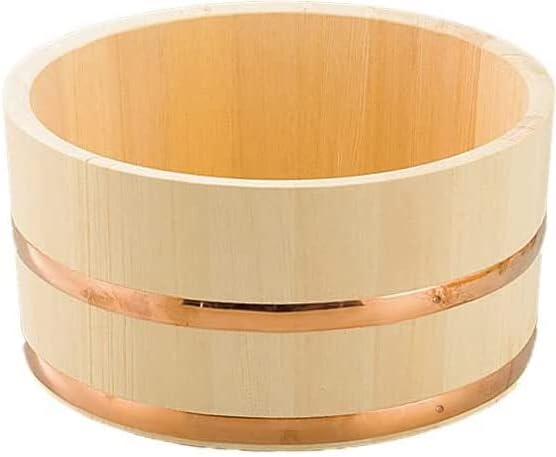
This IPPINKA bucket is made in Japan from hinoki wood and uses copper rings around the body. The product description specifies three nails on each ring, for six nails total, as reinforcement intended to help keep the bands in place.
It measures 8.86 inches in diameter and 4.53 inches high and weighs 1.3 pounds. Those measurements make it a relatively shallow bath bucket, but the listing does not provide a stated capacity. As with the other handmade wooden options here, it is not intended to be waterproof, so it should be used for scooping and rinsing rather than long-term water storage.
The reinforced bands are a useful design detail to weigh against the other hinoki option, which does not specify this feature. However, the supplied listing data marks this model unavailable. If it becomes available, compare its measurements with the available Yamako choices and confirm the care instructions before ordering.
Pros:
- Made in Japan from hinoki Japanese cypress.
- Copper rings are reinforced with three nails each.
- Dimensions and weight are provided.
Cons:
- Not intended to be waterproof or hold water for extended periods.
- Marked unavailable in the supplied listing data.
Verdict: Consider this model if reinforced copper bands are a priority, but its current listed availability may limit your options.
Yamako Thin Top Type 83827: A Distinctive Natural-Wood Design

The Yamako 83827 is a natural-wood Japanese bath bucket identified as a “Thin Top Type.” The supplied details do not explain the design beyond that name, so it is worth looking closely at the product images and listing information if the rim shape is important to you.
The product data does not specify its wood species, dimensions, weight, or whether it has metal bands. That makes direct comparisons with the hinoki and Sawara models difficult. In particular, check the measurements before ordering if you want to know how it will sit beside your tub or how much water it can scoop.
Its main advantage over the other Yamako option in this selection is the specific thin-top designation. Both Yamako listings are marked available in the supplied data, but neither includes the detailed material and size information provided for some of the other buckets.
Pros:
- Made from natural wood.
- Identified as a Japanese bath bucket with a thin-top design.
- Marked available in the supplied listing data.
Cons:
- Wood species, dimensions, and weight are not specified in the supplied details.
- The thin-top design is not explained further in the product data.
Verdict: Pick the Yamako 83827 if its thin-top design appeals to you, but verify the size and construction details on the product page before making a decision.
IPPINKA Sawara Oke: Japanese Cypress with Reinforced Copper Bands

This IPPINKA bucket is made from Japanese Sawara wood and has two copper bands, each reinforced with three nails. Its description presents it as a handmade bath accessory for scooping and rinsing, rather than a vessel for holding water over a long period.
The listed dimensions are 4.5 × 8 × 8 inches, and the weight is 1.1 pounds. The description does not clarify which measurement corresponds to height, so check the product page if an exact fit matters. Its stated weight is lower than the hinoki models in this selection, though the supplied information does not give a capacity for any direct comparison.
The product description recommends drying it thoroughly after each use and storing it in a dry, well-ventilated place. The supplied listing data marks it unavailable. If it becomes available, its specific wood type and reinforced bands make it a more fully described alternative to the Yamako buckets.
Pros:
- Made from Japanese Sawara wood.
- Two copper bands are reinforced with three nails each.
- Weight and listed dimensions are provided.
- Care guidance is included in the product description.
Cons:
- Not intended to hold water for extended periods.
- Marked unavailable in the supplied listing data.
Verdict: This is a well-detailed option on paper if you want Sawara wood and reinforced bands, but confirm availability and the dimension orientation before buying.
How to Choose a Japanese Wooden Bath Bucket
Check the wood type
Wood type is one of the clearest ways to compare these options. Two buckets are described as hinoki, or Japanese cypress, while another is made from Japanese Sawara wood. The Yamako listings say natural wood but do not name the species in the supplied details. If a specific wood matters to you, confirm it on the product page rather than assuming the listings are made from the same material.
Look at the dimensions, not just the product photo
A bucket’s height and diameter affect how it fits beside your tub and how you can scoop and pour water. The hinoki models include measurements, while the Yamako listings do not provide them here. The Sawara model lists three dimensions but does not clearly label each one, so verify the measurement orientation if you need a precise fit. Do not assume a bath bucket is large enough for a foot bath; one listing specifically says it is not.
Understand how wooden buckets are meant to be used
Several product descriptions say these buckets are for scooping and rinsing, not for keeping water inside for a long time. One is explicitly described as not leakproof, and another says it is not intended to be waterproof. If you need a container that can remain filled, these descriptions suggest a wooden bath bucket may not suit that purpose.
Compare the bands and other construction details
The IPPINKA hinoki and Sawara buckets specify copper bands reinforced with nails. That gives you a concrete construction detail to compare with the Yamako options, whose supplied descriptions do not mention bands. If the band design matters, check product images and the full listing to confirm what is included.
Plan for drying and storage
Wooden bath accessories need suitable care. The Sawara listing recommends drying the bucket thoroughly after use and storing it in a dry, well-ventilated place. The hinoki listings also advise drying the bucket and keeping it in a dry, ventilated area. Follow the care instructions for the exact model you choose.
Check current listing status and details
Availability can change, and the supplied listing data marks some products unavailable. Before choosing, open the product page to confirm that it can be ordered and to check the latest dimensions, material details, and care instructions. This is especially important for the Yamako listings, which have fewer specifications in the product information provided here.
Frequently Asked Questions
What is a Japanese wooden bath bucket used for?
These buckets are intended for scooping water and rinsing the body during a bath or shower. The product descriptions do not present them as containers for storing water for extended periods.
Are these wooden bath buckets leakproof?
Not necessarily. One hinoki listing explicitly says it is not intended to be leakproof, and another says the bucket is not waterproof. Check the exact product description and use the bucket as directed.
What is the difference between hinoki and Sawara wood in these listings?
The hinoki models are described as Japanese cypress, while the Sawara model is identified as Japanese Sawara wood. The supplied details do not provide a full comparison of their performance, so choose based on the stated material, design, and care guidance.
Can I use one of these buckets as a foot bath?
Do not assume so. The Youbi hinoki bucket’s description specifically says its size is not for a foot bath. For the other models, check the listed dimensions and intended use before buying.
How should I care for a Japanese wooden bath bucket?
The Sawara and hinoki descriptions recommend drying the bucket after use and storing it in a dry, well-ventilated area. Follow the instructions on the product page for your specific model.
Which bucket has the most construction detail?
The IPPINKA hinoki and Sawara listings describe copper bands reinforced with nails. The Sawara listing also provides care guidance, while the hinoki listing gives a diameter, height, and weight. Availability may affect whether either is an option for you.
Which option should I choose if I want a bucket with listed dimensions?
The hinoki and Sawara models provide measurements in their descriptions. The Yamako listings do not include dimensions in the supplied details. Confirm the measurements and availability on the product page before ordering.
Final Recommendation
For a Japanese wooden bath bucket with the clearest combination of material and construction details, the IPPINKA hinoki and Sawara models stand out on paper, though the supplied listing data marks both unavailable. If you want to shop among the options marked available, compare the two Yamako buckets and confirm their dimensions, wood type, and care instructions on their product pages. Whichever you choose, treat it as a scoop-and-rinse accessory and follow the maker’s drying and storage guidance.
