
A large wooden rolling pin gives you more room to roll broad sheets of dough for pizza, pastry, cookies, and other baking projects. The picks below range from simple 18-inch workhorses to French-style pins and adjustable models with thickness rings. Use the comparison table to narrow your choice, then consider how much control, consistency, and upkeep your baking routine calls for.
Table of Contents
Quick Comparison
| Product | Length and style | Standout feature | Best for |
|---|---|---|---|
| Folksy Super Kitchen Wood Rolling Pin with Thickness Rings | 17.7-inch straight barrel | Five removable thickness rings and measurement marks | Bakers who want repeatable dough thickness |
| Winco 18-Inch Wood Commercial Rolling Pin | 18-inch wood roller | Simple, commercial-style design | Those who want a straightforward large pin |
| KARRYOUNG 17-Inch French Rolling Pin | 17-inch tapered French style | Tapered ends for controlled rolling | Pastry makers who value hands-on control |
| Amazon Basics 17-Inch Acacia French Rolling Pin | 17-inch tapered French style | Acacia wood with a smooth, polished surface | Everyday baking and standard dough tasks |
| Fulimax 17-Inch Adjustable Wood Rolling Pin | 17-inch straight pin | Removable rings with metric and imperial sizing | Bakers who want guided thickness options |
Our Picks: Best Large Wooden Rolling Pin reviews
Folksy Super Kitchen: Best for Precise, Repeatable Thickness
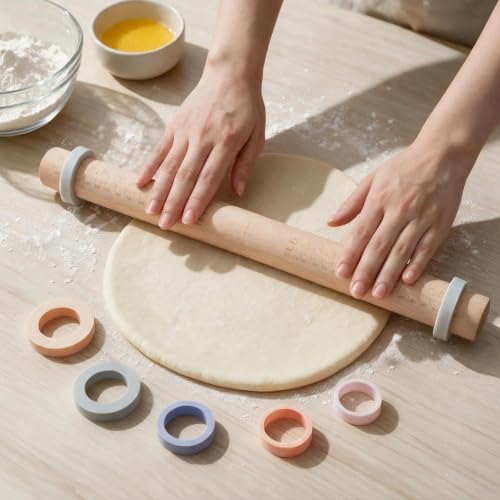
This 17.7-inch straight rolling pin is the most feature-rich choice in the group. Its one-piece beechwood barrel has no handles, and the set includes five removable silicone rings sized for 2, 3, 5, 8, and 10 mm thicknesses. Printed measurement marks also help you track the size of a dough sheet as you roll it.
The rings are useful when a recipe calls for an even layer, such as cookie dough or pastry. Choose a ring size, fit the rings to the pin, and roll until they guide the thickness. The long barrel also gives you a broad working area for pizza dough and other large sheets. Beechwood construction and closed ends are listed design details; the product information recommends keeping the pin out of the dishwasher and avoiding long soaks.
This is a strong fit for bakers who make different recipes and want a built-in thickness guide. The trade-off is that the rings add parts to keep track of, and they may be unnecessary if you prefer to judge thickness by feel. Like other wooden pins, it also needs careful drying and occasional oiling.
Pros:
- Five thickness options from 2 to 10 mm
- Measurement markings help track dough size
- Long, handle-free barrel for broad rolling strokes
- Made from beechwood with no paint or chemical coating listed
Cons:
- Requires hand cleaning and careful drying
- Removable rings add pieces to store and maintain
Verdict: Choose the Folksy Super Kitchen if thickness control is more important to you than keeping your tool as simple as possible.
Winco 18-Inch Pin: Best Simple, Full-Length Workhorse

The Winco is an 18-inch wooden rolling pin with a straightforward commercial-style design. Its length is the largest listed among these picks, making it a practical option when you want a wide roller without added rings, measurement marks, or a tapered French profile.
The product description identifies it for pastry dough, pizza dough, cookies, and general baking prep. Its uncomplicated build may appeal to cooks who want a basic tool that can handle several kinds of dough. The available specifications are brief, however, so they do not identify the wood species or provide details about the surface finish or care instructions.
Compared with the adjustable models, the Winco offers fewer built-in guides. Compared with the French-style pins, its listing does not describe tapered ends. That makes it a sensible choice for shoppers who prioritize length and a simple design over specialized features, but less suitable if you need precise thickness stops.
Pros:
- 18-inch length for broad rolling strokes
- Simple wooden design without removable parts
- Listed for pastry, pizza, cookies, and baking prep
- Commercial-style positioning for frequent kitchen use
Cons:
- Product details do not specify the wood type or finish
- No thickness rings or measurement marks are listed
Verdict: Pick the Winco if you want a long, no-frills wooden pin and do not need built-in thickness guides.
KARRYOUNG French Pin: Best for Hands-On Control

This 17-inch French-style rolling pin is made from solid rubber wood and has tapered ends. Unlike a handled pin, its single-piece shape lets you work directly against the barrel. The listed design is intended to give you control as you roll, which can be helpful when shaping pastry or adjusting the thickness of dough by hand.
The smooth surface is described as having no crevices where dough can collect. The pin is listed for pizza dough, fondant, cookies, bread, and other baking projects, and it is sized to fit in a drawer or cabinet. Its French profile also works with silicone baking mats and granite or marble counters, according to the product information.
Choose this style if you like to move your hands across the pin and guide the dough yourself. It does not include rings or measurement marks, so it will not provide the same repeatable thickness guidance as the Folksy or Fulimax options. The product description recommends wiping it clean and using mineral oil to maintain the wood finish.
Pros:
- Solid rubber wood construction
- Tapered shape offers hands-on control
- 17-inch length suits a range of dough tasks
- Smooth design is described as easy to wipe clean
Cons:
- No thickness rings or measurement marks
- Wood needs appropriate cleaning and care
Verdict: The KARRYOUNG is a good match if you prefer the feel and control of a tapered French pin over a guided straight roller.
Amazon Basics Acacia Pin: Best for Everyday French-Style Baking

This 17-inch French-style pin is made from acacia wood, with a tapered profile for working with pizza, pie, and pastry dough. Its smooth, polished surface is described as helping dough roll more easily. The acacia grain also gives the pin a distinct natural-wood look.
Its size suits standard baking tasks, and the tapered design is a good option if you want to steer the dough with your hands rather than rely on a handled roller. It does not have thickness rings, so you will need to estimate thickness or measure it separately when a recipe calls for a precise result.
Care is simple but specific: the product listing says to hand wash and towel dry right away. It also says not to soak the pin or put it in a dishwasher. Compared with the KARRYOUNG, this pick specifies acacia wood and FSC certification; both are 17-inch French-style options without thickness guides.
Pros:
- Acacia wood construction with a distinctive grain
- Tapered shape for hands-on control
- Smooth, polished surface
- FSC-certified according to the product listing
Cons:
- No thickness rings or measurement marks
- Must be hand washed and dried promptly
Verdict: Choose this pin if you want a simple acacia French roller for everyday dough work and are comfortable gauging thickness yourself.
Fulimax Adjustable Pin: Best for Metric and Imperial Guides

The 17-inch Fulimax is a straight wooden pin supplied with removable thickness rings. The listing describes four ring sizes, with measurements in both imperial and metric units: 1/16, 1/8, 1/4, and 3/8 inch, corresponding to 2, 3, 6, and 10 mm. The rings are meant to help you roll dough to a more consistent thickness without repeatedly checking it by hand.
This guided approach can be useful for cookies, pastry, pizza dough, pie crust, and noodles. Its smooth surface is described as helping reduce sticking, while the removable rings let you switch settings between recipes. The product information recommends wiping it clean after use; because it is wood, avoid treating it like a dishwasher-safe utensil.
The Fulimax is similar in purpose to the Folksy Super Kitchen pin, but their listed ring sizes differ. The Folksy set has five metric thicknesses, while the Fulimax lists four options in both measurement systems. Check the sizes against your recipes before choosing; neither set replaces careful dough handling if a recipe needs a thickness between the available guides.
Pros:
- Four listed thickness settings in metric and imperial units
- Removable rings make it easy to change settings
- 17-inch length for a range of baking tasks
- Suitable for doughs such as cookies, pastry, pizza, and noodles
Cons:
- Fewer ring settings than the Folksy model
- Wooden construction calls for careful cleaning and storage
Verdict: Choose the Fulimax if you want adjustable thickness guides and prefer having both metric and imperial measurements listed.
How to Choose a Large Wooden Rolling Pin
Pick a length that fits your dough and workspace
A longer pin can cover more dough in each stroke, which is handy for broad pizza crusts and pastry sheets. The options here measure 17 to 18 inches. Before choosing, consider the size of your counter and baking mat as well as where you plan to store the pin. A large roller is useful only if you have enough room to move it comfortably.
Choose between a straight pin and a French-style pin
A straight barrel gives you a simple rolling surface and is available with thickness rings on the Folksy Super Kitchen and Fulimax models. A French-style pin tapers at the ends and has no handles; you guide it directly with your hands. That shape can suit bakers who want to adjust pressure and direction as they roll, while a straight pin with rings is more useful when consistent thickness is the priority.
Decide whether thickness rings are worth having
Removable rings set a limit on how thin you can roll the dough, which can help make multiple pieces more uniform. Compare the actual ring sizes with your recipes before buying. The Folksy pin lists five metric sizes, while the Fulimax lists four options in both metric and imperial units. If you usually roll dough by feel, a pin without rings may be simpler to use and store.
Consider the wood and listed construction details
These options use beechwood, rubber wood, acacia, or wood that is not identified in the available product details. Look for the construction information that matters to you, such as a one-piece design, a smooth surface, or a stated wood species. Claims about finish and durability vary, so avoid assuming every wooden pin has the same surface treatment or maintenance needs.
Check the cleaning and care instructions
Wooden rolling pins generally need gentler care than dishwasher-safe tools. The product information for these picks calls for wiping or hand washing, avoiding long soaks, and drying promptly. Some listings also recommend oiling the wood. Follow the care instructions for the specific pin you choose, since excess water can affect wood over time.
Match the pin to your usual recipes
For pizza and other wide doughs, length and an open counter space matter. For pastry and cookies, thickness control may be helpful. A French-style pin can suit pie crust or other dough that benefits from close control, while a basic straight pin works across many general baking tasks. Think about the recipes you make most often rather than choosing extra features you may not use.
Frequently Asked Questions
What counts as a large wooden rolling pin?
There is no single standard, but the models in this guide measure 17 to 18 inches long. That length gives you a broad rolling surface for larger dough sheets than a shorter pin would.
Are thickness-ring rolling pins useful for beginners?
They can be. Rings provide a physical guide for rolling dough to a chosen thickness, which may make it easier to create more even batches. You still need to select a ring size that suits the recipe and roll the dough evenly across the work surface.
What is the difference between a French pin and a straight rolling pin?
A French pin has tapered ends and no handles. You hold and guide the barrel directly. A straight pin has a more uniform shape, and some models can be paired with removable rings that guide dough thickness.
Can I put a wooden rolling pin in the dishwasher?
Follow the care directions for your specific model, but the pins featured here are not listed as dishwasher-safe. The supplied product information recommends hand cleaning or wiping, and warns against soaking some models. Dry the pin promptly after cleaning.
How do I keep dough from sticking to a wooden pin?
Use the approach that suits your dough, such as lightly flouring the work surface and pin when the recipe calls for it. Smooth surfaces are described as helping reduce sticking on some of these models, but dough texture and moisture can still affect how it rolls.
Do wooden rolling pins need oiling?
Care instructions vary. The Folksy listing recommends applying a thin coat of cooking oil before first use and reapplying it periodically. The KARRYOUNG listing mentions mineral oil for maintaining the wood finish. Follow the guidance supplied with the pin you buy.
Which rolling pin is best for pizza dough?
Any of these long pins is listed for general baking or dough work, but the Folksy model specifically highlights rolling a large pizza crust, while the Winco is listed for pizza dough and measures 18 inches. If you want thickness guides for a consistent base, consider one of the adjustable models.
Final Recommendation
For the most guidance, the Folksy Super Kitchen stands out with five thickness rings and measurement marks. The Fulimax is a compelling alternative if you want four listed ring sizes in both metric and imperial units. If you prefer a simpler tool, choose the 18-inch Winco for length or a tapered French-style pin such as the KARRYOUNG or Amazon Basics for hands-on control. Consider your recipes, counter space, and willingness to maintain wood before making your choice.
