
A stiff door lock does not always need a new cylinder. The right lock lubricant can reduce friction and help a key turn more smoothly, but the best choice depends on the lock’s design and the lubricant its maker recommends. Dry graphite is a common option for keyed cylinders because it is designed to lubricate without leaving the sticky residue associated with many oils. Below, we compare five choices, from a small precision tube to specialist sprays, and explain what to consider before applying anything to your lock.
Table of Contents
Quick Comparison
| Product | Type | Standout feature | Best suited for |
|---|---|---|---|
| Hillman 703185 Graphite Tube | Dry graphite powder | Narrow tip for keyway application | Targeted use on keyed locks |
| AGS Lock-Ease Graphite Spray | Graphite aerosol | Rapid penetrant carries graphite into the lock | Outdoor and cold-weather locks |
| Lock Cylinder Graphite Lubricant Powder | Graphite powder | 50 ml container | Shoppers seeking a larger powder format |
| Mul-T-Lock Cylinder Lubricant | Lock lubricant spray | Approved by Mul-T-Lock | Mul-T-Lock mechanical and electromechanical cylinders |
| ABUS PS88 Lubricating Spray | Specialist lock spray | No propellant gas; designed to protect against corrosion | Locks exposed to moisture or cold |
Our Picks: Best Lubricant For Door Lock Cylinder reviews
Hillman 703185 Graphite Tube: Precise Dry Lubrication

Hillman’s small tube contains dry graphite powder for lock cylinders and key mechanisms. Its narrow dispenser tip is made to fit at the key slot, giving you a way to apply lubricant directly rather than spraying a wider area.
The dry formula is intended to avoid the sticky residue that can attract dust and debris. That makes this a straightforward option for a stiff keyed lock when you want a compact product for occasional, targeted use. The listed applications include door locks, padlocks, car locks, and toolbox locks.
The trade-off is the small 3-gram size. It is easy to store, but it may not be the most convenient format if you need to maintain many locks. As with any graphite product, check your lock maker’s instructions first; not every cylinder is suited to every lubricant.
Pros:
- Dry powder is designed to leave no sticky residue.
- Narrow tip helps direct powder into the keyway.
- Suitable for several types of keyed locks.
- Small tube is easy to keep with household maintenance supplies.
Cons:
- Small 3-gram quantity may not suit frequent or broad use.
- Graphite may not be appropriate for every lock cylinder.
Verdict: Choose the Hillman tube if you want a compact, precisely applied dry graphite lubricant for a compatible keyed lock.
AGS Lock-Ease: Graphite Spray for Cold and Outdoor Locks

AGS Lock-Ease is a 3-ounce aerosol spray that uses a rapid penetrant to carry graphite into the keyway. The product description says the graphite coats inner lock parts with a dry film, intended to help keys turn smoothly without leaving a sticky oil-like residue.
Its cold-weather focus makes it a useful option to consider for outdoor locks, padlocks, and vehicle locks. The formula is described as containing no water or other substances that can freeze, and the listing also notes moisture protection. It is also described for use on other mechanisms, though you should follow the instructions for each item rather than assuming one product fits every application.
An aerosol can be less precise than a narrow-tip tube, so protect nearby surfaces and use a small amount as directed. The listing does not specify a spray straw or other precision accessory, so application control may depend on the package included.
Pros:
- Rapid penetrant is designed to carry graphite into the lock.
- Dry graphite film is intended not to attract dust and grime like sticky lubricants.
- Described for outdoor and cold-weather locks.
- Suitable for a range of keyed locks, including padlocks and vehicle locks.
Cons:
- Aerosol application may be less targeted than a precision tube.
- Its broader listed uses make it important to check instructions for each mechanism.
Verdict: AGS Lock-Ease is a practical pick if you want a graphite spray for compatible locks that face cold or damp conditions.
Lock Cylinder Graphite Powder: A Larger 50 ml Format
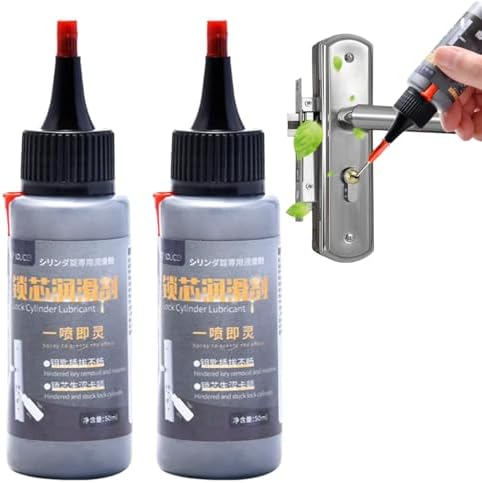
This generic product is described as a dry graphite powder lubricant in a 50 ml container. The listing presents it for door locks and other locking mechanisms, with use in different seasons and a focus on locks that are prone to clogging.
The larger stated volume may appeal if you prefer having more product on hand than the small Hillman tube offers. However, the product details are less specific about its dispenser and application method. The description uses both powder and spray language, so check the package details before buying if a particular applicator style matters to you.
Because the listing provides limited detail about the product’s construction and precise use, it is harder to compare its application control with a clearly described narrow-tip tube or aerosol. Stick to the lock manufacturer’s guidance, and avoid adding lubricant repeatedly if the key still binds; the issue may need cleaning or repair instead.
Pros:
- 50 ml stated volume is larger than the small 3-gram tube option.
- Described for door locks and other locking mechanisms.
- Powder format is presented as a dry lubricant.
- Listed for use in different seasons.
Cons:
- Product details are limited about application control and dispenser design.
- The description is unclear about whether it is applied as powder or spray.
Verdict: Consider this option if the 50 ml format appeals to you, but confirm the applicator and compatibility details before choosing it over a more clearly specified product.
Mul-T-Lock Cylinder Lubricant: A Brand-Specific Choice

Mul-T-Lock describes this 5-ounce spray as an approved lubricant for its mechanical and electromechanical cylinders. That brand connection is the main reason to consider it: a lock-specific lubricant can be a sensible option when it matches the cylinder maker’s recommendations.
The available product information is brief. It does not explain the formula, application method in detail, or specific care instructions, so it is difficult to compare its residue, precision, or cold-weather performance with the graphite products in this list. Check your lock documentation and the product label before use, especially with an electromechanical cylinder.
This is not the most informative all-purpose choice for an unknown lock. It makes the most sense when you own a compatible Mul-T-Lock cylinder and want to follow the brand’s guidance rather than selecting a lubricant based only on its general category.
Pros:
- Approved by Mul-T-Lock, according to the product description.
- Intended for mechanical and electromechanical cylinders.
- 5-ounce spray format provides more volume than a small tube.
Cons:
- Available product details do not explain the formula or application method.
- Its brand-specific positioning may not make it the best match for other locks.
Verdict: Pick Mul-T-Lock’s spray when you have a compatible Mul-T-Lock cylinder and its instructions point you to this product.
ABUS PS88: Specialist Spray for Moisture and Corrosion Protection

ABUS PS88 is a 50 ml specialist lock spray. Its listed features include protection against corrosion from salts, water, and humidity, as well as help preventing locks from freezing. The product description also notes that it uses no propellant gas.
Those features make it worth considering for locks exposed to weather or moisture. Unlike the Hillman and AGS products, the provided description does not identify this as a graphite lubricant, so it is better to treat it as a separate lock-care option and verify that it is suitable for your specific cylinder.
The compact container is smaller than the 5-ounce Mul-T-Lock spray. Also, the listing does not provide detail about the application tip or formula, so check the label for directions and compatibility rather than assuming it works like a dry graphite powder.
Pros:
- Designed to protect against corrosion from salts, water, and humidity.
- Described as helping prevent locks from freezing.
- No propellant gas, according to the product information.
- Compact 50 ml container.
Cons:
- The provided description does not identify it as a graphite lubricant.
- Application details and cylinder compatibility are not specified in the supplied information.
Verdict: ABUS PS88 is a potential fit for weather-exposed locks when the lock maker permits this type of specialist spray.
How to Choose a Lubricant for a Door Lock Cylinder
Check the lock maker’s instructions first
Lock cylinders can use different designs and materials, so do not assume one lubricant suits every lock. Check the product manual, manufacturer’s care instructions, or a locksmith’s advice before applying graphite or a spray. This is especially important for electromechanical locks, where the wrong product or application could affect operation.
Choose the right lubricant type
Dry graphite powder is designed to lubricate without the sticky residue associated with many oils. That can be useful where dust and grime are a concern, but graphite is not a universal answer. Specialist lock sprays, such as the ABUS and Mul-T-Lock options here, have different product descriptions and may be intended for particular locks or conditions. Follow the guidance for your cylinder rather than choosing by format alone.
Consider how precisely you can apply it
A narrow tube tip can direct powder into a keyway, while an aerosol may cover an area more broadly. If you need a targeted application, look for a clearly described precision tip. With any spray, protect nearby surfaces and use only the amount directed on the label.
Match the product to the lock’s environment
Outdoor locks may face damp conditions or freezing temperatures. AGS Lock-Ease is described for cold-weather locks, and ABUS PS88 is described as helping protect against moisture-related corrosion and freezing. Those features may matter for an exposed lock, but they do not replace checking product compatibility.
Look for clear product and applicator details
Check the container size, lubricant type, and application instructions before buying. A small tube can be convenient for occasional maintenance, while a larger container may suit someone caring for several compatible locks. If the product listing is unclear about whether it is powder or spray, verify that detail before ordering.
Do not use lubricant to mask a bigger problem
If a key remains difficult to insert or turn after you follow the lock maker’s care instructions, the cylinder may need cleaning, adjustment, or repair. Avoid forcing the key or repeatedly adding product. A locksmith can help identify a mechanical problem that lubricant will not solve.
Frequently Asked Questions
What is the best lubricant for a door lock cylinder?
There is no single best product for every cylinder. For a compatible keyed lock, a dry graphite product such as the Hillman tube or AGS Lock-Ease may be worth considering. For brand-specific or weather-related needs, check whether the lock maker recommends a specialist product.
Can I use graphite powder in any door lock?
No. Check the lock manufacturer’s instructions before using graphite. Some locks may require a different lubricant or care method, and electromechanical cylinders deserve particular attention to the manufacturer’s guidance.
Should I use oil in a sticky lock?
Do not assume that household oil is suitable. Some oil-based products can leave residue that collects dust and grime. Use only a lubricant approved for your lock, and follow its application directions.
How much lubricant should I apply?
Use the amount stated on the product label. Applying more is not necessarily better and may leave excess product around the keyway. If the lock still sticks, the cause may need attention beyond lubrication.
Is a spray or a powder easier to use?
It depends on the applicator and the lock. A narrow-tip tube can be more targeted, while a spray may be convenient for reaching inside a keyway. Check the product directions and protect nearby surfaces during application.
Can lock lubricant help with freezing?
Some products in this list are described for cold-weather use or as helping prevent freezing. That does not mean every lubricant is suitable for every outdoor lock. Check the label and your lock maker’s advice before applying one.
What should I do if lubrication does not help?
Stop adding product and avoid forcing the key. A worn key, debris, cylinder damage, or another mechanical issue may be responsible. Consider having the lock inspected by a qualified locksmith.
Final Recommendation
For a simple, targeted dry graphite option, the Hillman tube is a clear choice when your lock maker permits graphite. AGS Lock-Ease is worth considering if you prefer a spray and want a product described for cold-weather locks. For Mul-T-Lock cylinders, follow the brand’s guidance; for damp or exposed locks, check whether ABUS PS88 is compatible. If the lock manufacturer recommends a specific lubricant, use that advice as your starting point.
