
Choosing the best metal building wall insulation depends on your climate, wall design, and whether you need to control radiant heat, moisture, or both. The products below are reflective rolls made with foil or metalized film and a bubble or foam core. They are flexible and cover large areas, but they are not automatically a substitute for conventional insulation: reflective barriers work best when installed with the air space specified by the manufacturer.
| Product | Size | Core and facing | Best for |
|---|---|---|---|
| Houseables Metal Building Insulation Roll | 48 in × 50 ft | 3 mm foam core; foil and white film | Smaller buildings and flexible coverage |
| INSULATION MARKETPLACE Double Reflective Roll | 48 in × 50 ft | 3/16 in bubble core; foil and white film | Moisture-conscious indoor or outdoor projects |
| US Energy 72-Inch Double Reflective Roll | 72 in × 125 ft | 3 mm bubble core; reflective film on both sides | Large walls and buildings |
| US Energy Products Double Bubble White/Foil Roll | 48 in × 125 ft | 1/4 in bubble layers; white and foil facing | Large projects needing a longer roll |
| NASATECH White/Foil Double Bubble Roll | 36 in × 100 ft | Double bubble core; white and foil facing | Narrower wall sections and mixed uses |
Table of Contents
Our Picks: Best Metal Building Wall Insulation reviews
1. Houseables Metal Building Insulation Roll: A Flexible Choice for Smaller Projects

This Houseables roll measures 48 inches wide by 50 feet long and uses a 3 mm foam core between an aluminum-foil surface and a white film layer. The listing describes the foil as reflecting 95% of radiant heat and identifies the product as a Class 1/Class A fire-rated barrier. Treat those figures as product claims, and check the documentation and local rules for your specific project.
The roll format is useful when you want to cover a broad wall or ceiling without fitting many rigid panels. The listing also names sheds, pole barns, shops, garages, and doors as possible applications. Its flexible foam core may make it easier to handle around openings and other irregular areas than a rigid board, though careful measuring and sealing are still important.
This is a practical option for a smaller building or a project where a 50-foot roll is easier to manage than a much larger one. The main limitation is that a thin reflective roll should not be assumed to provide the same kind of thermal resistance as thick batt or board insulation. Follow the installation instructions, including any required air space, and consider whether your wall needs additional insulation.
Pros:
- Convenient 48-inch width and 50-foot roll length
- Flexible 3 mm foam core
- Foil and white film surfaces suit different installation needs
- Listing identifies it for walls, ceilings, sheds, and metal buildings
Cons:
- Shorter roll than the larger options in this roundup
- Reflective material alone may not meet a building’s full insulation needs
Verdict: Choose Houseables if you want a flexible, mid-size roll for a shed, shop, or smaller metal-building project.
2. INSULATION MARKETPLACE Double Reflective Roll: A Moisture-Resistant Option

This 48-inch-by-50-foot roll has a 3/16-inch bubble layer with reflective foil on one side and white polyethylene film on the other. The product description presents it as a radiant barrier and vapor barrier, and says it is suitable for indoor or outdoor use. Those claims make it worth considering for a metal building where humidity and condensation are concerns, but the wall assembly still needs to be designed to manage moisture correctly.
The bubble layer gives the material a different construction from Houseables’ thinner foam-core roll, while the foil-and-white-film faces can be useful when you want a reflective surface on one side and a lighter finish on the other. The listing also describes the material as tear-resistant and easy to cut. As with other reflective products, its performance depends on how it is installed; a reflective surface generally needs an air space to reduce radiant heat transfer.
Its 50-foot length makes it a reasonable fit for a single wall or a modest project, rather than a whole large building. The product description states a Class A/Class 1 fire rating and says it is made in the USA. Confirm the rating documentation before using it where building codes or an inspector require specific materials.
Pros:
- 3/16-inch bubble core with foil and white film faces
- Listing describes it as a vapor barrier for indoor or outdoor use
- Easy-to-cut roll format for wall and ceiling work
- Compact roll size may suit smaller jobs
Cons:
- Foil is listed on one side rather than both sides
- May need to be paired with other insulation for a high-performance wall
Verdict: Consider this roll for a smaller project where a bubble core and moisture-barrier claims are priorities, after checking the assembly requirements for your building.
3. US Energy 72-Inch Double Reflective Roll: Best for Covering Broad Walls
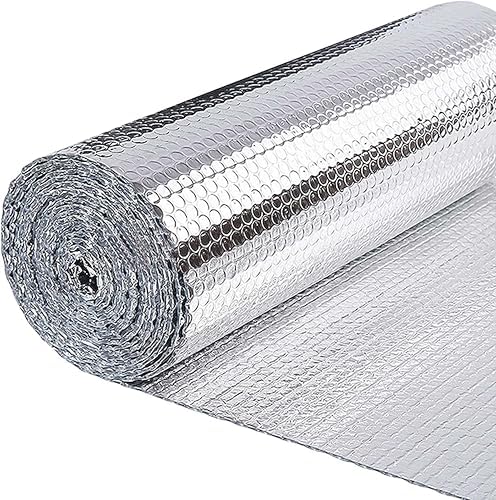
This wide roll measures 72 inches by 125 feet, giving it about 750 square feet of material before accounting for overlaps, cuts, and waste. It has a 3 mm single-bubble core laminated between two reflective metalized films. The listing describes the product as a radiant and vapor barrier and names pole barns, warehouses, commercial buildings, and walls among its applications.
The 72-inch width can reduce the number of seams on broad wall sections compared with a 36- or 48-inch roll. That can make layout faster, although a wide roll may take more care to hold and align during installation. This product’s double reflective faces distinguish it from options with foil on only one side. Its description claims 99.7% reflection of radiant energy and a Class A/Class 1 fire rating; check the manufacturer’s documentation for details before relying on either claim for a code-sensitive installation.
This roll may be more material than you need for a small shed or a single short wall. Also, the listing’s reflectivity figure does not by itself tell you the total thermal resistance of a finished wall. If your building needs strong winter insulation, compare the complete wall assembly—not just the radiant barrier—with your climate and local energy requirements.
Pros:
- Wide 72-inch material can reduce seams on large wall sections
- Long 125-foot roll offers about 750 square feet before waste
- Reflective film on both sides of the bubble core
- Listing names pole barns and commercial buildings as applications
Cons:
- Large roll may be cumbersome for one-person installation
- Reflectivity claims should not be mistaken for a complete wall R-value
Verdict: The 72-inch roll is a strong fit when you need broad coverage and want reflective faces on both sides, provided the wall design allows for proper installation.
4. US Energy Products Double Bubble White/Foil Roll: A Long Roll for Larger Jobs

This 48-inch-by-125-foot roll is listed as covering 500 square feet. Its construction uses two reflective metalized-film layers bonded to two internal layers of polyethylene bubbles, with white and foil surfaces. At a stated nominal thickness of 1/4 inch, it is thicker than the 3 mm options in this roundup, though thickness alone does not establish the performance of a finished wall.
The longer roll can be useful for covering several wall sections or a larger metal building while limiting the need to buy multiple short rolls. The description says it is designed for metal buildings and other areas, including basements and crawl spaces, and that it is not affected by moisture or humidity. It also lists a nominal R8 value and a Class 1/Class A fire rating. These are product specifications, not a guarantee of the R-value or code compliance of your finished wall.
Compared with the 72-inch option, this roll is narrower but may be easier to handle in tighter spaces. Compared with the Houseables roll, it has a longer run and a thicker bubble construction. Make sure the white/foil orientation, air space, seam treatment, and fastening method match the product instructions and your wall design.
Pros:
- Long 125-foot roll with 500 square feet of stated coverage
- Double-bubble construction with white and foil surfaces
- Stated 1/4-inch nominal thickness
- Listing includes a nominal R8 specification
Cons:
- Its 48-inch width may mean more seams than a wider roll
- Nominal product specifications do not replace a wall-assembly assessment
Verdict: Pick this option if you want a long roll with a double-bubble core for a larger project and have confirmed its specifications suit your wall assembly.
5. NASATECH White/Foil Double Bubble Roll: A Narrower Format for Wall Sections

The NASATECH roll is 36 inches wide and 100 feet long, which works out to about 300 square feet before cuts and overlaps. The description calls the material a double-bubble product made with two metalized layers and heavy-gauge polyethylene bubbles. It gives a nominal thickness of 5/16 inch in one place and also lists 1/4 inch as the nominal thickness, so confirm the current product specification before planning around a particular measurement.
Its narrower width may be useful when the wall layout has tighter sections or when handling a wider sheet would be awkward. The listing names warehouse walls and ceilings, concrete flooring, and use inside concrete slabs, in addition to other applications. It also states that the material is not affected by moisture or humidity and lists a nominal R8 value and Class 1/Class A fire rating. Check the product documentation and local requirements for the intended application.
Compared with the 48-inch rolls, this option covers less area per roll and will usually require more seams across a broad wall. Its construction and dimensions may still suit smaller sections, but it is important to plan for seams and waste before ordering. As with the other reflective products, it should be considered as part of a complete wall design rather than assumed to replace all other insulation.
Pros:
- Narrow 36-inch width can be easier to position in tight areas
- Double-bubble core with white and foil facing
- Listing names walls, ceilings, and concrete-related applications
- Stated nominal R8 specification
Cons:
- About 300 square feet per roll means less coverage than the longer options
- Product description lists two different nominal thicknesses
Verdict: Choose NASATECH when a narrower sheet is helpful for your layout, but verify the thickness and coverage details before buying.
How to Choose Metal Building Wall Insulation
Decide what problem you need to solve
Start by identifying whether the main goal is reducing radiant heat, slowing heat loss, controlling condensation, or improving comfort in a building you use often. Reflective rolls are designed to address radiant heat transfer, and some are also described as vapor barriers. They do not automatically provide the same kind of insulation as thick fiberglass, mineral wool, or rigid foam. For a heated or cooled workshop, compare the whole wall system with the performance needed for your climate.
Understand radiant barriers and air space
A reflective face needs to face an air space to reduce radiant heat transfer effectively. If it is pressed directly against another surface, its reflective function may be limited. Check the product instructions for the required air gap, which side should face the space, and whether the material is intended for the exact wall assembly you plan to build. Do not rely on a reflectivity percentage alone to predict energy savings.
Match the roll size to your wall layout
Measure the wall area and account for windows, doors, overlaps, and waste. Wider rolls can reduce the number of seams on broad walls, while narrower rolls may be easier to position around framing or in confined spaces. Longer rolls can be more efficient for large projects, but they can also be harder to handle. The listed coverage is a starting point, not a guarantee of the area you will finish.
Compare core material and thickness carefully
The products here use either a foam core or bubble layers, with listed thicknesses from about 3 mm to 5/16 inch. A thicker core does not automatically mean a higher effective R-value. Check the manufacturer’s technical information for the complete product and installation method, especially if you are comparing a radiant barrier with conventional insulation.
Plan for moisture and condensation
Metal walls can develop condensation when warm, moist air meets a cool surface. A vapor barrier may be part of the solution, but its placement depends on the climate, interior use, ventilation, and wall layers. Avoid trapping moisture between materials. For a frequently heated building or a wall with more than one insulation layer, consider asking a qualified building professional to review the assembly.
Check fire ratings and local building rules
Several listings state a Class A or Class 1 fire rating. Before installation, verify the rating documentation for the exact product and confirm that it is accepted for your building type and location. Local codes may set rules for exposed insulation, vapor barriers, and coverings, so do not assume a product listing alone establishes compliance.
Review installation details before ordering
Check how the manufacturer says to cut, overlap, tape, and fasten the roll. The right method can affect coverage and help avoid gaps. Also confirm which side should face the air space and whether the material is suitable for interior or exterior exposure in your planned application. If the instructions are unclear, contact the manufacturer before installation.
Frequently Asked Questions
Is reflective insulation enough for a metal building wall?
Not always. Reflective insulation is intended to reduce radiant heat transfer, while many buildings also need insulation that slows conductive heat flow through the wall. Whether a reflective roll is enough depends on your climate, building use, wall design, and local requirements.
Does reflective wall insulation need an air gap?
In general, a reflective surface needs an air space next to it to perform as a radiant barrier. Follow the specific product instructions for the required gap and placement. Installing the foil face directly against another material can limit its radiant-barrier function.
Can these rolls help with condensation?
Some listings describe their products as vapor barriers or say they inhibit condensation. The result depends on the full wall assembly, moisture levels, and climate. Use the product as directed and plan the wall so moisture is not trapped between layers.
Which roll is best for a large metal building?
The 72-inch-by-125-foot US Energy roll offers the widest format and about 750 square feet of material before waste. The 48-inch-by-125-foot US Energy Products roll offers 500 square feet. The right choice depends on your wall dimensions, ease of handling, and installation requirements.
What do Class A and Class 1 fire ratings mean for my project?
They are fire-rating claims stated in the product descriptions, but they do not automatically confirm that a product meets every code requirement for your building. Check the manufacturer’s documentation and local rules before installing the material, especially if it will be exposed.
Can I install a reflective roll directly against metal siding?
Do not assume that direct contact is the correct installation. Reflective barriers typically need an air space to work as intended, and the product instructions determine the appropriate placement. Check the wall design and manufacturer guidance before fastening the roll.
Final Recommendation
For a broad wall or large building, the US Energy 72-inch double reflective roll stands out for its width and long coverage. For a smaller project, Houseables offers a flexible 50-foot roll, while the INSULATION MARKETPLACE option emphasizes a bubble core and moisture-barrier use. If you choose either US Energy Products option, verify the listed thickness and R-value details for your specific assembly. In every case, treat reflective insulation as one part of a properly designed wall—not a guaranteed replacement for conventional insulation.
