
Non-slip hardwood deck tiles can refresh a patio, balcony, or other hard surface without a full decking project. The best fit depends on the wood, the backing design, drainage, coverage, and how securely the tiles connect. The options below use textured or slatted wood surfaces and interlocking bases, but no deck tile can eliminate the risk of slipping—especially when wet, dirty, or covered with algae.
Table of Contents
Quick Comparison
| Product | Wood | Set Coverage | Notable Feature |
|---|---|---|---|
| Josbuynls 36-Piece Larch Deck Tiles | Larch | About 36 sq. ft. | Four-way interlocking design |
| EcoTypee 36-Piece Camphor Pine Deck Tiles | Carbonized camphor pine | About 36 sq. ft. | Raised backing with drainage gaps |
| MEDUTEC Acacia Wood Deck Tiles | Acacia | About 10 sq. ft. | Low-profile, tool-free installation |
Our Picks: Best Non Slip Hardwood Decking reviews
Josbuynls Larch Deck Tiles: A Flexible Option for Larger Areas

This set includes 36 square tiles, each measuring 12 by 12 inches, for about 36 square feet of coverage. Each tile uses natural larch slats over a PE backing. The slatted layout leaves gaps between boards, while the product description says the textured surface and grooves are intended to add grip.
The four-way interlocking base snaps together without tools. That makes it practical for a renter or anyone who wants to lay tiles over an existing hard surface and later take them apart. The tiles can also be arranged in different directions, which gives you some flexibility when fitting a balcony or patio.
One point to keep in mind is that the slatted design needs a suitable, reasonably level surface beneath it. Gaps can help water pass through, but they do not solve drainage problems in the area below. As with any wood surface, plan to keep the tiles clear of debris and check them periodically for wear or movement.
Pros:
- 36 tiles provide about 36 square feet of coverage.
- Tool-free, four-way interlocking assembly.
- Slatted surface allows air and water to pass between boards.
- Tiles can be rearranged or removed for a different layout.
Cons:
- The listing does not specify a maintenance schedule or finish details.
- Gaps between slats may collect small debris and need cleaning.
Verdict: Choose the Josbuynls set if you want broad coverage and flexible, tool-free installation; look elsewhere if you need a seamless surface with no gaps.
EcoTypee Camphor Pine Tiles: Drainage-Focused Design for Patios
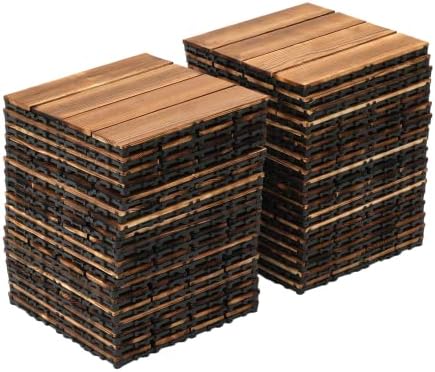
EcoTypee’s 36-piece set is made from carbonized camphor pine and has a thickened PE backing. Like the other full-size set here, it covers about 36 square feet when the 12-inch tiles are laid together. The wood slats and raised base are designed to let water drain through rather than sit on top of a solid tile.
The backing is described as having 32 support points per tile. The product listing also gives a load-bearing capacity claim, but that figure is a manufacturer specification, not a reason to use the tiles as structural decking. Install them over a stable, appropriate surface and follow the listing’s guidance for use.
Snapping the tiles together without tools should make this a straightforward project, and the pieces can be disassembled if you want to change the layout. The drainage-oriented construction may suit a patio that gets wet, though water still needs somewhere to go beneath the tiles. Its wood surface will also need routine care appropriate for outdoor wood.
Pros:
- 36 tiles cover about 36 square feet.
- Raised base and gaps between slats are designed to promote drainage.
- Tool-free assembly and disassembly.
- Carbonized camphor pine gives the set a distinct wood appearance.
Cons:
- The drainage gaps can allow dirt and leaves to pass beneath the tiles.
- The stated load capacity is a product claim, not a substitute for structural decking.
Verdict: EcoTypee is a strong option to consider when drainage and a larger coverage area matter, provided the surface underneath can handle water runoff.
MEDUTEC Acacia Tiles: A Low-Profile Choice for Smaller Spaces

These 12-by-12-inch tiles use solid acacia wood slats on a quick-click plastic base. The set contains 10 pieces, covering about 10 square feet, and the listed thickness is 0.75 inch. That low profile may be useful where you want to add a wood surface without raising the floor as much as thicker tiles would.
The product description presents the acacia as naturally water-resistant and intended for outdoor settings such as balconies, patios, and pool decks, as well as indoor rooms. The interlocking base is designed for tool-free installation and removal, which can be convenient for temporary flooring or a rental. Still, “water-resistant” should not be read as maintenance-free or as proof that the tiles are suitable for every wet location.
Compared with the two 36-piece options, this set covers much less area, so it may be better for a small balcony or a limited section of flooring than a full patio. The listing is marked unavailable in the supplied product information, so check its current availability before planning a project around it.
Pros:
- Acacia hardwood offers a natural wood look.
- Low-profile design is listed at 0.75 inch thick.
- Quick-click base is intended for tool-free installation and removal.
- Suitable for small areas where a 10-square-foot set is enough.
Cons:
- Ten tiles cover less area than the other sets in this guide.
- The listing is marked unavailable in the supplied product information.
Verdict: Consider MEDUTEC if you need a low-profile acacia option for a small area, but confirm availability and coverage before choosing it for a larger project.
How to Choose Non-Slip Hardwood Deck Tiles
Match the Set to Your Area
Measure the space before ordering and compare the result with the set’s listed coverage. The Josbuynls and EcoTypee sets each include 36 one-square-foot tiles, while the MEDUTEC set includes 10. Allow for cuts, edges, and the shape of the area; a simple square-foot calculation may not account for awkward corners or obstructions.
Look at the Surface and Slip Resistance
Slats, grooves, and surface texture can add friction and help water move between boards, but they do not make a floor slip-proof. Conditions such as rain, algae, dust, and spilled liquids can still make wood slippery. If the area gets wet often, keep it clean and use care when walking across it.
Check Drainage and the Surface Below
Interlocking tiles sit above the existing floor on a plastic base. Gaps and raised supports can let water pass through, but they do not correct poor drainage beneath the tiles. Confirm that the underlying patio or balcony can drain properly and that the added height will not block a door, drain, or threshold.
Choose Wood and Construction for Your Setting
The options here use larch, carbonized camphor pine, or acacia. Consider the look you want and the care you are willing to provide. Also check the base material and tile thickness: the backing affects how tiles connect and sit on the floor, while thickness can matter around doors and transitions.
Decide Whether You Need a Temporary or Fixed Installation
These products use snap-together bases, so they are designed to install without nails or glue and can be taken apart. That can be useful in a rental or for a reversible update. If you need decking that is firmly attached to a structure, these modular tiles are not a replacement for a properly built deck.
Plan for Cleaning and Upkeep
Slatted tiles can let debris fall between the boards, so consider how easy it will be to lift or move them for cleaning. Outdoor wood may need care over time, and the supplied descriptions do not provide a specific finishing or maintenance schedule. Check the product instructions for appropriate cleaning and ongoing care.
Frequently Asked Questions
Are hardwood deck tiles truly non-slip when wet?
No surface should be treated as slip-proof. Textured wood and gaps between slats may improve grip and drainage, but wet leaves, algae, dirt, or other substances can still create a slipping hazard. Keep the tiles clean and use caution when the surface is wet.
Can I install these tiles without tools?
All three products are described as interlocking tiles intended for tool-free assembly. The tiles snap together through their backing systems, though you should check the instructions for the specific product and layout.
Can I place deck tiles over concrete or an existing deck?
The MEDUTEC description specifically lists hard surfaces such as concrete, wood, and tile. The other sets are also presented as floor tiles for patios and similar areas. Before installation, make sure the surface is stable, level, clean, and able to drain.
How much area does each set cover?
The Josbuynls and EcoTypee sets contain 36 one-square-foot tiles each, for about 36 square feet. The MEDUTEC set contains 10 one-square-foot tiles, for about 10 square feet.
Can I use these tiles indoors?
The product descriptions mention indoor use for these tile styles, including rooms such as living areas, kitchens, or bathrooms. Before using them indoors, consider moisture, floor protection, door clearance, and whether the base beneath the tiles can stay dry.
Do the tiles need to be attached to the floor?
The listings describe snap-together installation without nails or glue. That makes the tiles removable, but it also means they are not permanently fixed to the underlying surface. Follow the manufacturer’s instructions and avoid using a loose modular system where a secure, structural deck is required.
Final Recommendation
For a larger area, the Josbuynls larch set offers 36 square feet of coverage and flexible four-way assembly. The EcoTypee set is worth considering if its raised backing and drainage-focused layout suit your patio. MEDUTEC’s acacia tiles are a smaller, lower-profile option, but the supplied listing information marks them unavailable. Whichever set you choose, measure carefully, confirm the surface below can drain, and remember that textured decking can reduce—but cannot remove—slip risk.
