
A rug that slides or bunches on a wood floor can be a daily nuisance and a tripping hazard. The right non-slip pad should match your rug’s size and backing, provide enough grip without making the rug awkwardly thick, and suit the floor’s finish. These five options include full-size cushioned pads, a narrow felt-and-rubber runner pad, and low-profile corner grippers for rugs that need help staying put.
| Product | Type | Best for | Key detail |
|---|---|---|---|
| GORILLA GRIP Slip Resistant Rug Gripper | Open-grid pad | Small rugs and mats | Trim-to-fit, reversible design |
| Veken Felt and Silicone Rug Pad | Cushioned full-size pad | Large area rugs | 8 × 10 feet; about 0.24 inch thick |
| GORILLA GRIP Felt Rug Pad with Rubber Backing | Felt and rubber pad | Runners and narrow rugs | 2 × 8 feet; 0.25 inch thick |
| Rabenda Rug Tape Grippers | Reusable corner grippers | Rug corners and edges | Thin, cuttable triangle pieces |
| Tiergrade 16-Piece Grid-Backed Rug Grippers | Adhesive grippers | Low-profile rug anchoring | Grid-style backing; washable and reusable by design |
Table of Contents
Our Picks: Best Non Slip Rug Pad For Wood Floors reviews
GORILLA GRIP Open-Grid Pad: A Practical Pick for Small Rugs

This 2 × 3-foot pad is a straightforward choice for a small area rug or doormat that keeps creeping across a hard floor. Its non-adhesive design has a grip surface on both sides, intended to help hold the rug and floor together without sticking the pad down. The open-grid construction also allows airflow beneath the rug.
The pad is thin and lightweight, so it adds less cushioning than the felt options in this guide. It can be trimmed with scissors to fit a different shape or smaller rug, and its reversible design gives you flexibility when positioning it. The listed material is vinyl, and the product is intended for hard floors, including hardwood and tile.
Some users report that a well-positioned pad helps keep small rugs in place during everyday use and makes vacuuming less frustrating. For best results, clean and dry the floor first, trim the pad so it sits inside the rug’s edges, and secure the rug corners. This option is less suited to shoppers who want a thick, plush layer beneath a large area rug.
Pros:
- Non-adhesive, dual-sided grip
- Open-grid design allows airflow
- Can be trimmed to fit
- Reversible and vacuum friendly
Cons:
- The 2 × 3-foot size is best for smaller rugs
- Offers less cushioning than a felt pad
Verdict: Choose this pad for a small rug or mat when you want a simple, trimmable grip layer rather than extra cushioning.
Veken Felt and Silicone Pad: Cushioned Coverage for Large Area Rugs

The Veken pad combines a dense felt-fiber blend with a silicone backing, giving it a different feel from the thinner grippers. This listed version measures 8 × 10 feet and is about 0.24 inch thick. Its large coverage and added cushion make it a reasonable match for a living room or bedroom area rug where softness underfoot matters as much as grip.
The pad is designed to help limit sliding, bunching, and wrinkles while adding a layer between the rug and the floor. It can be trimmed with household scissors, and the glue-free construction is intended not to fray when cut. The product information lists vacuum cleaning, so plan to vacuum it rather than wash it.
Its main trade-off is thickness: it may be too bulky for a doorway or another spot where a low rug edge is important. Measure your rug and check door clearance before choosing this size. Compared with the Gorilla Grip open-grid pad, the Veken offers broader coverage and more cushioning, but takes up more space and is less suited to small mats.
Pros:
- Large 8 × 10-foot size for area rugs
- Felt-and-silicone construction adds cushion and grip
- Can be cut to fit a rug
- Glue-free design is intended to resist fraying
Cons:
- Its thickness may not suit doorways or low-clearance doors
- Care instructions specify vacuuming only
Verdict: Pick the Veken if you need a large, cushioned underlay and have enough clearance around the rug.
GORILLA GRIP Felt and Rubber Pad: A Cushioned Fit for Runners

This 2 × 8-foot pad is sized for a runner or similarly narrow rug. It pairs dense felt with a textured rubber backing, so it provides more cushioning than a thin open-grid gripper while adding a slip-resistant underside. At 0.25 inch thick, it can also help a thin runner feel softer underfoot.
The felt is described as dense and designed to resist crushing over time. The pad is intended for several rug styles and hard-floor surfaces, including hardwood, and can be trimmed with scissors for a custom fit. Its long, narrow shape is convenient for hallways, but it is not a full-room solution unless you are using it under a matching runner.
Some users report that the rubber backing helps rugs stay in place while vacuuming, and the extra padding can reduce the hard feel of a thin rug. As with any pad, make sure it is cut slightly smaller than the rug so it does not show around the edges. Compared with the Veken, this one gives up broad coverage for a runner-friendly shape.
Pros:
- Runner-sized 2 × 8-foot format
- Felt and textured rubber combine cushioning with grip
- Can be trimmed for a closer fit
- Suitable for a range of rug styles and hard floors
Cons:
- May be too thick for some door clearances
- The narrow size is not suited to most large area rugs
Verdict: This is a strong option for a runner when you want noticeable cushioning along with a grippy backing.
Rabenda Triangle Grippers: Low-Profile Help for Rug Corners

Rather than covering the entire underside of a rug, Rabenda’s 12 triangle grippers are intended to anchor corners and help keep edges from curling. Their thin profile makes them less noticeable than a thick pad, and the pieces can be cut into smaller shapes or strips for different rug corners.
The grippers are designed to adhere to both the rug and the floor, and the manufacturer says they can be removed and cleaned with water or soapy water to restore their adhesion. That stick-on approach can be useful when a full-size pad is unnecessary, but it also calls for more care than a loose, non-adhesive pad. Follow the product instructions, and consider the floor and rug backing before applying them.
Rabenda specifically advises against using these grippers with fluffy, jute, or rubber rug backing, or on rugs over carpet. The adhesive may not hold properly on those materials, and fluffy backing could be pulled when the grippers are removed. This is a targeted fix for compatible rugs, not a universal choice for every wood-floor rug.
Pros:
- Thin design stays hidden under rug corners
- Can help reduce corner curl and movement
- Pieces can be cut to suit different shapes
- Designed to be removable and washable
Cons:
- Not recommended for fluffy, jute, or rubber rug backing
- Adhesive grippers require extra care when applying and removing
Verdict: Choose Rabenda for compatible rugs that mainly need help at the corners, but skip it if the rug has a backing the manufacturer excludes.
Tiergrade Grid-Backed Grippers: A Reusable Adhesive-Style Option
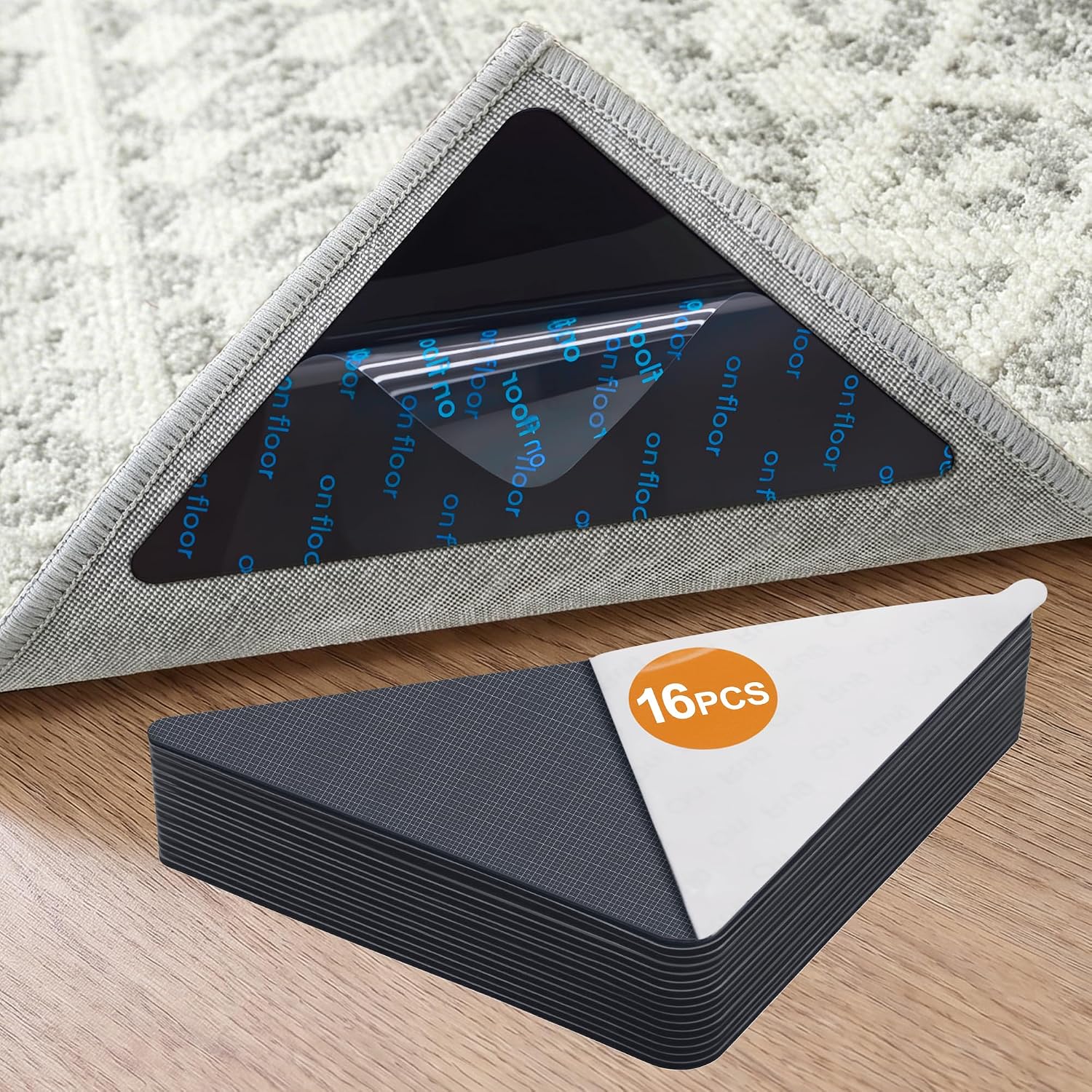
Tiergrade’s 16-piece set uses thin triangle grippers with a grid-style adhesive backing. The pieces are meant to increase contact beneath rug corners and edges while staying out of sight. Unlike a full-size pad, they add little cushioning, so their main purpose is to help anchor a rug rather than make it softer.
Installation involves cleaning the rug backing and floor, sticking one side of each gripper to the rug, then removing the other liner and pressing the gripper onto the floor. The product describes the pieces as washable and reusable, and its grid design is intended to allow airflow. In everyday use, some owners report that the grippers keep small mats from shifting and make them easier to vacuum.
This adhesive-style design is not right for every rug or floor. The manufacturer advises against use on fluffy, jute, or rubber backing and on rugs placed over carpet. Although the product is designed to remove without residue, adhesive can be a concern on delicate finishes; test cautiously and follow your flooring maker’s care guidance. Compared with Rabenda, the set offers more pieces and a grid backing, but shares similar material restrictions.
Pros:
- Thin pieces are designed to stay hidden
- Grid-style backing is intended to allow airflow
- Washable and reusable by design
- Useful for anchoring corners and small mats
Cons:
- Not recommended for fluffy, jute, or rubber rug backing
- Adhesive application may not suit delicate floor finishes
Verdict: Consider this set for compatible rugs when you want discreet corner grip, but choose a non-adhesive pad if you would rather avoid sticking anything to the floor.
How to Choose a Non-Slip Rug Pad for Wood Floors
Match the Pad to Your Rug’s Size
A pad should support the rug without showing beyond its edges. Measure the rug before shopping, then compare those measurements with the pad’s listed dimensions. A larger pad may be trimmed if the product allows it, while small grippers can be placed only where the rug needs help. For a runner, a long narrow pad is often easier to fit than a large rectangular one.
Choose the Right Grip Style
Non-adhesive pads rely on their surfaces to grip both the rug and floor. They are a practical starting point if you prefer not to attach anything directly to your flooring. Adhesive grippers can be useful for stubborn corners or thin mats, but they require careful placement and may not suit every rug backing or floor finish.
Consider Thickness and Door Clearance
Felt pads provide more cushioning, but added height can interfere with doors or create a raised edge. Measure the gap beneath nearby doors and consider how thick the rug will be once the pad is added. A thin gripper is usually a better fit for a doorway, while a thicker felt pad may feel more comfortable in a living area.
Check the Rug Backing
Not every grip material works with every rug. Adhesive products in this guide warn against use with fluffy, jute, or rubber backing. For other rug types, check the product’s compatibility information before buying. If you are unsure, a non-adhesive pad may be the simpler option, provided it is designed for the rug and floor surfaces involved.
Protect the Floor Finish
Wood floors can have different finishes and care requirements. Clean and dry the floor before placing a pad, and follow both the flooring maker’s guidance and the pad’s instructions. Take extra care with adhesive products, particularly on delicate or recently treated finishes. If you are uncertain, test in an inconspicuous spot first.
Think About Cleaning and Upkeep
Some pads can be vacuumed, while others have specific cleaning instructions. Trimming a pad to sit inside the rug’s edges can also help keep it concealed. If you expect to lift the rug often, consider whether you want a reusable adhesive design or a loose pad that can be picked up and repositioned.
Frequently Asked Questions
What type of rug pad is best for hardwood floors?
The best type depends on your rug, floor finish, and need for cushioning. A non-adhesive pad is a useful starting point if you want to avoid sticking a gripper to the floor. Felt-and-rubber or felt-and-silicone options add more cushioning, while adhesive corner grippers create a lower-profile hold.
Should a rug pad be the same size as the rug?
It should generally be slightly smaller so it stays hidden beneath the rug. Follow the pad maker’s fitting instructions, and trim the pad only if the product is designed to be cut.
Can I use adhesive rug grippers on wood floors?
Some grippers are marketed for hardwood, but floor finishes and rug backings vary. Check the product instructions and your flooring care guidance before use. If you are concerned about adhesive, consider a non-adhesive pad instead.
Will a thick rug pad stop a rug from sliding?
Thickness alone does not guarantee grip. Look for a pad with a backing designed to hold the floor and a surface suited to your rug. A cushioned pad can add comfort, but it still needs to fit properly and work with the rug’s backing.
Can I cut a rug pad to fit an unusual rug shape?
Several options in this guide are designed to be trimmed. Use household scissors where the product allows it, and cut the pad so it remains inside the rug’s outline. Do not cut a product unless its instructions permit trimming.
How do I keep a rug pad from showing?
Measure the rug and pad, then trim the pad to sit inside the rug’s edges if trimming is allowed. For corner grippers, position them beneath the rug rather than close to its visible edge.
Final Recommendation
For most shoppers who want cushioning under a large area rug, the Veken felt-and-silicone pad is the most suitable pick here, provided its thickness works with nearby doors. For a runner, the GORILLA GRIP felt-and-rubber pad offers a more appropriate shape. If you need a low-profile fix for a small rug, the non-adhesive GORILLA GRIP open-grid pad is a simple option; choose adhesive corner grippers only after checking the rug backing and floor-care guidance.






