
Choosing the best oil-based exterior wood sealer depends on whether you want a natural wood look, a tinted finish, or a product that combines stain and water protection. The options below include penetrating-style stain-and-sealer products, a clear sealer, and a product listing with details you should verify before ordering. Compare the finish, application needs, and regional availability with your project before you buy.
Table of Contents
Quick Comparison
| Product | Finish | Size | Best for |
|---|---|---|---|
| Ready Seal Natural Cedar, 5 Gallon | Natural cedar, semi-transparent | 5 gallons | Large fences, decks, and siding projects |
| Ready Seal 112 Natural Cedar, 1 Gallon | Natural cedar | 1 gallon | Smaller projects and cedar surfaces |
| Ready Seal 500 Clear, 5 Gallon | Clear, transparent | 5 gallons | Large projects where you want a clear finish |
| Thompson’s WaterSeal Clear Wood Sealer | Clear, fully transparent | 6 gallons | Large areas needing a clear sealer |
| TWP 101 Pro-Series Cedartone | Cedartone stain | Check listing | Exterior wood where water repellency is a priority |
Our Picks: Best Oil Based Exterior Wood Sealer reviews
1. Ready Seal Natural Cedar, 5 Gallon: Best for Large Wood Projects

This five-gallon Ready Seal is a semi-transparent stain and sealer in a natural cedar shade. It is intended for outdoor wood such as decks, fences, and siding, so it can suit projects where you want some color along with protection rather than a fully clear finish.
The listed formula is designed to apply without back-brushing or maintaining a wet edge, and the product information says it can be applied with a sprayer, roller, or brush. It also describes resistance to moisture and UV exposure. The listing says it may be applied in direct sunlight and can withstand rain within minutes, but follow the product label for surface preparation and weather guidance for your specific job.
The five-gallon container makes this a practical option for larger areas, though it may be more than you need for a small fence section or a few boards. Compared with the one-gallon Ready Seal, this size is better suited to covering more wood in one project. Choose another product if you want a clear finish or need a smaller container.
Pros:
- Semi-transparent natural cedar color combines stain and sealer.
- Designed for decks, fences, siding, and other exterior wood.
- Can be applied with a sprayer, roller, or brush.
- Five-gallon size suits larger projects.
Cons:
- The large container may be excessive for small jobs.
- The cedar tint changes the wood’s appearance rather than leaving it clear.
Verdict: Choose this Ready Seal if you have a sizable exterior project and want a semi-transparent cedar tone with a stain-and-sealer application.
2. Ready Seal 112 Natural Cedar, 1 Gallon: A Smaller-Project Pick

Ready Seal 112 is a one-gallon exterior stain and sealer in natural cedar. Its description specifically identifies it as oil-based and says it is made to penetrate wood while adding a cedar-colored finish. It is intended for outdoor surfaces such as cedar fences, decks, and siding.
The product information says it needs no primer and does not require back-brushing. That can simplify application, especially on a fence or other broad surface, but you should still prepare the wood and apply the product according to its label. The smaller container is easier to match to a limited job than the five-gallon option, although the listing does not provide a project-specific coverage estimate.
This is the more practical Ready Seal choice when you want the same general natural cedar look but do not need a large container. It is not a fit if your priority is a transparent finish, and the listing does not provide the same detailed application claims as the five-gallon Ready Seal product.
Pros:
- Oil-based stain and sealer in one product.
- Natural cedar finish is intended to enhance the wood’s appearance.
- Listed for fences, decks, and siding.
- One-gallon size can be more manageable for a smaller job.
Cons:
- The cedar color will alter the wood’s appearance.
- The listing does not state a coverage figure.
Verdict: Pick Ready Seal 112 if you want an oil-based cedar stain and sealer for a smaller outdoor wood project and prefer a one-gallon container.
3. Ready Seal 500 Clear, 5 Gallon: A Clear Finish for Larger Areas
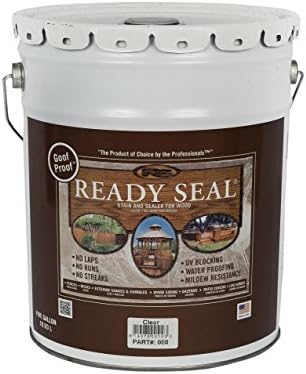
Ready Seal 500 is a five-gallon clear exterior wood stain and sealer. Its transparent finish is the main distinction from the natural cedar products in this group. If you want a clear product rather than a tinted stain, it is worth comparing with the other clear options here.
The supplied product details say it requires no primer and can be applied with a sprayer, roller, or brush. They also state that no back-brushing or wet-line application is required. Those features may help make application more straightforward across a large surface, but the available description does not spell out its full protection claims or confirm a specific base type. Check the label for those details before purchase.
The five-gallon size is aimed at larger jobs, not a quick touch-up. Compared with the tinted Ready Seal products, this option avoids adding a cedar shade; compared with the Thompson’s WaterSeal listing, it has more application information in the supplied description.
Pros:
- Clear, transparent finish.
- Large five-gallon container for broad projects.
- Can be applied by sprayer, roller, or brush.
- Product details say no primer or back-brushing is required.
Cons:
- The large container may not suit a small project.
- The supplied description gives limited detail about protection and base type.
Verdict: Consider Ready Seal 500 if you need a clear sealer in a large container, but confirm the label’s protection details and compatibility with your wood before ordering.
4. Thompson’s WaterSeal Clear Wood Sealer: A Fully Transparent Option

This listing is for a clear, oil-based wood sealant in a six-gallon container. It is described as fully transparent, so it is intended for shoppers who want a clear sealer rather than a cedar-colored stain. The listing gives a stated coverage area of 2,400 square feet, but actual coverage can depend on the wood and application conditions.
There is an important listing detail to check before buying: although the product title names Thompson’s WaterSeal, the supplied brand field identifies KXUPOIAV. Because those details do not match, confirm the item name, packaging, and seller information on the product page before placing an order.
Its large container and stated coverage make it a candidate for extensive work, but the provided information is brief. It does not explain application tools or provide the same level of project guidance as some of the Ready Seal descriptions. If those details matter for your job, compare the product label or choose an option with clearer application information.
Pros:
- Clear and fully transparent finish.
- Oil-based sealant, according to the product title and details.
- Six-gallon container for larger projects.
- Listing provides a stated coverage area.
Cons:
- The listed brand field conflicts with the product title.
- The supplied description offers limited application guidance.
Verdict: This may suit a large project requiring a clear oil-based sealer, but verify the listing identity and product details before ordering.
5. TWP 101 Pro-Series Cedartone: Best for Water-Repellent Protection

TWP 101 Pro-Series is an oil-based, cedartone exterior stain and protectant. Its product description emphasizes water repellency and resistance to moisture-related problems, as well as a mildew-resistant surface. It is listed for a broad range of exterior wood, including decks, fences, siding, shingles, rough-sawn cedar, log homes, shakes, and fascia.
The product is described as suitable for application by brush, roller, or sprayer, with reapplication when the color begins to lighten. This makes it a potential choice if you want a colored finish and a maintenance approach based on watching the wood’s appearance. The listing does not state a container size in the supplied product data, so check the current product details to confirm the amount you need.
Regional availability is a key consideration: the description says TWP 101 is not available in California, Colorado, Connecticut, the District of Columbia, Delaware, Illinois, Indiana, Maine, Maryland, Massachusetts, New Hampshire, New Jersey, New York, Ohio, Pennsylvania, Rhode Island, Utah, or Virginia due to VOC regulations. It points shoppers in those areas toward the TWP 1500 Series as a low-VOC alternative.
Pros:
- Oil-based formula described as water repellent.
- Listed for many exterior wood surfaces.
- Can be applied with a brush, roller, or sprayer.
- Product description identifies a low-VOC alternative for listed restricted areas.
Cons:
- Not available in several states and jurisdictions listed by the manufacturer.
- The supplied product data does not specify container size.
Verdict: Choose TWP 101 if its cedartone finish and water-repellent focus suit your project and the product is available where you live.
How to Choose an Oil-Based Exterior Wood Sealer
Decide whether you want a clear or tinted finish
Clear products are the closest match if you want to avoid adding a cedar tone. Semi-transparent stains add color while allowing some of the wood’s appearance to show through. Compare the finish descriptions carefully: Ready Seal’s natural cedar products and TWP 101 are tinted, while the Ready Seal 500 and Thompson’s WaterSeal listings are clear.
Match the product to the size of your project
Container size matters when you are covering a deck, fence, or siding. The listed Ready Seal options include both one- and five-gallon sizes, while the clear Thompson’s WaterSeal listing is six gallons. The supplied TWP details do not state its container size. Use the product label’s coverage guidance and your project measurements to estimate how much you need, rather than assuming all wood uses the same amount.
Check the application directions
Application claims differ across these products. Ready Seal 112 says it requires no primer or back-brushing, and Ready Seal 500 lists sprayer, roller, and brush application without back-brushing or wet-line application. TWP 101 also lists those three tools. The Thompson’s WaterSeal details provided here do not specify an application method. Always follow the exact product label for surface preparation, tools, and conditions.
Consider the protection claims that matter to you
Outdoor wood can face moisture and sun exposure, but the product descriptions do not make identical claims. The five-gallon Ready Seal Natural Cedar description mentions moisture resistance and UV protection. TWP 101 highlights water repellency and a mildew-resistant surface. For the clear options, check the full label to confirm which protection features are included rather than assuming every clear sealer works the same way.
Check regional rules and listing details
TWP 101’s listing identifies several states and jurisdictions where the product is unavailable due to VOC regulations and names TWP 1500 Series as a low-VOC alternative. Also verify that the item listing matches the product you intend to buy. The Thompson’s WaterSeal listing title and supplied brand field do not match, so review the seller and packaging information before ordering.
Think about future maintenance
Maintenance needs depend on the product and conditions at your home. TWP 101’s description says to reapply when the color begins to lighten, while Ready Seal says no sanding or stripping is required for reapplication. Treat these as product-specific directions, not a universal rule for every coating. Read the label before recoating wood that already has a finish.
Frequently Asked Questions
What is the difference between a wood sealer and a stain-and-sealer?
A sealer is generally selected for protection, while a stain-and-sealer adds color as well. In this group, the natural cedar Ready Seal products and TWP 101 have tinted finishes; the clear listings are meant for shoppers who prefer a transparent appearance.
Which option is oil-based?
The Ready Seal 112 title identifies an oil-based stain, the Thompson’s WaterSeal title and details identify an oil-based sealer, and TWP 101 is described as oil-based. The supplied Ready Seal 500 description does not specify its base type, so check its product label if oil-based is a must-have.
Can I use these products on a deck or fence?
The Ready Seal Natural Cedar products are listed for decks and fences, and TWP 101 is listed for decks and fences as well as other exterior wood. Check each product label to confirm that your exact wood surface is suitable and to find the preparation instructions.
Should I choose a clear or cedar-colored sealer?
Choose clear if you want to avoid adding a tinted finish. Choose cedar-colored stain and sealer if you want to add color while protecting the wood. Test the product on an inconspicuous area when you are unsure how the finish will look on your specific wood.
Can I apply Ready Seal in direct sunlight?
The five-gallon Ready Seal Natural Cedar description says it can be applied in direct sunlight. Conditions and preparation still matter, so use the label’s instructions for the exact product and project.
Is TWP 101 available everywhere in the United States?
No. Its supplied product description lists states and jurisdictions where TWP 101 is not available because of VOC regulations. Check the current product listing and local rules before selecting it.
How do I know how much sealer to buy?
Measure the area you plan to coat and compare it with the coverage information on the product label. The Thompson’s WaterSeal listing states a coverage area, but wood condition and application can affect how much product a project requires.
Final Recommendation
For a large project where you want a semi-transparent cedar tone, Ready Seal Natural Cedar in the five-gallon size is the clearest all-around match in this group. For a smaller cedar-colored job, consider Ready Seal 112. If you want clear protection, compare Ready Seal 500 with the Thompson’s WaterSeal listing, paying close attention to the limited product details and, for Thompson’s, the mismatch in listing information. TWP 101 is a strong option to consider for its stated water-repellent focus, provided it is available in your area.
