
The best paint for basement walls that are already painted depends on what the walls are made of and what kind of paint is on them now. For painted drywall or wood, an interior paint made for previously painted surfaces may be the simplest fit. For concrete or masonry, a waterproofing coating may be worth considering—but do not assume it can go over an old paint layer. Check the product label, remove loose or peeling paint, and address moisture problems before painting.
Below are five options with different uses, from coatings designed for masonry to general-purpose paints. The key is to match the product to your wall and the condition of its existing finish.
Table of Contents
Quick Comparison
| Product | Best suited for | Key details |
|---|---|---|
| KILZ Basement and Masonry Waterproofing Paint | Concrete and masonry where waterproofing is the priority | Interior/exterior use; not for active leaks or floors |
| Zinsser WaterTite Mold & Mildew White Waterproofing Paint | Dry basement masonry needing a waterproof coating | Latex base, low odor, and mold- and mildew-resistant film |
| Hensire Exterior Wall Paint for Concrete & Masonry | Exterior masonry touch-ups | Water-based matte paint in a small container |
| KOMPOZIT Acrylic Paint & Primer | Previously painted interior walls, drywall, and wood | Two-in-one acrylic paint with a satin finish |
| DWIL White Paint for Walls | Small interior wall projects and touch-ups | Water-based paint kit; listed coverage is about 50–55 square feet per set |
Our Picks: Best Paint For Basement Walls Already Painted reviews
1. KILZ Basement and Masonry Waterproofing Paint for Concrete Walls

KILZ is the most directly basement-focused option in this group. It is designed for concrete, brick, cinder block, stucco, and other masonry surfaces, with a coating intended to help resist water infiltration. The manufacturer says it blocks up to 12 PSI of water pressure and can be used indoors or outdoors.
For an already-painted basement wall, the main question is whether the existing coating is compatible. The supplied product details do not confirm that this paint can be applied over every type of old paint. Check the label and prepare the wall as directed; a waterproof coating should not be treated as a guaranteed fix for a poorly bonded old finish. KILZ also says to fill holes and cracks with hydraulic cement before below-grade application and not to use the product on floors or walls with active water leaks.
It dries to the touch in about an hour, with recoat time listed at four hours, but the stated full cure takes seven to 14 days. That makes it a more specialized choice than ordinary wall paint. It is a stronger candidate for bare or properly prepared masonry than for painted drywall or a quick color refresh.
Pros:
- Made for concrete and masonry, including basement walls
- Interior and exterior use
- Designed to resist water pressure and alkali buildup
- Low-odor formula with a listed four-hour recoat time
Cons:
- Compatibility with an existing paint layer is not specified in the supplied details
- Not intended for active leaks or floors
Verdict: Choose KILZ when the basement wall is masonry and waterproofing is the goal, but confirm that the existing coating and wall preparation meet the label directions before applying it.
2. Zinsser WaterTite for Waterproofing Dry Basement Walls
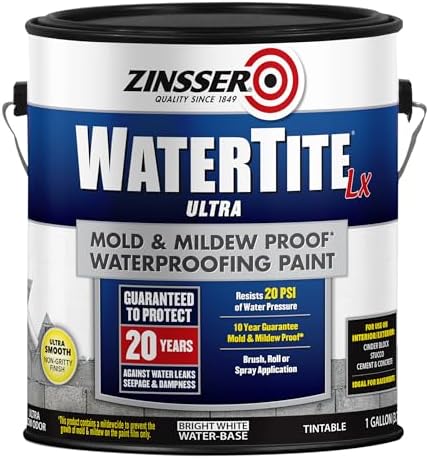
Zinsser WaterTite is a latex-based waterproofing paint with a smooth, bright-white finish. Its product description says it resists up to 20 pounds of water pressure and includes a 15-year waterproof guarantee and a 10-year guarantee for its mold- and mildew-resistant paint film. Those claims make it a purpose-built option for basement wall protection rather than a standard decorative wall paint.
The stated application is to dry walls, and the information provided does not establish that it can be applied over any existing paint. If your wall is already coated, check the can’s preparation and compatibility instructions before buying. A waterproofing finish is not a substitute for fixing a leak or resolving a moisture source.
The paint has a low-odor formula and soap-and-water cleanup, which can make application and cleanup more convenient. Compared with KILZ, its listed water-pressure resistance is higher, but product claims alone do not determine which coating is right for your wall. Surface compatibility and preparation should guide the choice.
Pros:
- Designed for waterproofing basement walls
- Lists resistance to up to 20 pounds of water pressure
- Latex base with a smooth, bright-white finish
- Low odor and soap-and-water cleanup
Cons:
- Listed for dry walls, not active leaks
- Supplied details do not confirm use over every existing coating
Verdict: Consider Zinsser for a dry, compatible basement wall where waterproofing is more important than a broad choice of decorative finishes.
3. Hensire Exterior Masonry Paint for Small Touch-Ups

Hensire is a water-based exterior paint for concrete, cement, brick, stone, stucco, and masonry. It has a matte finish and is described as self-priming on properly prepared compatible surfaces. The product is positioned for outdoor walls and facades, so it is not the natural first choice for a finished basement interior.
The listed container size is 17 ounces, making it more suitable for a small area than for painting a full basement. Its stated coverage is up to 11 square meters per liter, with actual coverage depending on surface texture, porosity, and application method. The product details give a touch-dry time of about two to three hours and a four-hour recoat time.
Because it is formulated for exterior masonry, check the label before using it indoors or over an existing coating. It may suit an exterior foundation wall or a small compatible masonry repair, but it is less versatile for a typical painted basement living area than the interior options below.
Pros:
- Designed for several types of exterior masonry
- Water-based matte finish with low odor
- Self-priming on properly prepared compatible surfaces
- Available in white, light gray, and black
Cons:
- Designed for exterior use, not specifically for basement interiors
- Small container is not suited to covering large walls
Verdict: Pick Hensire for a small exterior masonry job, not as your default paint for already-painted interior basement walls.
4. KOMPOZIT Acrylic Paint and Primer for Previously Painted Walls

KOMPOZIT is a two-in-one acrylic paint and primer for interior and exterior use. The product information lists drywall, wood, and previously painted surfaces among its uses, making it one of the more relevant choices here for refreshing an already-painted basement wall—provided that wall is a compatible surface.
The satin finish is described as durable and scrub-resistant, with resistance to moisture and frequent cleaning. That can be useful in a basement used for play, hobbies, or storage, where walls may need occasional wiping. It is listed as low odor, with touch-dry time of about one hour and recoat time of two to four hours.
There is an important limit: the supplied details name drywall and wood but do not specifically list concrete or masonry. Do not assume the paint-and-primer formula makes it suitable for every basement wall material. It is also not presented as a waterproofing coating, so choose another approach if your main concern is water entering through masonry.
Pros:
- Specifically lists previously painted surfaces among its uses
- Paint-and-primer formula for compatible surfaces
- Satin finish described as scrub-resistant
- Low-odor formula with a short listed recoat time
Cons:
- Does not specifically list concrete or masonry in the supplied details
- Not described as a waterproofing paint
Verdict: For an already-painted basement drywall or wood wall in sound condition, KOMPOZIT is the most straightforward general-purpose option in this list.
5. DWIL White Wall Paint for Small Interior Projects

DWIL is a water-based interior wall paint sold with a roller kit. The product description says it can be used on interior walls and wood, has low odor, and does not require a primer. It is presented as a convenient option for small projects, but the listed container is 32 ounces and the stated coverage is about 50 to 55 square feet per set.
The description recommends two coats for a uniform appearance and says the paint dries in 24 hours, with a full cure in seven days. It also says the formula can be diluted with up to 5% water if needed. Follow the product directions rather than relying on the “no sanding” claim for every wall: old paint that is loose, glossy, dirty, or damaged may still need preparation.
DWIL may work for a small painted drywall area or a touch-up, but the supplied details do not specifically identify concrete or masonry as suitable surfaces. It is not described as a basement waterproofing product. For a whole basement, compare the package coverage with your wall area before choosing it.
Pros:
- Water-based interior paint for walls and wood
- Includes a roller kit
- Low-odor formula and listed no-primer application
- Useful size for touch-ups or limited areas
Cons:
- Limited stated coverage per set for larger basement projects
- Not described as waterproofing paint or specifically for masonry
Verdict: Choose DWIL for a small interior wall refresh when the surface is compatible; for a full basement or masonry walls, look for a product specifically suited to that job.
How to Choose Paint for Basement Walls That Are Already Painted
Identify the wall material
First determine whether the wall is drywall, wood, concrete, brick, or cinder block. The products in this guide do not all suit the same surfaces. KOMPOZIT and DWIL list interior walls or wood, while KILZ, Zinsser, and Hensire are aimed at masonry. When a product description does not name your wall material, check the label or manufacturer’s instructions before applying it.
Decide whether you need a finish coat or waterproofing
If you want to change the color of a dry, sound interior wall, a general-purpose interior paint may be enough. If the wall is masonry and water resistance is the priority, consider a product made for waterproofing masonry. Neither type of paint should be treated as a fix for an active leak; KILZ specifically says it is not for walls with active water leaks.
Check compatibility with the existing paint
“Previously painted” does not mean compatible with every old coating. The existing finish may be loose, peeling, dirty, or otherwise unsuitable for a new layer. Read the product directions for surface preparation and any restrictions on painted surfaces. If you are unsure how the new paint will bond, test a small, inconspicuous area first.
Prepare the wall before painting
Remove loose or peeling paint and clean the surface as directed by the product label. For below-grade masonry, KILZ’s supplied directions call for filling holes and cracks with hydraulic cement before painting. Give repairs and cleaned surfaces time to dry as instructed. Good preparation is especially important when you are painting over an older finish.
Compare finish, coverage, and application time
Consider the finish you want, how much wall area you need to cover, and how long the project can take. KOMPOZIT is listed as satin, while Hensire is matte and Zinsser is described as smooth and bright white. DWIL lists about 50 to 55 square feet per set, so it is better suited to a limited area than a large basement. Recoat and cure times also differ, so read the label before planning the work.
Match the coating to the room’s use
A basement used as a living area may call for an interior wall paint, while an unfinished masonry space may need a coating intended for concrete or block. Think about whether the surface needs routine cleaning, whether appearance or water resistance matters more, and whether the product is approved for indoor use. Do not select an exterior-only coating for an interior project unless its directions allow that use.
Frequently Asked Questions
Can I paint over basement walls that have already been painted?
Often, yes, if the new paint is compatible with the wall material and existing coating and the old finish is sound. Clean and prepare the surface according to the new product’s directions. Do not apply a new coat over peeling paint or assume every waterproofing paint can go over an existing finish.
Should I use waterproofing paint over old paint?
Only if the product label allows application over that type of coating and the wall is prepared as directed. The supplied details for KILZ and Zinsser do not confirm compatibility with every existing paint layer. Check the label or ask the manufacturer if the surface is uncertain.
Is regular interior paint enough for a basement?
It may be suitable for a dry, compatible interior wall when your goal is a decorative refresh. Regular wall paint is not the same as a masonry waterproofing coating, and it will not solve an active leak. Choose based on the wall material and the problem you are trying to address.
Can waterproofing paint stop an active basement leak?
Do not rely on paint to fix an active leak. KILZ specifically says its product is not for walls with active water leaks. Find and address the source of water before painting, and follow the coating’s application instructions.
Which option is best for painted basement drywall?
KOMPOZIT is the clearest match in this group because its supplied description lists previously painted surfaces and drywall. Confirm that the old finish is sound and follow the label for preparation. DWIL is another interior option for a small area, though its listed coverage is limited.
Which option is best for concrete or cinder block?
KILZ is specifically described for concrete and cinder block walls, while Zinsser is positioned as basement waterproofing paint. Check the directions for surface preparation and compatibility with any existing paint. Hensire is described for exterior masonry, so it is not the default choice for an interior basement wall.
Conclusion
For already-painted basement drywall or wood, KOMPOZIT is the most direct fit among these options because it lists previously painted surfaces. For concrete or masonry where water resistance is the priority, consider KILZ or Zinsser, but confirm that the coating can go over your existing finish and prepare the wall as directed. Hensire is geared toward exterior masonry, and DWIL is better suited to small interior projects than a full basement. Before choosing any paint, identify the wall material, check for moisture problems, and follow the product label.
