The best paint for bathroom walls to prevent mold is a moisture-resistant interior paint made for damp spaces—but paint alone cannot solve a leak, poor ventilation, or mold growing behind the wall. For a straightforward bathroom repaint, Zinsser PERMA-WHITE is a strong place to start because its paint film is designed to resist mold and mildew. If you already have mold on a suitable surface, use a mold-killing primer as directed before applying a compatible topcoat.
Below, you’ll find five options with different roles: ready-to-use mold-resistant paints, a primer for existing mold, and an additive for mixing into paint. Check the product label for surface preparation, coverage, and application instructions, and address the source of excess moisture before painting.
Table of Contents
Quick Comparison
| Product | Type | Finish or format | Best for |
|---|---|---|---|
| Zinsser PERMA-WHITE Mold & Mildew-Proof Interior Paint | Interior paint | Eggshell, quart | Small bathroom painting projects |
| Zinsser Mold Killing Primer, Pack of 3 | Water-based primer | Matte, three-quart pack | Preparing suitable surfaces with existing mold |
| Rust-Oleum Mold and Mildew Proof Interior Paint | Interior paint | Satin, 1 gallon | A washable finish for bathroom walls |
| Paint-Guard Mold and Mildew Defense Paint Additive | Paint additive | Treats 1 gallon of paint | Adding mildew defense to compatible paint |
| Zinsser PERMA-WHITE Mold & Mildew-Proof Paint | Interior paint | Semi-gloss, listed as 1 gallon | A durable, washable bathroom finish |
Our Picks: Best Paint For Bathroom Walls To Prevent Mold reviews
1. Zinsser PERMA-WHITE Eggshell: A Convenient Choice for Small Projects

Zinsser PERMA-WHITE is a ready-to-use interior paint designed for spaces where moisture can be a concern. Its paint film is formulated to resist mold and mildew, and the product information says the film contains a mildewcide to help prevent growth on the coating. That distinction matters: it does not address mold elsewhere in the room or the moisture problem causing it.
This listing is a quart in eggshell white, making it a practical size for a small bathroom, a patch of wall, or a touch-up project. The paint is self-priming, so the manufacturer says sanding is not required for that purpose. It is also described as washable and scrubbable with soap and water. Follow the label’s surface-preparation and application instructions, especially if the existing coating is damaged or the wall has had mold growth.
Compared with the gallon-size paints below, this is easier to consider when you need less product. Its eggshell finish is less glossy than semi-gloss, while still offering a washable surface. The trade-off is that a quart may not be enough for a larger room, and its mold-resistance claim applies to the paint film rather than the whole bathroom.
Pros:
- Formulated to resist mold and mildew on the paint film.
- Quart size can suit small areas and limited projects.
- Self-priming formula is described as requiring no sanding.
- Washable, scrubbable finish cleans with soap and water.
Cons:
- A quart may not cover a full bathroom.
- It will not fix leaks, poor airflow, or mold beneath the coating.
Verdict: Choose this eggshell PERMA-WHITE option for a smaller bathroom painting job when you want a purpose-made mold-resistant paint in a quart container.
2. Zinsser Mold Killing Primer: For Treating Existing Mold on Suitable Surfaces
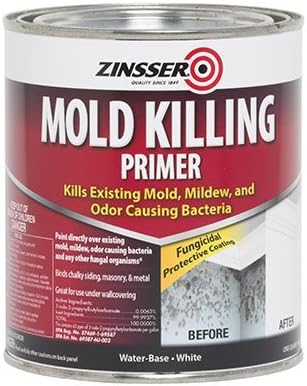
This product is a water-based primer, not a finished bathroom paint. It is specifically formulated to paint over and kill existing mold, mildew, moss, fungi, and odor-causing bacteria on non-porous interior and exterior surfaces. Its listing also describes an antimicrobial ingredient intended to help prevent future growth on the primer film.
The primer is low odor and cleans up with soap and water. It is listed as drying to the touch in about 30 minutes, with recoating within an hour. The stated coverage is up to 160 square feet, but actual coverage depends on the surface and application. The three-quart pack may suit a larger job or a household planning to keep extra primer on hand.
Use it only after following the label’s directions for the affected surface. A primer is not a substitute for correcting a leak, improving ventilation, or dealing with extensive mold contamination. The product can be used with any topcoat, and the listing names Zinsser PERMA-WHITE as one suitable pairing. Compared with the ready-to-use paints here, this is the more specialized choice for surface preparation—not a one-step final coating.
Pros:
- Formulated to kill existing mold on specified non-porous surfaces.
- Water-based formula cleans up with soap and water.
- Listed to dry to the touch in about 30 minutes and recoat within an hour.
- Can be covered with a compatible topcoat.
Cons:
- It is a primer, so a finished paint coat may still be needed.
- Its stated use is for non-porous surfaces; check the label before applying to your wall material.
Verdict: Consider this primer when you need to treat existing mold on a surface named in its instructions, then finish the wall with an appropriate topcoat.
3. Rust-Oleum Mold and Mildew Proof Paint: A Satin Gallon for Larger Areas

Rust-Oleum’s mold and mildew proof interior paint is a ready-to-apply paint option in a one-gallon container. The satin finish is described as washable and scrubbable, with resistance to stains and moisture. It is also self-priming, so the product is designed to adhere without sanding when used as directed.
The water-based formula is listed as low odor and fade resistant. The paint can be tinted to off-white, pastel, and medium colors, which gives you more flexibility than choosing only a white finish. For a bathroom, its washable coating is a useful feature on walls that may need routine cleaning. As with any paint, the underlying surface still needs to be suitable, sound, and prepared according to the label.
This gallon-size option may be a better fit than the quart-size PERMA-WHITE for a broader repaint. It does not list the same five-year paint-film guarantee found in the PERMA-WHITE product information, and no paint can correct moisture trapped in a wall. Choose it for its satin finish and stated moisture- and stain-resistant coating rather than as a fix for an ongoing mold problem.
Pros:
- One-gallon size suits larger painting areas.
- Satin finish is described as washable and scrubbable.
- Self-priming formula is designed to adhere without sanding.
- Can be tinted to off-white, pastel, and medium colors.
Cons:
- It is not a mold-killing primer for treating existing growth.
- A gallon may be more than needed for a small repair or touch-up.
Verdict: Pick this Rust-Oleum paint if you want a gallon of washable satin interior paint with stated moisture resistance for a larger bathroom project.
4. Paint-Guard Additive: A Flexible Option for Compatible Paint

Paint-Guard is a liquid additive that you mix into paint, primer, or another coating rather than apply as a standalone wall paint. The listed container treats one gallon. It is intended to help inhibit mold and mildew growth on the treated coating, making it an option if you want to use a paint brand or color you already have in mind.
The product description says it mixes into interior or exterior paint and is intended for areas such as bathrooms, ceilings, kitchens, and basements. It also claims not to alter the paint’s color or texture once dry. Read and follow its directions carefully, and confirm compatibility with the particular paint or coating before mixing. The additive does not replace a mold-killing primer when existing mold needs treatment, nor does it correct water intrusion or persistent condensation.
Compared with a ready-made mold-resistant paint, an additive gives you more choice over the base paint but adds a measuring and mixing step. It may be useful when you want a particular finish or color, but it requires careful preparation to treat the full amount of paint correctly.
Pros:
- Designed to mix with paint, primer, or coating rather than serve as a topcoat.
- One container is listed to treat one gallon of paint.
- Can be used with compatible interior paint for bathroom walls and ceilings.
- Offers an alternative to buying a specialty paint line.
Cons:
- Requires mixing and careful measurement before application.
- Does not treat existing mold or solve the source of moisture.
Verdict: Choose Paint-Guard if you want to add mold-and-mildew defense to a compatible paint you have selected and are comfortable mixing the coating yourself.
5. Zinsser PERMA-WHITE Semi-Gloss: A Washable Finish for Bathroom Walls

This PERMA-WHITE option is an interior paint made for rooms that can get damp, including bathrooms, basements, kitchens, closets, and laundry rooms. It has a semi-gloss finish described as washable, and the product is self-priming. Its stated coverage is 300 to 400 square feet per gallon, though the amount you get can vary with the surface and application.
The product information lists a one-gallon offering, while the size details also describe a 64-fluid-ounce pack of two. Check the current listing carefully to confirm the container size and quantity before ordering. The semi-gloss sheen is a practical choice when you want a surface that can be wiped down, but it reflects more light than eggshell or matte finishes.
Compared with the quart PERMA-WHITE, this listing may suit a larger project, and its semi-gloss finish offers a different look from eggshell. Both are mold- and mildew-resistant paints, not remedies for mold hidden behind the wall. For affected surfaces, determine whether primer and additional remediation are needed before applying a topcoat.
Pros:
- Made for interior areas such as bathrooms and laundry rooms.
- Semi-gloss finish is washable.
- Self-priming formula is designed to adhere without sanding.
- Stated coverage is 300 to 400 square feet per gallon.
Cons:
- The semi-gloss sheen may look shinier than you want on walls.
- Listing size details should be checked to confirm the exact quantity included.
Verdict: Choose this PERMA-WHITE listing if you want a washable semi-gloss finish for a bathroom and have confirmed the container quantity matches your project.
How to Choose Bathroom Paint to Help Prevent Mold
Know whether you need paint, primer, or an additive
A mold-resistant paint is a finish coat designed to resist growth on its own painted film. A mold-killing primer is a different product intended for treating existing growth on surfaces listed on its label. An additive is mixed into compatible paint or primer. Choose based on the condition of your walls and follow the product directions; these products are not interchangeable.
Fix moisture problems before painting
Paint cannot stop mold caused by a plumbing leak, roof leak, wet building materials, or poor airflow. Check for recurring condensation and make sure the bathroom’s ventilation system is working as it should. Let damp surfaces dry and address water damage before painting. If mold is extensive, keeps returning, or appears to be inside the wall, consider getting qualified help rather than covering it with paint.
Match the finish to how you use the room
Eggshell has a less reflective look than semi-gloss, while semi-gloss is shinier and is described as washable on the PERMA-WHITE listing. Satin is another option and is described as washable and scrubbable on the Rust-Oleum listing. Consider how often you clean the walls and the appearance you want, then confirm the chosen finish is suitable for the surface.
Measure the area and check the container size
Estimate how much wall space you plan to paint and compare it with the product’s stated coverage. The PERMA-WHITE semi-gloss listing states 300 to 400 square feet per gallon, while the primer lists coverage up to 160 square feet. Real coverage depends on the wall and application. Pay close attention to pack size and quantity, especially when a listing has more than one container-size detail.
Prepare the surface and follow the label
Remove loose or peeling paint and prepare the wall as directed by the manufacturer. Do not apply a coating over a damp, unsound, or unsuitable surface. For existing mold, use a product specifically intended for that purpose and only on the surfaces named in its instructions. Allow each coat to dry and recoat within the times stated on the label.
Choose a paint you can maintain
Bathroom walls may need regular cleaning, so a washable or scrubbable finish can be useful. Check the product information for cleaning guidance and avoid harsh methods that could damage the coating. Even a mold-resistant paint film needs routine care and good moisture control to stay in sound condition.
Frequently Asked Questions
Does mold-resistant bathroom paint stop mold completely?
No. It is designed to resist mold or mildew on the paint film, but it cannot prevent growth caused by an ongoing leak, trapped moisture, poor ventilation, or mold behind the surface. Correct the moisture source and use the paint as one part of a broader prevention plan.
Can I paint over mold with regular bathroom paint?
Do not simply cover visible mold with ordinary paint. Follow appropriate cleanup and remediation steps, and use a primer specifically intended for existing mold only when the surface and conditions match its label. Extensive or recurring mold may need professional attention.
Is mold-killing primer the same as mold-resistant paint?
No. The Zinsser Mold Killing Primer in this list is intended to treat existing mold on specified surfaces. Mold-resistant paints such as PERMA-WHITE are finish coats designed to resist growth on the paint film. The primer may still need a suitable topcoat.
Should bathroom walls be painted with satin or semi-gloss?
That depends on the look and cleanability you prefer. The products listed here describe satin or semi-gloss finishes as washable, and semi-gloss has a shinier appearance. Compare finish samples if appearance is important, and check each product’s label for approved surfaces and cleaning directions.
Can I use Paint-Guard with any paint?
The product is described as mixing with interior or exterior paint, primer, or coating. Still, check its directions and confirm compatibility with the specific product you plan to use. Measure and mix the additive as instructed rather than estimating.
How much paint do I need for a bathroom?
Measure the wall area and compare it with the coverage listed for the paint you choose. Actual coverage can vary based on the surface, color, and application. Also check whether the listing includes one container or a multipack, since that affects the total amount you receive.
Final Recommendation
For most small bathroom painting projects in this group, Zinsser PERMA-WHITE Eggshell is the most straightforward pick because it is a ready-to-use interior paint formulated to resist mold and mildew on the coating. Choose the mold-killing primer instead when existing mold needs treatment on a suitable surface, and consider the gallon-size Rust-Oleum paint or semi-gloss PERMA-WHITE for larger areas. Whichever product you select, control moisture and follow the label—paint alone cannot prevent mold throughout a damp bathroom.