
Choosing the best paint for block basement walls starts with the condition of the wall, not the color. If you want a coating that helps resist water pressure, look for a masonry waterproofer made for concrete and block. These products are not a fix for active leaks, though: repair cracks and address the source of moisture before painting. Below, we compare four options and explain what to check before you buy.
Table of Contents
Quick Comparison
| Product | Best for | Key details |
|---|---|---|
| KILZ Basement and Masonry Waterproofing Paint | Versatile interior or exterior use | For concrete, brick, and block; claims to block up to 12 PSI |
| INSL-X WaterBlock Acrylic Masonry Waterproofer | Water-based wall coating with high alkali resistance | For interior and exterior masonry; claims to withstand up to 12 PSI |
| LANCO Dry-Coat Waterproofing Paint | Shoppers looking for a larger container | Listed as a smooth white, 5-gallon coating for basement, concrete, and foundation walls |
| Zinsser WaterTite Mold & Mildew Waterproofing Paint | Waterproofing with mold- and mildew-resistant film claims | White latex coating; the product description lists waterproof and mold-resistance guarantees |
Our Picks: Best Paint For Block Basement Walls reviews
KILZ Basement and Masonry Paint: A Versatile All-Around Option

KILZ’s water-based masonry coating is made for interior and exterior concrete, brick, stucco, and cinder block. For a basement project, that broad surface range makes it a flexible choice if you are coating more than one masonry area.
The product description says its coating blocks up to 12 PSI of water pressure and resists alkali buildup. It dries to the touch in about an hour, is listed as ready for a second coat in four hours, and takes seven to 14 days to cure fully. That cure time matters: wait for the coating to finish curing before treating the surface as washable or fully protected.
Preparation is especially important below grade. KILZ directs users to fill holes and cracks with hydraulic cement before painting, and it is not intended for walls with active water leaks or for floors. Compared with the other picks, its instructions and use cases are clearly spelled out, making it a practical choice for a typical block-wall project—provided the wall is sound and dry enough to coat.
Pros:
- Suitable for interior and exterior masonry surfaces.
- Claims to block up to 12 PSI of water pressure.
- Low-odor formula with a stated four-hour recoat time.
- Includes clear cautions about cracks, active leaks, and floors.
Cons:
- Requires cracks and holes to be repaired before application.
- Full curing takes longer than the initial drying and recoat times.
Verdict: Choose KILZ if you want a clearly specified, multipurpose masonry waterproofer for repaired basement block walls, and do not expect it to stop an active leak.
INSL-X WaterBlock: A Water-Based Coating for Masonry Walls

INSL-X WaterBlock is an acrylic, water-based coating for vertical concrete and masonry walls. Its listed uses include basement walls, foundations, retaining walls, cinder block, stucco, and brick, so it is aimed at projects where you want one coating for several types of masonry.
The product description claims resistance to hydrostatic pressure up to 12 PSI and high alkali resistance up to pH 13. It also identifies a specific application range: both the surface and air should be between 50°F and 90°F when you paint. Check the product label for surface preparation and application instructions before starting, since the supplied description does not list a recoat time or full cure time.
Its pressure claim is similar to KILZ’s, but the temperature guidance makes planning more important, especially in a cool basement or during a hot spell. If your project can be done within the stated conditions and you want a water-based masonry coating, INSL-X is a focused alternative. As with any coating in this category, it should not be treated as a substitute for repairing water entry.
Pros:
- Designed for vertical interior and exterior masonry walls.
- Claims to withstand up to 12 PSI of hydrostatic pressure.
- High alkali resistance is listed up to pH 13.
- Suitable for several surfaces, including block, brick, and stucco.
Cons:
- Application is limited to a stated temperature range of 50°F to 90°F.
- The supplied product details do not specify recoat or full cure times.
Verdict: INSL-X is a good option to consider if its temperature limits fit your project and you want a water-based coating with clearly stated masonry and pressure-resistance uses.
LANCO Dry-Coat: A Large-Format Option for Foundation Walls

LANCO Dry-Coat is listed as a white, smooth waterproofing paint for basement, concrete, and foundation walls. The supplied product information identifies a five-gallon container, which may suit a larger project better than a smaller-format product.
There is less technical detail available for this option than for KILZ or INSL-X. The product description does not provide a pressure-resistance claim, temperature range, surface-preparation steps, drying time, or coverage information. That makes it harder to compare its performance or estimate how much you need based on the supplied details alone.
Before choosing it, read the current container label and confirm that it is appropriate for your wall condition and intended location. The larger container can be convenient for covering a broad area, but it is less appealing if you only need to coat a small section or want detailed application specifications upfront.
Pros:
- Listed for basement, concrete, and foundation walls.
- White, smooth finish is specified in the product title.
- Five-gallon container may fit a larger coating project.
Cons:
- The supplied description does not include pressure-resistance or application details.
- A large container may be more than needed for a small repair or test area.
Verdict: Consider LANCO for a larger wall project only after checking the label for the performance and application details missing from the supplied description.
Zinsser WaterTite: Waterproofing with Mold-Resistant Film Claims
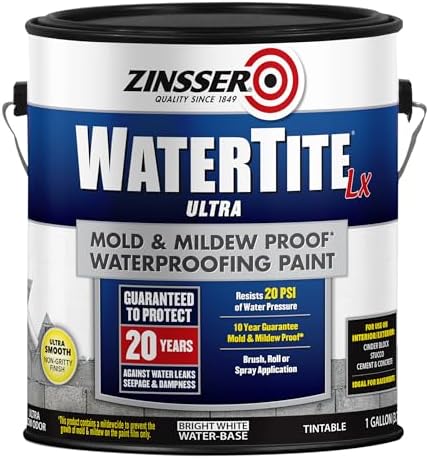
Zinsser WaterTite is described as a white, latex-based waterproofing paint for basement walls. Its product information highlights a smooth, bright finish and a paint film intended to resist mold and mildew. The description also states that the coating can be applied to dry walls with a brush or roller.
The listing claims the coating resists up to 20 lbs. of water pressure and cites separate waterproofing and mold- and mildew-resistance guarantees. The pressure figure is given in different terms from KILZ and INSL-X, so it should not be compared directly with their PSI claims. Read the product label for the exact conditions and terms behind any guarantee.
This could suit someone who puts a priority on the stated mold- and mildew-resistant finish. It is not a mold-removal product, however, and paint alone does not correct a moisture source. The supplied description also does not specify application temperature or recoat time, so check the label before planning the job.
Pros:
- Described as a smooth, bright white finish.
- Product information includes mold- and mildew-resistant film claims.
- Can be applied to dry walls with a brush or roller, according to the description.
- Lists separate waterproofing and mold-resistance guarantees.
Cons:
- Its pressure claim uses different wording from the PSI claims of other picks.
- The supplied details do not state application temperature or recoat time.
Verdict: Zinsser WaterTite is worth considering if its mold- and mildew-resistant finish claims match your needs, but confirm the guarantee terms and application instructions on the product label.
How to Choose Paint for Block Basement Walls
Decide Whether You Need Paint or a Waterproofer
Regular wall paint mainly changes the appearance of a surface. A masonry waterproofer is designed to help resist water passing through concrete or block. Check that the product specifically lists masonry or block and basement use. Even a coating marketed for waterproofing is not a cure for an active leak or a substitute for correcting the cause of moisture.
Check the Wall for Water and Damage First
Look for damp areas, cracks, holes, loose coating, and signs of water entering through joints. Follow the product’s repair instructions before painting. For example, KILZ specifies filling holes and cracks with hydraulic cement for below-grade use and says not to use its coating on walls with active leaks. If water continues to enter, deal with that problem before applying paint.
Match the Coating to Your Wall and Location
Confirm that the label covers your wall material, such as concrete block, poured concrete, brick, or stucco, and that it is suitable for interior basement use. If you are also coating exterior masonry, make sure the product permits both locations. Some products are intended for vertical walls, so do not assume a wall coating is suitable for a basement floor.
Compare Pressure Claims Carefully
Some products list a resistance figure in PSI, while others may use different wording or units. Compare claims only when the measurement and test conditions are clear. A pressure figure is not a promise that the coating will solve water problems in every basement; wall condition, preparation, and moisture source still matter.
Plan Around Temperature, Drying, and Cure Times
Check the label for the allowed air and surface temperatures, drying time, recoat window, and full cure time. INSL-X lists a 50°F to 90°F application range for both the surface and air. KILZ lists a four-hour recoat time and a longer full cure period. These are different milestones, so do not treat “dry to the touch” as fully cured.
Consider Finish, Odor, and Cleanup
Think about how the room will be used and how much ventilation you can provide while painting. The supplied descriptions identify KILZ as low odor and Zinsser as ultra-low odor, while Zinsser also describes a smooth, bright white finish and soap-and-water cleanup. Check the label for cleanup directions and the finish you can expect from your selected product.
Choose a Container Size That Fits the Job
Estimate the area you plan to coat, then compare it with the coverage stated on the product label. The supplied LANCO listing identifies a five-gallon container, but does not provide coverage details. Avoid relying on container size alone to estimate how much paint you need; wall texture and application instructions can affect the amount required.
Frequently Asked Questions
Can I paint directly over damp block walls?
Do not assume a masonry coating can be applied to a damp wall. Check the product label for surface-condition requirements and address water entering through the wall before painting. Zinsser’s supplied description, for example, specifies application to dry walls.
Will waterproofing paint stop an active basement leak?
No coating should be treated as a guaranteed fix for an active leak. KILZ specifically says its product is not for walls with active water leaks. Find and address the source of water, and repair cracks or holes as directed before coating the wall.
Can I use basement wall paint on the floor?
Not unless the product label specifically permits floor use. KILZ says its masonry waterproofer is not for floors, and wall coatings are not automatically designed for foot traffic.
Do I need to repair cracks before painting block walls?
Yes, follow the preparation steps on the product label and repair defects before coating. KILZ directs users to fill holes and cracks with hydraulic cement for below-grade application. Other products may have their own preparation requirements.
How long should I wait before applying another coat?
Recoat timing depends on the product and conditions. KILZ lists four hours before recoating, while the supplied details for the other options do not provide a recoat time. Use the current product label rather than assuming every coating dries at the same rate.
Is mold-resistant paint a replacement for removing mold?
No. A mold-resistant coating is intended to help the paint film resist mold or mildew; it does not remove existing growth or fix the moisture that allows it to develop. Address the source of dampness and follow appropriate cleanup guidance before painting.
Which paint is the best overall choice for block basement walls?
KILZ is the most straightforward all-around pick in this group because its description clearly lists block and other masonry uses, a pressure-resistance claim, drying and recoat times, and preparation cautions. INSL-X is a strong alternative if its stated application-temperature range fits your project. For either choice, repair the wall and confirm the label instructions before starting.
Final Recommendation
For most repaired, vertical block basement walls, KILZ Basement and Masonry Waterproofing Paint is the clearest all-around choice based on the supplied product details. INSL-X WaterBlock is a close alternative if you can work within its stated temperature range. Consider Zinsser if its mold- and mildew-resistant film claims are important to you, and verify LANCO’s application details before selecting it. Whichever coating you choose, prep the wall carefully and address active water problems before painting.
