
The best paint for an interior wood door should suit the door material, give you the finish you want, and fit your project timeline. Rust-Oleum Advanced Dry Door & Trim Paint is the most targeted choice here: it is made for doors and trim, works on wood, and comes ready to use. For a wood-grain effect, Giani’s kit offers a different approach, while Rust-Oleum Painter’s Touch is a versatile option for doors and other surfaces.
Table of Contents
Quick Comparison
| Product | Best for | Finish or look | Notable detail |
|---|---|---|---|
| Rust-Oleum Advanced Dry Door & Trim Paint | Everyday door and trim repainting | Satin white | Ready-to-use formula; dries to the touch in 45 minutes |
| Giani Wood Look Paint Kit | Creating a wood-look finish | English Oak effect | Three-step application; designed for interior or exterior doors |
| Rust-Oleum Painter’s Touch Latex Brush-On Paint | Versatile wood and multi-surface projects | Semi-gloss white | Water-based acrylic; covers up to 120 square feet |
Our Picks: Best Paint For Interior Wood Doors reviews
Best Overall: Rust-Oleum Advanced Dry Door & Trim Paint

This is the most straightforward pick if you want paint made specifically for doors and trim. The ready-to-use, pre-mixed formula is suitable for wood, metal, and fiberglass, so it can work for an interior wood door without requiring you to choose a general-purpose paint first.
The water-based formula is described as lower odor than traditional oil-based paints and resistant to fading. Its satin white finish is a practical middle ground if you want a soft sheen rather than a high-gloss look. It dries to the touch in 45 minutes, though that does not mean the finish is fully cured or ready for rough handling.
The quart size and door-focused formula make this a sensible choice for a focused door or trim project. It is less versatile in finish than the Painter’s Touch option, which is listed in semi-gloss white, and it does not create the decorative wood effect offered by Giani. The listed color is satin white, so check the available color options if you need a specific shade.
Pros:
- Made for doors and trim, and suitable for wood
- Ready-to-use, pre-mixed formula
- Water-based and lower odor than traditional oil-based paint
- Dries to the touch in 45 minutes
Cons:
- The listed version is satin white, which may not suit every color or sheen preference
- Touch-dry time should not be mistaken for full curing time
Verdict: Choose this paint if you want a ready-to-use, door-focused option for a standard satin-white finish on an interior wood door.
Best for a Wood-Grain Effect: Giani Wood Look Paint Kit
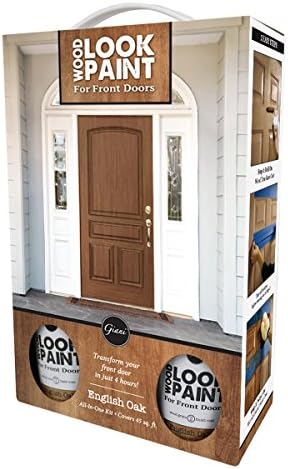
Giani’s kit is the specialty option in this group. Rather than providing a plain white finish, it is designed to give a door an English Oak wood-look effect. The kit is intended for interior or exterior doors made from common materials such as wood, painted steel, and aluminum.
The product description calls for a three-step application and says the quick-dry process can let you paint and close the door on the same day. It also describes the project as taking about four hours. Those details may appeal if you want to update a door’s appearance without replacing it, but this is a more specific decorative choice than a conventional solid-color repaint.
Because it is a wood-look kit, it is not the best match if you simply want a uniform white door. Follow the kit’s instructions closely, since the intended look depends on its application steps. Compared with Rust-Oleum Advanced Dry, Giani offers a more distinctive finish but is less direct as an everyday door-and-trim paint.
Pros:
- Designed to create an English Oak wood-look effect
- Suitable for interior doors as well as exterior doors
- Made for wood, painted steel, and aluminum doors
- Three-step process is designed for same-day door use
Cons:
- The wood-look style is less suitable if you want a simple solid-color finish
- Requires following a multi-step application rather than applying a standard paint alone
Verdict: Pick Giani if your goal is to give an interior wood door a decorative oak-style appearance rather than repaint it in a conventional solid color.
Best Multi-Surface Option: Rust-Oleum Painter’s Touch Latex Brush-On Paint

Painter’s Touch is a general-purpose brush-on paint rather than a door-specific product. Its water-based acrylic formula is suitable for surfaces that include wood, metal, plaster, masonry, and unglazed ceramic, making it a flexible choice if your project includes more than one material.
This version comes in semi-gloss white, and the product description says the finish minimizes surface imperfections and provides good hide. It covers up to 120 square feet and dries to the touch in 30 minutes. For a wood door, the listed preparation steps are to sand with 180- or 200-grit sandpaper, wash with a degreaser, let the surface dry, and then apply the paint.
Its main advantage over the other picks is versatility. It may be a good fit when you want one paint for a door and other project surfaces, but the door-specific Advanced Dry paint is a more direct option for a door-only job. The listed finish is semi-gloss white, so make sure that suits your desired look.
Pros:
- Suitable for wood and a range of other surfaces
- Water-based acrylic formula is low odor and resists chipping
- Covers up to 120 square feet
- Dries to the touch in 30 minutes
Cons:
- It is a multi-surface paint, not a formula made specifically for doors
- The listed version is semi-gloss white, which may not match your preferred finish
Verdict: Choose Painter’s Touch if you want a brush-on paint for a wood door and other surfaces, and its semi-gloss white finish fits your project.
How to Choose Paint for Interior Wood Doors
Match the paint to your door and project
Check that the paint is suitable for the door material and the kind of project you are doing. All three picks can work with wood, but their purposes differ: Rust-Oleum Advanced Dry is made for doors and trim, Painter’s Touch is a multi-surface paint, and Giani is meant to create a wood-look effect. If your door is not wood, verify that the product covers its material before buying.
Decide on the finish and color
Think about how you want the finished door to look before choosing a can. The products here include satin white, semi-gloss white, and an English Oak wood-look kit. A solid color gives a simpler appearance, while the Giani kit is the more decorative option. Match the sheen and color to nearby trim and the style of the room.
Consider application and preparation
Door painting takes more than choosing a color: the surface needs to be prepared, and the product’s directions matter. Painter’s Touch specifies sanding, cleaning with a degreaser, and allowing the surface to dry before painting. For the other products, follow the label and instructions supplied with the paint or kit. A decorative, multi-step kit may need a different approach from a ready-to-use door paint.
Plan around drying and door use
Drying information can help you plan when to start, but touch-dry does not mean fully cured. Advanced Dry lists a 45-minute touch-dry time, while Painter’s Touch lists 30 minutes. Giani describes a process intended to let you close the door the same day. Follow the product directions for recoating and handling, and avoid rushing a door back into heavy use.
Choose the right amount
Estimate the area you plan to paint and compare it with the coverage information on the product. Painter’s Touch lists coverage up to 120 square feet; the supplied details do not give a coverage figure for the other picks. The actual amount needed can depend on your door and application, so check the container guidance before you begin.
Frequently Asked Questions
What is the best paint for an interior wood door?
For a straightforward solid-color repaint, Rust-Oleum Advanced Dry Door & Trim Paint is the most door-focused option in this selection. It is suitable for wood and comes ready to use. Choose another product if you want a wood-look finish or a multi-surface paint.
Can I use regular multi-surface paint on a wood door?
Yes, if the product lists wood as a suitable surface and you follow its preparation directions. Painter’s Touch is a multi-surface option that includes wood, while Advanced Dry is specifically described as door and trim paint.
Which product creates a wood-look finish?
Giani Wood Look Paint Kit is designed to create an English Oak effect. It is the pick for someone who wants a decorative wood-style appearance rather than a plain white finish.
How long should I wait before using a freshly painted door?
Use the product’s instructions for handling, recoating, and returning the door to service. A touch-dry time is not the same as a full cure time. Giani describes a same-day process, but you should still follow its directions for your specific application.
Do I need to sand a wood door before painting?
Preparation depends on the product and the condition of the door. Painter’s Touch specifically directs users to sand with 180- or 200-grit sandpaper, clean with a degreaser, and let the surface dry. Check the directions for whichever paint you select.
Is satin or semi-gloss better for a door?
Neither finish is right for every room. Satin white offers a softer sheen, while semi-gloss white has a more noticeable sheen. Compare the finish with your trim and other painted surfaces, and choose the look you prefer.
Final Recommendation
For most people repainting an interior wood door in a solid color, Rust-Oleum Advanced Dry Door & Trim Paint is the clearest fit because it is made for doors and trim and is suitable for wood. Choose Giani if you want an English Oak wood-look effect, or Painter’s Touch if you value a multi-surface paint and prefer semi-gloss white. Before starting, check the product directions and make sure its finish, preparation steps, and timing work for your door.
