
Removing old paint from wood stairs takes more care than stripping a flat, open surface. Treads, risers, edges, and corners can hold paint in tight spots, while aggressive scraping or sanding may damage the wood. For most stair projects, a gel remover that stays where you apply it is a practical starting point. Before you begin, test a small, hidden area, check whether the existing coating may contain lead, and follow the product label for protective gear, ventilation, dwell time, and cleanup.
Table of Contents
Quick Comparison
| Product | Best for | What to know |
|---|---|---|
| Max Strip Paint & Varnish Stripper Gel | General paint and varnish removal | Water-based; requires a covered dwell period and water cleanup |
| Dumond Smart Strip Advanced | Multiple layers of paint | Can strip several coating types; must stay wet and be covered |
| Max Strip Citrus Paint Stripper Gel | DIY projects where a citrus scent is preferred | Designed for many aftermarket paints and coatings, but not baked-on finishes |
| Painthan Paint & Varnish Remover Gel | Vertical surfaces and detailed areas | Listing describes a thick, drip-resistant gel; test first |
| JAOJAO Advanced Paint & Varnish Remover | Small projects and spot removal | Compact 150 g container; listed as unavailable in the supplied product data |
Our Picks: Best Paint Remover For Wood Stairs reviews
1. Max Strip Paint & Varnish Stripper Gel: Best All-Around Option

Max Strip is a water-based gel made for removing aftermarket paints and finishes, including latex, acrylic, oil-based coatings, polyurethane, shellac, and varnish. That range makes it a versatile option if your stairs have more than one type of coating or you are not sure what was used.
Stair work calls for patient, controlled application. This product is not instant-acting: the supplied directions call for at least 15 to 30 minutes of dwell time, covering the gel with plastic film so it does not dry, and allowing more time or another application for heavy or layered coatings. After scraping, the product must be neutralized with water. Plan for that cleanup, especially on wood stairs where you want to avoid leaving residue in joints or corners.
The formula contains no methylene chloride or NMP, and the product description says it has no harsh fumes or unpleasant odor. Those details may make it more manageable for some indoor projects, but they do not remove the need to follow the label, protect surrounding surfaces, and keep the work area safe. It is not intended for factory-finished or baked-on coatings.
Pros:
- Designed for several common paint and varnish types
- Water-based formula without methylene chloride or NMP, according to the product description
- Gel format is practical for applying to stair risers and edges
- Directions provide a clear process for dwell time, scraping, and water cleanup
Cons:
- Requires covering during dwell time to prevent drying
- Not suitable for factory-baked or other excluded coatings
Verdict: Choose Max Strip if you want a versatile remover and are prepared to keep it covered, allow enough dwell time, and complete the required water cleanup.
2. Dumond Smart Strip Advanced: Best for Multiple Paint Layers

Smart Strip Advanced is a water-based, non-caustic remover designed for acrylic, latex, oil-based, and water-based paints, along with varnishes, stains, and other coatings. Its product description says it can remove multiple layers, making it worth considering for stairs that have been repainted several times.
Its key requirement is moisture control. The remover must remain wet to work, so the instructions call for covering it with Dumond Laminated Paper to reduce premature drying and support removal. On stairs, that means working in manageable sections and checking that the covering stays in place. Always test a small patch first: the coating type affects the needed dwell time and whether the product is compatible with the surface.
Smart Strip is described as suitable for wood and a range of other surfaces, and for indoor or outdoor use. It does not use methylene chloride or NMP, according to the listing. Compared with Max Strip, this is the more layer-focused choice, but it also calls for a specific covering method and careful planning. The supplied information does not give a universal dwell time, so follow the product’s instructions rather than assuming one timing works for every stair.
Pros:
- Designed to remove several layers of paint and other coatings
- Suitable for wood and many other listed materials
- Water-based and described as non-caustic
- Can be used indoors or outdoors, according to the product description
Cons:
- Must stay wet and requires a covering material during dwell time
- Test patch is important because coatings and dwell times vary
Verdict: Smart Strip Advanced is a strong candidate for thick, layered paint on stairs if you are willing to test first and use the recommended covering method.
3. Max Strip Citrus Paint Stripper Gel: Best Citrus-Scented Pick
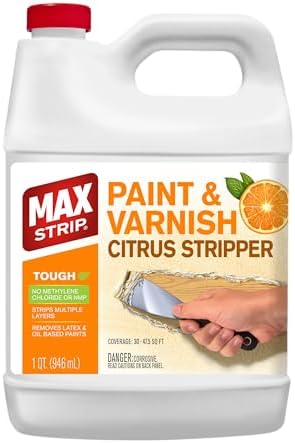
This citrus-scented gel is designed to remove many aftermarket paints and coatings, including latex, polyurethane, shellac, varnish, acrylic, and oil-based products. Like the other Max Strip option in this guide, it contains no methylene chloride or NMP, according to the product information.
The gel format can help you apply the remover carefully to vertical risers, stair edges, and other detailed areas. The instructions say to shake it well before use and check the surface every 15 minutes because set times vary. For a stair project, that makes it important to work in sections and avoid letting the product dry or spread onto areas you do not intend to strip.
The citrus scent may appeal if you prefer it to a product without a stated scent, but scent is not a substitute for safe handling or ventilation. The listing excludes deck coatings, factory-finished surfaces, and baked-on coatings such as vehicle paint. Compared with the standard Max Strip gel, the core appeal here is the citrus scent; confirm the directions and compatibility for your coating before choosing it.
Pros:
- Designed for a broad range of aftermarket paints and coatings
- Gel consistency suits controlled application around stair details
- Product description notes a fresh citrus scent and no harsh fumes
- Contains no methylene chloride or NMP, according to the listing
Cons:
- Not designed for factory-finished, baked-on, or deck coatings
- Set time varies, so the surface needs regular checking
Verdict: Pick the citrus version if its scent is a preference and your stair coating is within the product’s stated uses; it is not the right choice for excluded factory or baked-on finishes.
4. Painthan Paint & Varnish Remover Gel: Best for Vertical Areas

Painthan is a water-based gel remover whose product listing describes it as thick and drip-resistant. That format is useful to consider for stair risers and other vertical sections where a thinner liquid could be harder to keep in place.
The listing says it is intended for paints and coatings such as varnish, polyurethane, epoxy, and 1K and 2K paints, with a stated application window of 15 to 30 minutes. Those are product claims, not a guarantee for every finish or wood surface. Test a small, inconspicuous spot first, and follow the label to determine whether the remover suits your particular coating and how to clean the wood afterward.
The product is described as odorless and non-flammable. However, do not treat terms such as “non-toxic” or “eco-friendly” in a listing as a reason to skip the label’s safety instructions. Compared with the Max Strip options, Painthan emphasizes its cling on vertical surfaces and lists epoxy among its intended coatings. Its description does not spell out as much of a step-by-step cleanup process, so check the packaging before starting a full flight of stairs.
Pros:
- Thick gel is described as drip-resistant for vertical surfaces
- Listing names several coating types, including varnish and polyurethane
- Water-based formula is described as odorless and non-flammable
- Stated dwell window gives a starting point for a test patch
Cons:
- Compatibility and results still depend on the coating and require a test patch
- Confirm cleanup and handling directions on the product label before use
Verdict: Painthan is worth considering when gel cling on stair risers is a priority, provided a test patch confirms it works with your finish.
5. JAOJAO Advanced Paint & Varnish Remover: Compact Option for Small Jobs

JAOJAO is a water-based gel remover sold in a 150 g container. The product description says it is intended for wood and several other materials, and that its gel consistency is meant to cling to vertical surfaces. It lists a 15-to-30-minute dwell period before scraping, though the actual time can depend on the coating.
For a staircase, the small container may make more sense for a limited repair or a few painted spots than for stripping every tread and riser. The listing describes it as suitable for various coatings and says it is not intended for factory-baked or automotive finishes. As with any stripper, test first and do not assume that a “safe” or low-odor description means the product needs no precautions.
The key drawback is availability: this item is listed as unavailable in the supplied product data. Stock can change, but if you need to start soon, consider one of the available alternatives instead. Compared with the larger project-oriented options, JAOJAO’s compact size is better suited to small-scale work if it becomes available.
Pros:
- Compact 150 g size may suit spot work
- Gel is described as clinging to vertical surfaces
- Product description lists a range of materials and coatings
- Water-based formula, according to the listing
Cons:
- Listed as unavailable in the supplied product data
- Small container may be impractical for stripping a full staircase
Verdict: Consider JAOJAO only for a small job if it is available and a test patch confirms compatibility; for a full staircase, a larger available product is a more practical choice.
How to Choose a Paint Remover for Wood Stairs
Identify the Existing Coating
Paint remover performance depends on what is on the stairs. A surface may have latex paint, oil-based paint, varnish, polyurethane, or several layers from past renovations. Check the product’s stated coating types, then test a small, hidden area to confirm that the remover softens the finish without causing an unwanted change to the wood.
Match the Gel to the Shape of the Stairs
Stair treads are horizontal, while risers and some trim are vertical. A gel that clings can make controlled application easier on risers and edges. Look closely at the stair nosing, corners, and joints, where paint can collect and where a scraper may be difficult to use without gouging the wood.
Plan for Dwell Time and Covering
Some removers need to stay wet for a set period, and some require a cover to slow drying. Max Strip Paint & Varnish Stripper Gel calls for covering during dwell time, while Smart Strip Advanced is also specified to remain wet and be covered with its recommended paper. Follow the exact directions for the product you choose; do not let the remover dry on the stairs.
Check Cleanup Requirements
Paint removal is not finished when the softened coating is scraped away. Follow the label’s instructions for removing residue and preparing the wood for refinishing. Max Strip Paint & Varnish Stripper Gel specifically requires neutralization with water after scraping, so plan for that step and take care around stair joints and nearby flooring.
Consider the Project Size
A compact container may be suitable for a few spots, but stripping multiple treads and risers can take more product and time. Consider the size of the staircase, how many layers you need to remove, and whether the directions call for more than one application. Avoid buying based on a short stated dwell time alone; heavier coatings may need longer or repeated treatment.
Use Safe Work Practices
Read the label before opening the container and use the protective equipment and ventilation it calls for. Keep the work area clear so wet stairs are not accidentally used as a walkway. If the existing paint may contain lead, do not scrape or sand it until you have checked the appropriate lead-safe guidance for your situation. Keep remover and paint debris away from children and pets.
Frequently Asked Questions
What is the best type of paint remover for wood stairs?
A gel remover is often a practical choice because it can be applied in a controlled layer, including on vertical risers. The right product depends on the coating, the number of layers, and the remover’s cleanup and dwell-time requirements. Test a small area before treating the whole staircase.
Can I use these products on both treads and risers?
The supplied product descriptions list wood as a compatible surface for these removers, but the coating and exact surface condition still matter. Test each type of area if the treads and risers have different finishes, and use a gel carefully so it does not spread to areas you want to keep coated.
How long should paint remover stay on wood stairs?
Follow the product label rather than using one timing for every remover. Some listed products give a range or ask you to check periodically, while Smart Strip Advanced says dwell time depends on the coating and requires the product to stay wet. Thick or layered coatings may need more time or another application.
Do I need to cover paint remover while it works?
It depends on the product. The supplied directions for Max Strip Paint & Varnish Stripper Gel call for plastic film during its dwell time, and Smart Strip Advanced calls for Dumond Laminated Paper to help prevent drying. Check the instructions for your specific remover and do not substitute a covering method unless the label allows it.
Can a paint remover damage wood stairs?
Any stripping process can affect a finish or surface if the product is incompatible or left on too long. Test a hidden area, follow the dwell-time directions, and use a scraper carefully to reduce the chance of gouging the wood. Avoid assuming that a product described as gentle is suitable for every finish.
What should I do if the stairs have old paint that may contain lead?
Do not disturb paint that may contain lead by scraping or sanding until you have checked lead-safe guidance for your home and project. If you are unsure, consider contacting a qualified professional to assess the coating and recommend a safe removal method.
Final Recommendation
For a versatile starting point, Max Strip Paint & Varnish Stripper Gel stands out because it is designed for several common paints and finishes and provides specific directions for dwell time and cleanup. If your main challenge is multiple layers, consider Dumond Smart Strip Advanced, while keeping its wet-covering requirement in mind. Whichever product you choose, test first, follow the label, and plan the work so nobody needs to walk on wet or freshly stripped stairs.
