
Choosing the best paint for your front door depends on the door’s material, the finish you want, and how quickly you need the door ready to use. A water-based door-and-trim paint is a versatile option for wood, metal, and fiberglass, while a specialty formula can be a better fit for a metal door or a faux wood finish. Below, we compare four options and explain what to consider before you paint.
Table of Contents
Quick Comparison
| Product | Best For | Key Details |
|---|---|---|
| Rust-Oleum Advanced Dry Door & Trim Paint | A versatile satin finish | Water-based; for wood, metal, and fiberglass; touch-dry in 45 minutes |
| Giani Wood Look Paint Kit | A wood-grain look on a suitable door | Three-step kit; intended for wood, steel, and aluminum doors |
| DWIL Metal Paint | Outdoor metal doors and gates | Black, low-odor formula marketed for rust resistance |
| Modern Masters Front Door Paint | A smooth satin finish on wood or metal | Water-based enamel; UV-resistant; touch-dry in one hour |
Our Picks: Best Paint To Use For Front Door reviews
1. Rust-Oleum Advanced Dry Door & Trim Paint: Best Versatile Pick

Rust-Oleum’s ready-to-use paint is made for doors and trim, with a satin finish and a water-based formula. It is listed for use on interior or exterior wood, metal, and fiberglass, making it a flexible choice if you are not sure which specialty paint best suits your door material.
The paint is touch-dry in 45 minutes, according to the product details. That can help shorten the wait between painting and handling the door, but touch-dry does not mean fully cured. Follow the product label for recoat times and instructions on when it is safe to close or expose the door.
The quart-size product is offered in pre-mixed colors, and this listing is satin white. Its chip-resistant coating and fade resistance are useful features for a door that gets regular use and outdoor exposure. The main limitation is that this particular listing may not suit shoppers who want a specific custom color or a wood-grain effect.
Pros:
- Suitable for wood, metal, and fiberglass
- Water-based formula with less odor than traditional oil-based paint, according to the product details
- Touch-dry in 45 minutes
- Satin finish with a chip-resistant coating
Cons:
- This listing is satin white, so it may not match every color plan
- Touch-dry time is not the same as full cure time
Verdict: Choose this Rust-Oleum paint if you want a straightforward, quick-drying option that can work on several common door materials.
2. Giani Wood Look Paint Kit: Best for a Faux Wood Finish
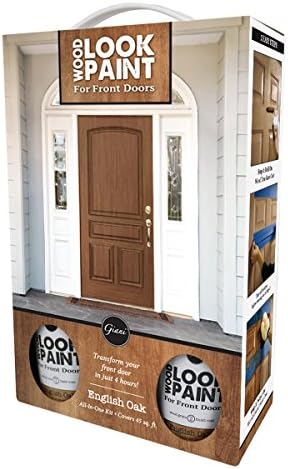
This Giani kit is for homeowners who want the look of wood grain rather than a solid coat of color. The English Oak kit is intended for interior or exterior doors made from painted steel, aluminum, or wood—the materials commonly used for front and interior doors.
The kit uses a three-step application and a quick-dry formula. Giani says the process can let you paint and close the door on the same day, with the full transformation taking about four hours. Actual timing can depend on your working conditions, so check the instructions and allow the finish to dry as directed.
This is a more specialized choice than a standard door enamel. It makes sense if you want to change the appearance of a plain door with a wood-look finish, but it is not the right pick if you simply want a solid color. The product details do not list fiberglass as a compatible material, so confirm suitability before using it on a fiberglass door.
Pros:
- Designed to create an English Oak wood-look finish
- Intended for both interior and exterior doors
- Suitable for painted steel, aluminum, and wood
- Three-step application is designed for a same-day project
Cons:
- Not intended for a simple solid-color finish
- The listed compatible materials do not include fiberglass
Verdict: Pick the Giani kit if a faux wood appearance is your goal and your door is made from a listed material.
3. DWIL Metal Paint: Best for an Outdoor Metal Door

DWIL’s metal paint is a black coating marketed for indoor and outdoor metal surfaces, including iron, steel, and aluminum. Its stated focus is protection against moisture, oxidation, and rust, which makes it a targeted option for a metal front door or gate.
The product details also highlight strong coverage, adhesion, quick drying, and low odor. These features may be useful when repainting a metal surface, but the listing does not provide a specific drying time or coverage amount. Check the label for application, surface-preparation, and recoating instructions before starting.
This is the least flexible choice in the group. It is described for metal rather than wood or fiberglass, and the listed finish is black, so it may not fit every door or color scheme. For a wood door or a broader range of materials, a dedicated door-and-trim paint is a better match.
Pros:
- Designed for metal surfaces such as iron, steel, and aluminum
- Marketed for rust and moisture protection
- Suitable for indoor and outdoor metal projects
- Low-odor and quick-drying features are listed
Cons:
- Listed as black, which limits color choice
- Not described for wood or fiberglass doors
Verdict: Consider DWIL if your front door is metal and black is the finish you want; choose a broader door paint for other materials or colors.
4. Modern Masters Front Door Paint: Best for a Smooth Satin Enamel

Modern Masters makes this water-based enamel for interior or exterior wood and metal surfaces, including doors and shutters. It is a focused option for a front-door refresh if you want a smooth satin finish and do not need a faux wood effect.
The paint is listed as touch-dry in one hour and covers up to 100 square feet. Its Never-Fade technology and UV resistance are intended to help the finish stay attractive with sun exposure. Those claims make it worth considering for an exterior door, though the product details do not list fiberglass as a compatible surface.
Compared with Rust-Oleum, Modern Masters is more specifically positioned as front-door paint, while Rust-Oleum lists a broader range of door and trim uses and dries to the touch sooner. The best fit depends on the surface and the finish you want. As with any paint, allow for the full drying and curing process in the label instructions rather than relying only on the touch-dry time.
Pros:
- Made for interior or exterior wood and metal
- Water-based enamel with a smooth satin finish
- UV-resistant technology is designed to help prevent fading
- Listed coverage is up to 100 square feet
Cons:
- Fiberglass is not listed as a compatible surface
- Touch-dry time is longer than Rust-Oleum’s listed time
Verdict: Choose Modern Masters if you want a dedicated satin front-door enamel for wood or metal and value the listed UV-resistant features.
How to Choose Paint for Your Front Door
Match the paint to the door material
Start by checking whether your door is wood, metal, or fiberglass. Not every product is listed for every surface: Rust-Oleum is specified for all three, while Modern Masters lists wood and metal, Giani lists wood and painted steel or aluminum, and DWIL is intended for metal. If your door’s material is not listed, check the product label or ask the manufacturer before applying the paint.
Decide on the look you want
A standard enamel gives you a solid-color finish, while the Giani kit is meant to create a wood-look effect. Finish also matters: Rust-Oleum and Modern Masters list satin finishes. If you are changing the color, consider how it will work with your home’s exterior and door hardware before you buy.
Consider sun, moisture, and daily use
A front door faces outdoor conditions and frequent handling. Look for product details that address exterior use, fading, chipping, or rust protection, depending on your door material. Modern Masters lists UV resistance, Rust-Oleum describes fade resistance and a chip-resistant coating, and DWIL is marketed for rust and moisture protection on metal. These features are not interchangeable, so focus on the risks that apply to your door.
Compare drying time with your schedule
Some products list a touch-dry time, while the Giani kit describes a same-day process. These details can help you plan, but they do not necessarily tell you when the finish is fully cured or ready for every kind of use. Follow the label for recoat times, ventilation, and instructions on closing the door.
Check coverage and project size
Modern Masters lists coverage of up to 100 square feet. The other supplied product details do not give a coverage amount, so check the packaging before estimating how much paint you need. Door size, surface texture, and the number of coats can affect how much product your project takes.
Prepare the surface and follow the label
A good finish starts with a clean, sound surface. Follow the paint maker’s directions for cleaning, sanding, priming, and applying coats, since the right steps can vary by door material and existing finish. Protect nearby hardware and surfaces, and work in the conditions stated on the product label.
Frequently Asked Questions
What type of paint is best for a front door?
Choose a paint made for exterior doors and compatible with your door’s material. A dedicated door enamel is a practical choice for a solid finish; select a specialty product if you need a metal coating or a faux wood look.
Can I use the same paint on wood, metal, and fiberglass?
Only if the product lists all of those materials. Rust-Oleum’s supplied details include wood, metal, and fiberglass. The other options have narrower material descriptions, so check their labels before use.
Is water-based paint suitable for an exterior front door?
It can be, if the product is specifically listed for exterior use and the door material. Several options here are water-based and include exterior applications, but you should follow the instructions for surface preparation and application conditions.
How long should I wait before closing the door?
Use the product’s directions rather than relying only on its touch-dry time. A surface can feel dry before the paint is fully cured, and closing a door too soon may affect the finish. Giani describes a same-day process, but follow its instructions for your conditions.
Which option is best for a metal front door?
For a metal door where you want a black coating, DWIL is specifically described for metal and rust protection. For a wider color choice or a satin door finish, compare Rust-Oleum and Modern Masters, while checking that the selected product matches your door.
Can I get a wood look without replacing my door?
Yes. The Giani Wood Look Paint Kit is designed to create an English Oak appearance on suitable wood, painted steel, or aluminum doors. Confirm that your door material is included and follow the kit’s three-step directions.
Final Recommendation
For a versatile choice across wood, metal, and fiberglass, Rust-Oleum Advanced Dry Door & Trim Paint is the strongest all-around fit in this group. Choose Modern Masters for a satin enamel with listed UV resistance on wood or metal, Giani when you want a faux wood finish, and DWIL for a black protective coating on an outdoor metal door. Before buying, confirm that the product matches your door material and the finish you want.
