The best paint for a trailer depends on its material and condition. For a steel trailer with surface rust, a rust converter or encapsulating primer is usually a better starting point than ordinary household paint. For clean metal, bare steel, wood, or a previously coated surface, check that the product is meant for that material and outdoor exposure. The five options below include useful rust-control coatings, a general-purpose paint for smaller jobs, and one product that is best kept for hobby models.
Table of Contents
Quick Comparison
| Product | Best For | Type | Key Consideration |
|---|---|---|---|
| Meuvcol 2-in-1 Rust Converter & Metal Primer | Rusty or bare metal touch-ups | Water-based rust converter and primer | Product information calls for thin coats and drying time between applications |
| Rust-Oleum Painter’s Touch Brush-On Paint | Small general-purpose paint jobs | Water-based acrylic | Not a dedicated rust treatment |
| SMAPHY 2-in-1 Rust Converter & Metal Primer | Rusty or bare metal areas | Water-based rust converter and primer | Listed coverage is up to 100 sq. ft.; actual results depend on the surface |
| Nicpro Model Paint Set | Miniatures and scale-model details | Acrylic hobby paint | Not designed as a full-size trailer coating |
| Eastwood Matte Black Rust Encapsulator Plus | Rusty steel and chassis areas | Rust-encapsulating coating | Requires removal of loose rust and surface contaminants |
Our Picks: Best Paint To Use To Paint A Trailer reviews
1. Meuvcol Rust Converter and Primer for Metal Trailer Repairs

Meuvcol combines a rust converter with a metal primer in a brush-applied liquid coating. It is intended for rusted and bare metal and is described for use on vehicles, trucks, farm equipment, and other indoor or outdoor metal surfaces. That makes it a practical option for localized trailer repairs, such as rust spots on a steel frame or hitch.
The product instructions call for cleaning off grease, oil, and other contaminants before applying thin coats. The listed drying time is 24 hours, so plan for the trailer to stay out of service while the coating dries. Its black, flat finish can work for a utilitarian frame or underbody, though it may not match a glossy trailer exterior.
Some users find it easy to brush on and appreciate that the included kit has small brushes and gloves. The container is not a conventional metal paint can, which may be less convenient if you want to store leftover product. Also, a rust converter and primer is not automatically a complete decorative finish; check the directions before adding another coating.
Pros:
- Combines rust conversion and metal priming in one product
- Designed for rusted and bare metal
- Brush application suits spot repairs and smaller areas
- Includes brushes and gloves
Cons:
- Listed drying time is 24 hours
- Black flat finish may not suit a visible trailer body
Verdict: Choose Meuvcol for brush-on rust control on a steel trailer, especially when you want a straightforward coating for a smaller repair.
2. Rust-Oleum Painter’s Touch for Small, General-Purpose Jobs

This water-based acrylic paint is made for a range of indoor and outdoor surfaces, including metal and wood. It is a general-purpose paint rather than a dedicated rust converter, so it makes more sense for a small touch-up on a properly prepared surface than for covering active rust across a trailer frame.
The listed coverage is up to 30 square feet, and the paint is described as drying to the touch in about 30 minutes. Its flat white finish may suit a white trailer detail or a small painted area, but the small container is unlikely to be a practical choice for a full trailer repaint. The product directions call for sanding, degreasing, and drying the surface before painting.
Its water-based formula and easy cleanup can be convenient for modest projects. Some users find that more than one coat is needed for complete coverage, so allow for that when estimating how much paint you need. For a rusty steel trailer, use a rust-specific product instead or confirm that your chosen primer and finish are compatible.
Pros:
- Suitable for several surfaces, including metal and wood
- Water-based acrylic formula
- Listed as drying to the touch in about 30 minutes
- Useful for small white touch-ups
Cons:
- Not a rust converter or dedicated trailer coating
- Small container and listed coverage make it a poor fit for a large repaint
Verdict: Consider Painter’s Touch for a small, well-prepared trailer touch-up, but choose a rust-specific coating for corroded steel or a larger restoration.
3. SMAPHY Rust Converter and Primer for Broader Metal Coverage

SMAPHY is a water-based rust converter and primer intended for rusty or bare metal. The listed uses include trailers, truck chassis, machinery, and other metal equipment, making it one of the more directly relevant choices for a steel trailer project.
The product is described as creating a matte black protective coating, and its listing gives coverage of up to 100 square feet per container. Treat that as an estimate, not a guarantee: rough, pitted, or heavily rusted metal can use more coating. The listing also says no topcoat is needed, but check the product directions and your trailer’s intended use before deciding to leave the finish exposed.
Its broad stated coverage could make it a useful option for more than a tiny spot repair. However, the supplied product information gives less detail about application and surface preparation than some competing options. Follow the container instructions closely, and do not assume that a coating can replace mechanical removal of loose, flaking rust.
Pros:
- Designed for rusty and bare metal
- Specifically lists trailers and chassis among its intended uses
- Listed coverage is up to 100 square feet
- Matte black finish is suited to many utility-frame applications
Cons:
- Actual coverage can vary with metal condition and application
- Less application detail is provided in the supplied information
Verdict: SMAPHY is a reasonable candidate when you need a rust-converting primer for a larger steel area, provided its directions fit your surface and finish plan.
4. Nicpro Acrylic Paint Set for Trailer Models and Fine Details
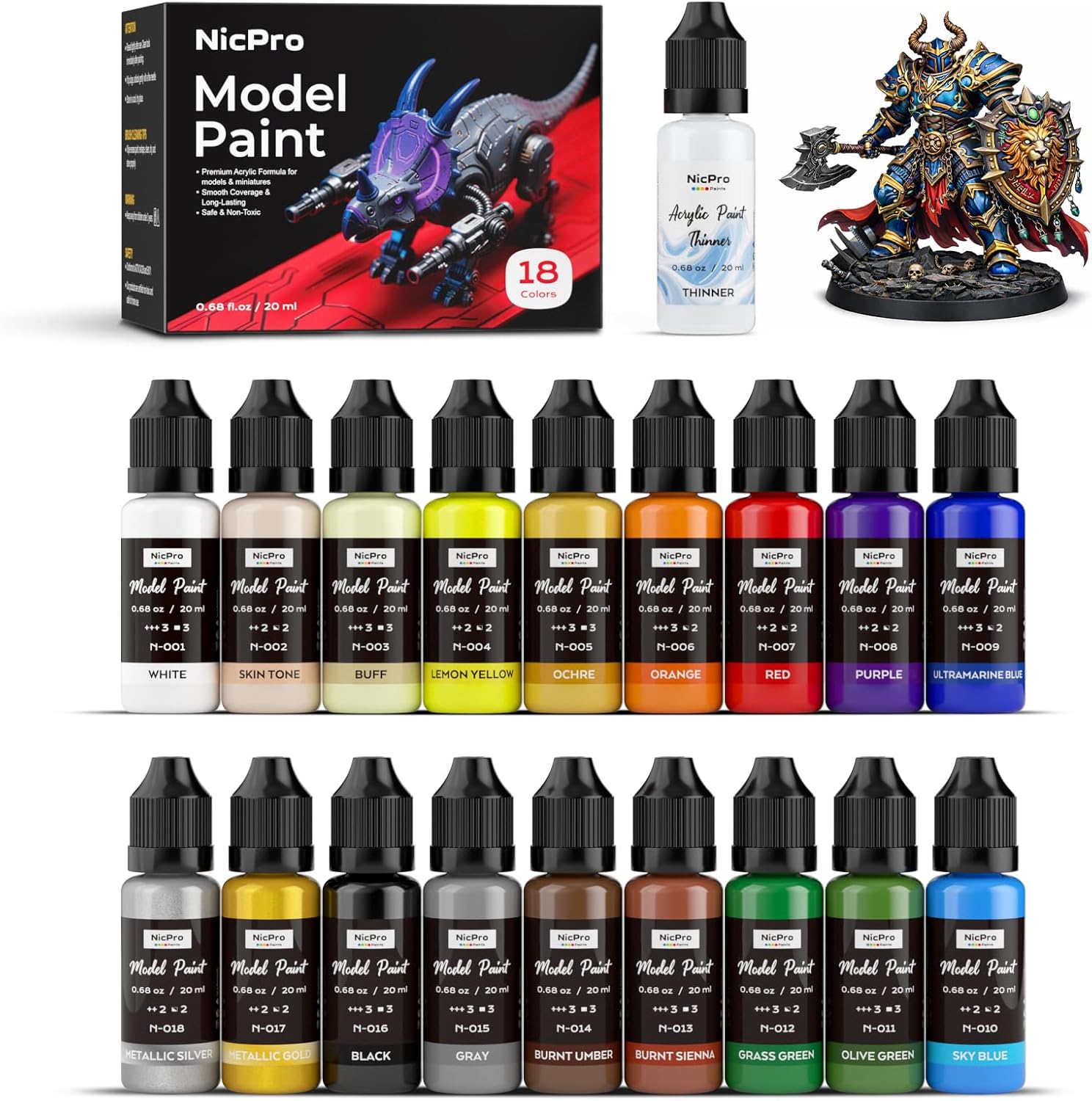
This set is made for miniature and model painting, not for repainting a full-size trailer. It includes 18 colors and a thinner, with dropper bottles intended for precise control. The paint is described for use on model materials such as plastic, resin, wood, and metal, and can suit a scale trailer, model kit, or small decorative detail.
The set’s range of colors is its main advantage over the larger-format coatings in this guide. It is designed for brush work and hobby techniques such as layering and blending. That is useful for small objects but impractical for covering a trailer body or frame: the bottles are small, and the product is not presented as an exterior vehicle coating.
For a model, users appreciate the color variety and find that a primer can help with coverage. Paint consistency may vary between colors, so test a shade before applying it to a finished model. For a road-going trailer, choose a coating specifically intended for the substrate and outdoor conditions instead.
Pros:
- Includes a variety of colors and a thinner
- Dropper bottles allow controlled use on small projects
- Designed for model materials, including metal and plastic
- Useful for scale trailers and decorative details
Cons:
- Not designed for full-size trailer painting
- Indoor hobby paint is not a substitute for a dedicated outdoor coating
Verdict: Buy Nicpro for a model trailer or small hobby details, not for protecting a working trailer from weather and road use.
5. Eastwood Rust Encapsulator for Rusty Steel and Chassis Areas

Eastwood Rust Encapsulator is intended for clean or corroded steel and cast iron. Its instructions call for removing loose, flaky rust with a stiff brush or wire brush, then cleaning away grease and oil before application. That preparation is important on a trailer: coating over loose scale or grime can undermine the result.
The product is described as usable by brush, roller, or spray, and its listed heat resistance is up to 350 degrees Fahrenheit. That makes it a possible fit for steel chassis areas and components near heat, though a trailer owner should follow the full instructions for the exact location and application method. The product information also calls for eye, skin, and respiratory protection, good ventilation, and keeping it away from open flame.
Compared with the two water-based rust-converter primers here, Eastwood emphasizes encapsulating existing rust and specifies mechanical cleaning before use. Its black finish is more suited to frames and underbody work than to a color-matched exterior panel. The supplied information does not give a square-foot coverage figure, so estimate carefully for a large project.
Pros:
- Made for clean or corroded steel and cast iron
- Can be applied by brush, roller, or spray according to the product information
- Listed heat resistance up to 350 degrees Fahrenheit
- Suitable for considering on frame and chassis areas
Cons:
- Requires removal of loose rust and surface contaminants
- Safety precautions and ventilation are important during application
Verdict: Eastwood is a strong option to consider for properly prepared, rusty steel trailer frames or underbody parts, but it is not the best choice for a color-matched body finish.
How to Choose Paint for a Trailer
Identify the trailer’s material
Start by checking whether the part you plan to paint is steel, aluminum, wood, or another material. A rust converter is meant for rusted metal, so it is not a universal coating for every trailer surface. Choose paint and primer that specifically list your substrate, and check the directions for any existing coating underneath.
Match the coating to the surface condition
Rusty steel needs a different approach from clean, painted metal. For corrosion, look for a product intended to convert or encapsulate rust, and remove loose flakes before painting. For sound existing paint or clean bare material, a suitable primer and finish may be more appropriate. Do not treat heavy scale or damaged metal as a paint-only problem.
Decide whether you need a primer, rust treatment, or finish coat
Some products combine rust treatment and primer, while others are general-purpose paint or hobby paint. A primer may prepare a surface without providing the color or appearance you want. Read the label to learn whether a separate topcoat is allowed or recommended, and confirm compatibility before layering products.
Consider where the trailer will be used
A trailer exposed to rain, road grime, salt, or frequent handling needs a coating intended for outdoor metal use. The frame and underbody may need a different finish from visible body panels. Follow the manufacturer’s instructions for the specific location rather than assuming that a product suitable for a small metal object will perform the same way on a trailer.
Estimate the amount and application time
Compare the stated coverage with the size and condition of the area. Pitted or rough metal may require more coating than a smooth surface, and multiple coats can change the total needed. Also account for drying time: one listed rust converter here specifies 24 hours, while the general-purpose acrylic paint lists a much shorter touch-dry time. Dry to the touch does not necessarily mean ready for use.
Prepare carefully and use the right safety steps
Clean away grease, oil, dirt, and loose rust before painting, following the product directions. Protect nearby tires, lights, wiring, and surfaces from splashes or overspray. Use the gloves, eye protection, respiratory protection, ventilation, and other precautions specified on the label, especially with products that warn against use near open flame.
Frequently Asked Questions
What type of paint is best for a rusty steel trailer?
Look for a rust converter, rust encapsulator, or metal primer designed for rusty steel. Remove loose, flaky rust and contaminants first, then follow the product directions for coats, drying, and any topcoat.
Can I use regular acrylic paint on a trailer?
Some general-purpose acrylic paints list metal and outdoor use, but they are not necessarily rust treatments or dedicated trailer coatings. They may work for a small, properly prepared touch-up if the label fits the surface and conditions.
Do I need to remove all rust before painting?
Follow the coating’s instructions. The Eastwood product information specifically calls for removing loose, flaking rust, while rust-converter products are designed for application to rusted metal. Paint should not be used to cover loose scale, grease, or dirt.
Should I add a topcoat over a rust converter?
It depends on the product and the finish you want. One product in this guide says no topcoat is needed, while another describes itself as a converter and primer. Check the label for topcoat guidance and compatibility before applying another coating.
Can I use these products on an aluminum trailer?
Do not assume that a product intended for rusted steel will work on aluminum. Check the product label for aluminum compatibility and surface-preparation instructions. The listed rust converters here are aimed at rusted or bare metal, but the supplied information does not confirm aluminum suitability.
How long should I wait before using the trailer?
Use the full cure and recoat instructions on the product, not just the touch-dry time. The products listed have different drying information, and conditions such as temperature and airflow may affect drying. Avoid loading or exposing the painted area until the label says it is ready.
Final Recommendation
For a rusty steel trailer frame or underbody, Eastwood Rust Encapsulator and the Meuvcol or SMAPHY rust-converter primers are the most relevant choices in this group. Choose based on the surface, application method, coverage needs, and instructions for any planned topcoat. Rust-Oleum Painter’s Touch is better suited to small general-purpose touch-ups, while Nicpro belongs on model trailers and hobby projects—not a full-size trailer.