
The best placement for a shower grab bar depends on how you move through the shower and where you need help with balance. A well-positioned bar is easy to reach before you step in, while you stand, and when you step out. For dependable support, a permanently installed bar should be secured to suitable wall framing or blocking—not just the shower wall surface. Suction bars are different: the products below describe them as balance aids, not supports for your full body weight.
Before choosing a location, consider asking an occupational therapist or other qualified professional to assess the user’s needs. Mark possible positions while the user is safely outside the shower, and check that the bar will be reachable without leaning or twisting. Building codes and installation requirements can vary, so follow the grab bar and mounting hardware instructions.
Table of Contents
Quick Comparison
| Product | Type | Best fit | Important note |
|---|---|---|---|
| The Solid Mount Fiberglass Shower Mounting Kit | Mounting kit | Fiberglass showers with wood framing | Grab bar sold separately; check wall-gap and stud requirements |
| TAILI 16.8-Inch Suction Shower Handles, 2-Pack | Suction handles | Temporary balance assistance on suitable smooth surfaces | Not for supporting full body weight |
| LEVERLOC 12-Inch Suction Grab Bars, 2-Pack | Suction handles | Short-term balance help on compatible walls | Manufacturer says not to use for body-weight support |
| Gotega 16-Inch Stainless Steel Grab Bars, 2-Pack | Screw-mounted bars | A more permanent installation | Secure installation matters as much as the bar itself |
| NUONU Suction Shower Handles, 2-Pack | Suction handles | Removable balance aid on smooth, nonporous surfaces | Do not treat a suction hold as a substitute for a fixed grab bar |
Our Picks: Best Placement For Grab Bars In Shower reviews
Best Mounting Support for a Fiberglass Shower: The Solid Mount Kit
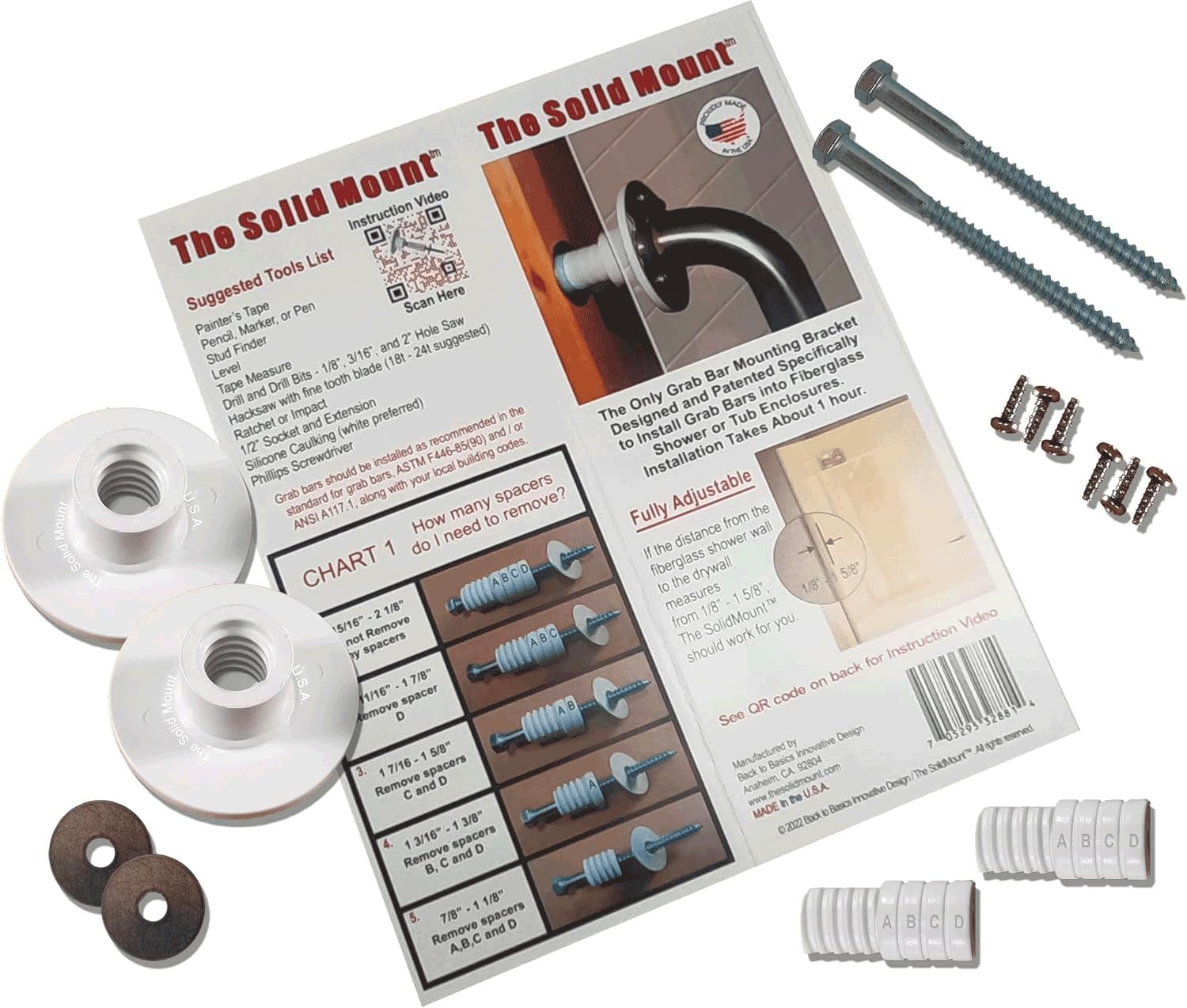
This is a mounting kit, not a grab bar. It is made to help attach a separately purchased grab bar through a fiberglass shower or tub wall and into a structural wood stud. The kit’s spacer bridges the gap between the fiberglass and the framing, rather than relying on the fiberglass panel itself to provide support.
That design makes it a specialized option for a permanent installation in a compatible fiberglass enclosure. It may suit someone who has chosen a location based on the user’s reach and needs, then confirmed there is a wood stud behind the wall. The manufacturer says the kit fits many bars with 2.5-inch or 3-inch flanges, but notes that part of the mounting base may remain visible after installation.
Check the wall construction and gap before ordering. The supplied information specifies wood framing and a gap from drywall to the fiberglass surface of 1/8 inch to 1-5/8 inches. It is not designed for metal studs, tile, marble, or drywall-only installations. The grab bar is also sold separately, so plan for both components and make sure the chosen bar’s flange is compatible.
Pros:
- Designed to anchor through fiberglass and into wood framing.
- Spacer helps bridge the gap behind the enclosure.
- Includes installation instructions and manufacturer support.
Cons:
- Only suits certain fiberglass walls with compatible wood framing and spacing.
- Grab bar is not included, and some of the mounting base may show.
Verdict: Choose this kit when you need a permanent grab bar in a compatible fiberglass shower and have verified the stud and wall-gap requirements; it is not a general-purpose mounting solution.
Best Longer Removable Handles for Smooth Walls: TAILI 16.8-Inch 2-Pack

This two-pack uses locking suction cups for removable placement on smooth, airtight, nonporous surfaces such as suitable tile, glass, metal, or acrylic. The 16.8-inch length gives you more gripping area than a short handle, and the product has a textured strip on top of the grip. Its removable design may be useful when drilling is not an option, such as in a rental or for temporary assistance.
Placement is limited by the surface, not just by where a person would prefer to hold on. The manufacturer says the handles are unsuitable for drywall, painted walls, porous surfaces, and uneven tile. It also says not to put all body weight on them. Treat these as balance aids only, and do not use them as the main safety support for entering, exiting, or standing in the shower.
The two handles can let you position assistance in more than one spot, but each position needs a compatible surface and a secure seal. Follow the installation directions, check the suction before each use, and move the handle if the surface or fit is not right. For someone who needs dependable weight-bearing support, a properly installed fixed bar is a better choice.
Pros:
- Longer grip area than many compact suction handles.
- Two handles allow placement in separate suitable locations.
- Removable installation does not require drilling.
- Textured grip is intended to help hands stay in place.
Cons:
- Works only on smooth, nonporous, airtight surfaces.
- Not intended to support full body weight.
Verdict: Consider this set for removable balance assistance on a verified smooth surface, but choose a securely installed grab bar if the user may need to pull or lean heavily on it.
Best Compact Removable Option: LEVERLOC 12-Inch Suction Bars

The LEVERLOC set includes two 12-inch suction handles. The manufacturer describes them as balance assistance and specifically warns against using them to support body weight. They attach without drilling, using suction cups and locking latches, and are intended for smooth, flat, nonporous surfaces such as suitable tile, glass, marble, or stainless steel.
The shorter length can make these easier to fit in a small shower or tub area, but it also gives you less room to place your hands than the longer TAILI handles. The manufacturer says the tile must be larger than 4 by 4 inches. Avoid uneven or porous surfaces, and follow the stated setup process: clean the wall, press the bar into place, then lock the latches.
These are best viewed as temporary grips for light balance help, not a substitute for a fixed bar. A suction handle’s usefulness depends on the wall surface and proper installation, so check it before every use. If the user needs a grab bar to steady their full weight, look at a permanent, properly anchored option instead.
Pros:
- Two compact handles can fit separate spots on compatible surfaces.
- Installs and removes without tools, drilling, or adhesive.
- Textured top strip and contoured underside provide a shaped grip.
Cons:
- Not intended to support body weight.
- Requires smooth, flat, nonporous surfaces and sufficiently large tile.
Verdict: This set is a practical removable option for light balance assistance when the wall meets the surface requirements, but it should not be relied on for weight-bearing support.
Best Fixed Stainless Steel Pair: Gotega 16-Inch Grab Bars

These 16-inch stainless steel bars are a fixed, screw-mounted option rather than a suction product. The supplied product information describes a textured, knurled surface and a concealed-screw design. A two-bar set may work well when you want support at more than one point—for example, one bar near the shower entrance and another within reach while standing—provided the wall can support secure installation.
Think about the direction of movement when choosing placement. A vertical bar near the entry may be easier to grasp while stepping in or out; a horizontal bar on a side wall may be more useful for steadying yourself while standing. The right arrangement depends on the person and the shower layout. Confirm that the bar can be installed securely in the wall structure and that its position does not interfere with shower controls or movement.
The listing states a pulling-force figure, but a product claim alone does not confirm that a bar will be safe in every wall or installation. The attachment points, fasteners, framing, and installation all matter. If you cannot confirm the wall structure, get qualified installation help rather than mounting it only to a thin wall surface.
Pros:
- Fixed design is more appropriate than suction handles for a permanent support location.
- Two bars offer flexibility for separate positions.
- Textured stainless steel grip is designed for wet-hand use.
- Concealed screw covers give the installed bar a finished look.
Cons:
- Requires drilling and secure installation in suitable wall structure.
- Incorrect placement or mounting can undermine the bar’s usefulness and safety.
Verdict: Choose this pair if you want fixed bars and can ensure a secure, suitable installation; do not rely on the stated product capacity without confirming the mounting method and wall construction.
Best Three-Cup Removable Handle Set: NUONU Suction Bars

The NUONU set uses three suction cups on each handle and a locking system. It is designed for smooth, nonporous surfaces such as suitable tile, glass, and acrylic. The product description emphasizes tool-free placement and a textured, curved grip. Its removable design may appeal to renters or people who want to reposition a handle without drilling.
As with other suction-mounted products, placement is limited by the wall finish. The surface must be smooth and suitable for a secure seal; textured, uneven, or porous walls are not a good fit. The listing does not establish that this handle can bear a user’s full weight, so treat it as a balance aid only and do not use it to pull yourself up or catch a fall.
A pair can be placed at separate points, but the best location still depends on the user’s reach and how they enter, stand, and exit. Before each use, check that the cups remain firmly attached and follow the product’s installation instructions. For routine weight-bearing support, choose a fixed bar installed into appropriate wall framing instead.
Pros:
- Three suction cups and locking clips are designed for tool-free attachment.
- Two handles allow placement in more than one suitable spot.
- Textured grip is designed to improve hand contact.
- Removable format can be useful where permanent changes are not wanted.
Cons:
- Limited to smooth, nonporous surfaces that can hold a suction seal.
- Should not be treated as a weight-bearing or fall-arrest support.
Verdict: This is an option for removable, light balance assistance on a compatible wall, but a securely mounted grab bar is the safer choice when substantial support is needed.
How to Choose the Best Placement for a Shower Grab Bar
Start with the user’s movement and reach
Think through each step: approaching the shower, stepping over the threshold, turning, standing, reaching for controls, and stepping out. A bar should be within comfortable reach before the user needs it. Avoid a position that requires bending, twisting, stretching, or reaching across a wet surface. If possible, ask the person who will use the bar to show where support would help while they are safely outside the shower.
Choose a position for each task
A vertical bar near the entry can provide a handhold while stepping in or out. A horizontal bar on a side wall may offer a steadier grip while standing or moving within the shower. Some people may benefit from more than one bar, but the best arrangement depends on the person, the enclosure, and the location of the controls. Do not place a bar where it blocks the shower door, curtain, or a clear path of movement.
Check the wall before selecting a fixed bar
A permanently mounted bar needs suitable backing and the correct fasteners. Do not assume that tile, fiberglass, or another wall surface alone can hold a person’s weight. Locate the framing or blocking and follow the bar manufacturer’s installation instructions. If the wall is fiberglass, a specialized mounting kit may be needed; confirm that it is designed for that enclosure and framing before buying.
Measure the height and test the reach
Common accessibility guidance often places horizontal grab bars around 33 to 36 inches above the floor, but this is not a one-size-fits-all placement rule for every home or user. Individual reach, the type of shower, and local requirements can change what is appropriate. Mark a proposed height with removable tape and check the reach from a stable position before drilling. When accessibility or code compliance matters, get advice from a qualified professional.
Know the limits of suction bars
Suction handles are only suitable for compatible, smooth, nonporous surfaces and must be installed as directed. Uneven tile, grout lines, porous walls, paint, and drywall can prevent a dependable seal. The suction products in this guide include warnings or limitations about body-weight support. Do not use one as a replacement for a fixed grab bar when the user needs to pull, lean heavily, or catch themselves.
Consider grip, length, and direction
A bar should be long enough for the user to grasp comfortably, but it also needs a suitable mounting location. A longer horizontal bar can provide more hand-position choices; a vertical bar may help at a step or threshold. Textured surfaces can help with grip when hands are wet. Compare the bar’s shape and length with the planned location, and make sure the user can grasp it without an awkward wrist or shoulder position.
Prioritize correct installation and regular checks
Even a well-placed bar is not useful if it is loose or mounted incorrectly. Follow the product instructions, use appropriate mounting hardware, and seek qualified help if you are unsure about the wall construction. For suction models, inspect the seal before each use and reinstall or remove the handle if it has shifted or lost suction. Keep the shower floor and the path to the bar clear as well.
Frequently Asked Questions
Where should a grab bar go in a shower?
Place it where the user can reach it before stepping in, while standing, or while stepping out—whichever actions need support. A vertical bar near the entry and a horizontal bar on a side wall are common arrangements, but individual needs and the shower layout should guide the final position.
How high should a shower grab bar be?
Common accessibility guidance often places horizontal bars around 33 to 36 inches above the floor. That range may not suit every user or installation. Check reach and comfort, and follow applicable local requirements and product instructions.
Can I install a grab bar on shower tile?
A fixed bar can be installed through tile when the wall structure and installation method are suitable. The bar must be securely anchored into appropriate backing or framing; tile by itself should not be assumed to provide support. Use an installer if you are unsure how to mount it safely.
Are suction grab bars safe to use in the shower?
Suction bars can be used only on surfaces that meet the product’s requirements and when installed correctly. The products in this guide describe suction handles as balance aids or warn against supporting body weight. Check the seal before every use and do not rely on suction to prevent a fall.
Should I use a vertical or horizontal grab bar?
A vertical bar can be easier to grasp while stepping into or out of a shower. A horizontal bar may offer support while standing or moving along the wall. The best direction depends on what the user needs help doing, so consider the person’s reach and movement before choosing.
Can a grab bar be mounted on a fiberglass shower wall?
It may be possible, but the mounting approach must match the enclosure and the wall behind it. The Solid Mount kit in this guide is designed for certain fiberglass showers with wood framing and a specified wall gap. Check those requirements and the bar’s compatibility before installation.
Final Recommendation
For a permanent shower support, prioritize a bar installed securely into suitable wall framing or blocking and positioned for the user’s actual movements. The Gotega bars are a fixed-bar option, while The Solid Mount kit is designed to help mount a separate bar in compatible fiberglass showers. The TAILI, LEVERLOC, and NUONU products are removable suction handles for compatible surfaces; treat them as light balance aids, not as weight-bearing grab bars. When the user’s needs are complex or the wall construction is uncertain, seek qualified installation or accessibility advice before choosing a location.
