
Planters with drainage trays make watering easier by letting excess water escape while helping keep floors, shelves, and windowsills cleaner. The right choice depends on your plant’s size, the space you have, and whether you want a lightweight plastic pot, a ceramic bowl, or a set of window boxes. These five options cover small houseplants, larger greenery, bonsai, and narrow growing spaces.
Table of Contents
Quick Comparison
| Planter | Size and quantity | Material and style | Best for |
|---|---|---|---|
| SQKH 10-Inch Wavy Plant Pot | 10 inches, 1 pot | PP resin; 3D wavy texture | A medium or large houseplant |
| SQKH 4-Inch Plant Pots | 4 inches, 6 pots | Polypropylene; matte striped finish | Small plants and grouped displays |
| SQOWL Ceramic Bonsai Planter | 10 inches across; shallow bowl | Glazed ceramic | Bonsai and succulents |
| KUGAZ 10-Inch Plant Pot | 10 inches, 1 pot | Plastic; simple modern design | Larger plants and everyday use |
| Hananojia Window Box Planters | 17 inches, 8 planters | Plastic; rectangular shape | Windowsills, herbs, and narrow spaces |
Our Picks: Best Planters With Drainage Tray reviews
1. SQKH 10-Inch Wavy Plant Pot: Best for Larger Houseplants

This single 10-inch planter is designed for medium and larger plants such as monstera, fiddle-leaf fig, bird of paradise, and larger pothos. Multiple drainage holes at the bottom let excess water flow into the matching tray, which can help reduce standing water around the roots and catch runoff before it reaches your floor.
The pot is made from thickened polypropylene resin, a lightweight alternative to ceramic. Its embossed wavy pattern gives it more visual detail than a plain nursery pot, while the listed UV- and frost-resistant construction makes it an option for indoor spaces, balconies, or yards. Those material claims are useful to consider, but outdoor exposure and care can affect how any planter holds up over time.
Because it is sold as one pot, this is a straightforward choice if you are repotting a single larger plant. It is less useful if you want a coordinated set or need a narrow planter for a sill. Check your plant’s root ball and the available space before choosing a 10-inch pot; the opening size alone does not guarantee a fit for every plant.
Pros:
- Wide 10-inch opening for medium and larger plants
- Multiple drainage holes and a matching tray
- Lightweight resin construction compared with ceramic
- Distinctive wavy texture suits modern décor
Cons:
- Sold as a single pot rather than a multi-pot set
- Plastic may not have the weight or feel of ceramic
Verdict: Choose this SQKH pot if you want a roomy, lightweight planter with a decorative finish for one larger houseplant.
2. SQKH 4-Inch Plant Pots: Best Six-Pack for Small Plants
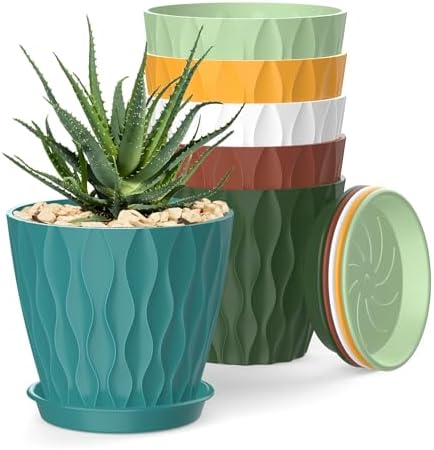
This six-pack of 4-inch pots is made for smaller plants and compact displays. The listed plant examples include orchids, violets, succulents, cacti, herbs, aloe, and small snake plants. Each pot has 48 drainage holes and a small matching tray, giving water a way out while helping catch occasional runoff.
The polypropylene construction is described as thick and sturdy, and the pots have a matte finish with a striped pattern. Their compact size works well on desks, shelves, kitchen counters, or windowsills where a larger planter would take up too much room. A six-pack can also help create a coordinated look across several small plants.
These are not intended for large root systems or plants that need more room to grow. The small trays may also need to be emptied after watering, so they are not a substitute for checking the pot’s moisture and drainage. For a small plant collection, though, they offer more pieces than the single-pot options here.
Pros:
- Six coordinated pots for small plants
- 48 drainage holes per pot
- Matching trays help catch runoff
- Compact size suits shelves and windowsills
Cons:
- 4-inch size limits use to smaller plants
- Small trays may need frequent emptying after watering
Verdict: This set is a practical fit if you need several small planters for compact houseplants, herbs, or succulents.
3. SQOWL Ceramic Bonsai Planter: Best Shallow Bowl for Bonsai

Unlike the deeper plastic pots in this list, this 10-inch ceramic planter is a low, round bowl. Its listed height, including the tray, is 3.9 inches. That shallow profile is suited to bonsai and other plants that fit a broad, low container, including succulents and cacti.
The planter has a drainage hole, a removable ceramic saucer, and a mesh pad. Its glazed finish gives it a more polished look than the plastic options and is described as easy to clean. Ceramic has a heavier, more substantial feel, but it can be less convenient to move than lightweight resin or plastic. The product is listed for indoor and outdoor use, though care is still needed to protect ceramic from knocks.
This is the most decorative, specialized pick in the group. Its shallow shape is not the best match for plants that need a deep pot, and the planter is sold without a plant. Compare the stated dimensions with your plant’s root system before buying.
Pros:
- Glazed ceramic finish and matching ceramic saucer
- Shallow bowl shape works well for bonsai displays
- Includes a drainage hole and mesh pad
- Broad 10-inch diameter offers room for a low arrangement
Cons:
- Shallow depth is unsuitable for some plants
- Ceramic is heavier and can be less forgiving if dropped
Verdict: Pick this planter for bonsai or a low-growing arrangement when ceramic style matters more than a lightweight, deep pot.
4. KUGAZ 10-Inch Plant Pot: Best Simple Option for Everyday Use

The KUGAZ is a single 10-inch plastic planter with multiple drainage holes and a matching saucer. It is intended for medium to large plants such as pothos, snake plants, spider plants, herbs, and flowering plants. The saucer catches water after it drains, helping protect the surface beneath the pot.
Its simple, modern look is less decorative than the textured SQKH pot, which may suit you if you want the plant to be the main focus. The lightweight construction can also make it easier to reposition a planted pot around a room or balcony. The supplied details describe it as durable plastic but do not specify a particular resin type or special weather-resistance claim.
This pot is a useful basic choice for someone who wants a larger planter and tray without extra design features. As with any 10-inch planter, confirm the dimensions of your plant and the space where you plan to place it. The saucer catches runoff, but it should be checked and emptied so water does not remain beneath the pot.
Pros:
- 10-inch size for a range of medium and larger plants
- Multiple drainage holes and a matching saucer
- Lightweight and easy to reposition
- Simple design works in many rooms and outdoor spaces
Cons:
- Sold as one pot, not a set
- Basic styling may be less decorative than textured or ceramic options
Verdict: Choose the KUGAZ if you want a straightforward, lightweight 10-inch pot with a saucer for everyday plant care.
5. Hananojia Window Box Planters: Best Set for Windowsills and Narrow Spaces

This set includes eight rectangular planters, each measuring 17 by 7 by 6.3 inches. Their long, narrow shape is designed for windowsills and other slim areas such as balconies, desks, or porch ledges. The product description lists flowers, herbs, vegetables, and greenery as possible planting choices.
Each box has two drainage holes and an integrated tray to catch excess water. The plastic construction is described as suited to indoor and outdoor use and resistant to aging and outdoor elements. The simple rectangular style keeps the focus on the plants, while the eight-piece pack is useful if you want to arrange several boxes along a window or divide plants into separate containers.
These are a different kind of planter from the round pots above: they use more horizontal space and are not as suitable for a single large plant. Measure your sill before ordering, especially if it has a narrow ledge or a raised edge. The integrated tray also means you should check how much water collects after watering.
Pros:
- Eight planters for multiple planting areas
- Long, rectangular shape fits many narrow spaces
- Two drainage holes per box with an integrated tray
- Suitable for herbs, flowers, and other compact plantings
Cons:
- Long footprint may not fit smaller windowsills
- Less suited to plants that need a round or deep pot
Verdict: Choose this set if you want several narrow planters for a windowsill, balcony, or other slim growing area.
How to Choose a Planter With a Drainage Tray
Match the pot shape and size to your plant
Start with the plant’s root system and the space available. A 4-inch pot is intended for compact plants, while a 10-inch pot can accommodate a larger root ball. A shallow bowl suits plants such as bonsai that fit a low container, while a rectangular window box offers more length for several small plants. Compare the listed measurements with your plant and the spot where the planter will sit.
Check the drainage setup
Drainage holes let excess water leave the soil, and the tray catches some of that runoff. Look at how many holes the planter has and whether the saucer is removable or integrated. Removable saucers are easier to lift and clean; integrated trays keep the planter as one piece. Either way, avoid leaving a pot sitting in collected water for long periods.
Choose a material that suits the location
Plastic and resin planters are lightweight and easier to move, which can be useful for larger plants or balconies. Ceramic has a glazed, decorative finish and a heavier feel, but it can be harder to reposition. If you plan to use a planter outdoors, consider the product’s stated weather-resistance details and the conditions in your area rather than assuming every material will perform the same way.
Consider how many planters you need
A single pot is a sensible choice for repotting one plant or replacing an existing planter. Multi-packs can be more convenient for a group of small plants or a row of window boxes. Think about whether the included quantity matches your space and routine; extra pots are useful only if you have a place and plants for them.
Think about where water will collect
A tray helps protect a floor, shelf, or sill, but it needs room beneath the planter and occasional attention. Check the tray’s size and whether it can be removed for emptying. For a windowsill or tabletop, measure the planter’s footprint and make sure the tray will sit securely on the surface.
Balance appearance with ease of care
A textured or glazed pot can act as part of your décor, while a plain design lets the foliage stand out. Also consider weight, cleaning, and how often you may need to move the pot. A decorative ceramic bowl may be a better display piece, while a lightweight plastic pot can be easier to handle during watering or rearranging.
Frequently Asked Questions
Why should a planter have drainage holes?
Drainage holes give excess water a way to leave the soil. This can help reduce water buildup around roots. A tray beneath the pot catches some of the runoff, but you should still check it after watering.
Does a drainage tray prevent all water from reaching the floor?
No tray can guarantee that every drip will be contained. Make sure the tray is positioned correctly, avoid overfilling it, and empty collected water as needed. A planter’s drainage setup helps manage runoff but does not replace careful watering.
Which option is best for small plants?
The SQKH six-pack has 4-inch pots designed for compact plants such as succulents, herbs, and small houseplants. Check the plant’s root size before choosing, since a small pot may not suit a plant that has outgrown its current container.
Which planter is best for bonsai?
The SQOWL is the specialized choice for bonsai because it is a broad, shallow ceramic bowl with a drainage hole and saucer. Its low profile will not suit plants that need a deeper container.
Are plastic planters easier to move than ceramic ones?
Generally, a lightweight plastic or resin planter is easier to handle than a ceramic planter. The SQKH and KUGAZ 10-inch pots are described as lightweight, while the SQOWL is made of ceramic. The weight of the planted pot will also depend on the soil and plant.
Can these planters be used outdoors?
The supplied product details list indoor and outdoor use for all five options, with specific weather-resistance claims for some plastic or resin models. Outdoor conditions vary, so consider sun, temperature, and placement when deciding where to use a planter.
Final Recommendation
For one larger houseplant, the SQKH 10-inch pot offers a roomy size, multiple drainage holes, a matching tray, and a decorative textured finish. If you need several small pots, the SQKH six-pack is the most suitable choice in this group. For bonsai, choose the shallow SQOWL ceramic bowl; for a narrow windowsill, the Hananojia boxes offer a better shape. The KUGAZ is a straightforward alternative if you want a simple 10-inch plastic pot and saucer.
