
Pressure-treated lumber is treated to resist decay and insects, but cuts, drilled holes, and damaged areas can expose less-protected wood. A compatible exterior wood preservative can help protect those spots, especially on lumber used outdoors or in ground contact. For most projects, choose a product labeled for pressure-treated wood and the type of exposure you expect. Copper-based options are common in this lineup, but they differ in stated uses, package size, and labeling.
Our top choice for routine cut-end protection is Wolman Woodlife CopperCoat Green. For a product with a stated concentration and specific end-cut code references, consider Tenino Copper Naphthenate. Always follow the label for application, safety, and disposal, and check local requirements before treating lumber.
Table of Contents
Quick Comparison
| Product | Best suited for | Key detail |
|---|---|---|
| Wolman Woodlife CopperCoat Green | Pressure-treated lumber cut ends and exterior wood | Insecticidal preservative with a transparent green color |
| Wolman Woodlife CopperCoat Green, 150-sq.-ft. listing | Projects where stated coverage is useful | Paintable and stainable; coverage listed as 150 sq. ft. |
| Tenino Copper Naphthenate 17% | End cuts on pressure-treated lumber | Ready-to-use formula; listing cites AWPA M4 and building-code references |
| Green Products Copper-Green, 12-pack | Multi-container supply needs | Twelve one-quart containers; brush, dip, or pressure application is described |
| Green Products Copper-Green, 1 gallon | Exterior wood projects needing a larger container | Exterior-use formula described as protecting against mold, mildew, and insects |
Our Picks: Best Preservative For Pressure Treated Wood reviews
1. Wolman Woodlife CopperCoat Green for Everyday Cut-End Protection

Wolman Woodlife CopperCoat Green is an exterior preservative intended for untreated or pressure-treated wood. Its listed uses include above-ground installations, ground contact, below-ground applications, and fresh-water contact. That range makes it a versatile option for outdoor lumber, though you should still confirm the label covers your exact project.
The product is described as an EPA-registered insecticidal preservative that helps protect against termites, other wood-boring insects, rot, and decay. It leaves a transparent natural-green color that may fade over time. The supplied description particularly recommends it for pressure-treated wood end cuts, making it a practical choice for freshly cut posts, boards, or landscape timbers.
Compared with the Tenino option below, CopperCoat’s description emphasizes a range of exterior uses rather than a stated copper-naphthenate concentration and end-cut code references. The listing does not provide coverage, so estimate your needs from the container label rather than assuming it will cover a certain area.
Pros:
- Specifically recommended for pressure-treated wood end cuts
- Listed for several exterior exposure conditions, including ground contact
- Helps protect against insects, rot, and decay
- Transparent green color can fade over time
Cons:
- Coverage is not stated in the supplied product details
- The green tint may not suit every finished project
Verdict: Choose CopperCoat if you want a broadly described exterior preservative with explicit end-cut guidance for pressure-treated lumber.
2. Wolman CopperCoat Green With Stated Coverage

This listing is another Wolman Woodlife CopperCoat Green preservative. Its description says it covers 150 square feet and can be painted or stained. It is also described as an insecticidal preservative intended to help prevent termite damage, rot, and decay.
The stated coverage can make planning easier if you are treating a known surface area. However, coverage can depend on the wood and how it is applied, so use the product label as your guide. The description does not specify how the listed coverage changes for rough, porous, or cut lumber.
This product appears closely related to the first CopperCoat listing, but the supplied details do not establish whether the package size or formulation is identical. Compare the container and label information before ordering. The supplied catalog data marks this listing as unavailable, so check the listing before relying on it for a project.
Pros:
- Provides a stated coverage figure for estimating needs
- Described as paintable and stainable
- Targets termites, rot, and decay
Cons:
- Supplied catalog data marks the listing unavailable
- Details provided do not clarify package size or how coverage varies by application
Verdict: Consider this CopperCoat listing if its stated coverage fits your project, but verify the package details and availability before choosing it.
3. Tenino Copper Naphthenate for Code-Focused End-Cut Treatment
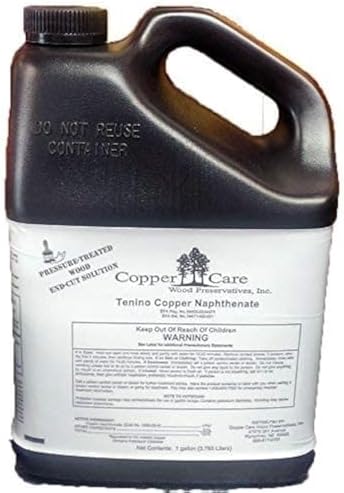
Tenino Copper Naphthenate is a ready-to-use wood preservative listed at 17% copper naphthenate, containing 2% copper as metal. Its product description specifically says it meets the AWPA M4 standard and cites building-code requirements for end cuts on pressure-treated lumber. If your project requires documentation or a particular labeled treatment, read the product label and check the applicable local requirements.
The listing also describes the formula as water repellent and toxic and repellent to termites and other wood-destroying insects. It is presented as a general-use product, with the description noting that treated wood may be discarded in a local landfill. Disposal rules vary, so confirm the label and local guidance rather than relying on a broad statement for every location.
Compared with CopperCoat, Tenino gives more specific concentration and end-cut information in the supplied details. That can help when you need to compare labels, but it does not make it the right choice for every surface or exposure. Use it only where the label allows, and take care with handling and cleanup.
Pros:
- Ready-to-use formula with a stated concentration
- Product description cites AWPA M4 and building-code references for end cuts
- Described as water repellent and protective against wood-destroying insects
- Low VOC is listed as less than 350 g/L
Cons:
- Its specific label directions and handling requirements should be checked before use
- May be more detail than needed for a small, straightforward touch-up job
Verdict: Tenino is a strong option to compare when your priority is a clearly specified copper-naphthenate treatment for pressure-treated lumber end cuts.
4. Green Products Copper-Green in a 12-Pack of Quarts

This product is a 12-pack of one-quart containers of Green Products Copper-Green preservative. The description says it can be brush applied for surface protection of most woods. It also notes that dipping or pressure impregnation results in deeper penetration, though those methods may not be practical for a typical home project.
The multi-container format may suit a larger job or a buyer who prefers to work from smaller containers. The description does not state coverage, identify particular pressure-treated lumber uses, or list specific protection claims beyond extending the service life of wood products. Check the label carefully to confirm that its directions match your intended application.
The supplied catalog data marks this listing as unavailable. Since the product comes as a case rather than a single container, confirm both availability and package quantity before planning around it.
Pros:
- Includes twelve separate one-quart containers
- Can be brush applied, according to the description
- Dip soaking or pressure impregnation is described as providing deeper penetration
Cons:
- Supplied catalog data marks the listing unavailable
- Coverage and specific pressure-treated wood directions are not stated in the supplied details
Verdict: This case pack may fit a larger supply need, but verify availability and label suitability before selecting it for pressure-treated lumber.
5. Green Products Copper-Green in a One-Gallon Container

Green Products Copper-Green is a one-gallon preservative described for exterior applications. The product details say it seals wood and protects against mold, mildew, and harmful insects. They also explain that dipping or pressure impregnation can provide deeper penetration than surface application.
The description says the copper reacts with wood cellulose and is not easily lost through leaching. That is a product claim, not a substitute for checking whether the treatment is approved for your specific use. The listing does not provide a coverage figure or specific guidance for pressure-treated lumber end cuts, so compare its label with the more explicit CopperCoat and Tenino options.
The one-gallon size may be a practical format for a project that needs more than a small touch-up container. However, the supplied catalog data marks this listing as unavailable. Check the listing and confirm exterior-use directions before making it part of your plan.
Pros:
- One-gallon container for larger jobs than a small touch-up
- Described for exterior applications
- Product details cite protection against mold, mildew, and insects
- Dip soaking or pressure impregnation is described as increasing penetration
Cons:
- Supplied catalog data marks the listing unavailable
- Coverage and specific cut-end guidance are not included in the supplied details
Verdict: Copper-Green may be worth considering for exterior wood when its label matches your use, but the lack of stated coverage and cut-end details makes it less direct for this specific task.
How to Choose a Preservative for Pressure-Treated Wood
Start with the area you need to protect
Pressure-treated lumber is treated during manufacturing, but sawing, drilling, or damage can expose fresh wood. For many projects, the key need is protecting cut ends and drilled areas rather than coating every board. Look for a product whose label specifically permits use on pressure-treated lumber and the area you plan to treat.
Match the product to the exposure
A fence post in ground contact faces different conditions from an above-ground deck board. Check whether the label covers your project’s exposure, such as outdoor weather, soil contact, or contact with fresh water. CopperCoat’s supplied description lists several of these uses, while other products may have narrower or less detailed directions.
Check standards and local requirements
If a building project calls for a specific end-cut preservative, verify the applicable code and product label rather than relying on a general product description. Tenino’s supplied listing cites AWPA M4 and building-code references for pressure-treated end cuts. Confirm that the current label and local rules align with your project before applying it.
Consider the color and planned finish
Some preservatives can change the wood’s appearance. CopperCoat is described as leaving a transparent green color that naturally fades over time, and one listing says it is paintable and stainable. If appearance matters, confirm drying and finishing directions on the label and test an inconspicuous spot when appropriate.
Estimate quantity from stated coverage
Only one of the supplied product descriptions gives a coverage figure: 150 square feet for a CopperCoat listing. Coverage is not stated for the other products in the provided details. Treat any listed figure as an estimate, since the wood surface and application method may affect how much product you use. Follow the container directions for your actual project.
Choose a workable package and application method
A smaller container can be easier to manage for a few cuts, while a gallon or case pack may be more suitable for a bigger job. The Copper-Green descriptions mention brush application, dipping, or pressure impregnation; the latter methods may not fit typical DIY work. Choose a method the product label allows and that you can carry out safely.
Read safety and disposal directions before opening
Wood preservatives are not interchangeable with ordinary paint or stain. Read the label for handling, application, cleanup, drying, and disposal instructions. Keep treated wood and product away from uses or locations the label does not allow, and check local disposal rules rather than assuming the same guidance applies everywhere.
Frequently Asked Questions
Do pressure-treated boards need preservative?
Not necessarily on every surface. Pressure-treated lumber has already received treatment, but cutting, drilling, or damage can expose wood. Use an additional preservative where the lumber label, product label, building requirements, or project plans call for it.
What is the best preservative for pressure-treated wood cut ends?
Wolman Woodlife CopperCoat Green is explicitly recommended for pressure-treated wood end cuts in the supplied details. Tenino is another option to compare because its listing cites AWPA M4 and building-code references for end cuts. Check the product label and local requirements before choosing.
Can I apply preservative over the whole board?
That depends on the product label and the intended use. Some products are described for surface protection of wood, but that does not mean every preservative is suitable for every board or installation. Follow the label’s directions for the wood and exposure involved.
Can I paint or stain over a wood preservative?
One CopperCoat listing says the product is paintable and stainable. For other options, the supplied details do not confirm compatibility. Follow the label’s instructions for drying and compatible finishes before painting or staining.
Does a preservative stop all rot or insect damage?
No product should be treated as a guarantee against damage. The products here are described as helping protect against certain threats, but performance depends on the product, the application, and the conditions. Use lumber and preservative suited to the project and follow the label.
Can treated wood be disposed of in regular household waste?
Disposal rules can vary by product and location. Although the Tenino description says treated wood may be discarded in a local landfill, confirm the current product label and your local waste guidance before disposal.
Final Recommendation
For a straightforward choice with clear end-cut guidance and several listed exterior uses, start with Wolman Woodlife CopperCoat Green. If you need to compare a product with a stated copper-naphthenate concentration and specific end-cut standard references, consider Tenino Copper Naphthenate. For any option, confirm the label fits your lumber and exposure, check availability and package details, and apply it exactly as directed.
