
Press fittings can speed up plumbing work, but the right tool depends on your pipe material, fitting system, work space, and how often you plan to use it. The options below range from socket-driven and hydraulic tools to a cordless press kit. Before buying, check that the tool and its dies match the exact fitting standard and pipe size you plan to install.
Table of Contents
Quick Comparison
| Tool | Drive type | Included sizes and systems | Best suited for |
|---|---|---|---|
| iCrimp Dual-Drive Copper Press Tool | Manual wrench or electric socket | 1/2, 3/4, and 1-inch copper | Buyers who want flexible drive options |
| iCrimp IWS-1632CF Press Tool Kit | Socket or impact wrench | 1/2, 3/4, and 1-inch copper | Copper work in tighter spaces |
| VEVOR Hydraulic Press Tool | Manual hydraulic | VUS copper and ASTM F1807 PEX rings | Several pipe and fitting types |
| AMZCNC 18V Cordless Press Tool Kit | 18V battery-powered | Copper, ASTM F1807 PEX, and ASTM F877 sleeves | Frequent work across multiple systems |
| Saker Hydraulic Copper Pipe Tool | Manual hydraulic | 1/2, 3/4, and 1-inch jaws | Manual pressing and repair jobs |
Our Picks: Best Press Fitting Tools For Plumbing reviews
iCrimp Dual-Drive Copper Press Tool: A Flexible Choice for Copper

This iCrimp tool is designed for 1/2-, 3/4-, and 1-inch copper tubing. Its standout feature is the choice of drive: you can use a manual wrench or an electric socket. That flexibility can be useful if you need to work without power in one spot but want a powered option for other jobs.
The set also includes a tubing cutter for pipe up to 1-1/4 inches in outside diameter. The tool has rubberized grips and a two-handed design, which may help you keep a stable hold while pressing. It is listed as compatible with Viega ProPress, Nibco, Elkhart, and copper pipe fittings, but check the exact fitting system and tool requirements before starting a job.
Compared with the IWS-1632CF, this model offers a manual-wrench option as well as electric socket drive. It is still aimed at copper fittings, so it is not the most versatile choice if you also need dies for different PEX systems.
Pros:
- Works with manual wrenches or electric sockets
- Includes jaws for three common copper pipe sizes
- Includes a cutter for tubing up to 1-1/4 inches in outside diameter
- Designed for compatibility with several named copper press fitting brands
Cons:
- Listed for copper pressing rather than a range of PEX fitting systems
- You must supply a compatible wrench or socket drive
Verdict: Choose this iCrimp if you want a copper press tool with both manual and powered drive options, and you have confirmed that its jaws match your fittings.
iCrimp IWS-1632CF: Compact Socket-Driven Copper Press Kit

The IWS-1632CF is a copper press kit built around socket or impact-wrench drive. Its compact tool body is intended to help with access in tighter spaces, while the included hexagonal jaws cover 1/2-, 3/4-, and 1-inch copper tubing. The kit also includes a tubing cutter for copper up to 1-1/4 inches in outside diameter.
A white LED indicator is included to signal a completed press, according to the product description. Treat that indicator as one part of the process rather than a substitute for following the fitting maker’s instructions and checking the completed connection. The kit is listed for Viega ProPress, Elkhart ApolloXpress, and Grinnell G-Press copper systems.
Unlike the dual-drive iCrimp above, this model is designed around socket or impact-wrench operation rather than a manual-wrench option. That makes it a focused choice if you already have a suitable drive tool. It does not include the wider selection of copper and PEX dies found in the cordless AMZCNC kit.
Pros:
- Compact body is intended for work in tight areas
- Includes three copper jaw sizes and a tubing cutter
- Can be driven by a socket wrench or impact wrench
- Lists compatibility with several named copper fitting systems
Cons:
- Requires a compatible socket or impact wrench
- Designed for copper fittings rather than multiple PEX systems
Verdict: The IWS-1632CF is a practical fit if you want a compact copper kit and already have the right drive tool for it.
VEVOR Hydraulic Press Tool: More Die Options for Different Jobs

This manual hydraulic tool comes with eight dies for two listed applications: VUS-type copper pipes in 1/2-, 3/4-, and 1-inch sizes, and ASTM F1807 PEX copper rings in sizes from 3/8 to 1 inch. That makes it a broader option than the copper-only iCrimp tools, as long as its die types match the fittings you use.
The head rotates up to 360 degrees, which can help you position the tool around tees or in cramped areas. Hydraulic pressure is applied by hand, so you do not need a battery or electrical connection. The trade-off is that manual hydraulic operation still takes hand effort and may be slower than a powered press tool during a large installation.
Be careful not to treat all similarly sized dies as interchangeable. The product lists separate dies for VUS copper and ASTM F1807 PEX rings. Confirm both the fitting standard and pipe size before pressing, and follow the fitting manufacturer’s installation instructions.
Pros:
- Includes dies for listed VUS copper and ASTM F1807 PEX ring applications
- Rotating head helps with tool positioning
- Manual hydraulic operation does not require a battery or power cord
- Useful option if you need more than copper press capability
Cons:
- Manual pumping requires effort
- Die compatibility depends on matching the fitting standard, not just the pipe size
Verdict: Consider the VEVOR if you need a manual tool for both listed copper and PEX ring systems and have verified that its dies fit your exact fittings.
AMZCNC 18V Cordless Press Kit: A Multi-System Powered Option
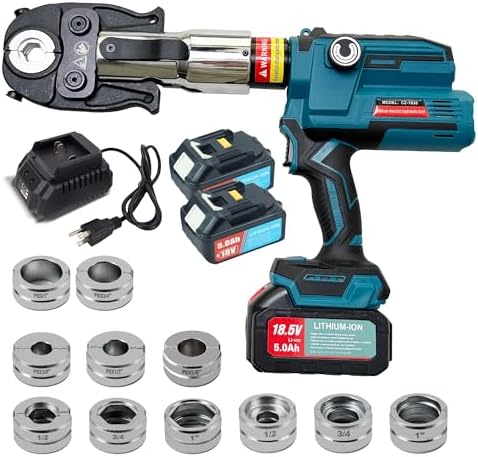
This cordless kit is the most extensive option in this group for people working across different press systems. It includes 11 dies: three for 1/2-, 3/4-, and 1-inch copper; five for ASTM F1807 PEX copper rings; and three for ASTM F877 stainless PEX sleeves. The included systems and sizes are specific, so check them against your fitting documentation before purchasing.
The kit includes an 18V brushless tool, two 4.0Ah batteries, a charger, and a carrying case. Its cordless design lets you move between work areas without a power cord, and the product description states that a press takes about three seconds. Actual work time will also depend on access, setup, and the connection process.
This kit offers broader system coverage than the copper-focused iCrimp tools, but its dies are not interchangeable just because two have the same size marking. Use the die intended for the material and fitting standard. The larger kit also brings more components to organize and keep charged.
Pros:
- Includes dies for copper, ASTM F1807 PEX rings, and ASTM F877 stainless sleeves
- Comes with two batteries, a charger, and a carrying case
- Cordless operation avoids a power cord at the work site
- Includes a brushless motor and 11 system-specific dies
Cons:
- Requires careful selection of the correct die for each fitting system
- More kit components to manage than a focused copper-only tool
Verdict: Choose the AMZCNC kit if cordless operation and the listed copper and PEX die systems suit your work, and you are prepared to verify each fitting match.
Saker Hydraulic Press Tool: A Manual Option with a Rotating Head

The Saker is a manual hydraulic tool supplied with 1/2-, 3/4-, and 1-inch jaws and a tubing cutter. Its 360-degree rotating head is intended to help you position it in tight work areas. Because it does not depend on a battery or cord, it may suit occasional repairs or serve as a manual alternative to a powered tool.
The product description mentions copper and PEX work and names fittings such as Viega and ProPress. However, it does not specify the range of fitting standards and die types in as much detail as some competing kits. Verify compatibility with the fitting manufacturer before relying on it for a particular PEX system or press connection.
Compared with the VEVOR, the Saker lists fewer detailed die applications, while both use manual hydraulic operation and a rotating head. If you need more clearly specified PEX ring coverage, the VEVOR’s listed ASTM F1807 dies may make it easier to compare against your project requirements.
Pros:
- Manual hydraulic operation needs no battery or electrical connection
- Includes three jaw sizes and a tubing cutter
- Rotating head is intended to improve access in tight spaces
- Could suit repair work or use as a manual backup tool
Cons:
- Requires manual effort to operate
- Fitting-system compatibility is less specifically detailed than on some other kits
Verdict: The Saker may fit occasional manual pressing needs, but confirm the precise fitting standard and included jaw compatibility before choosing it over a more clearly specified kit.
How to Choose a Press Fitting Tool for Plumbing
Match the Tool to the Fitting Standard
Start with the fitting, not the tool’s broad compatibility claims. Copper press fittings, PEX copper rings, and stainless PEX sleeves can call for different jaws or dies. Check the fitting manufacturer’s instructions and the tool’s compatibility information to confirm that the tool is approved for your exact system.
Check Pipe Material and Size
Make sure the tool includes a die for your pipe material and the exact size you plan to install. A 1/2-inch marking alone does not prove that a die works for every 1/2-inch fitting system. Some kits cover common copper sizes, while others include separate dies for PEX ring or sleeve standards.
Choose a Drive Type That Fits Your Work
Manual-wrench tools can be useful where power is not available, while socket-driven kits depend on having a compatible wrench or impact wrench. Manual hydraulic tools use hand pressure and do not need a battery. Cordless press tools reduce the need for a cord and may suit repeated work, but you will need to manage batteries and the included dies.
Consider Access and Tool Positioning
For tight work around tees, behind fixtures, or in other restricted areas, consider the tool’s body size and head design. A compact tool or a rotating head may make positioning easier, but it does not guarantee that the jaws will fit every cramped connection. If possible, assess the space needed to place the tool around the fitting before committing to a tool.
Look at What the Kit Includes
Some kits include a tubing cutter, batteries, charger, or carrying case; others rely on you to supply a compatible drive tool. A cutter can help prepare pipe, but you will still need to follow the fitting maker’s requirements for cutting and preparing the tube. Compare the included components with the tools you already own.
Follow the Installation Instructions
A press tool is only one part of a reliable connection. Use the correct die, prepare the pipe as directed, fully seat the fitting, and complete the tool’s pressing cycle. Check the finished work according to the fitting manufacturer’s procedure. Do not assume that an indicator light or a tool’s general compatibility claim replaces those steps.
Frequently Asked Questions
Can one press tool work with both copper and PEX?
Some kits include dies for more than one system. For example, the VEVOR lists dies for VUS copper and ASTM F1807 PEX copper rings, while the AMZCNC kit lists copper, ASTM F1807 PEX rings, and ASTM F877 stainless PEX sleeves. You must use the die intended for the specific fitting standard.
Are press tool dies interchangeable if they have the same size marking?
No. The same size marking does not mean dies are interchangeable across different fitting systems. Match the die to the material, fitting standard, and pipe size, and confirm compatibility with the fitting manufacturer.
Is a manual hydraulic tool a good choice for occasional repairs?
It can be a reasonable option if its included dies match your fittings and you are comfortable with manual operation. Hydraulic tools do not require a battery or power cord, but they still require hand effort. For frequent work, consider whether a powered option better suits your needs.
Do these tools include pipe cutters?
The two iCrimp options, the Saker, and the AMZCNC product description list a cutter or tubing cutter. The VEVOR description does not list one. Check the kit contents before buying and make sure the cutter suits the pipe size you need to prepare.
Can I use a press tool with any brand of fitting?
No. Compatibility depends on the tool, jaw or die profile, fitting, and pipe system. Some product descriptions name specific compatible brands or standards, but you should still verify the exact pairing before installation.
Which option is best for tight spaces?
The iCrimp IWS-1632CF is described as having a compact body, while the VEVOR and Saker hydraulic tools have heads that rotate up to 360 degrees. The best fit depends on the actual clearance around your connection and the space needed to position the jaws.
Final Recommendation
For copper-only work with a choice of manual or powered drive, the iCrimp dual-drive tool is a flexible place to start. The VEVOR offers clearly listed dies for both VUS copper and ASTM F1807 PEX ring applications, while the AMZCNC kit covers several listed copper and PEX systems with cordless operation. Whichever you choose, confirm that the tool and die match your exact fittings before beginning the job.
