
Choosing the best product for stripping paint from wood depends on the coating, the shape of the piece, and how much time you can give the remover to work. A water-based gel can be a practical option for many DIY projects, but no stripper is right for every finish. Check the product’s limits, test a small hidden area, and follow its application and cleanup instructions before treating the whole surface.
Our top pick for typical wood-restoration projects is Max Strip Paint & Varnish Stripper Gel. It is designed for several common aftermarket coatings and comes with clear instructions about dwell time, covering the surface, and cleanup. The other picks may suit you better if you want a citrus scent, need to tackle multiple paint layers, or prefer a different gel format.
Table of Contents
Quick Comparison
| Product | Best suited for | Notable feature | Important limitation |
|---|---|---|---|
| Max Strip Paint & Varnish Stripper Gel | Common aftermarket paint and varnish on wood | Water-based formula without methylene chloride or NMP | Must stay covered while it dwells and be neutralized with water after scraping |
| Max Strip Citrus Paint Stripper Gel | DIY projects where a citrus scent is preferred | Gel for several types of aftermarket paint and coatings | Not intended for factory-finished, baked-on, or deck coatings |
| Dumond Smart Strip Advanced Paint Remover | Projects with multiple paint layers | Designed to remove several coating types and layers | Must remain wet; the maker calls for a test patch and covering paper |
| Painthan Paint & Varnish Remover Gel | Vertical or overhead surfaces | Thick, drip-resistant gel consistency | Check the label for surface compatibility and complete directions |
| JAOJAO Paint & Varnish Remover | Small jobs where a compact amount is useful | Includes a brush and disposable gloves, according to the listing | Smaller 150 g quantity may not suit a large project |
Our Picks: Best Product For Stripping Paint From Wood reviews
1. Max Strip Paint & Varnish Stripper Gel: Best Overall for Typical DIY Projects

Max Strip’s water-based gel is made for removing aftermarket paint and finishes from surfaces that include wood. Its listed compatible coatings include latex, polyurethane, shellac, varnish, acrylic, and oil-based coatings. That range makes it a versatile starting point for stripping a painted chair, trim, or another household wood item—provided the existing finish is not a factory-baked coating.
The application process matters. The product description says to shake the container well, apply the gel, and check the surface at intervals. It also calls for a dwell time of at least 15 to 30 minutes, covering the application with plastic film to keep it from drying, and allowing more time or additional applications for heavy or layered finishes. After scraping, the surface must be neutralized with water. Those steps are part of the process, not optional shortcuts.
The formula contains no methylene chloride or NMP, and the manufacturer describes it as having no harsh fumes or unpleasant odor. That may make it appealing for indoor DIY work, but it does not replace good safety habits. Follow the label, protect nearby surfaces, and work with suitable ventilation and protective equipment.
Its clearest drawback is the amount of care needed to keep the stripper wet and complete the water cleanup. It is also explicitly not designed for automotive paint, powder coat, appliance enamel, kiln-fired finishes, deck coatings, or other factory-baked coatings. Compared with the citrus Max Strip, this version has a more detailed required process in the supplied product information.
Pros:
- Designed for several common aftermarket paints and wood finishes
- Water-based and contains no methylene chloride or NMP
- Suitable for a range of DIY and restoration projects when used as directed
- Clear instructions explain how to prevent drying and clean the surface
Cons:
- Requires covering during dwell time and water neutralization after scraping
- Not intended for factory-baked or other specifically excluded coatings
Verdict: Choose Max Strip Paint & Varnish Stripper Gel for a typical wood-stripping project if the finish is an aftermarket coating and you can follow its full application and cleanup process.
2. Max Strip Citrus Paint Stripper Gel: A Scented Option for DIY Use
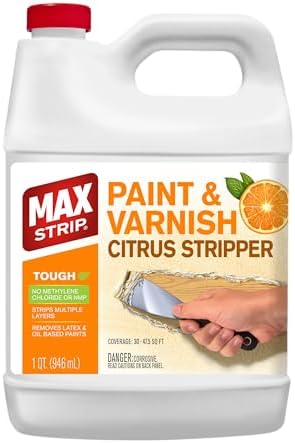
This Max Strip gel is aimed at much the same kind of work as the first pick: removing aftermarket paint and finishes from materials that include wood. The listed coatings include latex, polyurethane, shellac, varnish, acrylic, and oil-based paint. Its citrus scent is the main point of difference, so it may be worth considering if you prefer that scent over a conventional chemical odor.
The manufacturer describes the formula as free of methylene chloride and NMP and says it is suitable for DIY and professional stripping projects. It recommends shaking the product thoroughly before use and checking the surface as the stripper works, since the set time varies. Plan to test a small area first and give the coating time to respond rather than assuming the gel will lift every finish at the same speed.
This is not a universal paint remover. Its listing excludes deck coatings, factory-finished surfaces, and baked-on coatings such as vehicle paint. That distinction is important on wood furniture and trim, where the surface may have a factory-applied finish that is different from later paint layers. Check what you are stripping before you choose it.
Compared with the first Max Strip, the citrus version is presented as a straightforward alternative with a fresh scent, but its supplied directions are less specific about covering the surface and post-scraping neutralization. Read the container directions carefully rather than assuming that the two products have identical use steps.
Pros:
- Designed for several common aftermarket paint and finish types
- Contains no methylene chloride or NMP, according to the product description
- Citrus scent may be preferable for some indoor projects
- Can be considered for wood and other listed surfaces
Cons:
- Not designed for deck coatings, factory finishes, or baked-on coatings
- Application time varies, so testing and close monitoring are important
Verdict: Pick the citrus version if its scent and broad aftermarket-coating use fit your project, but confirm that the wood’s finish is within the product’s stated limits.
3. Dumond Smart Strip Advanced: A Pick for Multiple Paint Layers

Dumond Smart Strip Advanced is a water-based, non-caustic remover designed for a broad range of coatings. The product description says it can strip multiple layers of acrylic, latex, oil-based, and water-based paints, along with varnishes, stains, and other coatings. Wood is among its listed compatible surfaces, making it a candidate for furniture or trim with several paint layers.
Keeping the product wet is central to its use. Dumond advises testing a small patch first to check compatibility and determine the dwell time. The product must remain wet while it works, and the supplied directions call for covering it with Dumond Laminated Paper to help prevent premature drying. This makes it less of a quick, apply-and-forget option than a project that benefits from a planned setup.
The description says the product is made without caustics such as methylene chloride or NMP and lists many compatible materials beyond wood. That broad surface list does not mean every finish or item will respond the same way, however. A test patch is especially useful when you do not know what coatings are on the wood or how many layers you will need to remove.
Compared with the Max Strip options, Smart Strip is the most clearly positioned here for multiple paint layers. Its main tradeoff is the extra attention needed to keep it wet and use the recommended covering paper. Make sure you have the appropriate supplies and enough time before starting a large surface.
Pros:
- Designed to address multiple layers of several paint types
- Lists wood and many other surfaces as compatible
- Water-based and described as non-caustic
- Test-patch guidance helps you assess compatibility and dwell time
Cons:
- Must stay wet during the removal process
- Directions call for a specific laminated paper covering to help prevent drying
Verdict: Consider Smart Strip Advanced when your wood has several paint layers and you are prepared to test first, keep the remover wet, and follow the covering instructions.
4. Painthan Paint & Varnish Remover Gel: Best for Vertical Areas

Painthan is a water-based gel formulated for paint and varnish removal. Its thick consistency is described as drip-resistant, which may be useful on wood trim, upright panels, or other vertical areas where a thinner product could run. The listing names paint, varnish, polyurethane, and epoxy among the coatings it is designed to remove.
The product is described as non-flammable and as having no odor, with use suggested indoors and outdoors. These are manufacturer claims, not a reason to skip the label or basic precautions. Check the directions for suitable surfaces, application steps, and cleanup before using it, especially if the wood has a delicate veneer or an unfamiliar finish.
The listed working time is as little as 15 to 30 minutes, but the actual result can depend on the coating and its thickness. Treat that timing as a guide from the product description, not a guarantee for every wood project. Apply only as directed and allow for additional time if the finish does not lift readily.
Compared with the other options here, Painthan’s clearest practical advantage is its stated cling on vertical and overhead surfaces. The supplied information is less detailed about test patches, covering the gel, and cleanup than the Max Strip and Dumond descriptions, so read the package directions closely before choosing it for a larger job.
Pros:
- Thick gel is described as drip-resistant for vertical and overhead use
- Listed for paint, varnish, polyurethane, and epoxy
- Water-based and described as non-flammable
- Intended for indoor and outdoor projects
Cons:
- Timing can vary by coating and project conditions
- Check the package for complete surface compatibility and cleanup directions
Verdict: Painthan is worth considering for vertical wood surfaces if its coating compatibility and package instructions match your project.
5. JAOJAO Paint & Varnish Remover: A Compact Choice for Small Jobs

JAOJAO is a water-based paint and varnish remover sold in a 150 g size. The listing says the set includes a brush and disposable gloves, which may be convenient for a small touch-up or a limited stripping task. Wood and metal are named as surfaces the product is intended to clean, and the description lists a range of paint types.
The manufacturer describes the remover as fast-acting, with paint said to dissolve in five to ten minutes. Actual performance can vary with the coating and how many layers are present, so use the package instructions and check a small area before applying it broadly. The product description also mentions using a scraper or cleaning tool to remove loosened paint.
The compact size is both a possible advantage and a key limitation. It may be easier to justify for a small object or isolated area, but the supplied information does not establish how much surface the container will cover. For a large door, cabinet, or set of wood trim, compare the amount you will need with the larger one-quart options.
JAOJAO’s listing mentions many possible settings, including vehicles and industrial use, but that broad description does not confirm that it is suitable for every finish or every wood item. For a wood project, rely on the package’s specific directions and compatibility information rather than assuming that a general-use claim covers your exact surface.
Pros:
- Compact 150 g quantity may fit a small project
- Listing says a brush and disposable gloves are included
- Water-based formula is described as suitable for wood and metal
- Designed to loosen multiple types of paint
Cons:
- Small quantity may not be practical for a large surface
- Check the package closely for project-specific use and cleanup instructions
Verdict: Choose JAOJAO for a modest wood-stripping job if the stated surface compatibility fits and the small container is enough for your needs.
How to Choose a Paint Stripper for Wood
Identify the coating you need to remove
Start by working out whether you are removing paint, varnish, stain, polyurethane, or several layers of different finishes. Product descriptions often list specific coating types, and those lists are more useful than a broad claim that a stripper works on many surfaces. If you are unsure what is on the wood, test a small, hidden spot first and follow the product’s instructions for checking compatibility.
Check for finishes the product excludes
Some removers are intended for aftermarket coatings but not factory-finished or baked-on finishes. The Max Strip products listed here specifically exclude certain coatings, including deck coatings or factory-baked finishes. Do not assume that a product suitable for painted wood will also remove a factory finish. Choose based on the actual surface and the exclusions on the label.
Consider the shape and position of the wood
A gel that clings to a vertical surface can be easier to manage on trim, posts, or upright panels than a product that runs. A flat tabletop may be simpler to cover and monitor. Think about edges, grooves, carved details, and nearby surfaces too; those areas can require careful application and cleanup. Keep the product where it belongs and use tools that will not gouge the wood while scraping.
Plan for dwell time and keeping the stripper wet
Paint removers need time to work, and the directions differ by formula. Some products call for checking the surface at intervals, while others need to stay wet under a specified covering. Thick or layered coatings may need more time or another application. Plan for the full process rather than choosing based only on the shortest advertised timing.
Understand the cleanup requirements
Scraping is only one part of stripping paint. Some formulas require water neutralization after scraping, and others specify a particular covering or cleanup method. Read the full directions before starting so you have the right supplies and know how to prepare the wood for its next finish. Avoid improvising with a cleanup method that conflicts with the product instructions.
Balance scent and work location with safe handling
A product described as low-odor or citrus-scented may be more comfortable for some projects, but scent does not tell you everything about safe use. Follow the label’s protective equipment and ventilation guidance, and keep the work area controlled. If you are stripping old paint and suspect it may contain lead, pause and use the appropriate lead-safe guidance instead of dry sanding or scraping it without precautions.
Match container size to the project
A small container may be enough for a single item or a limited repair, while a larger surface can require more product and repeat applications. The product descriptions do not provide comparable coverage amounts, so avoid assuming that one container will cover a specific area. Estimate the amount of wood you need to strip, then confirm the expected coverage and directions on the packaging before buying.
Frequently Asked Questions
What is the best product for stripping paint from wood?
For a typical DIY project involving aftermarket paint or varnish, Max Strip Paint & Varnish Stripper Gel is our top pick because its description lists several common coatings and gives clear application and cleanup instructions. It is not suitable for every finish, so confirm the coating type and exclusions first.
Can paint stripper damage wood?
A stripper may affect a wood surface if it is incompatible with the finish or used incorrectly. Test a small hidden area, follow the product directions, and use care when scraping so you do not gouge the wood. If the item has a delicate surface or veneer, take extra care and check compatibility before treating a larger area.
Do I need to cover paint stripper while it works?
That depends on the product. Max Strip Paint & Varnish Stripper Gel calls for plastic film during dwell time to prevent drying, while Dumond Smart Strip Advanced specifies covering it with its laminated paper. Follow the directions for the particular formula you buy.
How long does paint stripper take to work?
Timing varies with the product, the coating, and the number of layers. The listed directions range from checking a product at intervals to allowing a stated dwell period; the advertised time is not a guarantee for every surface. Test a small area and follow the package instructions.
Can I use these products on factory-finished wood?
Do not assume so. The Max Strip listings exclude factory-finished or baked-on coatings, and other products may have their own limits. Check the exact product label and test a small area before use.
What should I do after scraping off the paint?
Use the cleanup method stated on the product label. Max Strip Paint & Varnish Stripper Gel specifically requires water neutralization after scraping. Other formulas may have different instructions, so do not apply one product’s cleanup steps to another without checking.
Final Recommendation
For most DIY wood projects involving common aftermarket paint or varnish, start with Max Strip Paint & Varnish Stripper Gel, provided its stated exclusions do not apply and you are willing to follow the covering and water-neutralization steps. Choose Dumond Smart Strip Advanced when multiple layers are the main challenge and you can keep the product wet under its recommended covering. For vertical areas, consider Painthan’s clingy gel; for a citrus scent, look at Max Strip Citrus; and reserve the compact JAOJAO option for smaller jobs. In every case, test first and follow the product label from application through cleanup.
