At high elevation, thinner air can affect propane burner performance, so a heater’s stated altitude limit matters as much as its flow rate. The options below include RV models with specific high-altitude claims and residential heaters whose supplied product details do not state an elevation rating. Match the heater to your setup, confirm its approved altitude and fuel type in the manufacturer’s manual, and check local code before buying or installing.
Quick takeaway: The Ranein RA65EH and RA65LH are the strongest matches for RV use at elevation, with a stated operating limit of up to 9,800 feet. The RVPart Pro is a more compact RV option rated for 5,000+ feet. For a home or cabin, the Rheem and APUS offer higher-capacity residential formats, but the provided information does not confirm high-altitude ratings for either model.
| Product | Best for | Stated altitude information | Type |
|---|---|---|---|
| Ranein RA65LH | RV use with steadier temperature control | Up to 9,800 feet | 12V DC RV heater |
| Ranein RA65EH | High-altitude RV travel and remote monitoring | Up to 9,800 feet | 12V DC RV heater |
| RVPart Pro RV Tankless Water Heater | Compact RV installations | Up to 5,000+ feet | 12V DC RV heater |
| Rheem RTG Series 7.0 GPM LP | Whole-home outdoor installation | Not stated in the supplied details | Residential outdoor heater |
| APUS 95,000 BTU Indoor | Indoor home or cabin use | Not stated in the supplied details | Residential indoor heater |
Table of Contents
Our Picks: Best Propane Tankless Water Heater For High Altitude reviews
1. Ranein RA65LH: Best RV pick for steadier temperatures at elevation
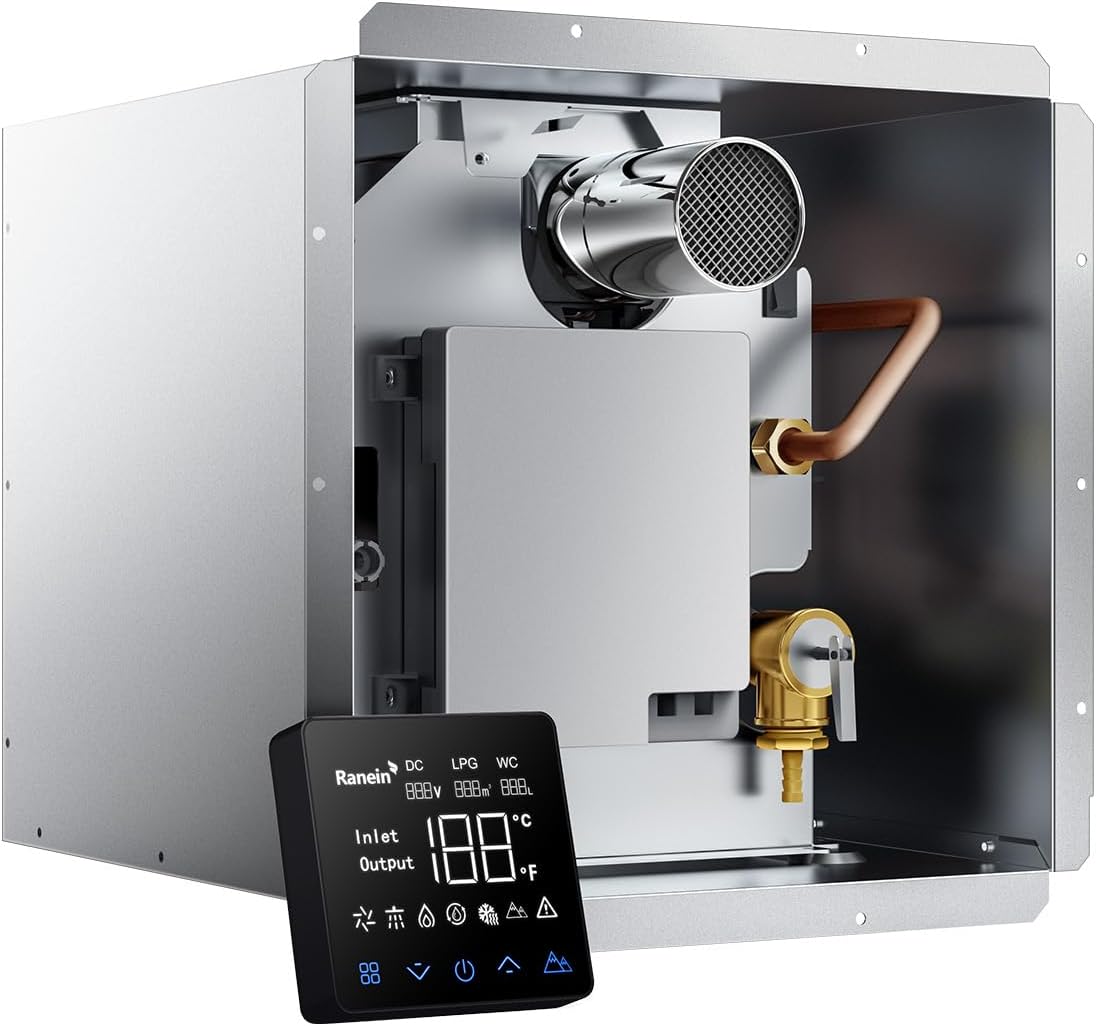
The RA65LH is a propane tankless heater designed for RVs, not a whole-house replacement. Its listed output is 65,000 BTU and up to 3.9 GPM, and the product information says it is engineered for elevations up to 9,800 feet. That specific altitude claim makes it one of the clearest matches here for mountain travel, though you should still confirm the limit and installation requirements for your exact location and RV.
A standout feature is its thermostatic mixing chamber, which is designed to help keep water temperature steadier as demand changes. It also has staged combustion and a remote that reports information such as water flow, system voltage, gas consumption, and anti-freeze activation status. The heater uses 12V DC and offers adjustable temperatures from 95°F to 124°F.
Fit is a key concern before ordering. The listed cutout is 12.8 by 12.8 inches, and the exterior door is sold separately. Optional door sizes are listed, but you should measure your existing opening and check the installation instructions rather than assuming it will fit a particular tank-heater opening. Its RV-focused design and altitude claim are advantages over the residential models below; its capacity and installation format are not intended for a typical household plumbing system.
Pros:
- Stated operating suitability up to 9,800 feet
- Thermostatic mixing chamber is designed to reduce temperature swings
- Remote displays useful operating information
- Compact RV format with 12V DC power
Cons:
- Exterior door is not included
- RV-specific design is not a whole-home solution
Verdict: Choose the RA65LH if you need an RV heater with a stated high-altitude limit and want the added temperature-balancing feature, after confirming the cutout and door fit.
2. Ranein RA65EH: High-altitude RV heater with a feature-rich remote

The RA65EH shares the core specs of the RA65LH: 65,000 BTU, up to 3.9 GPM, 12V DC operation, and a stated high-altitude limit of 9,800 feet. It is made for RVs and travel trailers, where a compact on-demand heater can provide hot water without storing it in a tank. Its 95°F to 124°F temperature range gives you room to set a comfortable output for showers and other RV uses.
The digital remote is a useful part of the package. It can show water flow, system voltage, gas consumption information, and anti-freeze activation status. The unit also uses staged combustion, which adjusts burner output to demand. Unlike the RA65LH, the supplied details do not list a thermostatic mixing chamber, so shoppers focused on temperature stability during changing water use may prefer the LH model.
As with the other Ranein RV model, measure carefully before buying. The heater is designed around a 12.8-by-12.8-inch cutout, while exterior door kits are optional and sold separately. The stated altitude limit is a useful starting point, not a substitute for checking the manual, RV installation rules, and any required adjustment or derating at your elevation.
Pros:
- Stated high-altitude operation up to 9,800 feet
- Remote provides flow, voltage, and other operating information
- Up to 3.9 GPM listed for RV hot-water use
- 12V DC power and adjustable temperature settings
Cons:
- Exterior door is sold separately
- Does not list the RA65LH’s thermostatic mixing chamber
Verdict: The RA65EH is a good choice for RV owners who want a stated 9,800-foot operating limit and a remote with detailed system information; consider the RA65LH if temperature balancing is your priority.
3. RVPart Pro: Compact RV option rated for 5,000+ feet

This RVPart Pro unit is a compact, propane-fired water heater for RVs that use 12V DC power. Its product information states a 60,000 BTU output and suitability for high-altitude use up to 5,000+ feet. That is a lower stated limit than the Ranein models, so it may suit moderate-elevation trips but is not the first option to consider for higher mountain locations.
The heater has an oxygen-free copper heat exchanger, a brushless DC fan, and staged combustion. Its control panel adjusts the water temperature from 95°F to 123°F and displays fault codes. The supplied details also list a built-in 150 PSI pressure-reducing valve, freeze protection, and automatic shutoff features. It is designed for a 15-by-15-inch door with a 13-by-13-inch opening, so check both measurements against your RV before ordering.
Owners describe the basic hookup as manageable when the RV already has compatible water, power, and propane connections. However, ignition depends on adequate water flow, so weak water pressure may prevent the burner from starting. It has a lower maximum stated altitude than either Ranein model, but its specified door and opening dimensions may make it a practical replacement for some RV layouts.
Pros:
- High-altitude capability stated up to 5,000+ feet
- Compact RV design with 12V DC operation
- Temperature adjustment and fault-code display
- Built-in pressure-reducing valve and listed safety features
Cons:
- Stated altitude limit is lower than the Ranein models
- Ignition may not engage if water pressure or flow is too low
Verdict: Pick the RVPart Pro for a compact RV installation at elevations within its stated range, but choose a model with a higher documented limit for trips above 5,000 feet.
4. Rheem RTG Series 7.0 GPM: Whole-home outdoor capacity

The Rheem RTG Series is a residential outdoor tankless heater listed at 7.0 GPM and described as a liquid propane model. The product information positions it for whole-home use and says its flow can support multiple showers, depending on demand and incoming-water conditions. Outdoor installation also avoids the need for indoor venting, though it still requires a suitable outdoor location and professional installation.
The unit includes digital temperature control with one-degree adjustments, freeze protection, and flame-failure protection. The listed warranty information describes coverage for the heat exchanger and parts, along with a separate labor term. However, the supplied product details do not give an altitude limit, so its large flow rating alone does not confirm that it will perform as needed at your elevation.
There are also conflicting details in the supplied listing: the title and main description identify it as liquid propane, while another section refers to natural gas and gives different heat-output figures. Confirm the exact fuel type, model specifications, and altitude requirements directly from the manufacturer’s documentation before purchase. Its residential capacity is an advantage over RV models, but the product is not a proven high-altitude choice based on the information provided.
Pros:
- Residential outdoor design with a listed 7.0 GPM flow rate
- Digital temperature control with fine adjustments
- Built-in freeze and flame-failure protection are listed
- Designed for whole-home use rather than RV plumbing
Cons:
- No high-altitude operating limit is stated in the supplied details
- Listing details conflict on fuel type and heat output; verify before buying
Verdict: Consider the Rheem for an outdoor whole-home propane installation only after confirming its exact fuel specifications and approved altitude with Rheem or a qualified installer.
5. APUS 95,000 BTU: Indoor residential choice with no stated altitude limit

The APUS is an indoor propane tankless heater listed at 95,000 BTU and up to 4.42 GPM. The supplied description says it can handle multiple fixtures under suitable conditions and has a low-flow start feature. It also includes an LED touchscreen, adjustable temperature settings from 95°F to 140°F, freeze protection, and safety shutoff features.
Its compact cabinet and indoor format may appeal to someone upgrading a home or cabin where an indoor unit is appropriate. The product information lists a 120V connection and says the unit needs venting; installation should follow the manual and local fuel-gas and venting rules. The listing claims high efficiency, but it does not provide a high-altitude rating. Its output and efficiency claims should not be treated as proof of suitable operation at elevation.
Some owners describe straightforward startup when existing venting and gas connections are compatible. That does not remove the need for a qualified installer to check venting, gas supply, electrical requirements, and altitude suitability. Compared with the Rheem, APUS is an indoor model with a lower listed flow rate; compared with the RV heaters, it is designed for stationary residential plumbing rather than a 12V RV setup.
Pros:
- Indoor residential format with a listed 4.42 GPM flow rate
- Low-flow start feature and adjustable temperature settings
- Compact design with digital controls
- Freeze protection and automatic safety shutdown are listed
Cons:
- No high-altitude operating limit is stated
- Requires proper indoor venting and professional installation
Verdict: The APUS may suit an indoor propane installation, but do not choose it specifically for high-altitude use unless the manufacturer confirms its approved elevation range.
How to Choose a Propane Tankless Water Heater for High Altitude
Start with the heater’s stated elevation limit
Look for a manufacturer-approved altitude range in the product manual, not just a general claim that a heater works well in the mountains. Elevation can affect combustion, and some models may need specific adjustments or may have reduced capacity outside their standard operating range. Of the products here, both Ranein RV models list operation up to 9,800 feet, while the RVPart Pro lists up to 5,000+ feet. The Rheem and APUS details provided do not state an altitude limit, so ask the manufacturer before using either at elevation.
Choose an RV or residential model for your actual system
RV water heaters are built around RV plumbing, compact openings, and 12V DC power. They are not direct substitutes for residential units. Whole-home heaters are designed for stationary plumbing and have different fuel, electrical, venting, and installation needs. Confirm the model type before comparing flow rates: a high GPM figure does not make an RV heater suitable for household use, or vice versa.
Match flow rate to your incoming water temperature and demand
Tankless flow depends on how much the heater must raise the water temperature. Colder incoming water requires more heating, which can reduce the usable flow rate. Think about how many showers or fixtures may run at once, but treat the listed GPM as a maximum under specified conditions rather than a guarantee at your elevation. For RV use, also consider whether the heater can keep up with your shower and sink needs at the same time.
Confirm fuel, gas supply, and electrical needs
Check that the heater uses the same propane setup as your vehicle or property and that the gas line can supply the required input. RV models in this list use 12V DC; the APUS lists a 120V connection. The Rheem listing contains conflicting references to liquid propane and natural gas, so verify the precise model and fuel before ordering. Have a qualified professional check gas pressure, line sizing, electrical requirements, and local rules.
Measure the opening and installation space
For an RV replacement, compare the new heater’s cutout, exterior door, depth, and connection locations with your existing unit. The Ranein models list a 12.8-by-12.8-inch cutout and offer optional door kits, while the RVPart Pro lists a 13-by-13-inch opening and a 15-by-15-inch door. Those measurements are not interchangeable. For residential heaters, check wall space, clearances, access for service, and venting or outdoor placement requirements.
Consider temperature stability and controls
High water demand, changing flow, and burner adjustments can affect the temperature you feel at the tap. Staged combustion is listed on the RV models, and the RA65LH also adds a thermostatic mixing chamber designed to help balance water temperature. Remote displays can make it easier to monitor flow or system status. If steady shower temperature matters most, compare these features alongside the altitude rating rather than choosing by capacity alone.
Plan for freezing weather and seasonal storage
Several products list freeze protection, but that feature does not mean you can ignore cold-weather care. Follow the manufacturer’s instructions for freeze protection, draining, and winter storage. For the APUS, the supplied information specifically warns that the unit should be fully drained if it will remain unused for an extended period in freezing conditions. Confirm the exact procedure for whichever model you choose.
Use a qualified installer and check local requirements
Gas appliances need correct combustion air, venting or outdoor placement, propane supply, and safe clearances. The Rheem listing calls for professional installation, and indoor models require special attention to venting. Local codes and manufacturer instructions may add requirements. At high elevations, ask the installer to confirm the model’s approved range and any required setup changes before installation.
Frequently Asked Questions
Which model in this list has the highest stated altitude limit?
The Ranein RA65EH and RA65LH list operation up to 9,800 feet. Check the manufacturer’s manual for the exact operating conditions and installation requirements before relying on that limit.
Can I use an RV tankless heater in my house?
These RV units are designed around RV plumbing, 12V DC power, and compact openings. They are not presented as whole-house residential heaters. Choose a residential model for a home and have an installer confirm its capacity, fuel, venting, and altitude suitability.
Does a higher GPM rating guarantee strong hot-water flow at elevation?
No. GPM figures depend on conditions, including how much the heater must raise the incoming water temperature. Elevation can also affect burner operation. Check the manufacturer’s performance information for your conditions rather than treating the listed maximum as a guaranteed flow rate.
Is the Rheem RTG Series confirmed for high-altitude use?
The supplied Rheem information does not state an altitude limit. It also contains conflicting references to fuel type and heat output. Confirm the precise model, propane compatibility, and elevation rating with Rheem or a qualified installer before purchasing.
Do the Ranein RV heaters include the exterior door?
The supplied product information says the exterior door is not included and is sold separately. Measure your RV opening and check the available door options before ordering.
Will built-in freeze protection keep a heater safe all winter?
Not necessarily. Freeze protection is a feature, not a replacement for the maker’s winterization instructions. Follow the manual’s steps for draining, power, and storage, especially when the heater will be unused in freezing weather.
Should I install a propane tankless water heater myself?
Follow the product’s installation instructions and local code. Gas supply, combustion, venting, and electrical connections can create safety risks if handled incorrectly. A qualified installer can also confirm that the unit is approved for your elevation and plumbing setup.
Conclusion
For an RV at high elevation, the Ranein RA65LH and RA65EH are the strongest candidates in this group because they state an operating limit of up to 9,800 feet. The RA65LH adds a thermostatic mixing chamber, while the RA65EH emphasizes remote system information. The RVPart Pro is a compact alternative for locations within its stated 5,000+ foot range. For a stationary home or cabin, compare the Rheem and APUS only after confirming their fuel details and approved altitude with the manufacturer. In every case, check the manual, measure the installation space, and use a qualified installer where required.