
A quiet 12,000 BTU window air conditioner can cool a medium-size room without making conversation, sleep, or work feel like a struggle. The Midea U-shaped model stands out for its claimed 32 dBA operation, while the other options offer different combinations of smart controls, window access, and extra features. Compare the stated noise levels carefully: manufacturers may measure them under different conditions, and not every listing provides a decibel figure.
| Product | Cooling coverage | Stated noise level | Standout feature |
|---|---|---|---|
| Midea 12,000 BTU U-Shaped Smart Inverter | Up to 550 sq. ft. | As low as 32 dBA | U-shaped design and app control |
| Frigidaire 12,000 BTU Smart Window AC | Up to 550 sq. ft. | Not specified | Wi-Fi, Dry Mode, and Sleep Mode |
| LG 12,000 BTU Dual Inverter Smart Window AC | Up to 550 sq. ft. | As low as 44 dB in Sleep Mode | LG ThinQ app and voice control |
| Soleus Air 12,000 BTU Air Conditioner with Heater | Not specified | Similar to 38 dB, according to the listing | Heating and a window-straddling design |
| Tehanld 12,000 BTU U-Shaped Window AC | Up to 550 sq. ft. | As low as 42 dB, according to the listing | U-shaped design and six operating modes |
Table of Contents
Our Picks: Best Quietest 12000 Btu Window Air Conditioner reviews
1. Midea U-Shaped Smart Inverter: Best for Quiet Cooling
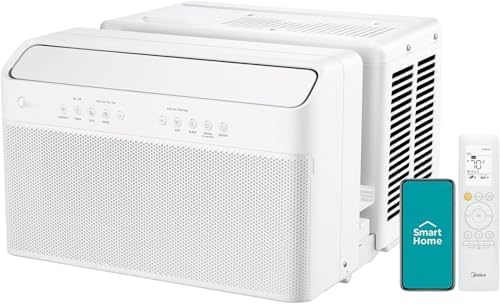
The Midea U is the clearest pick if low operating noise is your main concern. Its U-shaped body leaves the window sash between you and much of the outdoor compressor noise. Midea lists operation as low as 32 dBA, and the inverter system is designed to run with less noise and vibration than a traditional unit.
The design also lets you open the window when the AC is installed, so you can bring in fresh air and keep more of your view. The included quick-snap bracket is part of the installation system. Before ordering, check that your window is single-hung or double-hung, 22 to 36 inches wide, and has at least 13.75 inches of height.
For everyday control, the unit connects to the MSmartHome app and works with Alexa and Google Assistant. Midea also claims more than 35% energy savings compared with traditional units. That figure is a manufacturer comparison, not a guarantee of what you will save in your home; results depend on use and room conditions.
The main tradeoff is the special installation and window design. It is not a universal fit, and the claimed noise figure should not be treated as a direct comparison with models measured under different conditions. Still, it combines the lowest stated noise level here with app controls and window access.
Pros:
- Manufacturer-listed operation as low as 32 dBA
- U-shaped design helps separate the compressor from the room
- Wi-Fi control through the app, Alexa, or Google Assistant
- Allows the window to open when installed
Cons:
- Requires a compatible window within the listed size range
- Energy savings and noise can vary with conditions and use
Verdict: Choose the Midea if quiet operation is your top priority and your window fits its installation requirements.
2. Frigidaire Smart Window AC: Best for Flexible Everyday Controls

Frigidaire’s 12,000 BTU smart window AC is listed for rooms up to 550 square feet. Its feature set is geared toward adjusting cooling to your routine: you get three fan speeds, six-way directional airflow, a 24-hour timer, and a remote control. Wi-Fi control through the Frigidaire app, Alexa, and Google Home adds another way to change settings.
Sleep Mode is intended to support quieter operation, while Eco Mode is designed to help maintain the set temperature and conserve energy. Dry Mode can help remove excess moisture from the air. These modes give you options beyond simply running the unit at one setting, though the product information does not provide a decibel rating for comparison with the Midea, LG, or Tehanld.
Maintenance is straightforward on paper: the washable dust filter can be cleaned, and a Clean Filter alert reminds you when it needs attention. Auto Restart restores the previous settings after a power interruption. Those convenience features may be useful if you want app control but do not need a window-opening U-shaped design.
The biggest drawback for a noise-focused shopper is the lack of a stated sound level. Sleep Mode is a useful feature, but it does not establish how quiet the unit is compared with models that list decibel figures. Consider this option when control features matter as much as a specific noise target.
Pros:
- Wi-Fi control through the app and compatible voice assistants
- Three fan speeds and six-way airflow direction
- Sleep, Eco, and Dry modes
- Washable filter, Clean Filter alert, and Auto Restart
Cons:
- No decibel figure is provided in the supplied product details
- Does not list the window-opening benefit of a U-shaped design
Verdict: Pick the Frigidaire if you value flexible app controls and operating modes more than a published noise measurement.
3. LG Dual Inverter Smart AC: Best for App and Voice Control

LG’s 12,000 BTU Dual Inverter model is designed for rooms up to 550 square feet. Its listing gives a specific quiet-mode figure: as low as 44 dB in Sleep Mode. That is higher than the figures listed for the Midea and Tehanld, but sound levels may be measured differently between products, so treat the numbers as a guide rather than a perfect head-to-head test.
The LG ThinQ app lets you start or stop cooling, change modes, and adjust the temperature while away from home. It also works with Amazon Alexa and Hey Google. Four cooling and fan speeds, plus Auto Cool, give you several ways to set airflow and comfort.
LG says its Dual Inverter technology is up to 35% more energy efficient than the ENERGY STAR certification requirement. This is a manufacturer-stated comparison; your energy use will depend on settings, runtime, insulation, and other room conditions. The inverter design may appeal if you want smart features along with a stated Sleep Mode noise level.
The supplied product data marks this model as unavailable, so check its current listing before planning a purchase. Its stated sound level is also not the lowest in this group. If available, it is a sensible fit for shoppers who want ThinQ control and broad compatibility with voice assistants.
Pros:
- Sleep Mode operation listed as low as 44 dB
- LG ThinQ app control and compatible voice commands
- Four cooling and fan speeds with Auto Cool
- Listed for rooms up to 550 square feet
Cons:
- Supplied availability information indicates it may not be available
- Its stated noise figure is higher than those listed for some alternatives
Verdict: Consider the LG if you want app and voice control and can confirm the model is available, but it is not the lowest-noise option by its listed figure.
4. Soleus Air AC with Heater: Best for Cooling and Supplemental Heat

The Soleus Air combines 12,000 BTU cooling with a listed 10,000 BTU heater, giving it more seasonal flexibility than a cooling-only window unit. Its design straddles the window, which the product description says keeps the unit secure and preserves the view. It also says the design leaves the window usable for fresh air.
Soleus describes the sound as similar to a library at 38 dB because the design moves noise outside the room. That is a product claim, not a guarantee of the sound you will hear in your own space. The model also uses an inverter compressor, which the listing describes as running at variable speeds for efficiency.
This unit may suit someone who wants both cooling and heat and likes the idea of keeping more of the window clear. However, the supplied details do not state a room-size coverage figure, so it is harder to judge whether it matches your space based on square footage alone. Check the current listing for fit, installation requirements, and availability before deciding.
The supplied availability information indicates that this model may not be available. Also, its stated noise level is not directly comparable to figures measured under other conditions, and a 12,000 BTU cooling rating alone does not confirm the best room fit.
Pros:
- Includes both 12,000 BTU cooling and a listed 10,000 BTU heater
- Window-straddling design is intended to preserve the view
- Listing describes sound similar to 38 dB
- Inverter compressor runs at variable speeds
Cons:
- No room-size coverage is provided in the supplied details
- Supplied availability information indicates it may not be available
Verdict: Look at the Soleus if you want a combined cooling-and-heating unit and can confirm that its fit and availability work for you.
5. Tehanld U-Shaped AC: Best for a Quiet-Design Alternative

The Tehanld is a 12,000 BTU U-shaped window AC listed for rooms up to 550 square feet. Its listing says the design isolates the compressor outside the living space and puts operation as low as 42 dB. Vibration-dampening brackets and sealing strips are also included, though the claimed noise reduction depends on proper installation and the conditions around your window.
Its listed modes include Cool, Dry, Fan, Sleep, Auto, and Energy Saver. A touch panel and remote control provide basic ways to adjust the unit, while a removable, washable filter supports routine cleaning. The product description also claims energy and operating-cost savings, but those figures depend on assumptions that are not detailed here, so they should not be treated as a guaranteed household bill.
The U-shaped layout is intended to preserve the window view and allow the window to open. The listing says it fits most sliding and double-hung windows, but it does not provide a specific window-size range in the supplied details. Confirm the exact fit and installation needs before buying, especially if you have a nonstandard window.
Its stated 42 dB is higher than the Midea’s listed 32 dBA, though the measurement methods may differ. The Tehanld offers a similar broad idea—a U-shaped design for noise separation—but with remote control and several operating modes rather than the Midea’s listed app and voice control.
Pros:
- U-shaped design intended to move compressor noise outside
- Listed operation as low as 42 dB
- Six operating modes and remote control
- Washable filter and claimed compatibility with several window types
Cons:
- No specific window-size range is included in the supplied details
- Energy and operating-cost claims are not guaranteed results
Verdict: Consider the Tehanld if you want a U-shaped layout and multiple modes, but verify its window fit and compare its sound claims carefully.
How to Choose a Quiet 12,000 BTU Window Air Conditioner
Compare noise figures with care
Look for a stated decibel level and note the mode it applies to. A figure may describe Sleep Mode or a specific operating condition rather than every fan speed. The products here list different figures and use different wording, so a lower number is a helpful starting point, not a guaranteed direct comparison. If a manufacturer does not give a sound level, as with the Frigidaire, you have less information for judging noise before purchase.
Match cooling capacity to the room
Several of these models are listed for spaces up to 550 square feet, but room size is only one part of choosing capacity. Sun exposure, ceiling height, insulation, and the number of people and heat-producing appliances in the space can affect cooling needs. The Soleus listing does not provide a coverage figure in the supplied details, so check its product information before matching it to a room.
Check window type and dimensions
Window AC installation depends on the opening, not just the unit’s cooling capacity. The Midea specifies single-hung or double-hung windows from 22 to 36 inches wide and at least 13.75 inches high. Other models may have different fit requirements. Measure your window and confirm the product’s installation instructions, including whether your window style is supported, before ordering.
Decide whether a U-shaped design suits your home
A U-shaped or window-straddling design can place more of the compressor outside and may leave more of the window available. The Midea and Tehanld describe U-shaped layouts, while the Soleus says its design straddles the window. These designs can have different brackets and fit requirements from a conventional window unit, so weigh the noise and view benefits against installation needs.
Choose the controls you will actually use
App and voice controls can help if you want to change settings remotely or use a smart-home assistant. The Midea, Frigidaire, and LG list Wi-Fi features, while the Tehanld includes a remote and touch panel. The Frigidaire also lists a timer, Auto Restart, and several operating modes. Focus on controls that fit your routine rather than paying attention to features you may rarely use.
Consider energy claims as estimates, not promises
Some listings compare their inverter technology with traditional units or energy certification requirements. These claims can help you understand the product’s design goals, but they do not predict your exact electric bill. How long you run the AC, your temperature setting, local electricity rates, and the room’s insulation all affect energy use. A clean filter and a properly fitted installation also matter for day-to-day performance.
Think about extra functions and maintenance
If you want heat as well as cooling, the Soleus is the only option here with a listed heater. If humidity control matters, the Frigidaire and Tehanld list Dry Mode. Washable filters are included or described on several models, but regular cleaning is still part of owning a window AC. Check the product instructions for cleaning and seasonal care before use.
Frequently Asked Questions
Which 12,000 BTU window air conditioner is listed as the quietest?
The Midea U-shaped model has the lowest stated figure in this comparison, with operation as low as 32 dBA. Manufacturers may use different test conditions, so treat the listed numbers as useful guidance rather than perfectly matched measurements.
Are all of these models listed for rooms up to 550 square feet?
No. The Midea, Frigidaire, LG, and Tehanld are listed for up to 550 square feet. The supplied Soleus information does not include a coverage figure, so check its product listing for room-size guidance.
Can a U-shaped window AC let me open the window?
The Midea and Tehanld descriptions say their U-shaped designs allow the window to open, and the Soleus describes a design that preserves window use. How far the window can open may depend on the installation and the individual product setup, so confirm the instructions for the model you choose.
Which options have Wi-Fi control?
The Midea, Frigidaire, and LG list Wi-Fi or app control. The Midea works with Alexa and Google Assistant, the Frigidaire lists Alexa and Google Home compatibility, and the LG lists Amazon Alexa and Hey Google support.
Does the Soleus model provide heat?
Yes. Its supplied product information lists 12,000 BTU of cooling and a 10,000 BTU heater. Check the current listing and installation details to confirm that the model meets your needs.
How often should I clean a window AC filter?
Follow the care schedule in the product manual and check the filter regularly, especially during heavy use. The Frigidaire includes a Clean Filter alert, and several models describe washable filters. A clean filter helps maintain clear airflow.
What should I check before ordering a window AC?
Measure the window opening, confirm the window style is supported, and compare the product’s installation requirements with your space. Also check the room-size guidance, available controls, maintenance steps, and whether the model is currently offered.
Final Recommendation
For shoppers who put quiet operation first, the Midea 12,000 BTU U-shaped inverter AC is the strongest match based on its listed 32 dBA operation, window-opening design, and smart controls. The Frigidaire is a good alternative if its modes and app features matter more than a published noise figure. If you need heat as well as cooling, compare the Soleus carefully and confirm its availability and room fit. Whichever model you choose, measure your window and treat advertised noise and energy figures as product claims rather than guaranteed results.
