
Rust stains in a toilet can be stubborn, and the right remover depends on where the stain is and what surfaces the product is made for. Some formulas are designed specifically for white toilet bowls, while sprays and gels may be better suited to bathroom surfaces or ongoing stain prevention. Compare the product directions with your toilet’s material before you buy, and always follow the label for application and rinsing.
| Product | Best for | Format | Key consideration |
|---|---|---|---|
| Whink Rust Stain Remover | Rust stains in white toilets | Liquid | Made for white sinks and toilets; not a general-purpose remover |
| RustGuard Rust Stain Remover | Ongoing toilet stain prevention | Two cleaning tablets | Designed for white and colored toilets |
| Rust-Aid Rust Remover Spray Gel | Rust on multiple bathroom surfaces | Clinging spray gel, two-pack | Check the label to confirm use inside your toilet bowl |
| Whink Rust Stain Remover Foaming Spray | Rust on bathroom surfaces, including toilets | Foaming spray | Clinging foam is designed to stay on vertical surfaces |
| IRON OUT Rust Stain Remover Spray with Cling | Rust on hard-to-reach bathroom surfaces | Clinging gel spray | Confirm toilet-bowl compatibility on the package |
Table of Contents
Our Picks: Best Rust Remover For Toilets reviews
1. Whink Rust Stain Remover: Best for White Toilet Bowls

This liquid remover is the most direct fit for a white toilet with iron or rust marks. Its stated uses include white toilets and sinks, and the formula is designed to break down rust stains without scrubbing. The 32-ounce bottle is also listed for colorfast fabrics and carpets, though this guide focuses on its bathroom use.
Its main limitation is important: the product is specifically designed for white sinks and toilets, not as a general-purpose rust remover. That makes it a more cautious choice for colored bowls or other bathroom materials. The description says it has low odor and is safe for septic systems and piping, but you should still follow the product label for application and rinsing.
Pros:
- Specifically intended for white toilet bowls and sinks
- Liquid formula is described as working without scrubbing
- Low-odor formula, according to the product description
- Listed as safe for septic systems and piping
Cons:
- Not presented as a general-purpose rust remover
- Not the best fit if you need a product for a colored toilet
Verdict: Choose this if you have a white toilet and want a liquid rust remover specifically made for toilet and sink stains.
2. RustGuard Rust Stain Remover: Best for Ongoing Prevention
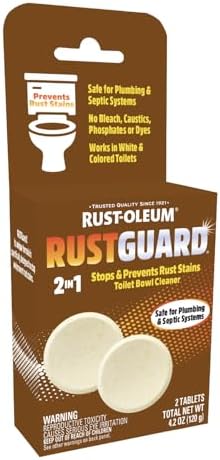
RustGuard comes as two toilet-bowl cleaning tablets. Rather than a spot-treatment spray or liquid, it is designed to help stop and prevent rust stains with every flush. The product description also says it helps prevent hard-water buildup and is made for both white and colored toilets.
This format may suit you if stains tend to return and you want an ongoing option instead of reaching for a stain remover only when marks appear. It is not the same as a targeted treatment for an existing, stubborn stain, so consider a dedicated remover for a visible mark that needs attention now. The tablets are described as free of bleach, caustics, phosphates, and dyes, and as safe for plumbing and septic systems.
Pros:
- Designed to help prevent rust stains with every flush
- Listed for both white and colored toilets
- Also intended to help prevent hard-water buildup
- Contains no bleach, caustics, phosphates, or dyes, according to the description
Cons:
- Tablets are geared toward ongoing care, not a focused spray treatment
- Only two tablets are included in the box
Verdict: Pick RustGuard if prevention is your priority and you want a tablet formulated for white or colored toilet bowls.
3. Rust-Aid Spray Gel: Best for Multiple Bathroom Surfaces

This two-pack is described as a 22-ounce spray gel for rust stains on bathroom surfaces such as tubs, showers, sinks, and tile. Its thicker consistency is intended to cling to surfaces, which can be useful on vertical areas where a thin liquid might run off. The description also lists porcelain, fiberglass, chrome, stainless steel, and tile as suitable materials.
The product information emphasizes broader bathroom use rather than specifically naming toilet bowls. If you want to apply it inside a toilet, check the label first to make sure that use is allowed. Its multi-surface scope may be useful for a bathroom with rust marks in several places, but it is less clearly targeted to toilet-bowl cleaning than the two toilet-specific picks above.
Pros:
- Clinging gel is designed for vertical and hard-to-reach areas
- Listed for several bathroom materials, including porcelain and tile
- Intended for tubs, showers, sinks, and other indoor surfaces
- Sold as a two-pack
Cons:
- The supplied description does not specifically list toilet bowls
- Not described as a toilet tablet for ongoing stain prevention
Verdict: Consider this for rust on several bathroom surfaces, but verify the label before using it inside a toilet bowl.
4. Whink Foaming Spray: Best for Clinging Coverage

This foaming spray is made for rust stains on a broad set of bathroom surfaces, including toilets, sinks, tubs, showers, tile, porcelain, ceramic, glass, chrome, and stainless steel. Its foam is designed to cling to vertical surfaces during the product’s dwell time, which can help keep the formula in contact with a stain instead of immediately running away.
The product is described as a no-scrub formula with a no-etch formulation. It is also listed as safe for PVC plumbing and septic systems when used according to label directions. Compared with Whink’s liquid remover for white toilets, this spray has a wider stated surface range, making it the more flexible option if you also need to clean other bathroom materials.
Pros:
- Toilet bowls are included in the stated surface list
- Foam is designed to cling to vertical surfaces
- Listed for a wide range of bathroom materials
- Described as safe for PVC plumbing and septic systems when used as directed
Cons:
- Requires following the label’s directions for contact time and rinsing
- Does not provide the ongoing prevention format of toilet tablets
Verdict: Choose this spray if you want a rust remover explicitly listed for toilets as well as other bathroom surfaces.
5. IRON OUT Spray with Cling: Best for Hard-to-Reach Rust

IRON OUT’s spray uses a clinging gel intended to dissolve rust stains and rinse away without scrubbing. The product description highlights use on vertical and hard-to-reach surfaces, including showers, tubs, sinks, and tile. It also identifies high iron and hard water as common sources of rust-colored stains around the home.
The description does not specifically name toilet bowls, so confirm that use on your toilet is allowed on the package before applying it there. It is described as septic-friendly when used as directed. Compared with the toilet-specific liquid and tablet options, this one is more clearly positioned as a multi-purpose household rust remover than a dedicated bowl treatment.
Pros:
- Clinging gel is intended for hard-to-reach and vertical areas
- Designed to rinse away without scrubbing
- Listed for multiple bathroom surfaces, including tubs, sinks, and tile
- Described as septic-friendly when used as directed
Cons:
- The supplied description does not specifically list toilet bowls
- Not designed as an ongoing toilet stain-prevention tablet
Verdict: This is a useful option for rust around the bathroom, but choose a toilet-specific product if the label does not confirm bowl use.
How to Choose a Rust Remover for Toilets
Confirm that the product is made for your toilet
Check the label for toilet-bowl use before buying or applying any rust remover. A product that lists tubs, sinks, or tile is not automatically suitable for the inside of a toilet. The options here differ: Whink liquid is specified for white toilets, RustGuard tablets are listed for white and colored toilets, and Whink foaming spray explicitly includes toilets in its surface list.
Match the formula to the stain and your cleaning routine
A liquid or spray is generally a targeted treatment for a visible stain, while a tablet is intended to help manage stains over time. If you are dealing with an existing mark, look for directions that explain how to apply the product and how long to leave it in place. If rust keeps returning, a prevention-focused tablet may better match your routine.
Consider the toilet’s color and surrounding materials
Do not assume a product intended for a white toilet is suitable for a colored bowl. Check for the exact surfaces named on the package, especially if the product may touch nearby tile, metal, or other finishes. When the label allows use on a surface but you are unsure how it will react, follow its guidance on testing a small, less visible area.
Look for a formula that fits the stain’s location
A clinging foam or gel can be useful on vertical surfaces because it is designed to stay in contact rather than run off quickly. For a stain inside a toilet bowl, use a product specifically labeled for toilets and follow its directions for application and rinsing. A general bathroom spray may be convenient for other surfaces but is not always the clearest choice for bowl treatment.
Check plumbing and septic-system directions
If your home uses a septic system, look for explicit septic guidance and follow the product’s stated directions. Several options in this guide describe themselves as safe for septic systems or plumbing when used as directed, but that does not replace the instructions on the package. Use only the amount and method the manufacturer specifies.
Use rust removers safely
Read the full label before use, provide the ventilation the label recommends, and keep the product away from children and pets. Never mix a rust remover with bleach or another cleaner. Follow the package instructions for contact time, rinsing, storage, and any surface warnings.
FAQs
What is the best rust remover for a white toilet?
Whink Rust Stain Remover is specifically described for rust stains on white toilets and sinks. Whink Foaming Spray is another option if you want a product listed for a broader range of bathroom surfaces, including toilets.
Can I use the same rust remover on a colored toilet?
Only if the product label says it is suitable for colored toilets. RustGuard is described for both white and colored toilets. The standard Whink liquid remover in this guide is designed for white sinks and toilets, so it is not the best choice for a colored bowl unless its label says otherwise.
Are toilet tablets better than a spray for rust stains?
They serve different purposes. RustGuard tablets are designed to help prevent stains with every flush, while sprays and liquids are better suited to treating a particular stain. For an existing mark, check the directions for a targeted remover.
Do rust removers always work without scrubbing?
Several products in this guide are described as no-scrub formulas, but results depend on the stain and the product directions. Let the product sit only for the time stated on its label, then rinse or flush as directed. Do not add extra cleaners to speed up the process.
Can I use a bathroom rust spray inside my toilet bowl?
Check the product label first. Some products in this guide explicitly list toilets, while others name surfaces such as sinks, tubs, showers, and tile without specifically naming toilet bowls. Do not assume that general bathroom use includes bowl use.
Are these products suitable for septic systems?
Some product descriptions specifically say they are safe for septic systems when used as directed. Check the package for the exact product you buy, and follow its use and rinsing instructions.
Final Recommendation
For a white toilet with an existing rust stain, Whink Rust Stain Remover is the most direct match because it is specifically made for white toilets and sinks. Choose RustGuard if you want ongoing prevention and have a white or colored toilet. For a spray that is explicitly listed for toilets and several other bathroom surfaces, Whink Foaming Spray offers the broadest stated surface compatibility. Whatever you choose, confirm the label matches your toilet and never mix rust removers with other cleaners.
