A flat metal roof needs a coating that matches its surface, seams, and drainage conditions—but foot traffic changes the decision. A waterproof coating is not automatically safe to walk on or built to withstand repeated steps. Of these five products, none is identified in the supplied product information as a traffic-rated walking surface. The Rust-Oleum coating is the strongest general-purpose roof-coating candidate here, while the Liquid Rubber products offer options for flexible waterproofing and repairs. If you need regular access, plan a separate roof-rated walkway or protective path and confirm compatibility with the coating manufacturer before applying it.
Table of Contents
Quick Comparison
| Product | Best suited for | Foot-traffic note |
|---|---|---|
| Rust-Oleum 710 Elastomeric Roof Coating | Reflective roof coating | Not identified as traffic-rated; protect access routes |
| Liquid Rubber Waterproof Sealant | Thick waterproof membrane and repairs | Not specified as a walking surface |
| Liquid Rubber Color Roof Sealant | Flexible coating for flat and metal roofs | Product information says it is not intended for traffic |
| TUFINEIN Rubber Liquid Waterproof Sealant | Small leak repairs and joints | Product information says it is not suitable for walking surfaces |
| Liquid Rubber Foundation Sealant | Foundation and basement waterproofing | Not suitable for walking surfaces; not a first-choice roof coating |
Our Picks: Best Sealer For Flat Metal Roof With Foot Traffic reviews
1. Rust-Oleum 710 Elastomeric Roof Coating: Best General Roof-Coating Pick
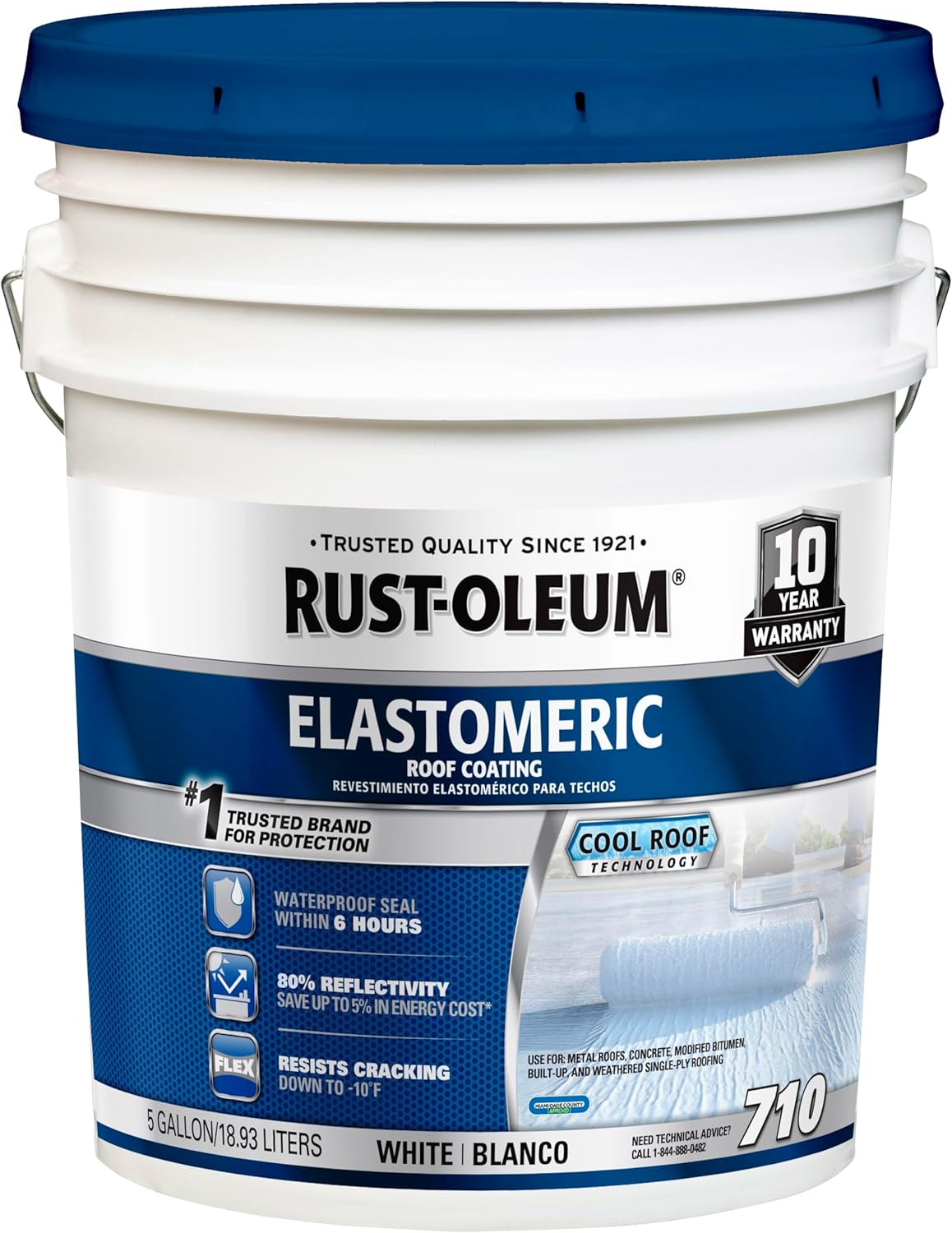
Rust-Oleum 710 is an acrylic elastomeric roof coating intended for exterior roofing. Its white finish is designed to reflect sunlight, and the product information lists initial reflectivity of 84% and weathered reflectivity of 74%. That makes it a reasonable option to consider if your goal is to coat a compatible roof surface and reduce heat absorption.
The product is applied as a liquid, and the listed coverage calls for two coats at 1.5 gallons per 100 square feet per coat. Plan carefully: a roof coating needs the specified film thickness to work as intended, so stretching the material too far can undermine the result. The product information also notes rain resistance after six hours, but weather and surface conditions can affect application. Follow the container directions for preparation, coverage, and drying before exposing the roof to rain or use.
Some users describe it as easy to apply and useful on rubber roof membranes, with two or more coats needed for their projects. That experience is relevant to ease of use, but it does not establish compatibility with every metal roof or prove resistance to foot traffic. The supplied information does not identify this coating as a traffic-bearing surface. For a roof that needs regular access, use a separate roof-approved walkway or protection system and confirm that it will not damage the coating.
Pros:
- Roof-specific acrylic elastomeric coating
- White finish with listed solar reflectivity figures
- Waterproofing features and resistance to weathering are listed
- Water-based cleanup is described by users
Cons:
- Not identified as a coating for repeated foot traffic
- Requires careful surface preparation and two coats at the stated coverage
Verdict: Choose Rust-Oleum 710 as the best general roof-coating candidate in this group, not as a stand-alone walking surface; add a compatible walkway solution if people need to cross the roof.
2. Liquid Rubber Waterproof Sealant: Best for Building a Thick Repair Membrane

This black, water-based bitumen coating is described for flat and metal roofs, gutters, and other surfaces. It is intended to form a seamless waterproof membrane, with flexibility designed to help it move with the building rather than crack as easily when conditions change. The manufacturer’s listed specification of more than 950% elongation is a notable feature for areas that shift or flex.
It is a high-build product, not a thin paint-like sealer. The supplied coverage guidance for flat or low-slope roofs is one gallon per 15 square feet for three to four heavy coats to build a 60–80 mil membrane. That low coverage means material needs can add up quickly on a large roof. Seam tape or fabric reinforcement is recommended in the product information for joints, seams, vents, and other places where movement may occur.
Users have described successful repairs on metal roofs in hot conditions and say the material can be forgiving to apply. Those accounts suggest it may suit targeted leak work or a small roof area, but they do not make it a walkable finish. The formula may remain tacky after curing, according to the supplied description, so it is a poor choice for any route that people will regularly walk across.
Pros:
- Designed for flat and metal roofs as well as gutters
- Flexible membrane with a listed elongation above 950%
- Can be brushed, rolled, or sprayed
- Product information recommends reinforcement for seams and transitions
Cons:
- Very low listed coverage per gallon for a roof membrane
- Not suitable as a regular walking surface
Verdict: Consider this for a compatible roof repair where a thick, flexible membrane is needed, but keep foot traffic off it and account for the substantial material requirement.
3. Liquid Rubber Color Roof Sealant: Best for Flexible Flat-Roof Coverage

This light-gray elastomeric coating is specifically described for flat, low-slope, and metal roofs. It forms a rubber-like waterproof membrane and is designed to flex with roof movement. The water-based, low-odor formula can be applied by brush, roller, or airless sprayer, which gives you options depending on the size and shape of the job.
Coverage depends on the roof type and the required membrane thickness. The supplied information estimates one five-gallon pail covers about 75 square feet on flat roofs or up to 150 square feet on sloped or metal roofs. It also calls for multiple heavy coats, with full cure typically taking 24–48 hours. Use the instructions for your exact roof and allow the coating to cure as directed before exposing it to weather or maintenance work.
Some users report good results on older metal roofs after priming, cleaning, and applying several coats. That points to the importance of preparation and a complete coating system, rather than relying on a single thin layer. The key limitation for your search is explicit: this product is not intended for walking or traffic-bearing surfaces and can remain tacky. It may protect the roof field, but it needs separate protection where people must walk.
Pros:
- Described for flat, low-slope, and metal roofs
- Flexible, UV-resistant membrane with up to 900% elongation listed
- Water-based formula with low odor
- Can be applied with a brush, roller, or airless sprayer
Cons:
- Not intended for foot traffic and may remain tacky
- Requires multiple coats and careful attention to coverage
Verdict: This is a roof-focused option for flexible waterproofing, but do not use it as the finished walking layer on a roof that sees foot traffic.
4. TUFINEIN Rubber Liquid Waterproof Sealant: Best for Small Leak Repairs

TUFINEIN’s neutral-gray liquid sealant is a small-format product intended for multiple surfaces, including metal roofs, gutters, concrete, and skylights. It forms a flexible waterproof membrane and can be applied with a brush, roller, scraper, or by pouring. The supplied information lists initial film formation in two to four hours, but that should not be confused with full cure or permission to walk on the surface.
For flat or low-slope roofs and standing-water areas, the listed coverage is about 10.7 square feet at a one-millimeter thickness. The product information recommends polyester fabric at joints and visible cracks to improve reinforcement. This makes the container more suited to localized repairs than coating a large roof economically.
Users have found it useful for smaller leak fixes, including around flashing and joints. They also note that a small roller may be more practical than the included brush for some jobs, and protective clothing and gloves can help keep the material off you. The product description expressly says it is not suitable for walking surfaces because it may remain tacky, so it cannot serve as the traffic-resistant layer you need.
Pros:
- Compatible with metal roofs and several other listed surfaces
- Useful small container size for spot repairs
- Can be applied with several common tools
- Product information recommends fabric reinforcement at joints and cracks
Cons:
- Limited coverage for a full roof
- Explicitly not suitable for walking surfaces
Verdict: Choose this for a small, compatible leak repair—not for broad roof coverage or a foot-traffic path.
5. Liquid Rubber Foundation Sealant: Best Kept for Foundation Projects

This five-gallon black membrane is primarily described for basement waterproofing, foundations, shower liners, and planter boxes. The product information lists adhesion to materials including metal, but its stated purpose and coverage guidance focus on concrete and below-grade waterproofing. That makes it a less direct fit for coating the surface of a flat metal roof than the roof-specific options above.
The supplied directions call for multiple coats and different coverage rates for interior basement and exterior concrete applications. The product goes on brown and dries black, and the formula is described as water-based with no VOCs. The information also recommends using fabric at joints and transitions where movement may occur.
Some users report applying it in several coats to foundation areas and using reinforcement at corners. Those experiences relate to its intended waterproofing use, not to performance on a metal roof under foot traffic. The description says it is not suitable for walking surfaces because it can remain tacky. For a roof project, only consider it if the manufacturer confirms that it is appropriate for your specific roof assembly and intended use.
Pros:
- Large container for foundation or basement projects
- Flexible waterproofing membrane with 900% elongation listed
- Water-based formula and no mixing required, according to the description
- Product information describes use on several building materials
Cons:
- Primarily intended for foundations and basement waterproofing
- Not suitable for walking surfaces
Verdict: This is not a leading choice for a walkable flat metal roof; reserve it for its stated foundation and basement uses unless the manufacturer approves your roof application.
How to Choose a Sealer for a Flat Metal Roof With Foot Traffic
Separate waterproofing from walkability
A coating can seal against water without being designed to withstand shoes, tools, or repeated maintenance trips. Before choosing a product, check whether its label specifically allows foot traffic and what kind of traffic it supports. In this group, several products are expressly not suitable for walking surfaces, and the others are not identified as traffic-rated. If regular access is needed, look for a manufacturer-approved walkway or roof protection system that is compatible with both the metal roof and the coating.
Confirm compatibility with your roof material and coating system
“Metal roof” can describe different panel finishes and roof conditions. Check the product directions for compatibility with your exact surface, including any existing coating. Ask the manufacturer whether a primer is needed and whether seams, fasteners, or old repairs require separate treatment. Do not assume that a product described for roofing or multiple surfaces will bond to every metal roof.
Match the product to the size and type of repair
A roof coating may be designed for broad coverage, while a small container of liquid rubber may make more sense for one flashing joint or a localized leak. Compare the required number of coats and the coverage at the specified membrane thickness, not just the container size. For example, the listed coverage for Liquid Rubber Waterproof Sealant is only 15 square feet per gallon on flat or low-slope roofs when applied in the specified heavy coats.
Pay close attention to seams, fasteners, and transitions
Leaks often occur at joints, roof edges, vents, and other points where surfaces meet or move. Some of the products recommend seam tape, fabric, or geotextile reinforcement in these areas. Follow the exact system instructions, including how to prepare the joint and which reinforcement to use. A coating alone may not be the right fix for a loose panel, damaged flashing, or a structural problem.
Prepare the surface and respect drying conditions
Remove dirt and loose material using a method that will not damage the roof, and repair defects before coating. The surface generally needs to meet the product’s requirements for cleanliness and dryness. Check application temperature, coat thickness, recoat window, and cure time on the container. A coating that feels dry on top may still need more time before rain or other work, and the stated times can depend on conditions.
Plan for safe access and drainage
Flat roofs can still have slick areas, weak spots, and fall hazards. Do not walk on uncured coating, and do not assume a cured elastomeric membrane is slip-resistant. Keep roof drains and water paths clear when planning a walkway or repair. If the roof has standing water, soft decking, or extensive damage, have the roof assembly assessed before applying a new coating.
FAQs
Can I use a roof sealer as a walking surface?
Not unless the product is specifically approved for foot traffic. Waterproofing and traffic resistance are different performance needs. Several products in this guide are expressly not intended for walking, and the others are not described as traffic-rated.
Which product in this guide is the best starting point for a flat metal roof?
Rust-Oleum 710 is the clearest general roof-coating candidate in this selection, while Liquid Rubber Color Roof Sealant is specifically described for flat, low-slope, and metal roofs. Neither is identified here as suitable for repeated foot traffic, so verify roof compatibility and plan a separate approved walkway if needed.
Can I coat over an existing roof finish?
Only if the product manufacturer confirms compatibility with the existing finish and the roof is properly prepared. Test or inspect a small area if the directions call for it, and follow the label’s requirements for cleaning, priming, and repairs.
Do seams and fasteners need extra attention?
Yes. Seams, fasteners, vents, and transitions can be vulnerable points, especially where materials move. The product information for some options recommends tape or fabric reinforcement in those areas. Follow the product’s system instructions rather than relying on a thin coat alone.
How many coats should I apply?
Use the number of coats and coverage rate on the product label. Several options in this guide require multiple coats to build the specified membrane. Applying less material than directed can leave the coating thinner than intended.
Is a black coating better than a white or light-colored coating?
Color alone does not determine whether a coating is right for your roof. Rust-Oleum lists reflectivity figures for its white finish, while the Liquid Rubber Waterproof Sealant is black and intended to build a waterproof membrane. Compare the product’s approved uses, roof compatibility, coverage, and traffic limitations before choosing by color.
Final Recommendation
For a compatible flat metal roof that needs general waterproof roof coating, start by comparing Rust-Oleum 710 and Liquid Rubber Color Roof Sealant against the roof manufacturer’s requirements. For localized repairs, Liquid Rubber Waterproof Sealant or TUFINEIN may be more practical, while the foundation sealant is best matched to its stated basement and foundation uses. Most importantly, none of the supplied options is established as a foot-traffic-rated finish. If you need regular access, choose a separately approved walkway or protective system and confirm that it works with your roof and coating before installation.