If you want a shower curtain rod that stays fixed instead of relying on pressure between two walls, choose a model designed for screw-mounted installation. A wall-mounted rod can be a better fit for a heavy curtain or a bathroom where a tension rod tends to slip. Our top pick is the Artiwell, with an adjustable 47-to-84-inch span and metal mounting parts. We’ve also included a curved drilled-in option and two tension rods for shoppers who would rather avoid drilling.
Table of Contents
Quick Comparison
| Product | Mounting | Adjustable range | Notable feature |
|---|---|---|---|
| BRIOFOX Industrial Shower Curtain Rod | Tension; no drilling | 43–72 inches | 304 stainless steel; listed 30-pound capacity |
| LAKEROD Heavy Duty Wall-Mounted Shower Rod | Screw-mounted | Adjustable; range not stated in supplied details | Stainless steel; listed 45-pound capacity |
| Artiwell Permanent Mount Shower Rod | Screw-mounted | 47–84 inches | 304 stainless steel rod and solid brass brackets |
| CorkLatta Stainless Steel Tension Rod | Tension; no drilling | 32–80 inches | Listed 30-pound capacity |
| Bonpally Curved Shower Curtain Rod | Screw-mounted | 40–72 inches | Curved shape; designed to add shower space |
Our Picks: Best Shower Curtain Rod That Screws Into Wall reviews
1. Artiwell Permanent Mount Shower Rod: Best Overall Fit

The Artiwell is a straightforward choice if you want a fixed, drilled-in rod with a broad adjustment range. It extends from 47 to 84 inches, so it can suit many standard tub and shower layouts. Measure your wall-to-wall opening before ordering and make sure it falls within that range.
The rod is made from 304 stainless steel, and its mounting brackets are solid brass with concealed metal screws. The product information describes a one-inch-diameter rod and includes mounting hardware and instructions. Installation requires drilling; the supplied instructions call for a 1/4-inch drill bit. A permanent mount offers a more secure setup than a pressure-based tension rod, but careful placement matters because the holes are not easily moved.
This is our top pick for shoppers who want a simple straight rod and know they can drill into the installation surface. Its brushed nickel finish can work with a range of bathroom styles. Unlike the LAKEROD, it has a stated adjustment range, which makes fit planning easier. Unlike the Bonpally, it does not have a curved profile for extra elbow room.
Pros:
- Adjusts from 47 to 84 inches
- 304 stainless steel rod with solid brass brackets
- Permanent screw mounting instead of tension
- Mounting hardware and instructions are included
Cons:
- Requires drilling, so it is not ideal for renters or walls you cannot alter
- Does not provide the extra interior room of a curved rod
Verdict: Choose the Artiwell if its measured range fits your space and you want a conventional, adjustable rod with screw-mounted brackets.
2. LAKEROD Heavy Duty Wall-Mounted Rod: Best for a Fixed, Sturdy Feel
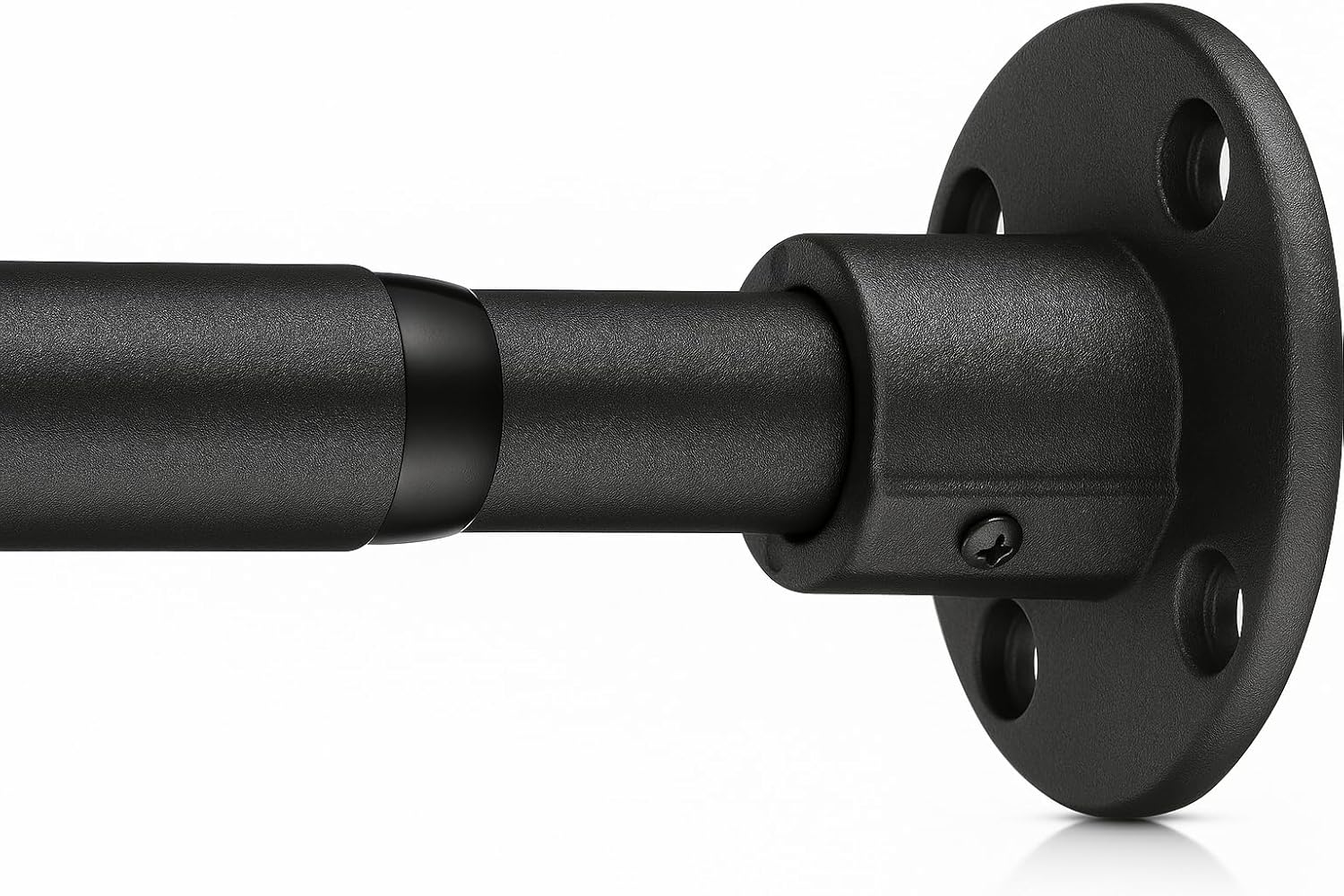
The LAKEROD is a wall-mounted industrial-style rod for shoppers who want a fixed installation rather than a tension fit. Its product details describe four screws at each end and a listed maximum weight recommendation of 45 pounds. Those features make it worth considering if your priority is a secure mount for a curtain that may get tugged during everyday use.
It is made from stainless steel and comes in black, with mounting hardware included. The industrial look can suit modern, farmhouse, or transitional bathrooms, and the rod can also be used in spaces such as closets or room dividers. Some owners describe it as solid once installed, but a stable result still depends on choosing a suitable mounting location and installing the hardware correctly.
One practical limitation is that the supplied product information does not give a numeric adjustment range. Check the product listing and measure your opening before buying; do not assume it will fit a particular tub width based only on the word “adjustable.” Compared with the Artiwell, the LAKEROD has a higher stated weight recommendation, but less clear fit information in the supplied details.
Pros:
- Fixed wall-mounted design with screws at both ends
- Stainless steel construction and black finish
- Listed maximum weight recommendation of 45 pounds
- Mounting hardware is included
Cons:
- Numeric adjustment range is not stated in the supplied product details
- Requires drilling and accurate bracket placement
Verdict: Consider the LAKEROD if you want a sturdy-looking fixed rod and can confirm its dimensions will work for your opening.
3. Bonpally Curved Shower Curtain Rod: Best for More Shower Room

The Bonpally is a curved, drill-mounted rod for people who feel crowded by a straight shower curtain. Its curve is designed to move the curtain farther from the bather, and the product description claims up to 10.5 inches of additional shower space. The actual room you gain will depend on your tub, wall placement, and how the rod is installed.
The rod adjusts from 40 to 72 inches and is made from stainless steel and ABS plastic. Its brackets can rotate to suit different wall angles, according to the product information. Installation requires drilling, and the instructions call for a 5/16-inch drill bit. The listed finish is black, which gives it a more noticeable look than a typical straight brushed-nickel rod.
This is the best match in the group if added elbow room matters more than keeping a simple straight profile. It is not the right pick if you specifically want an all-metal construction: the product description lists ABS plastic as part of its materials. It also has a narrower maximum span than the Artiwell.
Pros:
- Curved shape is designed to create more room inside the shower
- Adjusts from 40 to 72 inches
- Rotating brackets can accommodate different wall angles
- Wall-mounted design uses screws rather than tension
Cons:
- Requires drilling with a 5/16-inch bit
- Uses ABS plastic as well as stainless steel
Verdict: Pick the Bonpally if you want a drilled-in rod and a curved profile to make a compact shower feel less confining.
4. BRIOFOX Industrial Tension Rod: Best No-Drill Alternative

The BRIOFOX is included as a useful alternative, but it does not screw into the wall. It is a tension rod that presses between two surfaces, so it may suit a renter or anyone who wants to avoid making holes. It adjusts from 43 to 72 inches and has a brushed-nickel finish.
The rod is described as stainless steel with a one-inch diameter, and its product information lists a maximum weight recommendation of 30 pounds. Large nonslip rubber end plates are intended to help it grip the walls. Even a well-designed tension rod relies on pressure and a suitable installation surface, though, so it is not the same as a mechanically fastened wall mount.
Choose this model when no-drill setup matters more than a fixed screw-mounted hold. It has a similar stated weight recommendation to the CorkLatta, but a shorter maximum span. If your tension rods have slipped in the past or you expect frequent pulling on the curtain, consider one of the drilled-in options instead.
Pros:
- No drilling required
- Adjusts from 43 to 72 inches
- Stainless steel construction with brushed-nickel finish
- Large nonslip end plates and a listed 30-pound capacity
Cons:
- Not a screw-mounted rod, despite matching some shower-curtain searches
- Grip depends on proper tension and compatible wall surfaces
Verdict: Choose the BRIOFOX only if you prefer a no-drill tension rod over a permanent wall-mounted installation.
5. CorkLatta Stainless Steel Tension Rod: Best for a Wide No-Drill Range

The CorkLatta is another no-drill alternative, with a wider stated adjustment range than the BRIOFOX: 32 to 80 inches. Its five-pole setup is designed to be assembled to the length you need, while spring tension helps hold it between two walls. The product information also says two holders are included.
It is made from stainless steel, has a one-inch diameter, and is listed with a 30-pound maximum weight recommendation. Its silver finish is a simple option for bathrooms where a neutral metal look works better than black. Because it relies on spring tension, the rod still needs suitable opposing surfaces and a careful installation.
This model can suit a wide range of openings when you want to avoid drilling. It is not a substitute for a screw-mounted rod if your main goal is a permanent attachment. The multi-part construction also makes it important to follow the installation instructions and set the rod to the correct length.
Pros:
- Wide 32-to-80-inch adjustment range
- Stainless steel construction and silver finish
- No drilling required
- Two holders are included
Cons:
- Uses tension rather than screws to stay in place
- Listed weight recommendation is 30 pounds
Verdict: The CorkLatta is a flexible no-drill choice for a wide opening, but select a permanent-mount rod if screw attachment is a must.
How to Choose a Shower Curtain Rod That Screws Into the Wall
Measure the opening before choosing a rod
Measure the distance between the two walls where the brackets will sit, and compare that measurement with the rod’s listed adjustment range. The Artiwell adjusts from 47 to 84 inches, while the Bonpally adjusts from 40 to 72 inches. The LAKEROD is described as adjustable, but its supplied product details do not give a numeric range, so confirm the fit before ordering.
Decide between a straight and curved design
A straight rod keeps the curtain closer to the tub and has a familiar look. A curved rod projects farther into the room and is intended to create more space inside the shower. The Bonpally is the curved option here; check that its shape and bracket placement work with your tub and bathroom layout before drilling.
Check the material and weight information
Stainless steel is specified for the straight wall-mounted options, and the Artiwell lists 304 stainless steel with solid brass brackets. The Bonpally combines stainless steel with ABS plastic. Compare the listed weight recommendations as a guide, but remember that the installed rod’s support also depends on the wall, fasteners, and quality of installation.
Plan for the wall and the installation
A screw-mounted rod requires holes, so decide whether you are allowed to drill and whether you have the right tools. The Artiwell instructions call for a 1/4-inch drill bit; the Bonpally calls for a 5/16-inch bit. Read the included directions and make sure the mounting hardware is suitable for your wall surface. If you are unsure about the wall material or hardware, get advice before drilling.
Choose a finish that works with your bathroom
Finish affects how the rod looks alongside your faucet, shower head, and towel bars. The Artiwell is brushed nickel, the LAKEROD and Bonpally are black, and the tension alternatives offer brushed nickel or silver finishes. Matching every finish is not essential, but choosing a complementary tone can help the rod feel intentional rather than out of place.
Be clear about whether you need permanent mounting
A tension rod may be easier to install and avoids screw holes, but it depends on pressure against two surfaces. A fixed wall-mounted rod is the better match when you specifically want a screw-in installation. The BRIOFOX and CorkLatta are tension models, so consider them only if no-drill setup is more important than permanent attachment.
Frequently Asked Questions
Which shower curtain rod in this list screws into the wall?
The LAKEROD, Artiwell, and Bonpally are described as wall-mounted options that use screws and require drilling. The BRIOFOX and CorkLatta are tension rods and do not screw into the wall.
Which screw-mounted rod has the widest stated adjustment range?
The Artiwell has the widest clearly stated range among the screw-mounted options, adjusting from 47 to 84 inches. The LAKEROD is described as adjustable, but no numeric range is provided in the supplied product details.
Is a screw-mounted shower rod more secure than a tension rod?
A screw-mounted rod is mechanically attached to the wall rather than held in place by pressure. Its stability still depends on correct installation and suitable wall support. Tension rods can be convenient, but their grip depends on proper setup and compatible surfaces.
Does the Bonpally curved rod need drilling?
Yes. The Bonpally product information says drilling is required and specifies a 5/16-inch drill bit for installation.
Can I install a permanent shower rod in tile?
Drilling into tile requires the right tools and care to reduce the chance of cracking or damaging the surface. Check the product instructions and confirm that the included hardware is appropriate for your installation. If you are not comfortable drilling tile, consider hiring a qualified installer.
Are the BRIOFOX and CorkLatta good choices for this keyword?
They are useful alternatives if you want a no-drill rod, but neither is a screw-mounted model. Choose one of the wall-mounted options if attaching the rod with screws is your priority.
Conclusion
For most shoppers seeking a shower curtain rod that screws into the wall, the Artiwell is the clearest all-around choice because it combines a permanent mount with a stated 47-to-84-inch adjustment range, a stainless steel rod, and solid brass brackets. Choose the LAKEROD if its dimensions fit and you prefer its black industrial look, or the Bonpally if you want a curved rod intended to add shower space. The BRIOFOX and CorkLatta are best reserved for shoppers who want a no-drill tension setup instead.