
A sliding compound miter saw can help you make crosscuts, angled cuts, and bevel cuts in wider boards than a basic miter saw can handle. The right choice depends on the lumber and trim you work with, how much room you have, and whether you want features such as dual bevels or a cut-line guide. These five options range from a 10-inch saw with a compact sliding design to 12-inch models built for larger blades. Compare their stated features and capacities before choosing.
Table of Contents
Quick Comparison
| Miter Saw | Blade Size | Standout Features | Best Fit |
|---|---|---|---|
| SKIL MS6305-00 | 10 inches | Dual bevel, LED shadow line, 2×12 crosscut capacity at 90 degrees | Woodworkers seeking useful capacity and clear cut-line guidance |
| Makita LS1019L | 10 inches | Single-slide rail design, laser, 6-5/8-inch nested crown capacity | Trim work and shops where wall clearance matters |
| Delta 26-2241 | 10 inches | Dual bevel, shadow guide, front miter controls | Users who want accessible angle adjustments |
| DEWALT DWS779 | 12 inches | Stainless steel miter detent plate with 10 positive stops | Shoppers considering a 12-inch sliding saw |
| Metabo HPT C12RSH3 | 12 inches | Dual bevel, Xact Cut Shadow Line, nine miter detent stops | Woodworkers who want a larger blade and guided adjustments |
Our Picks: Best Sliding Compound Miter Saws For Woodworking reviews
SKIL MS6305-00: A Versatile 10-Inch Saw with a Shadow Line
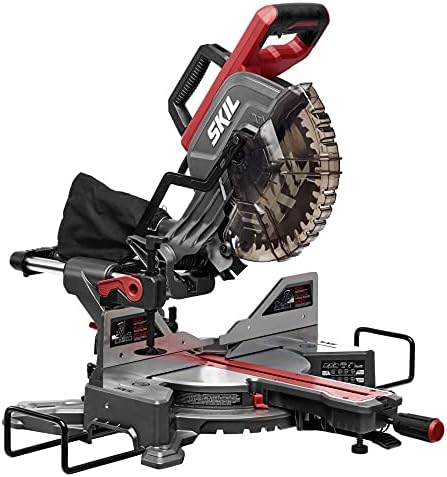
The SKIL MS6305-00 pairs a 10-inch blade with a 15-amp motor rated at 4,800 RPM. Its LED shadow line helps show where the blade will meet the workpiece, which can be useful when lining up repeated cuts. For woodworking projects that call for more than basic crosscuts, its dual-bevel design lets you tilt the saw in either direction.
Its listed capacity is a notable strength: the saw can crosscut lumber up to 2×12 at 90 degrees and 2×8 at 45 degrees. It can miter up to 50 degrees left and right, with 11 positive stops at common angles. These details make it a flexible option for framing pieces, boards, and trim, though the actual fit of a workpiece can depend on its shape and how it is positioned.
The main tradeoff is its 10-inch blade. If your work often involves larger stock or you want a 12-inch blade, the DEWALT or Metabo HPT may be a better match. The SKIL is a strong middle ground for shoppers who value dual bevels and a broad stated crosscut capacity without moving to a 12-inch model.
Pros:
- Dual-bevel design for left and right bevel cuts
- LED shadow line provides a visible cut-line guide
- Listed capacity of up to 2×12 at 90 degrees
- Miter range reaches 50 degrees in both directions
Cons:
- Uses a 10-inch blade rather than a 12-inch blade
- Its motor speed and capacity may be more than needed for occasional, simple cuts
Verdict: Choose the SKIL if you want a well-equipped 10-inch saw with dual bevels, a shadow line, and a useful stated crosscut capacity.
Makita LS1019L: A Space-Conscious Saw for Trim Work

The Makita LS1019L is a 10-inch dual-bevel sliding miter saw with a laser guide. Its two-steel-rail sliding system is designed to work as a single slide-glide operation. The rails sit in a layout intended to let the saw operate close to a wall, which may be useful in a small shop or a crowded work area.
Makita lists a 6-5/8-inch nested crown molding capacity, comparable to the capacity it describes for a 12-inch miter saw. It also lists 5-1/4 inches of vertical cutting capacity. At 57.9 pounds, it is described as a relatively compact, portable design, but that weight is still worth considering if you plan to move the saw often.
This saw may suit finish carpenters and woodworkers who regularly cut crown molding and need to save bench space. Its 10-inch blade and rail design set it apart from the two 12-inch choices in this list. The supplied product information does not give a miter range or motor speed, so check the listing and manual if those details are important to your work.
Pros:
- Dual-bevel design and laser guide
- Listed 6-5/8-inch nested crown molding capacity
- Rail layout is designed to allow operation close to a wall
- Weight is listed at 57.9 pounds
Cons:
- Still weighs nearly 58 pounds, which may be a factor for frequent moves
- Key details such as miter range and motor speed are not included in the supplied specifications
Verdict: Consider the Makita if crown molding capacity and a wall-friendly slide design matter more to you than having a 12-inch blade.
Delta 26-2241: Front-Mounted Controls for Angle Changes

The Delta 26-2241 is a 10-inch sliding compound miter saw with a 15-amp motor rated at 4,000 RPM. Its shadow guide projects a cutting line onto the workpiece. Delta also places the miter controls and bevel release at the front, a layout that can make adjustments easier to reach while the saw is set up.
The saw has a dual-bevel range of 45 degrees left and right, plus a miter range of 50 degrees left and 60 degrees right. It includes 10 miter detents and seven positive bevel stops. At 55 pounds, it is a substantial tool to move but lighter than some larger shop equipment. The stated maximum cut thickness is 5.5 inches; check the product details for the specific cut capacity that matches your board dimensions.
This Delta stands out for its front controls and wide right-side miter range. Compared with the SKIL, its listed specifications show a narrower left miter range and a lower motor speed, while it offers more miter travel to the right. If you need specific board-width capacity or want a 12-inch blade, compare those requirements with the other models before deciding.
Pros:
- Dual bevel with 45-degree tilt in both directions
- Front miter controls and front bevel release
- Shadow guide provides a visible cutting line
- Miter range extends to 60 degrees right
Cons:
- Uses a 10-inch blade
- Maximum cut thickness is listed as 5.5 inches, so check fit for your stock
Verdict: The Delta is a sensible option if accessible front controls and a broad right-side miter range are high on your list.
DEWALT DWS779: A 12-Inch Sliding Saw with Positive Miter Stops

The DEWALT DWS779 is a 12-inch sliding compound miter saw. The supplied product information highlights its stainless steel miter detent plate, which has 10 positive stops. Those stops can help you return to common preset miter positions when making repeated angled cuts.
A 12-inch blade may be worth considering if you want a larger blade format than the 10-inch saws in this roundup. However, the available specifications here do not state its motor, bevel range, cutting capacity, weight, or cut-line guide. Those details can make a major difference in woodworking, so verify the model’s full specifications before buying rather than assuming it matches another 12-inch saw.
Compared with the Metabo HPT, the DWS779’s provided details are less complete: the Metabo lists its bevel range, miter range, and shadow-line system. The DEWALT’s stainless detent plate and 10 stops are clear advantages on paper, but shoppers should confirm that its other specifications meet their needs.
Pros:
- 12-inch sliding compound miter saw
- Stainless steel miter detent plate
- 10 positive miter stops
Cons:
- Supplied specifications do not state cutting capacity or bevel range
- Motor details and cut-line guidance are not specified in the available product information
Verdict: Consider the DWS779 if you want a 12-inch saw and its detent system suits your work, but confirm its full capacity and features before choosing it over the more fully specified options.
Metabo HPT C12RSH3: A 12-Inch Dual-Bevel Saw with a Shadow Line

The Metabo HPT C12RSH3 combines a 12-inch blade with a dual-bevel design and a no-load speed of up to 4,000 RPM. Its Xact Cut Shadow Line marks the cut line on the workpiece. The saw has nine miter detent stops and one-touch bevel and miter locks for making adjustments.
Its stated miter range is 0 to 45 degrees left and 0 to 57 degrees right, while the bevel range is 45 degrees in either direction. The adjustable miter scale is intended to support accurate settings. These details give woodworkers a clear picture of its angle options, though the supplied description does not provide a crosscut capacity or weight.
Compared with the DEWALT, the Metabo HPT’s listed specs include more information about its angle range and cut-line guide. Compared with the 10-inch models, it offers a larger blade size, but a 12-inch saw may not be necessary for smaller stock or a compact work area. The product description also states that it comes with a five-year warranty; confirm the current warranty terms for the exact purchase.
Pros:
- 12-inch blade with dual bevel
- Xact Cut Shadow Line helps show the cut line
- Miter range extends to 57 degrees right
- One-touch bevel and miter locks
Cons:
- Crosscut capacity and weight are not stated in the supplied details
- A 12-inch saw may be more than necessary for small-stock projects
Verdict: The Metabo HPT is a strong choice if you want a 12-inch dual-bevel saw with a clearly specified angle range and shadow-line guide.
How to Choose a Sliding Compound Miter Saw for Woodworking
Match the Blade Size to Your Projects
Blade size is one of the first choices to make. The saws here use either 10-inch or 12-inch blades. A larger blade may suit projects involving larger stock, while a 10-inch model may be a better fit if its listed capacity covers your usual work. Compare the manufacturer’s stated crosscut and vertical capacity with the actual width and thickness of your lumber.
Check Crosscut, Miter, and Bevel Capacity
A saw’s capacity is more useful than its blade size alone. Check how wide and thick a board it can cut at 90 degrees, then confirm its capacity at the angles you use most. Miter range describes the saw’s ability to turn left or right across the table. Bevel range describes how far the blade tilts. Dual-bevel models can tilt in both directions, which can reduce the need to reposition a workpiece for matching bevel cuts.
Consider the Slide Design and Your Work Space
The sliding rails help the blade travel across wider material, but the saw also needs enough room to operate. Measure your bench area and check how far the rails and workpiece extend during a cut. The Makita’s rail design is specifically described as allowing operation close to a wall, which may matter in a compact shop. For any model, check the setup requirements before committing to a location.
Choose a Cut-Line Guide You Can See Clearly
A laser or shadow-line system can help you line up the blade with your mark. The SKIL, Delta, and Metabo HPT list shadow-line guides, while the Makita lists a laser. A guide does not replace careful measuring or checking the cut, but it can make alignment easier. Think about the lighting in your work area and whether the guide is easy for you to see.
Look at Stops and Adjustment Controls
Positive stops and detents can make it faster to set common angles and return to them for repeated cuts. Compare how many stops a saw provides and where its controls are located. The Delta places its miter controls and bevel release at the front, while the Metabo HPT lists one-touch locks. If you often change angles during a project, accessible controls may matter as much as the number of preset positions.
Account for Weight and Portability
A saw that stays on one bench has different needs from one that moves between work areas. Check the weight and consider whether you will need a separate stand or help lifting it. The Makita and Delta list weights of 57.9 and 55 pounds, respectively. The supplied specifications do not list weights for every model, so confirm that information if portability is important.
Verify the Complete Specifications Before Buying
Product summaries do not always include every detail that affects fit. Confirm the saw’s cutting capacity, bevel range, included guides, and warranty terms in the full product information and manual. This is especially important for the DEWALT DWS779, whose supplied details here only identify its blade size and miter detent plate. Also check that the intended blade and workpiece suit your project and follow the tool’s safety instructions.
Frequently Asked Questions
What does “sliding compound” mean?
A sliding miter saw uses a sliding mechanism to move the blade across the workpiece, helping it cut wider material than a non-sliding design. “Compound” refers to the saw’s ability to make both miter and bevel cuts. A dual-bevel model can tilt left and right.
Is a 10-inch or 12-inch miter saw better for woodworking?
Neither size is best for every project. Choose based on the dimensions of the material you cut most often and the capacity listed for the saw. The 10-inch models in this list include stated features such as the SKIL’s 2×12 crosscut capacity at 90 degrees, while the Metabo HPT and DEWALT use 12-inch blades.
Do I need a dual-bevel miter saw?
A dual-bevel saw can tilt both left and right, which is useful when a project calls for bevels in both directions. If you make bevel cuts only occasionally or can reposition your workpiece, a dual-bevel feature may be less important. Check the exact bevel range before choosing.
Is a shadow line better than a laser?
Both are intended to help you see where the blade will cut. The options in this list include both types, but visibility can depend on the tool and the lighting in your shop. Whichever system you choose, use your marked cut line and make sure the workpiece is secure.
What should I check before cutting wide boards?
Check the saw’s stated crosscut capacity at the angle you plan to use, not just its blade diameter. Also confirm that the board can sit flat and stay supported throughout the cut. Follow the saw’s manual for safe workpiece support and operation.
Which saw is the best fit for a small workshop?
The Makita LS1019L is described as having a rail design that allows it to operate close to a wall, which may help save space. Still, measure the saw and its full travel before setting up a permanent location. A compact shop may also benefit from considering the saw’s weight and how often you need to move it.
Final Recommendation
For a versatile 10-inch option with a shadow line, dual bevel, and a clearly stated 2×12 crosscut capacity at 90 degrees, the SKIL MS6305-00 is the most balanced pick in this group. If you prefer a 12-inch blade and want detailed angle specifications, consider the Metabo HPT C12RSH3. The Makita LS1019L is worth a look for crown molding and wall-friendly rail placement, while the Delta offers convenient front controls. Before buying the DEWALT DWS779, confirm its full capacity and bevel specifications for your projects.
