
The best spray paint for vent covers depends on where the cover is used, what it is made of, and the finish you want. For a typical metal or plastic grille, look for paint that lists the material on its label and can leave a thin, even coat without clogging openings or moving parts. Our picks include flat and gloss finishes, a lower-odor water-based option, and a coating made for exterior roof accessories.
Before painting, remove the cover if possible, clean it, and let it dry fully. Apply light coats in a well-ventilated area, keep paint out of the duct, and check the product label for surface and temperature limits. A paint that works on a standard grille may not be suitable for a vent exposed to high heat or severe outdoor weather.
Table of Contents
Quick Comparison: Best Spray Paint For Vent Covers
| Product | Finish | Notable features | Best for |
|---|---|---|---|
| Rust-Oleum Painter’s Touch 2X Ultra Cover | Flat black | Oil-based; six cans; listed for metal and plastic | Multiple covers or a flat black finish |
| Rust-Oleum Low Odor Premium | Matte snow white | Water-based; lower-odor formula; any-angle spray tip | Indoor projects where odor is a concern |
| Krylon COLORmaxx Paint and Primer | Flat white | Paint-and-primer formula; listed for metal and most plastics | A white finish with broad surface compatibility |
| Rust-Oleum Roof Accessory Coating | Matte carbon black | Oil-based; weather-resistant; made for exterior use | Outdoor roof vents and accessories |
| COLOR CARE Spray Paint | Gloss white | Oil enamel; six cans; listed for metal and plastic | Several covers needing a glossy white finish |
Our Picks: Best Spray Paint For Vent Covers reviews
1. Rust-Oleum Painter’s Touch 2X Ultra Cover: Best Flat Black Multipack

This six-pack of flat black Rust-Oleum spray paint is a practical option if you have several vent covers to refresh or want extra paint for future projects. Its oil-based formula is listed for metal and plastic, along with surfaces such as wood, plaster, masonry, and unglazed ceramic.
The flat finish is useful when you want a low-sheen look or want to make small surface marks less noticeable. Each 12-ounce can is listed as covering up to 12 square feet and drying to the touch in 20 minutes. Actual coverage can vary with the cover’s shape, condition, and application, so a slatted grille may need more paint than a flat surface of the same size.
Its main trade-off is the oil-based formula, which may be less appealing for an indoor project where odor is a concern. The product is also black, so it is not the right pick if you want a white cover to blend into a light wall or ceiling. As with any spray paint, use thin coats and keep the openings clear.
Pros:
- Six cans suit multiple covers or more than one project
- Flat finish helps hide minor surface imperfections
- Listed for metal and plastic surfaces
- Dries to the touch in 20 minutes, according to the product details
Cons:
- Flat black may not match light-colored rooms
- Oil-based formula may be less convenient for indoor use
Verdict: Choose this multipack for several vent covers when you want a flat black finish and the cover material is listed on the can.
2. Rust-Oleum Low Odor Premium: Best for Indoor White Covers

This water-based Rust-Oleum spray paint comes in matte snow white and is designed for indoor and outdoor surfaces. Its lower-odor technology is stated to produce 40% less odor than traditional Rust-Oleum spray paint. That makes it a sensible option to consider when painting a removable cover for an indoor room, though you should still work with good ventilation.
The product details list wood, metal, glass, ceramic, and most plastics among compatible surfaces. It is also listed as drying to the touch in one hour, with coverage up to 13 square feet per can. The any-angle spray tip can help when reaching around the edges of a cover, but careful passes are still important on narrow slats and corners.
Compared with the oil-based picks here, this paint offers a water-based formula and a lower-odor design. The trade-off is its one-hour touch-dry time, which is longer than the listed times for some other options. Matte white may also look different from a glossy or satin finish nearby, so consider the surrounding trim before choosing it.
Pros:
- Water-based formula with lower-odor technology
- Listed for metal and most plastics
- Any-angle spray tip helps reach awkward areas
- Matte snow white suits a low-sheen look
Cons:
- Listed touch-dry time is one hour
- Matte finish may not match glossy surrounding surfaces
Verdict: This is a strong choice for a white indoor vent cover when lower odor and a matte finish matter more than the fastest touch-dry time.
3. Krylon COLORmaxx Paint and Primer: Best Flat White Single Can

Krylon COLORmaxx combines spray paint and primer in one product, making it a convenient option for a small project. The 12-ounce can is listed for use on metal, most plastics, wood, glass, plaster, and ceramic. Its flat white finish can work well when you want a simple, non-glossy look.
The product details list coverage up to 25 square feet per can and say it dries to the touch in 20 minutes or less. Those figures can be helpful when planning a project, but a vent cover’s slots and edges make its paint needs different from a broad, flat surface. The push-button tip is also described as usable in any direction, including upside down.
This is a single-can option, unlike the multipacks in this list, so it may suit one cover better than a whole-home refresh. The product description includes both flat and gloss wording, while the title identifies the selected color and finish as flat white. Check the can and product listing before ordering if an exact sheen match is important to you.
Pros:
- Paint-and-primer formula in one can
- Listed for metal and most plastics
- Flat white works for a subdued, low-sheen appearance
- Any-direction spray tip can help with edges and hard-to-reach spots
Cons:
- One can may not be enough for several covers
- Finish details in the product description are not fully consistent
Verdict: Pick Krylon COLORmaxx for a single cover if you want a flat white paint-and-primer product and confirm the finish on the can before starting.
4. Rust-Oleum Roof Accessory Coating: Best for Exterior Roof Vents
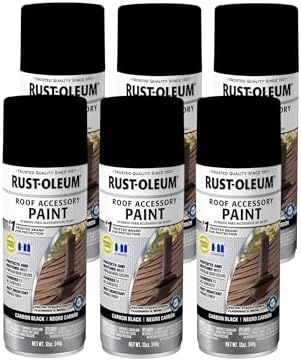
This Rust-Oleum coating is designed for exterior roof accessories, so it is the most purpose-specific pick here for outdoor roof vents. Its carbon black color and matte sheen can suit roof hardware where a non-reflective finish is preferred. The oil-based formula is described as weather-resistant and corrosion-resistant.
The product details list wood, metal, masonry, and plastic as compatible surfaces. It is also listed as drying to the touch in 20 minutes and covering up to 12 square feet per can. Those exterior-focused features make it different from the general-purpose paints in this guide, but they do not mean it is the right choice for every indoor HVAC grille.
Check that your cover is an exterior roof accessory and that its material is listed before using this product. For an indoor vent cover, the roof coating’s weather focus may be unnecessary; the low-odor or general-purpose options may be a better fit. Follow the label’s directions for surface preparation and application.
Pros:
- Designed for exterior roof accessories
- Listed for metal and plastic, as well as wood and masonry
- Matte carbon black finish
- Product details describe weather and corrosion resistance
Cons:
- Specialized for exterior use, not a general indoor pick
- Oil-based formula may be less appealing for projects where odor is a concern
Verdict: Choose this coating for an exterior roof vent or accessory when its material and use match the product label; skip it for a standard indoor grille.
5. COLOR CARE Spray Paint: Best Gloss White Multipack

COLOR CARE’s six-pack is an all-purpose oil enamel spray paint in gloss white. The product details list metal and plastic among the compatible materials, making it a possible fit for many vent covers when those surfaces match the label. A gloss finish can suit covers that need to coordinate with other shiny trim or hardware.
The listed formula is touch-dry in approximately five minutes and is described as rust-resistant. The product information also recommends shaking the can well, spraying upright at room temperature, and clearing the nozzle after use. Because coverage per can is not provided in the supplied details, plan carefully if you have a large number of covers.
This pack makes more sense for several matching projects than for a single small cover. Its gloss white finish is also a different look from the flat or matte white choices above, and the oil enamel may be less suitable if you are trying to limit paint odor indoors. Use thin, controlled passes so paint does not build up around the grille openings.
Pros:
- Six cans are useful for multiple covers or projects
- Gloss white finish suits a brighter, shinier look
- Listed for metal and plastic surfaces
- Product details list a touch-dry time of approximately five minutes
Cons:
- Coverage per can is not stated in the supplied product details
- Gloss may highlight surface flaws more than a flat finish
Verdict: Consider this pack for several covers when you want gloss white and the listed surface compatibility fits your project.
How to Choose Spray Paint for Vent Covers
Match the paint to the cover material
Vent covers may be made from different materials, so check the paint label before buying. The options in this guide list compatibility with materials such as metal and plastic, but not every paint lists every surface. If you cannot identify the cover material, test a small hidden area first and follow the paint maker’s preparation instructions.
Choose a finish that fits the room
Flat and matte finishes have less shine, while gloss reflects more light. Think about nearby trim, walls, and other fixtures so the cover does not look out of place. Flat finishes can be helpful for hiding minor imperfections, while a gloss finish may better match shiny surfaces. The final look also depends on the cover’s condition and how evenly you apply the paint.
Consider odor and where you will paint
For an indoor project, the lower-odor water-based option may be appealing. Lower odor does not mean you should paint in an enclosed space: remove the cover if possible and work in a well-ventilated area. Oil-based paints may suit other projects, but consider where you can safely apply them and let the cover dry according to the label before bringing it back inside.
Check whether the vent is indoors or outdoors
A standard indoor grille and a roof vent face different conditions. The roof accessory coating in this list is specifically intended for exterior use, while the other choices are general-purpose paints. Confirm that the product is meant for the vent’s location and the cover’s material. Do not assume an exterior coating is suitable for an indoor vent or vice versa.
Keep the coat thin and the openings clear
Grilles have narrow slots, edges, and sometimes moving louvers. Heavy coats can build up in those areas, cover openings, or interfere with movement. Remove the cover when practical, spray in light passes, and avoid painting the duct interior. Let the paint dry as directed before reinstalling the cover.
Check temperature limits and special conditions
Some vents may be exposed to warm air or other conditions that call for a product with specific limits. The supplied product details do not state that these paints are suitable for high-heat applications. If your cover gets hot, check the can’s temperature guidance and use a product explicitly labeled for that purpose rather than guessing.
Decide whether you need one can or a multipack
A single can may be enough for one small cover, while a multipack can make sense for several covers or future touch-ups. Compare the stated coverage with the size and shape of your project, but remember that slats and edges can use more paint than a flat area. Coverage information is not provided for every pick, so avoid treating all cans as equal.
Frequently Asked Questions
Can I spray paint a vent cover without removing it?
Removing the cover is usually the more controlled approach because it helps you reach the edges and avoid spraying into the duct. If removal is not practical, protect nearby surfaces and keep paint away from the opening. Follow the paint label and do not let paint block airflow.
What kind of spray paint works on metal vent covers?
Choose a paint whose label lists metal as a compatible surface. Several picks here list metal, including general-purpose options and the exterior roof accessory coating. The right choice also depends on whether the cover is indoors or outdoors and what finish you want.
Can I use these paints on plastic vent covers?
Some of the listed products include plastic or most plastics in their stated surface compatibility. Check the can for the exact type of plastic and any required preparation. If you are unsure, test a small hidden spot first.
Is lower-odor spray paint odor-free?
No. The Rust-Oleum Low Odor Premium product is described as having 40% lower odor than traditional Rust-Oleum spray paint, not as odor-free. Use it with good ventilation and follow all label precautions.
Should I paint the louvers or moving parts?
Use care around louvers and moving parts because a thick coat can interfere with movement. If the cover has adjustable pieces, apply light coats and avoid coating joints or areas that need to move freely.
Can I use roof accessory paint on an indoor vent?
The Rust-Oleum Roof Accessory Coating is described for exterior use on roof accessories. For an indoor grille, a general-purpose product that matches the cover material is usually a more direct fit. Always follow the label’s intended-use instructions.
How long should I wait before reinstalling a painted cover?
Touch-dry time is not the same as full curing time. Follow the can’s instructions for drying, recoating, and handling, and allow the cover to dry as directed before reinstalling it. Keep the area ventilated during application and drying.
Conclusion
For an indoor vent cover where lower odor matters, Rust-Oleum Low Odor Premium is the most tailored pick in this group. For a flat black multipack, consider Rust-Oleum Painter’s Touch 2X; for an exterior roof vent, look at the Roof Accessory Coating. Whichever you choose, verify surface and temperature compatibility, apply light coats, and keep the grille openings clear.
