
The best thing to waterproof leather boots depends on the leather and how you wear them. Oils and balms can condition leather while helping it resist moisture, but they are not right for every finish. These five options range from simple mink oil to beeswax-based pastes and a multi-item care kit. Before applying any treatment, check your boot maker’s care instructions and test the product on a small, hidden area.
Table of Contents
Quick Comparison
| Product | Type | Best For | Important Note |
|---|---|---|---|
| MEKER Mink Oil | Mink oil conditioner | Oiled and natural leather | Not for suede, napped, patent, or soaked leather |
| WERNMIND Boot Beeswax Waterproofing Paste | Beeswax paste with lanolin | Work and hiking boots | Apply by hand or with the included wipe |
| Frye Leather Boot & Shoe Waterproof Balm | Mink oil and beeswax balm | Smooth and oiled leather | Includes an applicator sponge |
| JobSite Premium Mink Oil Paste | Mink oil paste | Leather and vinyl footwear | May darken light or soft leathers |
| Feilove 5-in-1 Mink Oil Kit | Mink oil care kit | Several pairs or frequent care | Includes two tins and application tools |
Our Picks: Best Thing To Waterproof Leather Boots reviews
MEKER Mink Oil: A Simple Conditioner for Oiled Leather

MEKER Mink Oil is a compact conditioner for leather goods, including boots, shoes, jackets, bags, and saddles. Its formula lists mink oil, beeswax, lanolin, maintenance oil, and fatliquor. The product is intended to soften and protect oiled and natural leather while helping guard against water, salt, and perspiration stains.
For boots, the application is straightforward: brush away dust, spread on a small amount with the sponge applicator, and let it dry. The directions suggest allowing it to absorb overnight for best results. That extra wait makes this a better choice for planned care than for a last-minute treatment before heading out.
Its main advantage is its broad use across common smooth and full-grain leather goods. However, the product specifically rules out suede, napped, frosted, patent, and soaked leather. If your boots are light-colored or have a delicate finish, a hidden-area test is especially important before treating the whole boot.
Pros:
- Combines conditioning ingredients with water- and stain-resistance claims.
- Suitable for several types of leather goods, not just boots.
- Clear application directions, including a longer absorption option.
- Small tin is convenient for occasional leather care.
Cons:
- Not suitable for suede, napped, frosted, patent, or soaked leather.
- Best results may require leaving it to absorb overnight.
Verdict: Choose MEKER if you want an all-purpose mink oil conditioner for compatible oiled or natural leather and can give it time to absorb.
WERNMIND Beeswax Paste: A Hands-On Option for Outdoor Boots
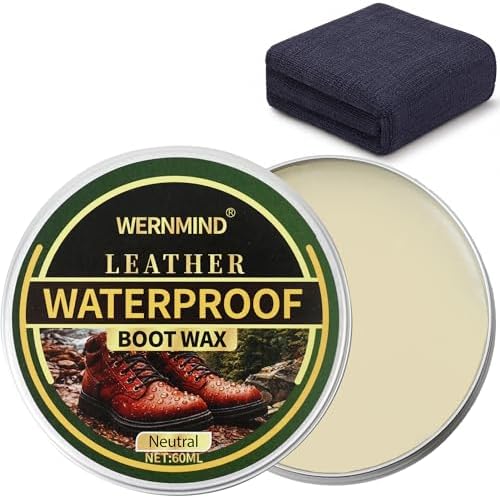
This beeswax waterproofing paste is designed for leather gear such as work boots, hiking boots, gloves, and jackets. The formula includes lanolin, which the product says helps nourish leather while the wax forms a water-repelling barrier. It is positioned as both a conditioner and a protective treatment against moisture, salt stains, scuffs, and daily wear.
The application is meant to be simple: the paste softens with contact from your fingers or the included wipe, so you do not need heating tools. That may suit someone who prefers a direct, hands-on application. Use a small amount and spread it evenly, following any care instructions for your particular leather.
Compared with the mink oil options here, this is the more explicitly beeswax-focused choice. The listing does not specify which leather finishes are suitable, so do not assume it is safe for suede or other specialty leather. Test a hidden spot first, and consider whether a wax treatment is right for the look and feel you want to keep.
Pros:
- Designed for outdoor leather gear, including work and hiking boots.
- Combines a water-repelling wax treatment with conditioning claims.
- Can be applied without melting or heating tools.
- Usable on several leather items beyond footwear.
Cons:
- The supplied information does not list compatible leather finishes.
- Hand application may be less tidy than using a dedicated applicator sponge.
Verdict: Consider WERNMIND if you want a beeswax paste for compatible outdoor leather and prefer an easy, tool-free application.
Frye Waterproof Balm: A Balanced Treatment for Smooth Leather

Frye’s balm combines mink oil and beeswax in a treatment made for smooth and oiled leather. It is intended to help repel water, rain, stains, and scuffs while conditioning leather. The product also describes itself as a softener to help keep leather flexible and reduce dryness and cracking.
The included sponge makes application more controlled than spreading a paste with your fingers. The suggested routine is to rub the balm into the leather, buff away excess, and let the boots dry fully. The listing describes the formula as non-greasy, fragrance-free, and made in the USA.
This is a focused choice for smooth leather boots and shoes, with the added convenience of an applicator. It is also presented for use on bags, wallets, belts, saddles, and other smooth leather goods. The supplied information does not identify it as suitable for suede or napped leather, so keep it to compatible finishes and test first.
Pros:
- Combines mink oil conditioning with beeswax protection.
- Includes a sponge for applying the balm.
- Directions include buffing off excess and allowing it to dry.
- Designed for several smooth leather goods, not only boots.
Cons:
- Primarily intended for smooth and oiled leather.
- Requires a full drying period before the treated footwear is ready to wear.
Verdict: Frye is a strong fit if your boots are smooth or oiled leather and you want a wax-and-oil balm with a dedicated sponge.
JobSite Mink Oil Paste: A Practical Pick for Leather and Vinyl

JobSite Premium Mink Oil is a paste for preserving and conditioning leather and vinyl footwear and accessories. Its listed ingredients include mink oil, silicone, lanolin, and neatsfoot oil. The product is intended to soften materials and help repel water, oil, and salt stains.
The broad material range may be useful if you have both leather and vinyl items to care for. It is also listed for jackets, belts, bags, and purses. Unlike the products described as silicone-free, JobSite includes silicone in its formula, which is worth considering if you are choosing based on ingredients.
There are two clear cautions: the product may darken light or soft leather, and it is not intended for suede or nubuck. That makes a spot test particularly important. Compared with the other picks, it is a straightforward option for compatible leather or vinyl, but less suitable when preserving a very light color is a priority.
Pros:
- Listed for both leather and vinyl items.
- Contains mink oil, lanolin, and neatsfoot oil.
- Designed to help repel water, oil, and salt stains.
- Can be used on several footwear and accessory types.
Cons:
- May darken light or soft leather.
- Not for suede or nubuck, and the formula contains silicone.
Verdict: Pick JobSite for compatible leather or vinyl if color change is not a concern; avoid it for suede, nubuck, and light leather you want to keep unchanged.
Feilove 5-in-1 Kit: Extra Supplies for Regular Leather Care

Feilove’s kit includes two tins of mink oil along with a horsehair brush, sponge, and polishing towel. It is designed for smooth, tanned, and full-grain leather, with a formula intended to condition leather and help it resist everyday moisture, dirt, and stains. The extra tin makes it more suited to caring for multiple pairs or several leather items than to a one-time boot treatment.
The care steps are simple: brush off dust, apply a small amount evenly, let it absorb for at least 15 minutes, and polish with the towel. The listing describes the formula as silicone-free and says it is intended to soften leather without leaving a heavy or greasy residue. It also advises performing a spot test before use.
This kit offers more tools than the single tins in this comparison, which can make the routine easier to organize. Its stated compatibility is limited to smooth, tanned, and full-grain leather, so it is not the right default for suede or other napped finishes. The listing also notes that some initial shedding may occur with the horsehair brush.
Pros:
- Includes two tins, a brush, a sponge, and a polishing towel.
- Useful for caring for multiple pairs or leather items.
- Application steps are clearly described.
- Formula is listed as silicone-free.
Cons:
- May be more supplies than needed for occasional care of one pair.
- The brush may shed at first, according to the product information.
Verdict: Choose Feilove if you want a ready-to-use kit with extra mink oil for regular care of compatible smooth leather items.
How to Choose a Leather Boot Waterproofer
Start with the Boot’s Leather Type
Check the boot label or care instructions before choosing a treatment. Many oils and balms in this guide are intended for smooth, oiled, tanned, or full-grain leather. Suede and nubuck need different care, and some products here specifically warn against using them on those finishes. If you are unsure what your boots are made of, ask the maker before applying a conditioner.
Decide Whether You Want Wax, Oil, or Both
Wax-focused products such as the WERNMIND paste are designed to form a water-repelling barrier. Mink oil products emphasize conditioning and softening, while options such as the Frye balm combine oil and beeswax. Think about whether your main goal is helping leather stay supple, adding moisture resistance, or handling both needs with one treatment.
Consider Color and Finish Changes
Some leather treatments can affect the look of leather. JobSite specifically warns that it may darken light or soft leather. Even when a product does not make that warning, test it on a hidden spot and let it dry before treating a large area. This is a useful step for boots where color and finish matter.
Look at the Application Routine
A sponge or included cloth can help spread a treatment evenly, while a paste applied by hand may feel simpler but can be messier. Drying time also varies: MEKER suggests an overnight absorption period for best results, while Feilove calls for at least 15 minutes before polishing. Choose a routine you can follow without rushing the treatment or wearing wet product.
Match the Amount to Your Needs
A single tin may be enough for occasional care of one pair. If you have several pairs or plan to condition leather goods regularly, a kit with extra product and application tools may be more practical. Consider the items you actually intend to treat and avoid choosing a product solely because it claims to work on many materials.
Keep Expectations Realistic
Leather treatments can help resist moisture, but they do not change the construction of a boot or guarantee that it will stay dry in every condition. Follow the boot maker’s care guidance, apply the product as directed, and allow it to dry fully. For sustained wet conditions, the boot’s design and condition matter along with the treatment.
Frequently Asked Questions
What is the best thing to waterproof leather boots?
There is no single best choice for every boot. For smooth or oiled leather, a balm or mink oil treatment may suit you; for a wax-focused option, consider a beeswax paste. Match the product to your leather type and test it in a hidden area first.
Can I use mink oil on suede or nubuck boots?
The products in this comparison include specific warnings against using mink oil on suede or nubuck. Choose a treatment made for those finishes and follow the boot maker’s care instructions.
Will waterproofing treatment change the color of my boots?
It can. JobSite warns that its paste may darken light or soft leather. Since finishes can react differently, test any treatment on a small, hidden area and let it dry before using it across the boot.
How should I apply leather waterproofing treatment?
Start with clean, dry boots and follow the product directions. In general, use a small amount, spread it evenly, and let it absorb or dry for the time stated on the label. Buff away excess if the directions call for it.
How often should I waterproof leather boots?
There is no single schedule that fits every boot or product. Follow the treatment label and your boot maker’s guidance. How often you wear the boots and the conditions they face can also affect how frequently they need care.
Does a leather conditioner make boots fully waterproof?
No treatment should be assumed to make every boot fully waterproof. These products are described as helping leather repel moisture, but boot construction, seams, and wear also affect how well footwear handles wet conditions.
Final Recommendation
For a balanced treatment for smooth or oiled leather, the Frye balm stands out for combining mink oil and beeswax with an included sponge. MEKER is a practical alternative if you want a general-purpose mink oil conditioner and do not mind allowing extra time for absorption. For outdoor boots, consider WERNMIND’s beeswax paste; for multiple pairs, Feilove offers extra product and tools. Whatever you choose, confirm compatibility with your boot’s finish and spot-test before applying it widely.
