
A wall-mounted propane heater can provide focused warmth without taking up floor space, but the right choice depends on how it vents, how much heat your room needs, and whether you want a simple control or a more advanced thermostat. This guide compares direct-vent models, which send combustion exhaust outdoors, with ventless options, which need careful attention to indoor-air and local-code requirements.
Table of Contents
Quick Comparison
| Heater | Type | Heat output | Notable features | Best suited for |
|---|---|---|---|---|
| Comfort Glow 11,000 BTU Direct Vent Wall Heater | Direct vent | 11,000 BTU; up to 350 sq. ft. | Thermostatic control, electronic ignition, vent kit included | Small rooms where vented, power-free operation is a priority |
| Rinnai EX08DTP Direct Vent Wall Furnace | Direct vent | 8,000 BTU | Modulating heat, electronic thermostat, child lock | Those who want precise temperature control |
| BILT HARD 28,000 BTU Ventless Infrared Heater | Ventless | 28,000 BTU; up to 1,300 sq. ft. | Radiant ceramic plaques, thermostat, no electricity required | Larger spaces where ventless heaters are permitted |
| Rinnai FC510P Ventless Propane Heater | Ventless | Not stated in the supplied product details | Programmable thermostat, ODS, multiple safety shutoffs | Shoppers seeking a ventless model with built-in safety controls |
| Ashley Hearth 11,000 BTU Direct Vent Wall Heater | Direct vent | 11,000 BTU; up to 375 sq. ft. | Matchless piezo ignition, vent kit included | Compact rooms that need straightforward, vented heat |
Our Picks: Best Wall Mount Propane Heater Indoor reviews
Comfort Glow 11,000 BTU Direct Vent Heater: A Compact, Vented Pick
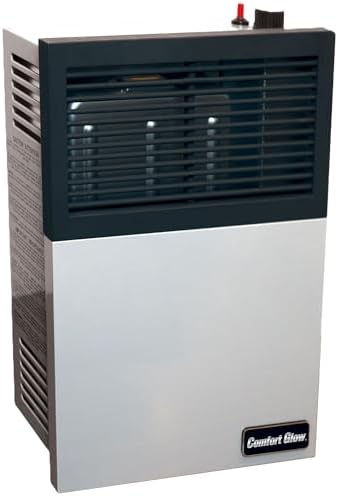
The Comfort Glow is a direct-vent wall heater rated at 11,000 BTU, with stated coverage of up to 350 square feet. Its sealed burn system sends exhaust through the wall rather than into the room, making it a different kind of choice from the ventless heaters in this list.
A thermostat helps regulate heat, while electronic ignition and a safety pilot with a built-in pressure regulator are designed to stop gas flow if the pilot goes out. The stainless-steel burner is described as quiet, and the heater does not need electricity to operate—useful during a power outage.
The included vent kit contains the heat shield, vent and intake pipes, vent cap, flashing, and connection rod. The unit is approved for bedrooms and several types of housing, according to the supplied product details. It requires a propane tank of at least 100 pounds and a two-stage low-pressure regulator, so check your fuel setup before buying. Installation also involves a wall penetration and should follow the manual and local requirements.
Pros:
- Direct-vent design routes exhaust outdoors
- Thermostatic control and electronic ignition
- Includes the vent components listed for installation
- Operates without electricity
Cons:
- Requires a minimum 100-pound propane tank and a compatible regulator
- Its stated coverage is smaller than the higher-output BILT HARD model
Verdict: Choose the Comfort Glow if you want a compact direct-vent heater with a thermostat and power-free operation, and your propane supply meets its requirements.
Rinnai EX08DTP: Direct-Vent Heat with Modulating Controls

The Rinnai EX08DTP is an 8,000-BTU direct-vent wall furnace. Its lower stated output makes it worth considering for a smaller heating zone, though the supplied details do not give a room-coverage figure. As with other direct-vent units, it requires a suitable route through an exterior wall.
Its controls are more involved than a basic on-and-off heater. An electronic thermostat has a stated range of 60–80°F, and a seven-stage modulating gas valve adjusts output in response to temperature changes. Timer settings, electronic spark ignition, and a variable-speed inducer motor are also listed.
The cabinet is described as cool to the touch, and the unit includes a child lock and self-diagnostic electronics. Rinnai recommends professional installation and does not recommend installing the heater without a technician. That guidance, along with its more advanced controls, makes this a better fit for shoppers who value managed heating over a simple DIY-style setup.
Pros:
- Direct-vent design separates combustion from room air
- Modulating heat and electronic thermostat
- Includes timer settings and a child lock
- Self-diagnostics monitor operation and provide shutdown codes
Cons:
- Professional installation is recommended
- Supplied details do not state a coverage area
Verdict: The EX08DTP is a strong candidate if you want direct-vent heat with detailed temperature control and are prepared to use a qualified installer.
BILT HARD 28,000 BTU Heater: High Output for Larger Areas

The BILT HARD is the highest-output heater in this comparison, rated at 28,000 BTU with stated coverage of up to 1,300 square feet. It uses ceramic plaques to produce radiant heat, which warms nearby surfaces and people rather than relying only on heated air circulating through a room.
This is a ventless model, so it does not require an external vent or chimney. It has a thermostat sensing bulb and High, Medium, and Low settings, and its description lists an oxygen depletion sensor (ODS) shutoff. The heater can be wall-mounted or used with the supplied base feet. It also operates without electricity.
Its output may be more than a small, enclosed room needs, and the stated coverage should not be treated as a guarantee for every layout or climate. Ventless combustion heaters add combustion byproducts and moisture to indoor air, so an ODS is not a substitute for fresh air, proper use, or checking local rules. Confirm that this heater is allowed in your location and appropriate for your space before choosing it.
Pros:
- Highest stated heat output and coverage in this comparison
- Radiant ceramic heating with thermostat control
- Can be wall-mounted or used with the included base feet
- Does not require electricity or an external vent
Cons:
- Ventless operation may not be permitted or suitable in every home or location
- Its high output can be excessive for smaller rooms
Verdict: Consider the BILT HARD for a larger area only if ventless propane heaters are permitted and you can meet the required indoor-air and safety conditions.
Rinnai FC510P: A Ventless Option with Multiple Shutoffs

The Rinnai FC510P is a ventless propane heater with a programmable thermostat. The supplied details do not state its BTU output or room-coverage area, so compare those figures in the product manual or current listing before deciding whether it fits your room.
Its listed safety features include a flame-failure device, overheat switch, oxygen depletion sensor, and tilt switch. The heater is also described as having a cool-to-touch cabinet and safety lock. These features add layers of automatic protection, but they do not remove the need to follow installation instructions, provide appropriate fresh air, and check whether ventless heating is allowed where you live.
Rinnai recommends professional installation for its heaters. Compared with the direct-vent Rinnai EX08DTP, this model avoids an external vent but does not route combustion exhaust outdoors. That tradeoff is central to the decision: consider it only if ventless use is suitable for your space and the missing output specifications meet your needs.
Pros:
- Programmable thermostat
- Multiple listed safety shutoffs, including an ODS
- Cool-to-touch cabinet and safety lock
- Ventless design does not require ducting or an external vent
Cons:
- Supplied details do not state BTU output or coverage
- Ventless operation is not suitable or permitted in every setting
Verdict: The FC510P may suit you if you specifically want a ventless heater with programmable controls, but verify its heating capacity and local requirements first.
Ashley Hearth 11,000 BTU Heater: Simple Direct-Vent Heating

The Ashley Hearth is an 11,000-BTU direct-vent heater with stated coverage of up to 375 square feet. Its stainless-steel ported burner is designed for quiet operation, while a sealed burn system sends combustion exhaust outside. It is intended for liquid propane only.
Matchless piezo ignition provides a way to light the unit without a separate match, and a safety pilot with a built-in pressure regulator is designed to stop gas flow if the pilot goes out. The package includes a heat shield, air intake pipe, and connecting rod. Its listed dimensions are about 17.36 inches long, 6.61 inches wide, and 20 inches high.
Compared with the Comfort Glow, the Ashley has slightly higher stated coverage, while both offer 11,000 BTU direct-vent heat and include vent-related components. The Ashley’s product details describe it as suitable for bedrooms and mobile or modular homes. Check the installation instructions and local requirements carefully, especially before putting a fuel-burning heater in a sleeping area.
Pros:
- Direct-vent sealed burn system
- 11,000 BTU output with up to 375-square-foot stated coverage
- Matchless piezo ignition and safety pilot
- Includes several vent and installation components
Cons:
- For liquid propane only
- Requires a suitable exterior-wall installation
Verdict: Choose the Ashley Hearth if you want a straightforward 11,000-BTU direct-vent heater with slightly greater stated coverage than the Comfort Glow.
How to Choose an Indoor Wall-Mount Propane Heater
Decide Between Direct-Vent and Ventless
A direct-vent heater takes in combustion air and sends exhaust outdoors through a wall vent. That design requires an appropriate exterior-wall installation, but it keeps combustion exhaust from being discharged into the room. A ventless heater does not need an external vent, but combustion byproducts and moisture remain indoors. Check the heater manual, building rules, and local codes before choosing either type, especially for bedrooms or small, enclosed spaces.
Match Heat Output to the Room
Use the manufacturer’s stated BTU output and coverage as a starting point, not a guarantee. Insulation, ceiling height, drafts, climate, and the room’s layout can all affect how much heat you need. Avoid choosing a high-output unit just because it covers more area on paper; an oversized heater may be uncomfortable in a smaller space. For the Rinnai FC510P, the supplied details do not include BTU output or coverage, so verify those specifications before purchase.
Check the Propane Supply and Regulator
Confirm that the heater is designed for liquid propane and that your tank, regulator, and connections match its requirements. The Comfort Glow, for example, specifies a minimum 100-pound propane tank and a two-stage low-pressure regulator. Requirements vary by model, so do not assume that a connection or tank setup that works for one heater will work for another.
Consider Controls and Power Needs
Basic ignition and temperature controls may be enough for occasional use, while a programmable or electronic thermostat can offer more control over a regular heating schedule. Some models in this list do not need electricity, while the Rinnai EX08DTP includes electronic controls and an inducer motor. Check the product instructions to confirm what requires power and how the heater operates during an outage.
Plan for Installation and Clearances
Wall-mounted propane heaters need a suitable mounting location, required clearances, and safe gas connections. Direct-vent models also need a properly installed wall opening and vent components. Rinnai recommends professional installation for its models. Even when a product includes a vent kit, review the manual and local requirements before buying, and use a qualified installer when required or recommended.
Understand Safety Features and Their Limits
Features such as an oxygen depletion sensor, safety pilot, overheat switch, or flame-failure device are useful safeguards, but they do not replace correct installation and operation. An ODS is not a substitute for ventilation or permission under local rules. Follow the manufacturer’s instructions for clearances, room use, maintenance, and fuel connections, and use a carbon monoxide alarm as directed by its manufacturer and local safety guidance.
Frequently Asked Questions
Can a propane wall heater be used indoors?
Some propane wall heaters are designed for indoor use, but their venting type matters. Direct-vent models send exhaust outdoors, while ventless models release combustion byproducts into the room. Follow the product instructions and confirm that the heater type is permitted for your location and intended room.
What is the difference between direct-vent and ventless heaters?
A direct-vent heater uses an exterior-wall vent to bring in combustion air and discharge exhaust outdoors. A ventless heater does not use an external vent. That can simplify the venting setup, but it also means the room needs to meet the manufacturer’s requirements for safe use and indoor air.
Which heater in this list has the highest stated output?
The BILT HARD model is listed at 28,000 BTU and up to 1,300 square feet of coverage. It is ventless, so check local rules and indoor-air requirements before considering it for your space.
Do these heaters work during a power outage?
The Comfort Glow and BILT HARD descriptions say they do not require electricity. The other supplied product details list electronic features, but do not clearly state whether each heater can operate without power. Check the manual for the exact model you are considering.
Can I install a wall-mounted propane heater myself?
Installation depends on the model, your wall, the fuel connection, and local requirements. Rinnai recommends professional installation for its heaters. For any model, follow the manual and use a qualified professional when the manufacturer or local rules require it.
Are ventless propane heaters suitable for bedrooms?
That depends on the specific heater, its instructions, and local rules. Do not assume that an ODS makes a ventless heater suitable for a sleeping area. Confirm the approved uses for the exact model and check applicable codes before installing it in a bedroom.
What should I check before ordering a heater?
Confirm the heater’s fuel type, BTU output, stated coverage, venting needs, propane tank and regulator requirements, installation clearances, and permitted room uses. Also check whether the model needs electricity and whether professional installation is recommended.
Final Recommendation
For many shoppers seeking indoor propane heat, a direct-vent model is the clearest choice when there is a suitable exterior wall and the installation can meet local requirements. The Comfort Glow offers thermostat control and power-free operation, while the Ashley Hearth lists slightly greater coverage at the same 11,000-BTU output. Choose the Rinnai EX08DTP if advanced temperature control and professional installation suit your plans. Consider either ventless Rinnai or the higher-output BILT HARD only after confirming that ventless operation is allowed and appropriate for your space.
