
Water-based polyurethane can protect wood floors while keeping odor and cleanup more manageable than with traditional solvent-based finishes. The right choice depends on the sheen you want, how quickly you need to recoat, and whether the product’s label matches your floor and project. These picks range from a fast-recoating satin finish to specialty extra-matte options, with important differences in the amount of product information available.
Table of Contents
Quick Comparison
| Product | Sheen | Standout detail | Best for |
|---|---|---|---|
| Minwax Ultimate Floor Finish | Satin | Recoat in two hours; no sanding between coats | A practical all-around floor finish |
| Rust-Oleum Varathane Interior Floor Polyurethane | Matte | Water-based interior floor polyurethane | A matte floor finish |
| LOBA 2K Duo Extra-Matte | Extra-matte | Two-component formula; stated coverage of 500–600 sq. ft. per gallon | A low-sheen finish with a wear-resistance focus |
| Rust-Oleum Satin Clear Wood Finish | Satin | Clear, water-based wood finish | Shoppers considering a satin clear finish |
| VerMeister Silk X-Matt | Extra-matte | Low-VOC formula; stated coverage of 350–500 sq. ft. per coat | A natural-looking matte finish |
Our Picks: Best Water Based Polyurethane For Wood Floors reviews
1. Minwax Ultimate Floor Finish: Best All-Around Satin Pick

Minwax Ultimate Floor Finish is a clear, water-based polyurethane for hardwood floors with a satin sheen. Its stated self-crosslinking technology is designed to create a tough finish, and the product is described as suitable for hardwood floors, including light-colored wood and stains.
The practical draw is the short recoat window: Minwax says you can apply another coat after two hours, without sanding between coats. Two coats are recommended, and the finish is listed as dry for light traffic within 24 hours. Its water-based formula also allows soap-and-water cleanup and is lower in odor than traditional solvent-based polyurethane, according to the product information.
Compared with the matte and extra-matte options here, this is the clearest fit if you want a satin look and straightforward application directions. It is also specifically described as not ambering over time, which makes it worth considering for lighter woods. As with any floor coating, follow the label for preparation and application conditions.
Pros:
- Recoat in two hours, according to the product information
- No sanding between coats is required
- Does not amber over time, making it suitable to consider for light-colored wood
- Soap-and-water cleanup
Cons:
- Satin sheen may not suit shoppers who want a matte or extra-matte look
- Two coats are recommended, so one coat is not the stated application plan
Verdict: Choose Minwax if you want a clearly specified, fast-recoating satin floor finish with simple cleanup instructions.
2. Rust-Oleum Varathane Interior Floor Polyurethane: Matte Sheen

This Varathane product is identified as a water-based interior floor polyurethane in a matte finish, sold in a one-gallon container. That makes it a direct option to consider if you want a floor-specific product and prefer a lower-sheen appearance over satin.
The supplied product details do not include application directions, recoat time, coverage, or cleanup instructions. That makes it harder to compare with the Minwax finish, which provides more detail on those points. Before buying, check the product label and listing for guidance on suitable floor types, preparation, number of coats, and drying time.
Its clearest distinction from the other picks is the combination of an interior-floor designation and matte sheen. Shoppers who need detailed specifications to plan a project may prefer a product with more complete application information.
Pros:
- Identified as a water-based interior floor polyurethane
- Matte finish for a less glossy appearance than satin
- One-gallon size
Cons:
- Available product information does not specify coverage or recoat time
- Check the label for application and cleanup directions before starting
Verdict: Consider Varathane if a matte, water-based interior floor finish is your priority and you can confirm the application details on the product label.
3. LOBA 2K Duo Extra-Matte: Specialty Two-Component Finish

LOBA 2K Duo is a water-based polyurethane listed in an extra-matte sheen. The “2K” designation is part of its product name, and the supplied description presents it as a two-component finish. Its stated strengths include wear resistance, high solids, and a non-yellowing formula.
The product information lists coverage at 500–600 square feet per gallon. It also describes the formula as easy to use, with no foaming or lap marks. Those are useful points to weigh when comparing it with the other extra-matte pick, VerMeister, which is presented as a single-component product and lists a lower coverage range per coat.
This option may suit shoppers seeking an extra-matte look and a finish specifically positioned around wear resistance. However, it is marked unavailable in the supplied product data. Confirm availability and read the manufacturer’s instructions before planning a project around it; the available information does not give a recoat time or a full application schedule.
Pros:
- Extra-matte sheen
- Water-based formula described as wear-resistant and non-yellowing
- Stated coverage of 500–600 square feet per gallon
- Product description says it applies without foaming or lap marks
Cons:
- Marked unavailable in the supplied product data
- Available details do not specify recoat time or a full application schedule
Verdict: LOBA is worth considering if its extra-matte, two-component format suits your project, but confirm availability and application requirements first.
4. Rust-Oleum Satin Clear Wood Finish: Check Floor Suitability

This Rust-Oleum option is listed as a satin clear wood finish and appears in the supplied product data as a water-based finish. Its satin sheen may appeal if you want a clear coating with more sheen than a matte product but less shine than a gloss finish.
Unlike the Varathane product above, its title does not specifically identify it as an interior floor polyurethane. The available details also do not list coverage, drying time, or application instructions. That distinction matters: before using it on a floor, confirm that the packaging expressly approves the intended surface and use.
Compared with Minwax, this pick offers less supplied guidance for planning a floor-finishing job. Its main point of interest is the clear satin finish, but the limited specifications make label verification especially important.
Pros:
- Clear satin finish
- Listed as a water-based wood finish
- One-gallon size
Cons:
- The supplied title does not specifically identify it as a floor finish
- Available details do not state coverage, drying time, or application directions
Verdict: Consider this finish only after confirming on the product label that it is suitable for your specific wood-floor project.
5. VerMeister Silk X-Matt: Low-VOC Extra-Matte Finish
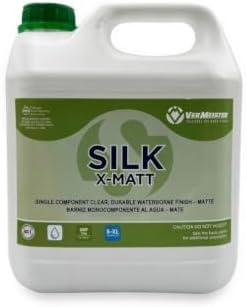
VerMeister Silk X-Matt is a single-component, water-based hardwood floor finish with an extra-matte appearance. Its product description highlights low VOC content, an EC1 certification, and a non-yellowing formula. It is also described as having a warm toning effect while aiming to avoid a whitening appearance.
The listed coverage is 350–500 square feet per gallon per coat. The product information says it is dust-dry in 20 minutes and can be recoated without sanding after three to five hours. These details make it easier to plan than options with fewer supplied instructions, though you should still follow the product label for actual job conditions and application steps.
Compared with LOBA, VerMeister is described as a single-component finish, while LOBA is a two-component option. VerMeister may be a more suitable fit for shoppers seeking an extra-matte look with detailed timing and coverage information, but it is not the choice for someone who wants a satin sheen.
Pros:
- Extra-matte finish with a non-yellowing formula
- Low VOC content and EC1 certification stated in the product description
- Recoat without sanding after three to five hours, according to the product information
- Coverage listed at 350–500 square feet per gallon per coat
Cons:
- Extra-matte sheen may not suit shoppers who want satin or gloss
- Coverage is stated per coat, so total project needs depend on the number of coats required
Verdict: Choose VerMeister if you want an extra-matte floor finish with stated low-VOC credentials and useful coverage and recoat details.
How to Choose Water-Based Polyurethane for Wood Floors
Match the Sheen to the Look You Want
Satin, matte, and extra-matte finishes create different levels of shine. Minwax and the Rust-Oleum clear finish are listed as satin, while Varathane is matte and LOBA and VerMeister are extra-matte. Decide how much sheen you want before comparing application details, since the finish appearance is a key difference among these picks.
Confirm the Product Is Made for Your Floor
Look for clear wording on the label that says the finish is suitable for your type of floor and the intended indoor use. Some products here are explicitly identified as floor finishes, while the Rust-Oleum satin clear product is titled as a wood finish without a specific floor designation. Do not assume all clear wood finishes are appropriate for floors.
Compare Recoat Time and Application Steps
Recoat windows affect how you plan the work, but they are not the same as the time needed before a floor can be used. Minwax lists a two-hour recoat time and light traffic within 24 hours. VerMeister lists a three-to-five-hour recoat window without sanding. For other products, check the label for drying, recoating, and use instructions.
Estimate Coverage for the Whole Project
Use the stated coverage to estimate how much finish you may need, and remember that coverage may be listed per coat. VerMeister states 350–500 square feet per gallon per coat, while LOBA lists 500–600 square feet per gallon. Actual needs depend on the floor and the application plan, so use the product’s directions when calculating how many containers to buy.
Consider Formula and Handling
Water-based formulas can offer practical cleanup and odor benefits, but the details differ by product. Minwax specifies soap-and-water cleanup and lower odor than traditional solvent-based polyurethane. VerMeister highlights low VOC content and an EC1 certification. Check the label for handling, ventilation, and safety directions that apply to your home and project.
Check Whether the Finish Is Single- or Two-Component
LOBA is presented as a two-component finish, while VerMeister is described as single-component. These formats can have different preparation and application requirements. If choosing a two-component product, read the instructions carefully and make sure its mixing and use directions fit your project before opening the container.
Frequently Asked Questions
What is the best water-based polyurethane for wood floors?
Minwax Ultimate Floor Finish is the strongest all-around choice in this group based on its floor-specific description, two-hour recoat time, no-sanding-between-coats direction, and stated satin finish. For an extra-matte look, consider VerMeister or LOBA, while checking their application requirements and availability.
Does water-based polyurethane change the color of wood?
It depends on the formula. Minwax and LOBA are described as non-yellowing, and VerMeister is also described as non-yellowing while offering a warm toning effect. Test the finish on a small, less visible area if the final color is important to your project.
How many coats should I apply?
Follow the directions for the product you choose. Minwax recommends two coats, while VerMeister gives coverage per coat but the supplied details do not specify a required total number of coats. Do not use one product’s instructions as a substitute for another product’s label.
How long should I wait before recoating?
The stated recoat times vary. Minwax lists two hours, and VerMeister lists three to five hours without sanding. The supplied details do not give a recoat time for every option, so check the product label and follow its instructions for your working conditions.
Is matte or satin better for a wood floor?
Neither sheen is automatically better; it comes down to the appearance you prefer. Matte and extra-matte finishes offer a more subdued look, while satin has more sheen. Compare samples on your floor if you are unsure which appearance will work best.
Can I use any clear wood finish on a floor?
No. Confirm that the product label specifically permits floor use and is suitable for your wood and indoor setting. This is especially important for the Rust-Oleum satin clear wood finish, whose supplied title does not specifically identify it as a floor coating.
Final Recommendation
For most shoppers seeking a clearly specified water-based floor finish, Minwax Ultimate Floor Finish is the easiest pick to assess: it has a satin sheen, a two-hour recoat time, and soap-and-water cleanup instructions. If you prefer extra-matte, compare VerMeister’s single-component format with LOBA’s two-component option, and verify the directions and availability before buying. For any product, confirm floor suitability and follow the label’s preparation, application, and drying instructions.
