
White paint can brighten wood paneling while letting its grooves and texture remain visible, but the right choice depends on the paneling’s condition, the finish you want, and how much preparation the product requires. These five paints are mostly made for cabinets, furniture, doors, or outdoor wood rather than specifically for wall paneling, so check the label and test a small area before painting an entire room. Our top pick is a satin door-and-trim paint that lists wood among its suitable surfaces; the other options may suit paneling when their intended use and finish match your project.
Table of Contents
Quick Comparison
| Product | Finish or formula | Best suited for | Key consideration |
|---|---|---|---|
| Rust-Oleum Advanced Dry Door & Trim Paint | Satin, water-based | Wood paneling where a satin finish is desired | Quart size; coverage is not stated in the supplied details |
| DWIL Cabinet Paint | Semi-gloss, water-based | Small wood-paneling projects and areas needing a wipeable finish | Dark surfaces may need two or more coats |
| DecorRom Wood Furniture Paint | White, all-in-one furniture paint | Small DIY projects and paneling touch-ups | 18-ounce kit is better suited to limited areas than large rooms |
| DWIL White Wood Paint | Water-based acrylic | Wood projects where a no-sanding product is appealing | Described primarily for outdoor wood and furniture |
| DWIL Matte Furniture Paint | Water-based acrylic, matte | Paneling where a low-sheen look is the priority | Its stated applications focus on furniture and cabinets |
Our Picks: Best White Paint For Wood Paneling reviews
1. Rust-Oleum Advanced Dry Door & Trim Paint: Best Overall Fit

Of this group, Rust-Oleum’s satin door-and-trim paint is one of the clearest matches for wood paneling: its listed uses include interior or exterior wood, along with metal and fiberglass. It comes ready to use in a pre-mixed white, which makes it a straightforward option if you want a satin finish without choosing a separate tint.
The water-based formula is described as lower odor than oil-based paint and touch-dry in about 45 minutes. Its chip-resistant coating is designed for durable use. Satin is a practical middle ground for many rooms: it has more sheen than matte, but less shine than semi-gloss. Since this is a door-and-trim product, though, the supplied details don’t give coverage for broad wall areas. Plan your quantity carefully and check the label for application directions on paneling.
Compared with the furniture-focused paints below, this product has the most directly relevant listed surface use for paneling. Its main limitation is that the description doesn’t state coverage or specifically name wall paneling, so it may take more planning for a full-room project.
Pros:
- Lists interior and exterior wood among its suitable surfaces
- Pre-mixed satin white finish
- Water-based formula with less odor than oil-based paint, according to the product description
- Touch-dry in about 45 minutes
Cons:
- Designed as door-and-trim paint rather than specifically as wall paint
- Coverage information is not provided in the supplied product details
Verdict: Choose Rust-Oleum if you want a satin white paint with wood use clearly listed and are comfortable verifying coverage and paneling directions before starting.
2. DWIL Cabinet Paint: Best for a Wipeable Semi-Gloss Finish
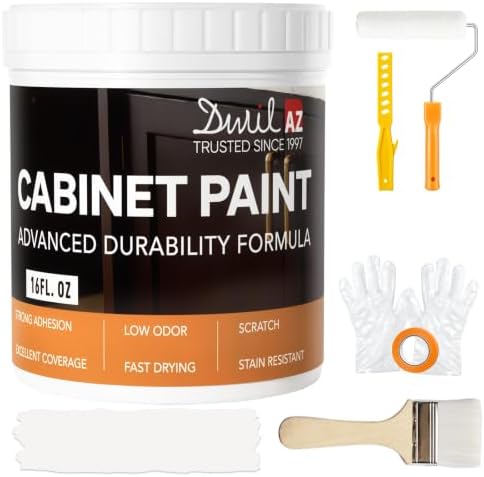
DWIL Cabinet Paint is a water-based white paint intended for cabinets, vanities, doors, drawers, tables, and other wood furniture. It has a semi-gloss finish, which may be useful on paneling in a busy area where you want a surface that the product description says is easy to wipe clean once cured.
The 16-ounce size is listed as covering up to 80 square feet, depending on the surface and application method. The product comes with application tools, and its description says no primer or topcoat is required on properly prepared surfaces. That claim has limits: dark-colored cabinets may need two or more coats, and the manufacturer notes that the original color can show through after the first coat. Paneling with a dark stain may need similar patience, so test a small section first.
Compared with the satin Rust-Oleum option, this paint offers a glossier finish and more specific coverage guidance, but its stated use is focused on cabinetry and furniture. For a whole room, its small container may mean buying several kits.
Pros:
- Water-based, low-odor formula
- Semi-gloss finish is described as easy to wipe clean once cured
- Includes application tools
- Provides an estimated coverage figure for the 16-ounce size
Cons:
- Dark surfaces may need two or more coats
- Small container may not be practical for extensive paneling
Verdict: Consider this DWIL paint for a smaller paneling project where you want semi-gloss and appreciate having an estimated coverage figure, but confirm that the product label supports your exact surface.
3. DecorRom Wood Furniture Paint: Best Small-Project Kit

DecorRom’s 18-ounce white paint is marketed for wood furniture such as chairs, tables, dressers, and cabinets. The kit includes a brush, roller, masking film, gloves, sandpaper, and painter’s tape, giving you several basic supplies for a small DIY job. That can be handy if you’re painting a short section of paneling or refreshing a small feature wall and don’t already have tools.
The instructions call for a clean, dry surface and thorough stirring. The product description suggests waiting 30 minutes before applying a second coat for a stronger effect. Its stated applications cover indoor and outdoor wood projects, but the supplied information does not provide a coverage estimate or name wall paneling specifically. For a large room, the 18-ounce size may be an inconvenient place to start unless you confirm how much paint your surface needs.
Unlike the cabinet paint, this kit’s stated appeal is its included tools rather than a specified finish or coverage estimate. It may be convenient for a small area, but compare the total amount needed with a larger container before committing to a full room.
Pros:
- Includes several basic painting and masking supplies
- Made for a range of wood furniture projects
- Instructions describe a simple clean-and-stir application process
- Useful as a possible starter kit for a limited DIY project
Cons:
- Small 18-ounce size may not suit a full room
- Finish and coverage are not specified in the supplied details
Verdict: Pick DecorRom for a small wood-painting job where the included tools are useful, but look elsewhere if you need clearly stated coverage or enough paint for extensive paneling.
4. DWIL White Wood Paint: Best for Projects That Need an Outdoor Formula

This water-based acrylic paint is presented mainly as an outdoor wood and furniture product. Its description highlights weather resistance, UV protection, and moisture resistance, along with a kit of application tools. Those features may make it worth considering for exterior wood paneling, provided the product label confirms compatibility with your particular surface.
DWIL says the paint can be applied to untreated surfaces without a separate primer and promotes a no-sanding process. Still, that is not a reason to skip all surface preparation: the instructions say to clean the surface first. Existing paint, a glossy finish, damage, or other surface conditions may call for additional preparation, so follow the label and test a discreet area rather than assuming every panel is ready to coat.
For indoor paneling, its outdoor focus makes it a less direct match than Rust-Oleum’s paint, which explicitly lists interior wood. The supplied description does not specify the finish or coverage, so those details are important to confirm before buying enough for a large area.
Pros:
- Water-based acrylic formula described as low odor
- Marketed for outdoor wood and furniture projects
- Product details highlight UV and moisture resistance
- Kit includes application tools
Cons:
- Its main stated use is outdoor wood, not indoor wall paneling
- Finish and coverage are not stated in the supplied information
Verdict: Consider this DWIL option for exterior paneling only after checking the label; for an interior room, a product with clearer indoor wood use is a safer fit from this list.
5. DWIL Matte Furniture Paint: Best for a Low-Sheen Look

DWIL’s 32-ounce furniture paint offers a white matte finish in a water-based acrylic formula. Its low-sheen appearance can suit paneling if you want a softer look than satin or semi-gloss. The product is described for cabinets, tables, chairs, dressers, shelves, and other wooden furniture, so confirm that the label covers your intended paneling before using it on a wall.
The product description says its formula can adhere to properly prepared wood without a separate primer for most projects and is designed to reduce sanding. It advises cleaning and drying the surface, stirring the paint, and applying it evenly with a brush or roller. These directions make the product sound approachable, but they do not guarantee that every previously coated or glossy panel will accept paint without further preparation.
Compared with the semi-gloss DWIL cabinet paint, this one is the better match if finish preference matters more than a wipeable sheen. The supplied details do not state a coverage figure or list paneling as an intended use, so measure your project and check the product label before deciding how many containers to buy.
Pros:
- Matte white finish for a low-sheen appearance
- 32-ounce size is larger than the small paint options in this list
- Water-based acrylic formula
- Described for several types of wooden furniture and cabinets
Cons:
- Stated uses focus on furniture rather than wall paneling
- Coverage is not provided in the supplied details
Verdict: Choose this paint if a matte finish is your priority and the product label confirms your paneling is suitable; otherwise, favor an option with a more direct wood-surface match.
How to Choose White Paint for Wood Paneling
Check that the paint is meant for your paneling
Paint made for furniture, cabinets, or trim may work on wood, but it is not automatically the best choice for a large wall. Read the product label to confirm the paint is suitable for the paneling’s location and surface. Indoor walls and exterior cladding have different demands, so look for clear indoor or outdoor guidance rather than relying on a general “wood paint” description.
Decide how much sheen you want
Finish affects the look of the grooves and the overall feel of the room. Matte paint has little shine, while satin has a soft sheen and semi-gloss is more reflective. A shinier finish can make surface marks and uneven spots more noticeable, so consider the condition of your paneling and the look you want before choosing. The products here offer satin, semi-gloss, matte, or finishes that are not specified in the supplied details.
Plan for the paneling’s existing color and finish
White paint may need extra coats over dark wood or a deep existing color. DWIL specifically notes that dark surfaces may need two or more coats of its cabinet paint. Check the label’s preparation instructions for your surface, and test the paint in an inconspicuous spot to see how the color and finish look after drying. Don’t assume a “no sanding” claim means every existing coating can be painted without preparation.
Prepare the surface before painting
Start with the preparation steps on the paint label. The product details in this guide call for cleaning, and some direct users to work on a dry surface. Pay attention to grooves, edges, and any damaged or peeling areas. If the paneling has a glossy coating or an unknown finish, verify how the manufacturer recommends preparing it before painting.
Estimate the amount of paint you need
Paneling’s grooves and texture can affect how much paint a project uses, and not every product here provides a coverage estimate. DWIL Cabinet Paint lists up to 80 square feet for its 16-ounce size, with actual coverage depending on the surface and application method. Use product-specific coverage information when available, account for the number of coats, and avoid estimating a full room from a small furniture project.
Consider drying time and room use
Dry-to-touch time is not the same as time needed before recoating or full curing. Rust-Oleum lists a touch-dry time of about 45 minutes, while DWIL Cabinet Paint says it dries to the touch in about two hours. Follow each product’s directions for recoating and curing, and ventilate the area as instructed, especially when working indoors.
Choose the right tools and test your technique
Brushes can help reach panel grooves, while a roller may cover broad, flat sections more quickly. Some options include application tools, but the supplied details do not establish that every included tool is ideal for every kind of paneling. Test your chosen method in a small area first, and keep coats even to reduce visible buildup in the grooves.
Frequently Asked Questions
Can I use cabinet paint on wood paneling?
Possibly, if the product label allows use on your type of wood surface and the paneling is prepared as directed. DWIL Cabinet Paint is listed for cabinets, doors, and other wood furniture, but it does not specifically name wall paneling in the supplied details. Test a small area before painting a full wall.
Should I sand wood paneling before painting it?
Follow the paint manufacturer’s surface-preparation instructions. Some products promote reduced or no sanding, but that does not mean every paneling surface is ready to paint as-is. Clean the surface, check for glossy or damaged areas, and test a small spot if you are unsure how the paint will adhere.
Will white paint cover dark wood paneling in one coat?
That depends on the original color, paint, surface, and application. DWIL says dark-colored surfaces may need two or more coats of its cabinet paint and that the original color may show through after the first coat. Plan for more than one coat unless the product label and a test patch show otherwise.
What finish is best for paneling: matte, satin, or semi-gloss?
There is no single best finish for every room. Matte gives a low-sheen look, satin offers a modest sheen, and semi-gloss is more reflective. Consider the paneling’s condition, the look you prefer, and the product’s stated use. The DWIL Cabinet Paint description says its semi-gloss surface is easy to wipe clean once cured.
Can I use outdoor wood paint on interior paneling?
Check the product label rather than assuming an outdoor formula is suitable indoors. The DWIL White Wood Paint is described mainly for outdoor wood projects, while the Rust-Oleum paint explicitly lists both interior and exterior wood. For an indoor room, choose a product whose directions clearly cover interior use.
How much paint will I need for a paneled room?
Measure the area and use the paint’s stated coverage as a starting point, then account for the paneling’s texture and the number of coats. Coverage can vary with surface conditions and application method. If the product does not provide a coverage figure, check its label or ask the manufacturer before buying enough for a large project.
Final Recommendation
Rust-Oleum Advanced Dry Door & Trim Paint is the strongest starting point in this group for wood paneling because its listed uses include interior and exterior wood, and it offers a satin white finish. For a small project where semi-gloss and stated coverage matter, consider DWIL Cabinet Paint. If you prefer matte, DWIL Matte Furniture Paint may be worth considering after confirming the label supports your paneling. In every case, prepare the surface as directed and test a small area before covering an entire wall.
