
Deck cracks need a repair material that can handle outdoor exposure and bond to sound wood. The right choice depends on the size and depth of the damage, whether the boards are stable, and whether you plan to paint or stain the repair. For small, stationary cracks, an exterior-rated filler may help; for soft, rotted, or badly damaged boards, filling alone may not be a lasting fix.
Below are five options with different strengths, from two-part epoxy putties for more substantial repairs to ready-to-use fillers for smaller surface defects. Check the product label for outdoor use and follow its directions for mixing, application, and curing before putting a deck back into service.
Table of Contents
Quick Comparison
| Product | Type | Notable features | Best suited for |
|---|---|---|---|
| Boncart 16 oz High-Strength Epoxy Wood Filler | Two-part epoxy putty | Waterproof after curing; sandable, paintable, and drillable | Outdoor cracks and damaged wood sections |
| Rmolitty Epoxy Wood Putty Filler | Two-part epoxy putty | Stainable and paintable; about a 30-minute working window | Repairs that need a moldable, substantial fill |
| Gorilla All Purpose Wood Filler Kit | Ready-to-use filler | Water-resistant; kit includes a putty knife and sanding block | Smaller cracks and surface repairs |
| aididan White Wood Filler | Water-based filler | Paintable and stainable; includes scrapers and sandpaper | Small repairs where simple application matters |
| Deuvuo White Wood Filler | Paintable and stainable filler | Large container; can be mixed with pigment, tint, stain, or dye | Multiple wood repairs and finish-matching projects |
Our Picks: Best Wood Filler For Deck Cracks reviews
1. Boncart High-Strength Epoxy Wood Filler for Outdoor Damage

Boncart is a two-part epoxy putty intended for repairing cracks, holes, pits, voids, and rotted sections of wood. Its stated outdoor uses include posts, fences, and railings, making it one of the more directly relevant options here for deck repairs.
Once fully cured, the filler is described as waterproof and resistant to shrinking and cracking. It can also be sanded, painted, or drilled after curing. That makes it a practical choice when a crack needs more than a thin surface skim, though the product’s directions should determine how much to mix and how to apply it.
Two-part epoxy requires mixing before use, so it takes more preparation than a tub of ready-to-use filler. The product description also notes an odor during application that dissipates after the material is mixed and fully cured. Use it only on sound wood around the damaged area; filler is not a substitute for replacing a loose or structurally compromised deck board.
Pros:
- Described for indoor and outdoor wood repairs
- Waterproof after curing, according to the product description
- Can be sanded, painted, or drilled after it cures
- Suitable for cracks and larger voids in addition to small pits
Cons:
- Requires mixing two components before application
- May have an odor while being applied and curing
Verdict: Choose Boncart if you want a two-part epoxy specifically described for outdoor wood repairs and need to fill a crack or void in otherwise sound deck wood.
2. Rmolitty Two-Part Epoxy Putty for Deep or Shaped Repairs

Rmolitty is a two-part wood epoxy putty intended to fill cracks and holes as well as rebuild weathered or moisture-damaged wood sections. The product description lists outdoor use on fences and decks, along with indoor projects. Its putty form may be useful when you need to shape the repair rather than spread a thin coating over a surface.
The listed working window is about 30 minutes, and the description says the cured material can be sanded, painted, or stained after 24 hours. Those times are product claims, not a substitute for checking the package instructions or accounting for job conditions. Plan the repair before mixing so you have time to apply and shape the material.
Compared with Boncart, this option explicitly mentions stainability and includes auxiliary tools, which may appeal if you want to blend the finished repair into the deck. Its claims about long-term durability should be treated as manufacturer claims rather than a guarantee for every deck, crack, or exposure condition. Confirm that the specific repair is within the product’s directions for use.
Pros:
- Described for both indoor and outdoor wood repairs, including decks
- Can be shaped during its stated working window
- Listed as sandable, paintable, and stainable after curing
- Includes auxiliary application tools, according to the description
Cons:
- Requires mixing the filler and hardener
- Limited working time means you need to prepare the repair area first
Verdict: Consider Rmolitty when you want a moldable two-part putty for a deck crack or damaged section and plan to stain or paint the finished repair.
3. Gorilla All Purpose Wood Filler Kit for Convenient Surface Repairs

This ready-to-use filler is designed for cracks, gouges, and holes. Its description identifies it as suitable for interior and exterior use and says it is water-resistant, shrink-resistant, and crack-resistant. For a deck, it is most appropriate to consider for smaller, stable surface defects rather than a moving joint or a large area of rotten wood.
The kit includes an 8-ounce tub, a putty knife, and a sanding block. Having the basic tools together makes it a straightforward pick for a small repair. The filler is described as easy to spread and as sandable, paintable, and stainable, so you can prepare the surface for a finish after it has dried according to the package directions.
Unlike the two epoxy putties above, Gorilla’s filler does not require mixing a separate hardener. That convenience may be a plus for quick touch-ups. It is described as water-resistant, not waterproof, so check the label and consider how exposed the repair will be to rain and standing water before using it on a deck.
Pros:
- Ready to use without mixing two components
- Described for interior and exterior repairs
- Can be sanded, painted, and stained
- Includes a putty knife and sanding block
Cons:
- Water-resistant rather than described as waterproof
- The kit contains less filler than the larger tubs listed here
Verdict: Pick this kit for a small, stable deck crack when ease of application and included tools matter more than a two-part structural-style repair material.
4. aididan Water-Based Wood Filler for Small Paintable Repairs
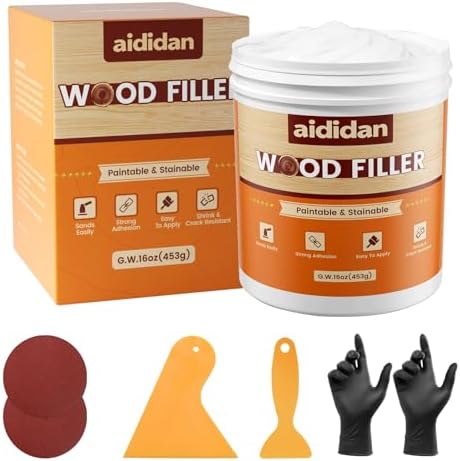
aididan is a white, water-based wood filler intended for cracks, holes, and scratches. It is listed as paintable and stainable, and the kit includes two scrapers, sandpaper, and gloves. That bundle may be handy for occasional DIY repairs where you do not already have basic application tools.
The product description says the filler is made to resist cracking, shrinking, and sinking, but it does not specifically identify deck use or state that the cured repair is waterproof. For that reason, treat it as a possible option for a small, sheltered repair only if its package instructions approve the intended outdoor conditions. It is not the safest pick for a highly exposed deck crack based on the supplied product information alone.
Compared with the exterior-oriented epoxy options, aididan is less involved to work with, but its outdoor suitability is less clear. Before applying it to a deck, confirm that the label covers exterior use and the expected exposure. Use a finish compatible with the filler, and allow it to dry as directed.
Pros:
- Water-based formula described as low-odor
- Paintable and stainable after drying
- Includes scrapers, sandpaper, and gloves
- Suitable for small cracks, holes, and surface scratches
Cons:
- Outdoor deck suitability is not stated in the supplied description
- Not described as waterproof
Verdict: Choose aididan for small wood repairs when you value a water-based formula and kit accessories, but verify the label before using it on an exposed deck.
5. Deuvuo White Wood Filler for Larger Finishing Projects

Deuvuo comes in a 32-ounce container and is described as a paintable and stainable white wood filler. The product title calls it an exterior wood repair filler, while the listed applications focus on items such as furniture, floors, cabinets, tables, and doors. Check the label for deck-specific directions and exposure limits before applying it outdoors.
The description says the filler can be sanded and mixed with pigment, tint, stain, or dye. That flexibility may help when you need to adjust the color for a finish, though matching a weathered deck can still take trial and error. A larger container may also make sense if you have several repairs, but it may be more than you need for one small crack.
Deuvuo is a surface filler rather than a two-part epoxy putty. It may suit finish-focused repairs on wood that remains sound, but it is not the strongest match in this group for deep or structural damage. As with any deck repair, confirm the intended outdoor use and let the filler cure fully before applying a compatible coating or returning the area to use.
Pros:
- Large container for multiple repair tasks
- Described as paintable and stainable
- Can be sanded and mixed with pigment, tint, stain, or dye
- Product title identifies it as an exterior wood repair filler
Cons:
- Deck-specific exposure guidance is not included in the supplied description
- The larger quantity may be unnecessary for a single small crack
Verdict: Deuvuo is worth considering for several finish-focused wood repairs, but confirm its label directions for an exposed deck before choosing it over a clearly outdoor-rated epoxy.
How to Choose Wood Filler for Deck Cracks
Check that the product is meant for outdoor exposure
A deck faces rain, moisture, and changing weather, so do not assume that a general wood filler is suitable outdoors. Look for exterior-use directions and read the label for limits on water exposure, application conditions, and curing. In this group, Boncart and Rmolitty describe outdoor applications, while Gorilla is listed for interior and exterior use. For aididan and Deuvuo, check the product packaging for deck-specific guidance before buying or applying.
Match the filler to the size and condition of the crack
A small, stable surface crack is different from a deep split, a loose board, or an area of rot. Ready-to-use fillers can be convenient for modest surface defects, while a moldable two-part epoxy may be more suitable for filling a deeper void or rebuilding a damaged section, if the product directions allow it. If the board is soft, shifting, or badly deteriorated, replacing it or addressing the underlying damage is usually more appropriate than covering it with filler.
Consider movement and the repair location
Wood expands and contracts as conditions change. Filler is generally a poor choice for a joint or crack that moves, because movement can stress the repair. Before filling, make sure the surrounding wood is stable and that the damaged area is not part of a gap designed to drain water or allow boards to move. Do not block drainage paths or fill gaps between deck boards unless the deck’s construction and product directions call for it.
Choose between ready-to-use filler and two-part epoxy
Ready-to-use filler avoids a mixing step and can be handy for quick, small repairs. Two-part epoxy putty takes more preparation, but it can be shaped and is described by the products here for larger voids or damaged wood sections. Consider how much material you need, how much working time you have, and whether you are comfortable measuring and mixing components.
Plan for the finished color and coating
Some fillers can be painted or stained, but that does not guarantee an exact match with weathered deck boards. Check that your chosen stain or paint is compatible with the filler, and test the finish on a small area when possible. White fillers may be more visible before finishing, while tinted or stainable options may give you more flexibility. Follow the product instructions for sanding and applying a topcoat.
Prepare the wood and allow the repair to cure
Remove loose debris and any unsound material from the crack, and make sure the wood meets the product’s requirements before application. Moisture, temperature, mixing, and fill depth can affect how a repair cures, so follow the label rather than relying on a general timeline. Keep people off the repaired area until the filler and any finish have cured as directed.
Frequently Asked Questions
What is the best type of filler for an outdoor deck crack?
For an exposed deck, start with a product whose label clearly allows outdoor use and the expected level of moisture exposure. A two-part epoxy putty may suit a stable, deeper defect, while a ready-to-use filler may be easier for a small surface crack. The crack’s movement and the condition of the wood matter as much as the product type.
Can I use wood filler on a crack between deck boards?
Usually, gaps between boards serve a purpose by allowing drainage and movement. Filling them can trap water or interfere with the deck’s design. Reserve filler for damage within a board, and check the deck manufacturer’s guidance if you are unsure whether a gap is intentional.
Will wood filler repair a rotted deck board?
Filler may fill a limited damaged section when the surrounding wood is still sound and the product is approved for that repair. It cannot restore a board that is extensively soft, loose, or structurally weak. Replace seriously damaged wood and address the source of moisture or rot.
Can deck wood filler be stained?
Some products in this selection are described as stainable, including Boncart, Rmolitty, Gorilla, aididan, and Deuvuo. Check the specific product instructions and test the stain first, since the repair may take color differently from the surrounding wood.
How long should I wait before using the deck after a repair?
Use the curing time on the product label. The required time can depend on the product and application conditions. Do not walk on, wash, stain, or paint the repair until the instructions say it is ready.
Should I fill a crack that keeps getting wider?
A crack that continues to change may be caused by movement, moisture, or a structural problem. Filler may not hold under those conditions. Find and address the cause first, and consider replacing the board or getting professional advice if the deck feels unstable.
Do I need to sand the repair before painting or staining?
Only if the product directions call for it. Several products here are described as sandable after curing, but the right timing and surface preparation vary. Follow the label and use a coating that is compatible with the filler.
Final Recommendation
For a stable crack in an exposed deck, Boncart is the clearest all-around match in this group because its description specifically covers outdoor wood repairs and says the cured epoxy is waterproof. Rmolitty is another option if you want a moldable two-part putty that is described as stainable and suitable for decks. For a small, straightforward surface defect, Gorilla offers a ready-to-use alternative, but confirm that its water-resistant properties are suitable for the location. No filler should be used to disguise a loose board, active movement, or serious rot.
