
A sticky sliding glass door is often caused by debris in the track, worn rollers, or hardware that needs attention—not simply a lack of lubricant. After cleaning the track and checking for visible damage, choose a lubricant suited to the materials and application method. These five options include silicone sprays, a silicone grease, and precision-applied oils, so you can compare them by format and intended use.
| Product | Type | Best for | Notable feature |
|---|---|---|---|
| Rocket TT Slide & Glide Silicone Door Lubricant Spray | Silicone spray | Tracks and assorted moving parts | Fast-drying, non-staining formula |
| IMPRESA Heavy Duty Sliding Door Lubricant | Silicone grease | Targeted lubrication on sliding hardware | Small jar format |
| UniSport Door, Lock, and Hinge Lubricant | Mineral-based oil | Doors, locks, and hinges | Described as working across a wide temperature range |
| Lemenyaa Door Hinge Lubricant | Silicone oil | Controlled, precise application | Needle-tip nozzle with built-in storage |
| Liquid Rescue Synthetic Sliding Door Lubricant | Synthetic oil | Rails, rollers, latches, and locks | Supplied with three needle sizes |
Table of Contents
Our Picks: Best Lubricant For Sliding Glass Doors reviews
Rocket TT Slide & Glide: A versatile silicone spray for door tracks

Rocket TT is a 100% silicone lubricant in a spray can. Its description names sliding door tracks, rollers, hinges, springs, and other moving parts as intended uses, making it the broadest-purpose pick in this group for routine door maintenance.
The formula is described as fast-drying, low-odor, and non-staining, with no oily or sticky residue. It is also listed as compatible with metal, plastic, rubber, vinyl, wood, and glass. Those claims make it an appealing option when a door system has several different materials, though careful application still matters: spray only where the door manufacturer recommends lubrication, and avoid overspray on nearby surfaces.
The main tradeoff is the spray format. It can cover a larger area quickly, but it may be less precise than a needle-tip bottle or a grease applied directly to a part. Protect the surrounding floor and glass, and use a small amount rather than saturating the track.
Pros:
- 100% silicone formula for a range of door components
- Described as fast-drying and non-staining
- Listed for use on several common door-system materials
- Useful for indoor or outdoor applications, according to the product description
Cons:
- Spray application can be less precise than a dropper
- May require care to prevent overspray around the track
Verdict: Choose Rocket TT if you want a versatile silicone spray for a sliding door system with multiple moving parts and materials.
IMPRESA Heavy Duty: Silicone grease in a compact jar

IMPRESA is a silicone grease sold in a six-ounce jar. The product description lists sliding door tracks, patio doors, glass doors, hinges, and garage doors as possible uses. Unlike a spray, a jar format lets you work with the lubricant directly, which can suit someone who wants to apply it to a specific point rather than cover a broad area.
The brand describes it as heavy-duty, clean, and long-lasting, and says it helps reduce friction and wear on tracks and moving parts. The supplied information does not specify an applicator, so you may want to have a suitable tool on hand for controlled placement. Use only the amount needed and follow the door manufacturer’s guidance for lubricating its rollers or track.
This is a practical option if you prefer grease over a spray and expect to treat a focused area. It may be less convenient for someone who wants a ready-to-aim nozzle or needs to lubricate several hard-to-reach parts.
Pros:
- Silicone grease format for targeted application
- Listed for sliding doors, patio doors, and glass doors
- Can also be used on hinges and other moving hardware
Cons:
- The jar format may be less convenient for narrow or hard-to-reach areas
- An applicator is not specified in the supplied product details
Verdict: Pick IMPRESA if you want silicone grease in a jar and are comfortable applying it carefully to the recommended parts.
UniSport Door, Lock, and Hinge Lubricant: A multipurpose oil
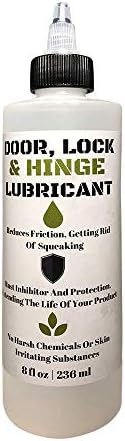
UniSport is an eight-ounce mineral-based lubricant intended for doors, locks, hinges, and garage doors. Its description says it works on sticking sliding doors and helps protect against rust. It is also described as non-toxic and as functioning between -35°F and 180°F.
This is a broader household maintenance product rather than a lubricant focused only on sliding glass doors. That may be useful if you have several types of hardware to maintain, but the oil format may not be the right choice for every sliding-door track. Oils can leave more residue than a fast-drying silicone spray, so use a small amount and check your door manufacturer’s recommendations before applying it to rollers or tracks.
Compared with the silicone choices here, UniSport may make more sense when locks or hinges are also on your maintenance list. If your priority is a clean-drying product for a track near flooring or glass, Rocket TT is the more directly described option.
Pros:
- Designed for doors, locks, hinges, and garage doors
- Includes rust inhibitors, according to the description
- Described as suitable for a wide temperature range
Cons:
- Oil may leave residue that needs careful cleanup
- Less specifically focused on sliding-door tracks than some alternatives
Verdict: Consider UniSport if you want one oil-based product for several kinds of door hardware, but verify that oil is appropriate for your slider’s components.
Lemenyaa Door Hinge Lubricant: Precise drops with a stored nozzle

Lemenyaa is a two-ounce silicone oil designed for precise, drop-by-drop application. Its needle-tip nozzle is intended to place lubricant where needed without spraying, and the bottle has a built-in slot to store the nozzle when it is not in use.
The description focuses on hinges, locks, cabinets, tools, and metal surfaces, rather than specifically naming sliding door tracks or rollers. That makes it a better fit for a squeaky hinge or a small, accessible moving part than for lubricating a long track. The product is described as odor-free and non-drip, but the small bottle may be less convenient when you need to cover a larger area.
For a sliding glass door, consider this option only if the part needing attention is suitable for silicone oil and can be reached with the nozzle. Its precision design gives it a clear advantage over a spray for controlled placement, while Rocket TT is more directly positioned for tracks and rollers.
Pros:
- Needle-tip nozzle supports controlled application
- Built-in nozzle storage helps keep the applicator with the bottle
- Silicone oil is described as odor-free and non-drip
- Useful for small hardware points such as hinges and locks
Cons:
- Product details emphasize hinges and metal parts, not sliding tracks
- Small bottle and dropper format may be slow for wider areas
Verdict: Choose Lemenyaa for small, precise lubrication jobs, not as the first choice for coating an entire sliding-door track.
Liquid Rescue: Synthetic oil with three precision needles

Liquid Rescue is a 100% synthetic lubricant specifically described for sliding glass doors and other sliders. The one-ounce bottle includes three stainless needles in different lengths, each with a silicone tip cover. The product information names slide rails, rollers, latches, locks, and other moving parts as intended application points.
The needle attachments are designed to direct the oil into tight spaces, making this a more precise choice than a standard spray. The small bottle may be a drawback if you have several doors or want a product for broad household use. Its description also says it begins displacing sticky old petro-oils or sprays, but you should still clean visible dirt from the track before applying any lubricant.
Among these options, Liquid Rescue is the most specifically tailored to sliding glass doors and their related parts. It is a strong fit if you want a dedicated product with a precision applicator, while Rocket TT offers a larger spray format for a wider range of materials and components.
Pros:
- Specifically described for sliding glass doors and sliders
- Includes three needle lengths for reaching different spots
- Listed for rails, rollers, latches, locks, and other moving parts
- Synthetic formula is described as suitable for metal and plastic parts
Cons:
- One-ounce bottle may not suit frequent or large-area use
- Oil application requires care to avoid excess on the track
Verdict: Choose Liquid Rescue if your main goal is targeted lubrication for sliding glass door rails and rollers.
How to Choose a Lubricant for Sliding Glass Doors
Check what is causing the door to stick
Lubricant can help when friction or squeaking comes from moving parts, but it will not fix every cause of a hard-to-move door. Dirt or grit in the track, damaged rollers, misalignment, or a worn component may need cleaning or repair instead. Inspect the track and door hardware before applying anything, and do not use lubricant to mask a mechanical problem.
Match the formula to the door manufacturer’s guidance
Silicone sprays, silicone grease, silicone oil, and synthetic or mineral-based oils have different formats and may leave different amounts of residue. Check your door’s care instructions before choosing a product, especially if you are unsure what the rollers or track are made of. When the manufacturer specifies a lubricant type, follow that recommendation rather than assuming any multipurpose product will work.
Choose an application style you can control
A spray can be convenient for covering several moving parts, but it may be harder to keep off nearby glass, flooring, or trim. A jar of grease can suit a focused application, while a needle-tip bottle is useful for placing small amounts in tight spaces. Think about the location of the part you need to reach and how easily you can protect nearby surfaces.
Use only a small amount
More lubricant is not necessarily better. Too much product can collect dust or leave a slippery mess near the door. Apply a modest amount only to the parts that the manufacturer says to lubricate, then operate the door and wipe away any excess. If the track is dirty, clean it first instead of coating debris with lubricant.
Consider how many parts you need to maintain
If you only need to treat a roller or a hard-to-reach point, a precision bottle may be a convenient fit. If you also want to maintain hinges, locks, or other door hardware, a multipurpose product may be more useful. For several different materials or components, compare the product’s stated compatibility before buying.
Frequently Asked Questions
What type of lubricant is best for sliding glass doors?
There is no single best formula for every door. Silicone products are among the options here, while other choices use synthetic or mineral-based oil. Check your door manufacturer’s instructions and choose a product intended for the materials and moving parts in your system.
Should I lubricate the track or the rollers?
That depends on the door’s design and care instructions. Some systems call for attention to the rollers or other moving parts rather than a coating across the full track. Consult the manufacturer’s guidance, and apply lubricant only to the parts it identifies.
Can I use a household oil on a sliding glass door?
Do not assume a household oil is suitable. Oil can leave residue, and the product may not match the materials or maintenance needs of your door. Check the door instructions and the lubricant’s stated uses before applying it.
Why is my sliding door still difficult to move after lubrication?
The track may still have dirt or grit, or the door may have worn rollers, misalignment, or damaged hardware. Clean and inspect the door, then seek repair guidance if it continues to stick. Lubricant cannot correct a damaged or misaligned part.
How much lubricant should I apply?
Start with a small amount and follow the product label and door manufacturer’s instructions. Wipe away excess rather than leaving a thick coating, which can collect dirt or create a mess.
Which option is easiest to apply precisely?
Lemenyaa and Liquid Rescue use needle-style applicators for controlled placement. Liquid Rescue is specifically described for sliding glass door rails and rollers, while Lemenyaa’s product details focus more on hinges and other small hardware.
Final Recommendation
For a dedicated sliding glass door product with precision applicators, Liquid Rescue is the clearest match for rails, rollers, and related moving parts. If you prefer a versatile silicone spray for multiple door components and materials, Rocket TT is a strong alternative. In either case, clean the track first, check your door’s maintenance instructions, and apply lubricant sparingly.
