Having all bathroom outlets not working usually means a single tripped Ground Fault Circuit Interrupter (GFCI) outlet cut power to every socket on that circuit. Press the center “RESET” button firmly on your primary bathroom outlet to restore power. The most common cause is moisture or an overloaded circuit from high-draw grooming tools like hair dryers.
Table of Contents
Reasons your bathroom outlets stopped working
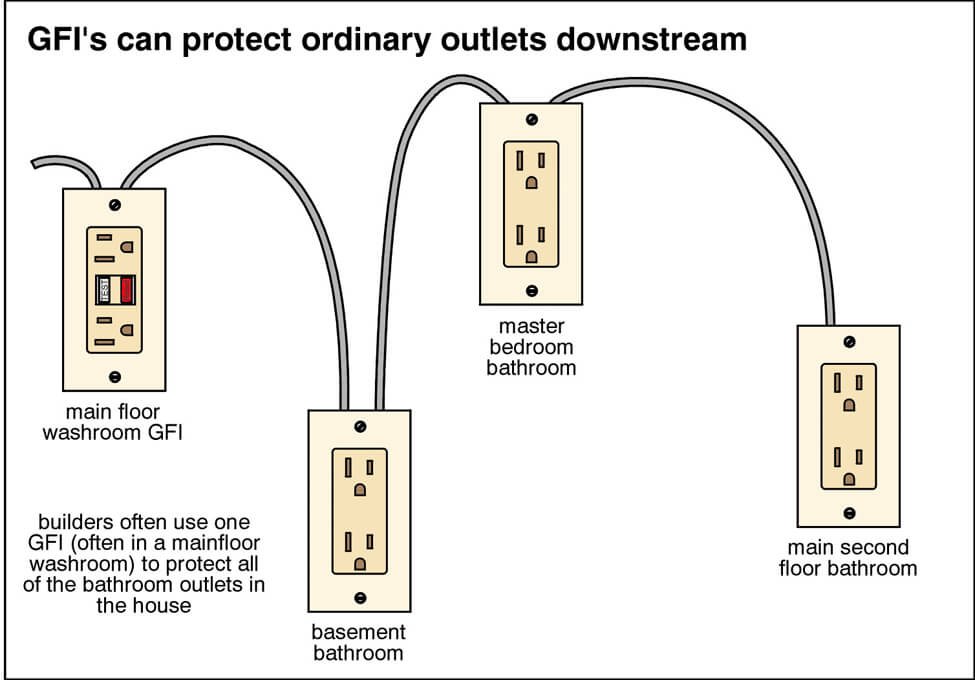
Bathroom circuits share wiring to protect you from shocks near water. Under modern building standards, multiple bathrooms often connect downstream from one primary GFCI receptacle or a dedicated breaker.
First, water vapor from a hot shower can seep into a socket and trip the safety sensor. Second, running two heating appliances at once draws too much current, causing the main breaker to trip to prevent overheated wires. Third, GFCI internal sensors wear out over time; if a unit fails to reset or test properly, it should be replaced. This setup presents a clear trade-off: you save on installation costs with shared wiring, but one tripped plug knocks out power across every bathroom in your house.
Reset the main GFCI outlet
This fix is for homes where one outlet has small “TEST” and “RESET” buttons between the plug holes. If that outlet tripped, push the “RESET” button until you hear a sharp click. Sometimes the button resists; press it firmly with your thumb or a pencil eraser.
If you see a small light turn off or hear that click, plug in a nightlight to verify it worked. This guide isn’t for people with old two-prong sockets that lack ground wires; those require a licensed technician. If the reset button pops back out immediately, unplug everything connected to that circuit before trying again.
Reset the electrical panel breaker
This step handles overloads where the breaker box tripped rather than the wall receptacle. Walk to your main electrical panel, usually in a basement, garage, or utility closet. Look down the rows of switches for one that sits halfway between “ON” and “OFF”, or shows a small red or orange window.
To clear it, push that switch firmly to the full “OFF” position first, then push it back to “ON”. You’ll feel firm resistance and hear a loud click. If it restores power, your bathroom lights and plugs will come back on right away. The mistake people actually make is flicking the switch straight to “ON” without going to “OFF” first; this leaves the internal spring disconnected, costing them an unnecessary service call for a simple switch error.
Check secondary and outdoor locations
This step solves hidden circuit links where the main GFCI sits in another room entirely. Builders often link upstairs bathroom plugs to an outlet in the garage, basement, half-bath, or even an exterior patio plug.
Walk through every room near water or concrete floors. Look for any outlet with test buttons, then reset each one you find. If you spot burned plastic, hear buzzing, or see black soot around any faceplate, stop immediately. Those symptoms point to damaged internal wiring. Fixing wires behind drywall carries a severe shock hazard and demands professional tools; call a licensed electrician rather than handling bare copper yourself.
What not to do
- Don’t force a reset button that refuses to latch. Pushing it with tools breaks the internal safety spring and leaves the circuit completely unprotected against water hazards.
- Don’t replace a breaker with a higher amperage model. Putting a 20-amp breaker on 15-amp wiring turns hidden wall wires into fire hazards when they overheat.
- Don’t wrap wires in electrical tape as a permanent repair. Tape degrades quickly in humid bathroom environments and creates active short-circuit risks behind your walls.
- Don’t touch outlets or the service panel with damp hands. Water drops conduct current straight into your skin, creating an immediate electrocution hazard.
How to stop it happening again
A few simple habit changes keep bathroom circuits stable and prevent sudden shutoffs.
| If you’re doing this | Do this instead | Why |
|---|---|---|
| Running two styling tools together | Use one heating appliance at a time | Two high-watt tools exceed the circuit’s safe amperage limit |
| Showering without running the exhaust | Turn the vent fan on before running hot water | High humidity condenses inside sockets and trips safety sensors |
| Leaving appliances plugged in daily | Unplug curling irons and shavers after use | Idle transformers can develop tiny ground faults that trip GFCIs |
| Plugging high-draw tools into power strips | Plug hair dryers directly into the wall receptacle | Power strips add resistance and overheat under heavy electrical loads |
Frequently asked questions
Can one tripped GFCI affect other bathrooms?
Yes, because home builders frequently wire several bathroom outlets in a series off a single protective GFCI device. When the first outlet detects a fault, it cuts the flow of power to every socket connected downstream. You only need to reset that first master outlet to fix them all.
Why does my outlet trip when I turn on the shower?
If a GFCI trips, it’s due to a ground fault, not ambient steam or humidity. The GFCI detects this water bridge as a dangerous current leak to ground and trips immediately to prevent shocks. Running your bathroom exhaust fan prevents this moisture buildup.
How long does a GFCI outlet last?
Most GFCI units last for many years under normal household use. Environmental factors like high humidity or frequent electrical surges degrade the internal sensing circuit faster. When an older unit refuses to reset even with nothing plugged in, the internal mechanism has reached its end.
Is it safe to reset a breaker multiple times?
No, resetting a breaker more than twice in a row is unsafe. A breaker that trips repeatedly signals an active short circuit or a dangerous overload in your wall. Forcing the power back on can melt the wire insulation and start a house fire.
What happens if the reset button won’t click?
No power is reaching the outlet, or the device has failed internally. If your main panel breaker is fully on but the button still feels loose and won’t click, the receptacle can’t complete its internal safety check. You’ll need a professional to replace the unit.
Final Thoughts
If the outlets still don’t work after you’ve pressed the reset button, there might be a deeper wiring issue or a faulty breaker in your main panel. Don’t hesitate to call a licensed electrician if you’re unsure about the next steps. It’s always safer to let a professional handle complex electrical repairs.