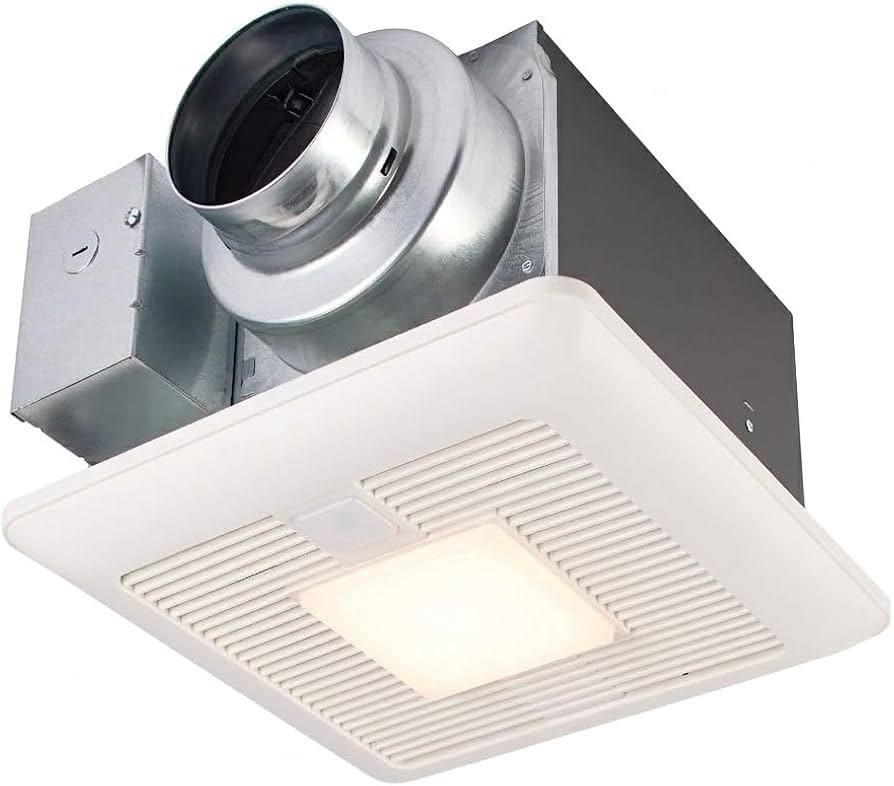
A bathroom fan with humidity sensor my insightful review confirms that automatic moisture sensing stops mold growth by clearing damp air without human intervention. The system works properly only if you match the airflow rate to room square footage and set relative humidity triggers between 50% and 60%. Leaving standard units in drafty spaces ruins this balance completely.
Table of Contents
My insightful take on this humidity sensor

- Size the unit according to HVI recommendations based on your bathroom’s square footage and fixture count.
- Calibrate the activation dial to 55% relative humidity to avoid false starts during standard weather changes.
- Run a 4-inch rigid metal duct instead of flexible foil pipe to prevent airflow resistance and trapped water pools.
- Check the built-in run timer so it keeps venting damp air for 20 minutes after your shower stops.
- Clean lint off the intake grille regularly to prevent the internal moisture probe from reading false levels.
Why automatic sensors prevent moisture damage
Standard manual wall switches rely on people remembering to flip them before turning on the water. When people forget, steam condenses against cold drywall, vanity wood, and ceiling paint within five minutes. Over months, this persistent moisture causes toxic fungal colonies and peeling primer. An automatic moisture sensor uses an internal electrical element that tracks relative air dampness. When steam crosses the preset threshold, the sensor triggers a relay to activate the fan.
Modern units remove wet air steadily until the internal sensor notes a stable drop back to ambient room levels. The EPA guide to mold and moisture notes that keeping indoor humidity levels between 30% and 50% stops mold spores from growing on building materials. You get clean air protection even if a guest or teenager takes a thirty-minute hot shower and leaves the room right after. However, there’s a clear trade-off: these specialized sensor modules cost more upfront than basic switches, and troubleshooting electrical faults demands careful attention to multi-wire wall boxes. This equipment isn’t for unheated half-baths or powder rooms, where occupants wash hands without generating shower vapor.
When the answer is different
Different building layouts and climate regions change how an automated fan operates in your home.
| Situation | What changes | What to do instead |
|---|---|---|
| Coastal regions with natural 70% humidity | Fan never shuts off automatically | Set dial to 80% or use timer mode |
| Uninsulated attic duct route | Steam condenses inside the cold pipe | Wrap outer ducting with R-6 insulation |
| Shared rental wall controls | Tenants switch off constant wall power | Wire sensor lead directly to hot feeder |
How to do it properly
- Shut off the dedicated 15-amp circuit breaker at the main electrical panel, then confirm the bathroom fixture has zero current using a non-contact voltage tester.
- Cut an opening in the ceiling drywall matching the housing template, maintaining at least 1 inch of clearance from nearest wooden ceiling joists.
- Fasten the fan housing directly to the structural joist using four 1-1/4-inch wood screws through the pre-drilled bracket holes.
- Fasten 4-inch rigid metal ducting to the discharge collar using aluminum foil tape, avoiding any drywall screws that penetrate the inner airway.
- Follow the manufacturer’s wiring diagram to connect the ground, neutral, and hot wires to the fan’s control module.
- Adjust the humidity dial located behind the faceplate to 55% relative humidity using a flat-head screwdriver before snapping the decorative grille into position.
- Restore circuit breaker power and run your hot shower for 4 minutes to verify the blades spin up without touching any wall switches.
The mistakes that ruin it
- Connecting the unit to flexible vinyl ducting traps condensed water in low dips, which collapses the pipe and burns out the motor.
- Wiring the fan’s constant-power lead directly into an ordinary light switch cuts all sensor electricity the moment you turn off the light.
- Setting the relative humidity trigger below 50% keeps the motor running continuously throughout damp summer days, raising your electric bill.
- Venting the discharge pipe directly into an open attic floor blows warm steam onto structural roof rafters, rotting the wood framing.
Frequently asked questions
Can a humidity sensing fan turn on by itself?
Yes, the fan starts up whenever natural ambient air passes the threshold limit you set on its internal dial. If summer storms bring high indoor humidity above your chosen level, the motor activates even when nobody uses the shower. Adjust the dial higher to stop these phantom starts.
Why does my bathroom fan keep running continuously?
Your bathroom fan runs continuously because the sensor dial is set too low for your home’s natural air moisture. If your dial sits at 50% but your house stays at 55% humidity, the fan runs forever. Turn the adjustment screw toward 60% or 65% to stop it.
How long should the fan run after a shower?
The unit should run about 20 minutes after you turn off the hot water. This run time provides enough fresh airflow to dry damp tile grout, wet mirrors, and wet drywall surfaces. If your model includes a delay timer dial, set it directly to the 20-minute mark.
Is it safe to leave the fan switch on all the time?
Yes, it’s entirely safe because the electronic controller only draws operating wattage when moisture triggers the internal switch. The fan stays in an idle, low-power monitoring state until the relative humidity exceeds the set threshold. This design assumes the unit is wired to a constant 120-volt circuit without manual interruptions.
What happens if I paint over the fan grille?
Thick latex paint clogs the narrow openings that allow wet room air to reach the built-in sensor probe. When air can’t circulate across the electronic components, the motor fails to activate during showers. This varies by model — check the label on your plastic grille before using paints.
Does duct length matter for humidity sensing fans?
Yes, it matters because long duct runs create backpressure that slows down steam removal from the room. If your pipe extends beyond 25 equivalent feet or adds several elbows, steam lingers around the ceiling longer. Install smooth rigid metal pipes to keep air flowing outside fast enough.
Final Thoughts
Upgrading to this technology is a smart move for any home. You’ll breathe easier knowing your space stays fresh and dry without having to flip a switch. Once you’ve picked the right model for your layout, it’s time to call a pro to get it installed and running perfectly.