
Finding the best 30-inch, six-panel prehung interior door takes more than matching the style: you also need the right handing, frame size, core, and installation format. The options below include two prehung choices, a solid-pine door with an assembly-required jamb, and related slab-door alternatives. Check each listing carefully—some products are not prehung, and one does not clearly match the six-panel style.
Table of Contents
Quick Comparison
| Product | Type and construction | Key fit or setup note |
|---|---|---|
| JUBEST 30″ × 80″ Right-Hand Prehung Interior Door | Primed, lightweight hollow-core door; jamb kit | Six-panel style is identified in the listing; check the product photos and included parts |
| WIN STELLAR 30″ × 80″ Solid Pine Door with Jamb | Solid-core pine door; jamb kit requires assembly | Specified for a 32″ × 82″–82.5″ rough opening; right-hand setup |
| JUBEST 30″ × 80″ Raised Six-Panel Door Slab | Primed, hollow-core slab | Not prehung; hinges and handle bore are not included or machined |
| JUBEST 30″ × 80″ Left-Hand Prehung Door | Primed, lightweight door with jamb kit | Listing details do not clearly confirm a six-panel design; verify before buying |
| JUBEST 30″ × 80″ One-Panel Door Slab | Primed, hollow-core slab | Not a six-panel door or a prehung unit; consider only if you are open to another style |
Our Picks: Best 30 Inch 6 Panel Prehung Interior Door reviews
1. JUBEST Right-Hand Prehung Door: A Primed Six-Panel Option

This is the closest match for shoppers looking for a 30-by-80-inch six-panel door in a prehung format. It comes primed and paintable, with a jamb kit described as ready to assemble. The door has a pre-drilled lockset hole, and the listing recommends a rough opening of 31½ by 81 11/16 inches.
The door is described as lightweight, with a hollow-core build and HDF skin. That can make it easier to handle than a solid-core door, but it is not the choice for someone prioritizing the mass and sound-dampening feel of solid wood. There is also a detail worth checking: the listing discusses a vertical-line texture as well as a six-panel style. Look closely at the current product images and specifications to confirm the design you will receive.
Some owners describe installation as straightforward when the parts align, while others report that assembly and alignment can take extra effort. Treat the included instructions as a starting point and check the jamb and door fit before fastening everything in place. A handle is not clearly listed as included, so plan to supply a lockset or handle unless the listing confirms otherwise.
Pros:
- Prehung format includes a jamb kit.
- Primed surface can be painted to suit your room.
- Pre-drilled lockset hole reduces some door-prep work.
- Recommended rough-opening dimensions are provided.
Cons:
- Installation alignment may require patience and careful adjustment.
- Confirm the pictured panel style and included hardware before ordering.
Verdict: Choose this if you want a primed, right-hand prehung option and its style, handing, and rough-opening requirements match your project.
2. WIN STELLAR Solid Pine Door with an Assembly-Required Jamb

This option pairs a solid-core natural pine door with a pine jamb kit. It is listed as a 30-by-80-inch six-panel door, but it arrives as a door slab and a separate jamb kit rather than a conventional preassembled prehung unit. The jamb needs assembly, and the product arrives in two packages.
The solid-core construction is the main difference from the lighter hollow-core choices here. The product details describe it as sound-dampening, and its listed weight is 57 pounds. That added weight may suit a bedroom or other room where a more substantial door is welcome, but it also makes handling and hanging more demanding.
The door has no pre-drilled borehole, so you will need to lay out and cut the lockset opening. The jamb kit has hinges attached on one side, with the other side designed for screw attachment to the door. It is specified for a 32-by-82- to 82½-inch rough opening and a right-hand setup. Confirm those measurements and the handing before purchase.
Pros:
- Solid-core pine construction offers a heavier, more substantial feel.
- Natural wood surface is ready for stain or another finish.
- Jamb kit and black hinges are included.
- Rough-opening dimensions are specified.
Cons:
- Jamb assembly and door preparation are required.
- No lockset bore is pre-drilled, and the heavier door may be harder to handle.
Verdict: This is a strong candidate if you want solid pine and are comfortable assembling the jamb and boring the door yourself.
3. JUBEST Raised Six-Panel Slab for a Custom Frame
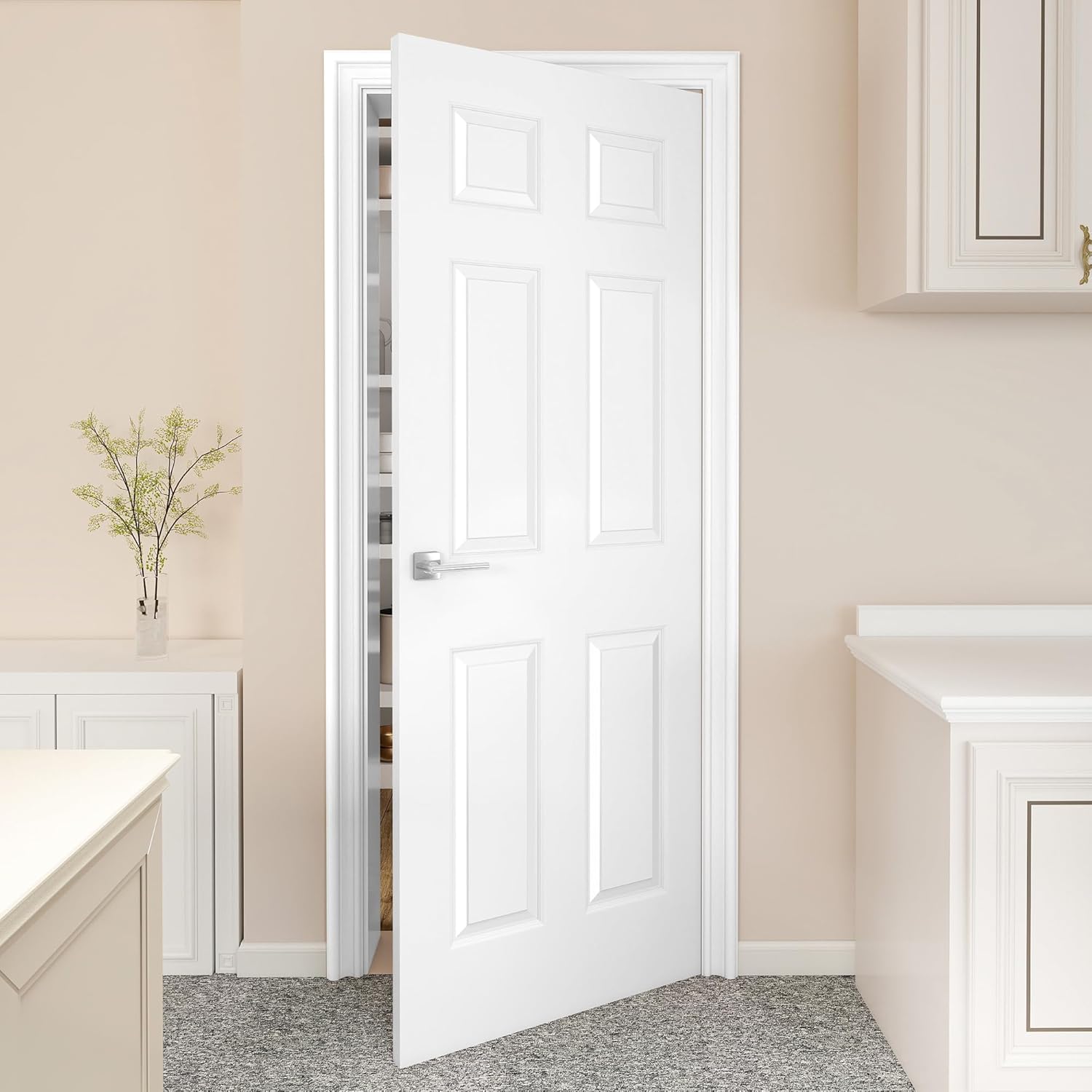
This JUBEST door has the classic raised six-panel look, a textured, primed surface, and a 30-by-80-inch slab size. It is a hollow-core slab—not a prehung door—so it does not come with a jamb or hinges. The slab is reversible and unmachined, which gives you flexibility to place the hinges and handle bore for your frame.
The primed surface is paintable, and the product calls for finishing all six sides. The listed trimming allowance is ¼ inch from each side of the slab. That is a limited allowance, so measure carefully and do not assume it can be cut down substantially to fit an opening.
Owners have described the appearance as attractive and the door as suitable for light-duty interior spaces such as a pantry, laundry room, or child’s room. There are also reports of occasional shipping damage, so inspect the slab when it arrives and before beginning any cutting or finishing. Compared with the prehung choices, this one gives you more control over hardware placement but requires more of the installation work.
Pros:
- Classic raised six-panel design with a paintable primed surface.
- Reversible and unmachined for flexible hinge and bore placement.
- Lightweight hollow-core construction is easier to handle than solid pine.
- Useful where you already have a frame or want a custom setup.
Cons:
- Not prehung; jamb, hinges, and handle hardware are not included.
- Limited trimming allowance and occasional reports of shipping damage call for careful inspection.
Verdict: Buy this slab if you specifically want a six-panel style and already have the skills or help to fit it into a frame; skip it if you need a complete prehung unit.
4. JUBEST Left-Hand Prehung Door: Confirm the Panel Style First

This JUBEST model is a 30-by-80-inch left-hand prehung door with a jamb kit and primed surface. The description says it is lightweight and paintable, and the supplied product details list a pre-drilled 2⅛-inch lockset hole. The listing also says hinges and installation instructions are included; the handle is not.
There is an important style mismatch to resolve before buying. Although the supplied title presents this as a prehung interior door, the details and owner descriptions point to a two-panel or vertically textured design rather than clearly confirming a six-panel door. Do not choose it solely to meet a six-panel requirement; verify the current listing images and specifications first.
Its left-hand configuration may be useful if your room layout requires that swing direction. Some owners describe the jamb and hinges as convenient, while others have reported damage in transit. Inspect the package and door promptly, and confirm the handing from the room side before installation.
Pros:
- Left-hand prehung configuration for openings that need that swing.
- Jamb kit and hinges are listed as included.
- Primed surface can be painted to match your interior.
- Lockset bore is listed as pre-drilled.
Cons:
- Six-panel styling is not clearly confirmed by the supplied details.
- Handle is not included, and shipping damage has been reported.
Verdict: Consider this only if you need a left-hand prehung door and confirm that the actual panel design meets your needs.
5. JUBEST One-Panel Slab: A Style Alternative, Not a Six-Panel Pick
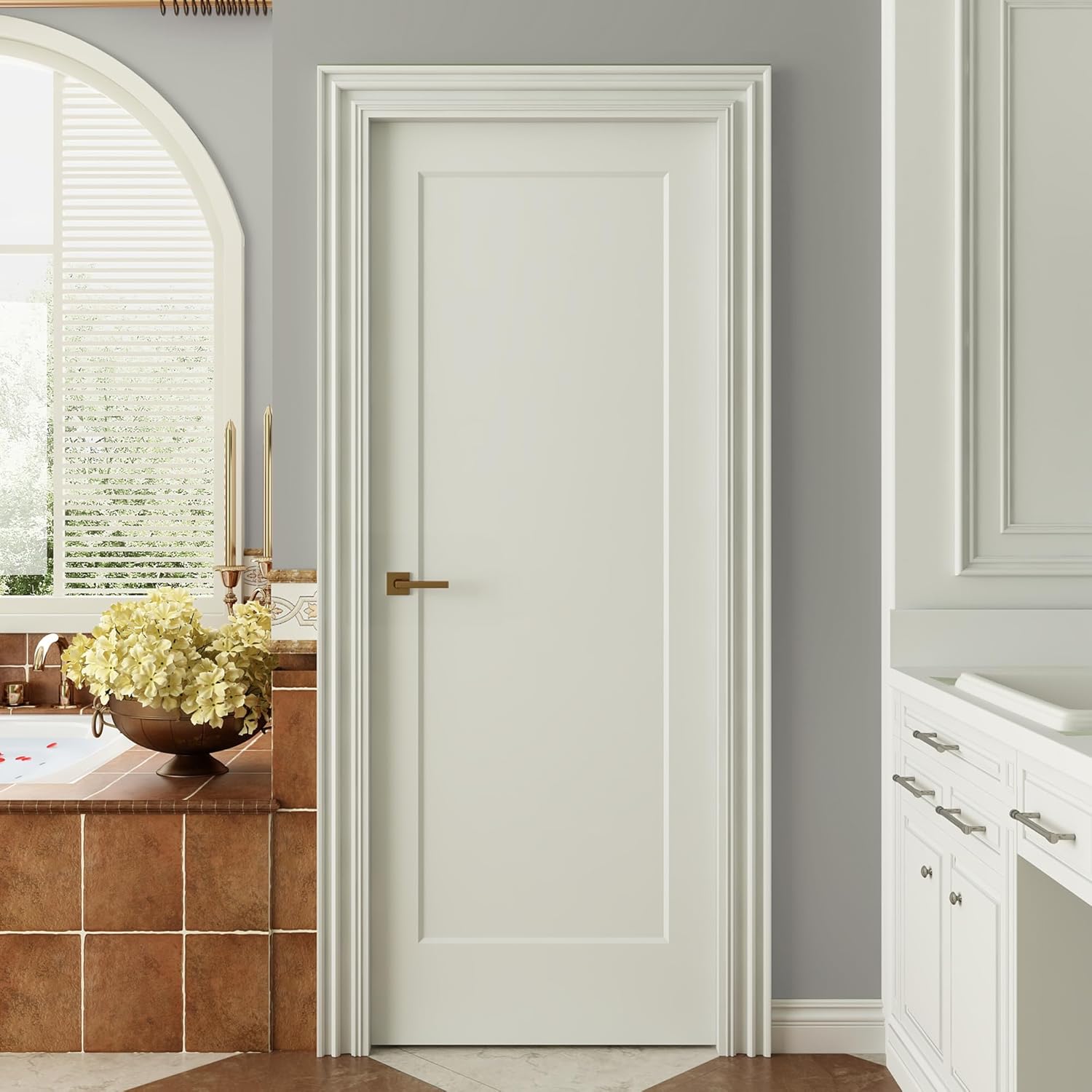
This is a related alternative for shoppers who are open to a simpler look. It is a 30-by-80-inch, one-panel hollow-core slab with a smooth, primed surface. It is not prehung and does not include hardware, so it does not meet the six-panel prehung brief.
The unmachined slab allows you to choose where to route the hinges and bore the handle hole, which can help when matching an existing frame. The listed trimming allowance is ¼ inch from each side. Its clean, single-panel design differs from the traditional raised-panel appearance of the six-panel options.
Owner experiences suggest the primed surface can need little preparation before painting, though the actual finish may still need sanding or touch-up. As with any slab, check that it is flat and undamaged before cutting. If you want a ready-to-install door and frame together, choose one of the prehung options instead.
Pros:
- Smooth, paintable primed finish.
- Unmachined slab gives you control over hinge and bore placement.
- Hollow-core build is relatively easy to handle.
- May suit contemporary interiors better than a raised-panel door.
Cons:
- One-panel design, not six-panel.
- Not prehung and does not include hinges or other hardware.
Verdict: Choose this only if you are willing to trade the six-panel look for a simpler one-panel slab and handle the fitting work yourself.
How to Choose a 30-Inch Six-Panel Prehung Interior Door
Measure the rough opening, not just the door
A 30-by-80-inch door describes the door panel, not the full space needed for its frame. Measure the opening’s width and height at several points, and check the manufacturer’s recommended rough-opening size. The options here list different requirements: the JUBEST right-hand model recommends 31½ by 81 11/16 inches, while the WIN STELLAR model specifies 32 by 82 to 82½ inches. Do not assume those measurements are interchangeable.
Confirm handing and swing direction
Handing determines which side the hinges are on and the direction the door swings. Check the room layout, nearby walls, fixtures, and traffic path before ordering. The prehung options listed here specify right-hand or left-hand configurations, so make sure the product’s stated handing matches your opening. If the listing’s explanation is unclear, confirm it with the seller before purchase.
Know the difference between prehung and slab
A prehung door comes with a frame or jamb kit, though some kits still require assembly. A slab is only the door panel. Slabs can offer more freedom to place hinges and drill the handle bore, but they need a suitable existing frame and additional fitting work. Check exactly what is included; “prehung” and “jamb kit” do not always mean the door arrives fully assembled.
Choose a core that fits the room
Hollow-core doors are generally lighter and easier to maneuver, which can simplify handling during installation. Solid-core wood doors are heavier and may offer a more substantial feel and better sound dampening. Consider the room’s privacy needs, how often the door will be used, and whether you can safely manage the door’s weight during installation.
Check the panel design and finish
Product titles, descriptions, and images do not always describe a door in the same way. This matters when you are shopping specifically for six panels. Compare the current listing photos with the written details, and ask for clarification if they conflict. A primed door is ready for paint, but check whether the product calls for sanding or finishing all six sides.
Plan for the bore, hinges, and handle
Some doors arrive with a lockset bore and hinge preparation; others are unmachined. A pre-drilled bore can save work, while an unmachined slab lets you position the hardware to suit a custom frame. Check whether hinges are attached, included loose, or not included at all. Handles and locksets may need to be purchased separately.
Inspect the door and kit before installation
Check the slab, jamb, hinges, and other parts for damage or missing pieces as soon as the shipment arrives. Confirm that the door is the size and handing you ordered before you cut, paint, or assemble it. Keep the packaging until you have checked the parts, and follow the product’s instructions for assembly and finishing.
Frequently Asked Questions
Is the JUBEST raised six-panel door prehung?
No. The JUBEST raised six-panel option is a slab door. It does not include a jamb or hinges, and its hinge locations and handle bore are not machined.
Which option is closest to a ready-to-install six-panel door?
The JUBEST right-hand prehung model is the closest match in this selection, but confirm the panel design in the current listing and check what its jamb kit includes. The WIN STELLAR option is also described as six-panel, but its jamb requires assembly and the door has no pre-drilled lockset bore.
What does a 30-by-80-inch door measurement refer to?
It refers to the door panel’s width and height, not the full rough opening. The required opening is larger to allow for the jamb and installation adjustments. Use the exact rough-opening guidance for the product you choose.
Can I trim these doors to fit?
Trimming limits vary by product. The JUBEST slab listings state a ¼-inch allowance from each side. The WIN STELLAR listing describes a different allowance at the top and bottom. Follow the specific product instructions and avoid cutting beyond the stated limits.
Do these doors include handles?
Do not assume they do. The JUBEST prehung descriptions state that a handle is not included, and the slab options do not include hardware. Check the current product listing for the exact contents before ordering a handle or lockset.
Which door is better for sound dampening?
The WIN STELLAR solid-core pine door is the clearest choice in this group for a heavier, sound-dampening construction. Hollow-core doors are lighter and may be easier to handle, but they are not the best match when sound control is a priority.
Final Recommendation
For a 30-inch six-panel door with a prehung setup, start with the JUBEST right-hand option if its handing and rough-opening requirements fit your project, and verify the panel style and included parts before ordering. Choose the WIN STELLAR model if solid pine matters more to you than a simpler installation and you are prepared to assemble the jamb and bore the door. If you already have a frame, the JUBEST raised six-panel slab offers more control over hardware placement—but it is not a prehung door.