
A bath transfer bench lets you sit down outside the tub, then move across the tub wall while seated. That can make bathing easier for older adults and people with limited mobility, but the right choice depends on your tub’s shape, available floor space, and the support you need. We compared five options by their stated capacity, adjustability, transfer features, and practical fit considerations.
Table of Contents
Quick Comparison
| Transfer bench | Weight capacity | Standout feature | Best for |
|---|---|---|---|
| Medline Transfer Bench | 400 lb | Reversible backrest and armrest | A configurable, supportive seat |
| Drive Medical Tub Transfer Bench | 350 lb | Height adjusts in 0.5-inch increments | Fine-tuning seat height |
| DMI Tub Transfer Bench | 400 lb | Safety belt and removable seat opening | Added transfer and hygiene features |
| HOMLAND Tub Transfer Bench | 400 lb | Adjustable height and reversible backrest | Flexible setup and a roomy seat |
| Dr. Dunley Tub Transfer Bench | 400 lb | Suction feet and tool-free assembly | A straightforward, lightweight option |
Our Picks: best bath transfer bench for elderly reviews
Medline Transfer Bench: A Supportive Seat with a Reversible Backrest

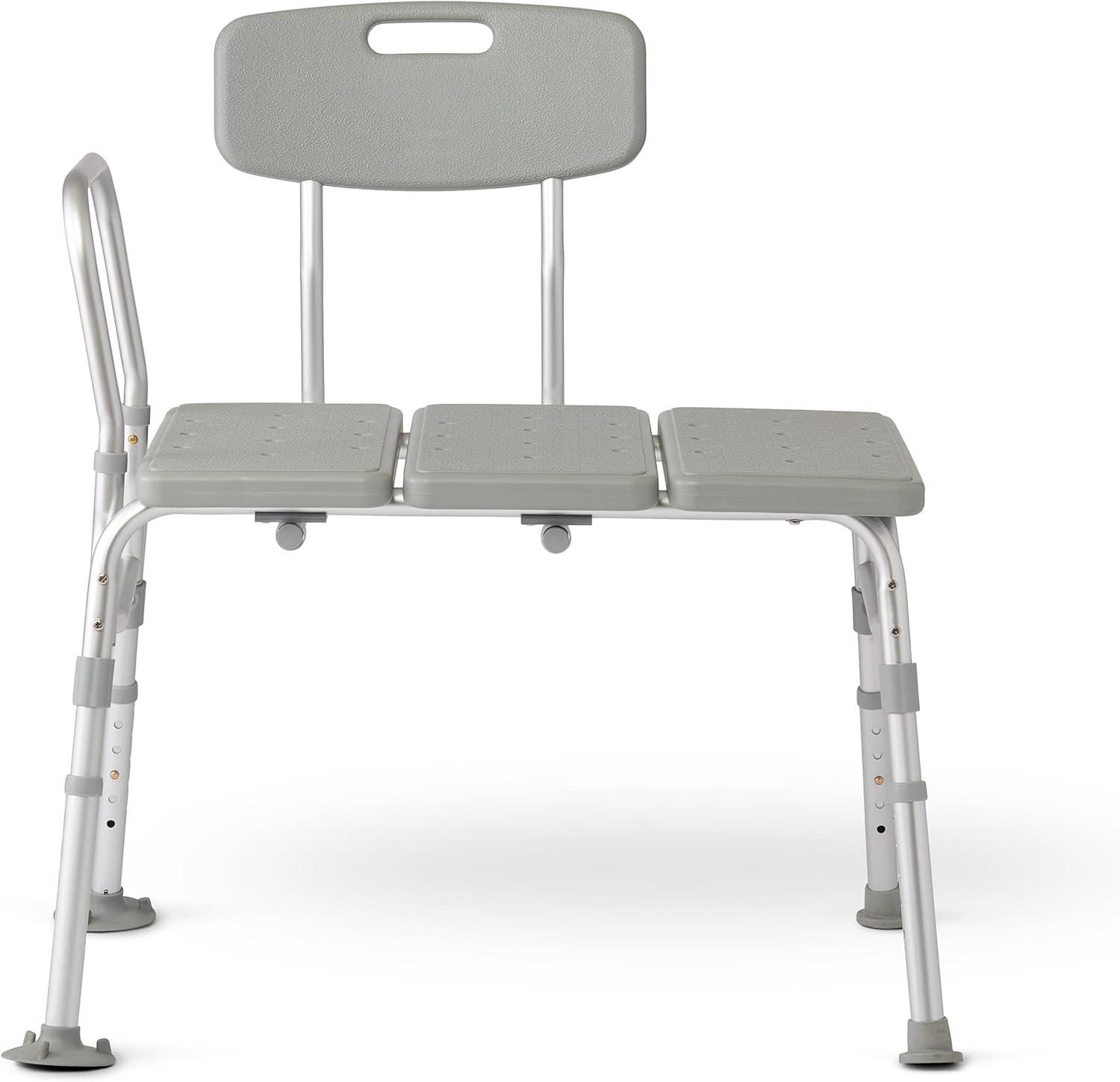
The Medline is a transfer bench and shower seat with a rust-resistant aluminum frame, a backrest, and an armrest. Its stated weight capacity is 400 pounds. The seat height adjusts with push buttons, and the backrest can be moved to either side to suit different bathroom layouts.
The bench is 32 inches wide overall, with a seat listed as 26.5 inches wide. That broad layout can offer a useful transfer area, but it also means you should measure your bathroom and tub before ordering. The armrest stays on one side, so check that its position works for the user’s preferred transfer direction.
Some users report that the adjustable legs help the bench sit level and that the simple surfaces are easy to wipe down. Its tool-free assembly is another practical plus. Keep in mind that this bench spans both the bathroom floor and the tub, so it needs enough space outside the tub as well as a suitable tub edge.
Pros:
- 400-pound stated weight capacity
- Adjustable seat height and reversible backrest
- Backrest and armrest provide additional sitting support
- Tool-free, push-button assembly
Cons:
- Its 32-inch overall width may be too large for a tight bathroom
- The armrest stays on one side, so its location may not suit every transfer
Verdict: Choose the Medline if you want a supportive, height-adjustable bench with a reversible backrest and have room for its wider footprint.
Drive Medical Tub Transfer Bench: Incremental Height Adjustments

This Drive Medical bench has a supportive backrest, drainage openings, suction-cup feet, and an aluminum frame. Its stated weight capacity is 350 pounds, lower than the 400-pound capacity listed for the other benches in this group. Check the user’s needs and the manufacturer’s guidance before deciding whether that capacity is appropriate.
The legs adjust in half-inch increments, which can help you set the seat height to better match the tub and user. That fine adjustment is the main distinction from a model with fewer height settings. As with any transfer bench, the legs must be set securely and the seat should be level before use.
This model is a practical choice if careful height adjustment matters more to you than a higher stated weight capacity or extra features such as a safety belt or cutout. The provided product information does not list dimensions for the seat, so measure your tub and available floor area and confirm the fit before buying.
Pros:
- Height adjusts in 0.5-inch increments
- Aluminum frame and supportive backrest
- Drainage openings help water pass through the seat
- Suction-cup feet are included
Cons:
- 350-pound stated capacity is lower than the other options here
- Supplied product details do not specify seat dimensions
Verdict: The Drive Medical is worth considering if you need incremental height adjustment and its 350-pound capacity and tub fit meet your requirements.
DMI Tub Transfer Bench: A Safety Belt and Removable Seat Opening

The DMI combines a transfer bench with a shower chair. Its aluminum frame and plastic seat include a backrest, a safety belt, suction-cup feet, and a removable cutout for perineal access. The bench has a stated capacity of 400 pounds and adjusts in height from 19 to 23.5 inches.
At 39 inches wide overall, it is one of the larger options in this comparison. That extended width provides a long transfer surface, but it can take up more space outside the tub than a more compact bench. Measure the bathroom carefully, including the space needed to sit down and move across the tub edge.
The belt, seat locks, and cutout may be useful for people who need those specific features, but they do not replace hands-on help when it is needed. The product information says the materials contain latex, so people with a latex sensitivity should check suitability before choosing this model.
Pros:
- 400-pound stated weight capacity
- Includes a safety belt and seat locks
- Removable cutout provides perineal access
- Height adjusts from 19 to 23.5 inches
Cons:
- 39-inch overall width requires substantial space
- Product information says it contains latex
Verdict: Pick the DMI if its belt and removable cutout suit your needs and your bathroom can accommodate its extra-wide transfer footprint.
HOMLAND Tub Transfer Bench: Adjustable, Roomy, and Reversible

The HOMLAND is an aluminum transfer bench with an A-frame design, non-slip rubber feet, drainage holes, and a reversible backrest. Its push-button height adjustment ranges from 17.5 to 22.5 inches, and the stated weight capacity is 400 pounds. The seat measures about 27 inches wide and 16.14 inches deep.
Its adjustable height and reversible backrest make it adaptable to different setups. The product information lists a minimum overall width of 32.3 inches and depth of 22.4 inches, so allow for that footprint on both the bathroom floor and inside the tub. The wide seat may be comfortable for some users but could crowd a narrow tub.
Some users report that the bench is straightforward to assemble and useful during recovery or when getting into the tub feels difficult. Those practical advantages depend on proper setup: position the bench securely, set each leg to the right height, and check that it rests evenly before use.
Pros:
- 400-pound stated weight capacity
- Height adjusts from 17.5 to 22.5 inches
- Reversible backrest suits different bathroom layouts
- Wide seat, drainage holes, and non-slip feet
Cons:
- Its seat and overall footprint may not fit smaller tubs
- Requires assembly before use
Verdict: The HOMLAND is a strong option if you want adjustable height, a reversible backrest, and a wide seat, provided you have enough room for its footprint.
Dr. Dunley Tub Transfer Bench: Lightweight Design with Suction Feet
The Dr. Dunley is a transfer bench with a backrest, a lightweight construction, and large suction-cup feet. It has a stated weight capacity of 400 pounds and is described as using tool-free, click-together assembly. The listed materials include plastic and polypropylene.
Its simpler feature set may suit someone who wants a basic bench without a belt or a removable seat cutout. Some users report that setup is easy and the bench feels stable in use. The provided product details do not give seat dimensions or a specific height-adjustment range, so check the product listing and tub measurements before ordering.
The suction feet are intended to help hold the bench in place, but they need clean, compatible surfaces and correct positioning. Follow the manufacturer’s setup instructions, and do not assume that suction feet make an improperly placed or uneven bench safe.
Pros:
- 400-pound stated weight capacity
- Tool-free assembly
- Lightweight construction for easier handling
- Large suction-cup feet and supportive backrest
Cons:
- Product details do not specify seat dimensions or height range
- Does not list added features such as a safety belt or removable cutout
Verdict: Consider the Dr. Dunley if you want a simple, lightweight bench, but confirm its dimensions and adjustment options before making a final choice.
How to Choose a Bath Transfer Bench
Measure the Tub and Bathroom Space
A transfer bench has legs on both sides of the tub wall: one set rests inside the tub, and the other rests on the bathroom floor. Measure the tub’s width and height, as well as the open floor area beside it. Also check whether the bench can sit level despite a curved tub edge or limited space. Compare your measurements with the bench’s overall width and depth, not just its seat size.
Check the Seat Height Range
The right height should let the user sit down and stand up as comfortably as possible while keeping the bench stable and level. Compare the user’s needs with the adjustment range listed for the model. A bench with incremental height settings, such as the Drive Medical, may help with fine adjustments. Do not use a bench if the legs cannot be set securely to the needed height.
Choose a Suitable Weight Capacity
Check the stated weight capacity and make sure it is appropriate for the person who will use the bench. The listed capacities in this comparison range from 350 to 400 pounds. Capacity is only one part of safe use; the bench also needs to fit the tub, be assembled correctly, and sit on a stable surface.
Consider Backrests, Armrests, and Transfer Aids
A backrest can provide support while the user is seated. An armrest may help with stability when sitting down or standing up, but its placement matters. A belt, such as the one included with the DMI, may be useful for some care situations. Think about which features match the user’s abilities and whether a caregiver will help with transfers.
Look at Footing and Seat Design
Non-slip or suction feet can help keep a bench from shifting when correctly installed on compatible surfaces. Drainage holes let water pass through the seat rather than pooling on it. Check that the feet rest evenly and follow the setup instructions. A cutout can make hygiene easier for some users, while a wider seat may provide more room but take up more tub space.
Plan for Assembly and Cleaning
Tool-free assembly can make setup simpler, but every locking button and leg still needs to be secured as directed. Smooth seats and frames can be easier to wipe down after bathing. Before use, inspect the bench for loose parts and confirm that it remains stable when placed in its intended position.
Consider Whether More Support Is Needed
A transfer bench can make bathing more manageable, but it does not prevent every fall or replace personal assistance. If the user has trouble sitting, shifting across the tub, or following transfer steps, ask a healthcare professional or occupational therapist for guidance on choosing and using bathing equipment.
Frequently Asked Questions
What is a bath transfer bench?
A bath transfer bench is a seat that straddles the tub wall. The user sits on the outside portion, then moves across the tub edge while seated. This can reduce the need to step over a high tub wall, though some people still need help with the transfer.
How is a transfer bench different from a shower chair?
A shower chair usually sits fully inside the tub or shower. A transfer bench extends outside the tub as well, giving the user a place to sit before moving across the tub wall. Measure carefully because a transfer bench generally needs more floor space.
Will every transfer bench fit a standard bathtub?
No. Tub widths, edges, heights, and bathroom layouts vary. Compare the bench’s dimensions with your tub and available floor space before buying. Check that it can sit level and that the legs can be positioned as intended.
Are suction-cup feet enough to keep a bench safe?
Suction feet can help grip compatible surfaces when positioned correctly, but they are not a substitute for proper assembly and setup. Follow the manufacturer’s instructions, make sure all legs are stable, and check the bench before each use.
Should I choose a bench with a backrest?
A backrest can provide support while seated, which may be helpful for a user who needs to rest during bathing. Consider whether the backrest can be positioned on the needed side, and make sure it does not interfere with the tub or transfer path.
Can a transfer bench be used without a caregiver?
That depends on the user’s mobility, balance, strength, and ability to transfer safely. Some people may be able to use a bench independently, while others need assistance. Ask a healthcare professional for advice if you are unsure.
Final Recommendation
The Medline is a well-rounded choice if you want a 400-pound capacity, adjustable seat height, and a reversible backrest, while the HOMLAND offers a similar set of adjustment features with a wide seat. The DMI stands out for its safety belt and removable cutout, and the Drive Medical is the pick for half-inch height adjustments. The Dr. Dunley is a simpler option, but its dimensions and adjustment details should be confirmed before purchase. Whichever bench you choose, measure the tub and bathroom first, follow the setup instructions, and match the equipment to the user’s support needs.