For sealing a toilet base to the floor, choose a bathroom-rated caulk that stays flexible and resists water. A 100% silicone sealant is a strong option for tile and other compatible surfaces, but caulk is not a fix for a loose toilet or a failed wax or rubber seal. Secure the toilet and check for leaks before sealing; where appropriate, leave a small uncaulked section at the back so a leak is easier to spot.
Our top pick is GE Advanced Silicone in the 10-ounce cartridge: it offers a waterproof, flexible seal and enough material for a typical job. The smaller squeeze tube suits touch-ups, while the other picks include a caulk-removal tool and a peel-and-stick strip for shoppers considering alternatives.
Table of Contents
Quick Comparison
| Product | Type | Best for | Key detail |
|---|---|---|---|
| GE Advanced Silicone Caulk, 2.8 oz Tube | 100% silicone | Small jobs and touch-ups | Squeeze tube; water-ready in 30 minutes per product details |
| Gorilla 100% Silicone Caulk, 10 oz | 100% silicone | Wet bathroom areas | Mold- and mildew-resistant formula |
| GE Advanced Silicone Caulk, 10 oz Cartridge | 100% silicone | Most toilet-base caulking jobs | Cartridge format; flexible waterproof seal |
| Saker 3-in-1 Silicone Caulking Tool | Caulk-removal and finishing tool | Removing old caulk and smoothing new beads | Combines a scraper and smoothing surfaces |
| Self-Adhesive Toilet Caulking Strip | Peel-and-stick PVC strip | A quick cosmetic edge treatment | Cut-to-fit strip with adhesive backing |
Our Picks: Best Caulk For Sealing Toilet To Floor reviews
GE Advanced Silicone Caulk, 2.8 oz Tube: Best for Small Jobs

This squeeze tube contains white 100% silicone caulk made for kitchen and bathroom use. Its small size can suit a short bead around a toilet base, a repair, or another small sealing task. Because it does not require a caulk gun, it is also a simpler option for occasional DIY work.
The product details describe a flexible, waterproof seal that resists shrinking and cracking. The caulk is listed as water-ready in 30 minutes, with a full cure time of 24 hours. Water-ready does not mean you should ignore the label’s directions; allow the sealant to cure as instructed before exposing it to water or cleaning the area.
The main trade-off is the amount of caulk. A small tube may be convenient, but it is less efficient for larger or repeated jobs than a cartridge. For sealing a toilet, first confirm that the toilet sits firmly and the floor is clean and dry. Caulk should finish the joint, not hold a rocking toilet in place or cover up a leak.
Pros:
- 100% silicone formula for bathroom sealing
- Compact squeeze tube does not require a caulk gun
- Flexible, waterproof sealant
- Product details list a 30-minute water-ready time
Cons:
- Small amount may not suit larger jobs
- White may stand out against some floor colors
Verdict: Choose this tube for a small toilet-base job or occasional touch-up when convenience matters more than buying a full cartridge.
Gorilla 100% Silicone Caulk, 10 oz: Best for Mold Resistance

Gorilla’s white 100% silicone sealant comes in a 10-ounce cartridge for use with a caulk gun. It is designed for kitchen and bath areas, and the product information describes it as waterproof, flexible, and resistant to mold and mildew after curing. Those features make it a suitable candidate for a bathroom joint, provided the floor and toilet materials are compatible with the product label.
The cartridge holds more than the small GE squeeze tube, so it is a more practical format if you are sealing a longer joint or have other bathroom caulking to do. The listed water-ready time is 30 minutes, and the full cure time is 24 hours. Follow the package directions for application and curing rather than relying on the shorter water-ready interval as a sign that the job is fully cured.
A cartridge requires a caulk gun and a steadier hand than a squeeze tube. That is a manageable trade-off for many DIYers, but beginners may want to practice a smooth, even bead on scrap material first. As with any caulk, it is not a remedy for movement at the toilet base or moisture coming from beneath the fixture.
Pros:
- 100% silicone formula intended for kitchen and bath use
- Product details specify mold- and mildew resistance after curing
- Flexible and waterproof once applied as directed
- 10-ounce cartridge provides more material than a small squeeze tube
Cons:
- Requires a caulk gun
- Full cure is listed as 24 hours
Verdict: Pick Gorilla if you want a full-size bathroom silicone cartridge with mold- and mildew-resistance claims and already have, or plan to use, a caulk gun.
GE Advanced Silicone Caulk, 10 oz Cartridge: Best Overall for a Toilet Base

This GE Advanced Silicone option combines a bathroom-rated 100% silicone formula with a full-size cartridge. The product details describe a flexible, waterproof seal that resists shrinking and cracking, making it a practical choice for the joint between a stable toilet and a compatible floor. Its white finish is a common match for white toilets, though it may not blend with every tile or flooring color.
The cartridge format is suited to a continuous bead and gives you more material than the 2.8-ounce squeeze tube. It works with a caulk gun, which can make it easier to control the flow once you get the feel for the trigger. The listed water-ready time is 30 minutes and the full cure time is 24 hours; check the product label for the exact conditions and directions.
GE’s cartridge is our best overall pick because it balances a bathroom-focused silicone formula with enough material for a typical sealing job. It does not include a caulk gun or a finishing tool, so you may need to supply those separately. Take time to remove old caulk and dry the joint before applying new sealant; a fresh bead over residue or moisture is unlikely to give a neat finish.
Pros:
- 100% silicone sealant intended for kitchen and bathroom use
- Flexible and waterproof formula
- Cartridge format suits a continuous bead around a fixture
- Product details list 30-minute water-ready performance
Cons:
- Requires a caulk gun, which is not included in the product details
- White may not match every floor or grout color
Verdict: For most homeowners sealing a stable toilet to a compatible floor, this full-size GE cartridge is the most balanced option in the list.
Saker 3-in-1 Caulking Tool: Best for Removing Old Caulk
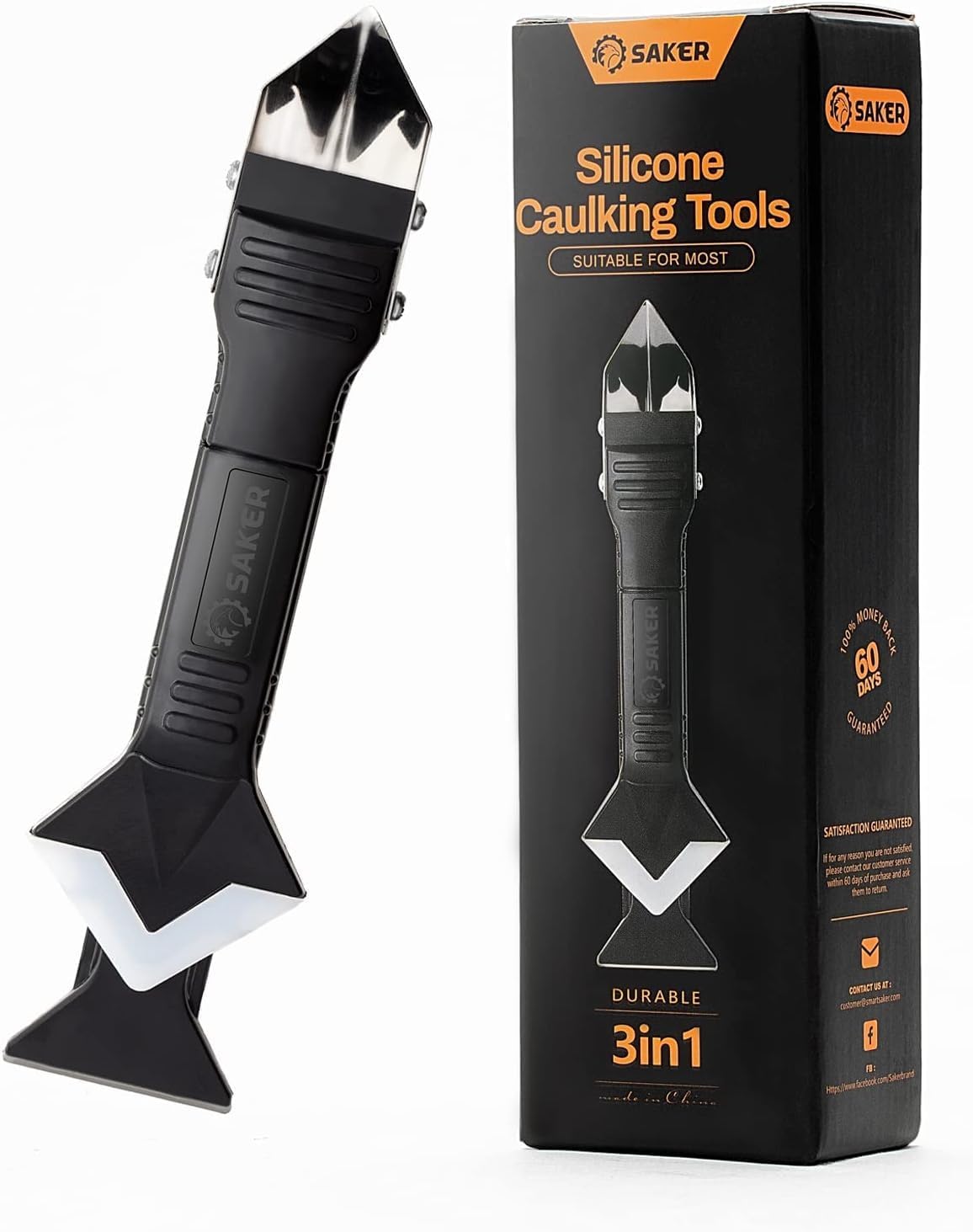
The Saker is a caulk-removal and finishing tool rather than a sealant. Its design combines a metal scraper for removing old caulk with surfaces intended to clear residue and smooth a new bead. That combination can be useful when re-caulking a toilet base, since a clean joint is an important part of preparing for new silicone.
The tool may help you work without switching between separate scrapers and smoothers. Its plastic finishing end can wear when used on hard surfaces, according to the product information, so use it with care and avoid forcing it against rigid material. A metal blade can also scratch some flooring or finishes if handled carelessly; work slowly and keep the blade angled away from the surface.
This is an accessory, not an alternative to caulk. It makes the most sense if you are removing an existing bead or want a dedicated tool for shaping the new one. If the toilet is loose or there is a leak, deal with that underlying issue before using a finishing tool and applying a new bead.
Pros:
- Combines scraping, residue removal, and caulk smoothing functions
- Designed for removing old sealant and finishing new caulk
- Can be used for bathroom joints beyond a toilet base
Cons:
- Does not include caulk or seal a joint by itself
- Metal and plastic parts require care to avoid surface damage or wear
Verdict: Add this tool if you need to remove an old bead and finish new caulk; skip it if your only need is a tube or cartridge of sealant.
Self-Adhesive Toilet Caulking Strip: Best for a Quick Cosmetic Update

This product is a foldable, self-adhesive PVC strip, not a tube of caulk. It is designed to cover a seam or edge around fixtures such as toilets, sinks, and tubs. The supplied description lists it as 1.5 inches wide and 10.5 feet long, and says it can be cut to fit.
Installation is simple in principle: clean and dry the surface, peel off the backing, and press the strip into place. The product description notes that heating the surface with a hair dryer may help the adhesive bond. A strip can provide a fast, tidy-looking finish, but it should not be treated as a repair for a faulty toilet seal or a substitute for a properly applied bathroom sealant where that is needed.
Because it relies on adhesive, careful surface preparation and a smooth, dry area matter. A floor with uneven edges, dust, or moisture may make it harder to get a neat fit. Compared with silicone caulk, the strip is quicker to place but gives you less control over shaping a custom bead around curves and tight spots.
Pros:
- Peel-and-stick installation does not require a caulk gun
- Can be cut to fit the area
- Foldable design is intended for corners and seams
- Useful for a quick visual refresh around a toilet base
Cons:
- Not a tube or cartridge of silicone caulk
- Adhesion depends on a clean, dry surface and careful placement
Verdict: Consider the strip for a quick cosmetic edge treatment on a suitable surface, but choose silicone caulk for a more traditional sealed joint.
How to Choose Caulk for Sealing a Toilet to the Floor
Choose a formula made for wet areas
Look for a sealant labeled for kitchen and bathroom use, with water resistance suited to the location. The GE and Gorilla options here are 100% silicone products. Silicone stays flexible, which can help the joint handle small movements, but always check the label to confirm that it is suitable for your toilet and flooring materials.
Match the package size to the job
A small squeeze tube can be convenient for a short bead or a touch-up and does not need a caulk gun. A cartridge holds more material and is a better fit for a longer joint or more than one project, but you will need a compatible gun. Avoid choosing a larger package simply because it contains more; consider whether you can use and store it as directed.
Think about application and cleanup
A smooth bead depends on preparation and steady application. Remove old caulk and residue, then make sure the joint is clean and dry. A caulk gun can help apply a continuous bead, while a finishing tool can help smooth it. Follow the product label for cleanup, since silicone can be difficult to remove after it cures.
Check cure time before using the bathroom
Some products list a short water-ready time as well as a longer full cure time. These are not the same thing. For example, the GE and Gorilla product details list 30 minutes to become water-ready and 24 hours for full cure. Follow the package directions for conditions, cure time, and when to expose the seal to water or cleaning.
Do not use caulk to fix a loose or leaking toilet
Before sealing the base, check that the toilet is stable and that there is no sign of water leaking from beneath it. Caulk is a finish seal, not a replacement for a sound toilet flange, mounting hardware, or wax or rubber seal. If the toilet rocks, or if you see water or persistent dampness, address the plumbing or installation problem first.
Choose a color and finish that suit your floor
The caulk options in this list are white, which can blend well with a white toilet but may contrast with darker tile or flooring. A neat bead is easier to maintain when its color works with the fixture and floor. If appearance is your main concern, a strip may be another option, but check that the surface is suitable for adhesive and keep its purpose separate from fixing a plumbing leak.
Frequently Asked Questions
What type of caulk is best for a toilet base?
A bathroom-rated, waterproof silicone caulk is a common choice for sealing the joint between a stable toilet and a compatible floor. Check the product label for material compatibility and application directions. Caulk does not replace the toilet’s floor seal or secure a loose fixture.
Should you caulk all the way around a toilet?
Follow local plumbing requirements and the advice of a qualified plumber for your installation. Some people leave a small gap at the back of the toilet so water from a leak can become visible instead of staying hidden beneath the base. Do not use caulk to conceal a suspected leak.
Can I caulk around a toilet that rocks?
No. A rocking toilet should be stabilized before you apply caulk. Movement can damage the seal or make the bead crack. If tightening or shimming does not solve the problem, have the installation checked.
How long should toilet caulk cure before the area gets wet?
Use the cure times and directions on the specific product. The GE and Gorilla options listed here state a 30-minute water-ready time and a 24-hour full cure time. The shorter time does not mean the caulk has fully cured.
Can I use the self-adhesive strip instead of silicone caulk?
The strip is a peel-and-stick PVC trim product, not a silicone sealant. It may suit a quick cosmetic update on a clean, dry, compatible surface, but it should not be relied on to repair a toilet leak or replace a needed plumbing seal.
Do I need a caulk gun for every option?
No. The GE 2.8-ounce tube is a squeeze tube, and the self-adhesive strip does not need a caulk gun. The GE and Gorilla cartridges do require a caulk gun for application. The Saker tool helps remove and smooth caulk but does not dispense sealant.
Final Recommendation
For most toilet-base caulking jobs, the GE Advanced Silicone 10-ounce cartridge is the best all-around choice in this group: it is a full-size, bathroom-focused 100% silicone sealant with a flexible, waterproof formula. Choose the smaller GE tube for a short repair, or Gorilla if mold- and mildew-resistance claims are a priority. Whichever product you use, stabilize the toilet, check for leaks, prepare a clean and dry joint, and follow the package directions for curing.