
A condensing tankless gas water heater recovers heat from its exhaust to warm incoming water, which can improve efficiency compared with a non-condensing design. The right model depends on how much hot water your household uses at once, your incoming water temperature, available gas supply, venting, and room for a condensate drain. The picks below range from high-capacity Rinnai models to more compact, lower-output options for smaller homes.
| Product | Maximum flow | Burner input | Notable feature | Best fit |
|---|---|---|---|---|
| Rinnai RX199iN | Up to 11.1 GPM | 199,000 BTU | Natural gas or propane support with Smart Sense | High-demand homes |
| Vancepic Condensing Tankless | Up to 5.1 GPM | 120,000 BTU | Stainless steel heat exchanger and digital controls | Smaller homes |
| Ranein Condensing Tankless | Up to 5.1 GPM | 120,000 BTU | Four preset modes and included vent components | Homes needing a compact setup |
| EZ Ultra HE | Up to 3.4 GPM at a 45°F rise | Not specified | Horizontal or vertical venting options | Lower hot-water demand |
| Rinnai RSC199iP Smart-Circ | Up to 11 GPM | Not specified | Propane model with learning recirculation | Large households seeking scheduled hot water |
Table of Contents
Our Picks: Best Condensing Tankless Gas Water Heaters reviews
Rinnai RX199iN: High capacity with flexible fuel support

The RX199iN is the highest-capacity option in this group, with a listed maximum output of 199,000 BTU and flow of up to 11.1 GPM. Its Smart Sense gas control is designed to support natural gas or propane, which may give you more flexibility when planning an installation. Check the product details and installation instructions to confirm the unit is configured for your home’s fuel supply.
Rinnai describes the heater as compact and suitable for indoor or outdoor installation. An outdoor setup requires the RX-OVC vent cap, so factor that into the project rather than assuming the unit can be mounted outdoors as-is. The Quick Flush feature is intended to simplify flushing, and the listed UEF is .98. Wi-Fi control requires a separately sold Controlr module.
This model is a strong candidate for a larger home with several simultaneous hot-water demands, but the 11.1 GPM figure is a maximum—not a guarantee that every fixture can run at that rate in every climate. Incoming water temperature, the temperature rise you need, gas supply, and the plumbing layout all affect actual flow. Professional installation is recommended by the manufacturer.
Pros:
- Highest listed flow and BTU input among these picks
- Smart Sense supports natural gas or propane
- Indoor or outdoor installation options, with the required outdoor vent cap
- Quick Flush feature and a listed UEF of .98
Cons:
- Outdoor installation requires a separate RX-OVC vent cap
- Wi-Fi control requires an additional module
Verdict: Choose the RX199iN if you need high capacity and value fuel flexibility, provided a qualified installer confirms it suits your home and setup.
Vancepic 5.1 GPM: A simpler fit for smaller homes

This indoor natural gas model is rated for up to 5.1 GPM and 120,000 BTU. Its condensing design uses heat from exhaust gases, and the product description lists a stainless steel heat exchanger. A digital display lets you set the temperature from 95°F to 149°F and see water and gas flow information, along with fault codes.
The listed flow makes this a more plausible fit for a small home or apartment than for a large household with several showers running at once. The product information describes simultaneous use of multiple fixtures, but your results will depend on the temperature rise and fixture flow rates. It also lists a 114W anti-freeze heater and a condensate drain kit. Confirm the included vent components and local requirements before installation.
Compared with the higher-output Rinnai models, this Vancepic offers a lower-capacity option with straightforward digital controls. Its listed limited warranty is two years for the heat exchanger and parts; check the current terms and installation requirements before purchase.
Pros:
- 5.1 GPM and 120,000 BTU rating for smaller hot-water loads
- Stainless steel heat exchanger listed in the product information
- Digital temperature control and flow-rate display
- Anti-freeze function and condensate drain kit are included in the description
Cons:
- Less capacity than the high-output Rinnai options
- Confirm venting details and warranty terms with the seller before buying
Verdict: Consider the Vancepic for a smaller home that needs a natural gas condensing heater, but size it carefully against your peak hot-water demand.
Ranein 5.1 GPM: Preset modes and a compact installation kit

The Ranein is a 120,000 BTU natural gas heater rated for up to 5.1 GPM. Its touch control offers four modes, including Eco, Kitchen, Bathtub, and a setting that adjusts to incoming water temperature. The display can show flow, gas consumption, and fault codes, giving you more operating information than a basic dial control.
At a listed 22 by 14.2 by 6.4 inches, it is designed to fit in a compact indoor space. The product description says the package includes a Category III stainless steel vent pipe, condensate drain line, mounting hardware, and an installation template. It also lists a 114W anti-freeze heater that activates below 42.8°F, plus several safety protections.
The 5.1 GPM rating positions it alongside the Vancepic rather than the larger Rinnai units. Ranein states that the model is not recommended for elevations above 2,000 feet, an important limitation for some homes. Have an installer check local code, venting, gas capacity, and the temperature rise needed for your location.
Pros:
- Four operating modes and a touch control display
- Compact dimensions for an indoor installation
- Vent pipe, condensate line, and mounting hardware listed as included
- Anti-freeze function and multiple listed safety protections
Cons:
- Not recommended for elevations above 2,000 feet
- 5.1 GPM capacity may not suit homes with heavy simultaneous demand
Verdict: The Ranein is worth considering if its included components and preset controls suit your project and your home is within the stated elevation limit.
EZ Ultra HE: A lower-flow option with flexible venting
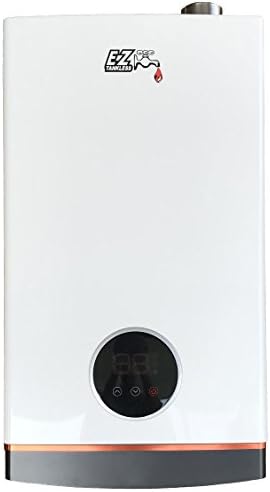
The EZ Ultra HE is an indoor natural gas condensing heater with a listed maximum of 3.4 GPM at a 45°F temperature rise. That figure is lower than the other models here, so it may be better suited to a modest hot-water load than a busy household that regularly runs several fixtures at once. The product information does not specify its BTU input.
The unit recovers heat from exhaust gas to preheat incoming water. It can be vented horizontally or vertically using 2-inch solid-core Schedule 40 PVC or CPVC, according to the product description. A back-draft prevention device and stainless steel horizontal vent pipe are listed as included. Have a professional verify that the proposed vent material and route comply with the unit instructions and local code.
Its lower listed flow can make the EZ Ultra HE a practical option when the household’s demand is limited and the installation layout works with its venting choices. It is not the best match for buyers who need the higher maximum flow of the Rinnai models or even the 5.1 GPM units.
Pros:
- Condensing design uses exhaust heat to preheat incoming water
- Horizontal or vertical venting options are listed
- Includes a back-draft prevention device and horizontal vent pipe
- May suit a smaller hot-water demand
Cons:
- Lower listed flow than the other models in this guide
- BTU input is not specified in the supplied product details
Verdict: Choose the EZ Ultra HE only if its 3.4 GPM rating at a 45°F rise is enough for your household and an installer confirms the venting plan.
Rinnai RSC199iP Smart-Circ: High flow with propane recirculation

The RSC199iP is an indoor propane condensing heater with a listed maximum flow of up to 11 GPM. Its Smart-Circ feature is designed to learn household hot-water patterns and schedule recirculation around them. That may be useful if you want hot water delivered through a compatible recirculation setup, though it is worth confirming the system requirements and installation details before choosing this model.
Rinnai describes the unit as compact, with multiple venting options. The product information lists a residential warranty with 15 years for the heat exchanger, five years for labor, and one year for parts; confirm the warranty terms, registration requirements, and coverage with the manufacturer before purchase. A separate Controlr module is needed for Wi-Fi control.
This model is a better match for propane homes than the natural-gas-only choices in this guide, and its listed flow places it in the high-capacity group. It is not the same fuel configuration as the RX199iN, which supports natural gas or propane through Smart Sense. Check the exact model and fuel supply to avoid ordering the wrong unit.
Pros:
- Up to 11 GPM listed for larger hot-water demand
- Smart-Circ learns usage patterns to schedule recirculation
- Multiple venting options are listed
- Compact design and a stated residential warranty
Cons:
- Propane model, so it is not the right match for a natural-gas-only setup
- Wi-Fi control requires a separately sold module
Verdict: The RSC199iP is a sensible high-capacity choice for a propane home that can benefit from scheduled recirculation.
How to Choose a Condensing Tankless Gas Water Heater
Size for your busiest hot-water moments
Think about how many hot-water fixtures may run at the same time, not just how many people live in your home. A morning with two showers and a kitchen tap running has a different demand from one shower at a time. Compare that peak demand with the heater’s flow rating, and remember that the listed maximum is not a promise of the same output under every condition.
Account for incoming water temperature
A tankless heater must raise incoming water to your chosen temperature. Colder incoming water requires a larger temperature rise, which can reduce the flow available at your fixtures. The EZ Ultra HE, for example, lists its 3.4 GPM capacity at a 45°F rise. Check the manufacturer’s sizing information for your local water temperature and desired output before selecting a model.
Match the unit to your fuel supply
Confirm whether your home uses natural gas or propane and choose a model designed for that fuel. The Rinnai RX199iN description says Smart Sense supports both fuels, while the Rinnai RSC199iP is identified as a propane model. Do not assume that a gas heater can be switched between fuels without the proper setup or approval; ask a qualified installer to verify compatibility.
Plan venting and condensate drainage
Condensing heaters create condensate as they recover heat from exhaust. Your installation needs a suitable drain plan, as well as vent materials and a route approved for the specific model. Some products list vent components in the box, but included parts do not remove the need to follow the manufacturer’s instructions and local code. Ask the installer to check clearances, vent length, and drain placement.
Check gas, electrical, and site requirements
Confirm that the home’s gas supply can support the heater’s input, and check whether the unit needs a nearby electrical outlet. Also consider installation location, freeze protection, and elevation limits. The Ranein product description, for example, says it is not recommended above 2,000 feet. A professional can confirm whether the home’s existing connections and location are suitable.
Compare controls, recirculation, and ongoing upkeep
Digital displays and preset modes can make adjustments easier, while a recirculation feature may help manage hot-water delivery in a compatible system. Look closely at what is included: Rinnai’s RX199iN and RSC199iP descriptions say Wi-Fi control requires an optional Controlr module. Ask about routine flushing and maintenance, too, since service access and upkeep matter over the life of a tankless unit.
Read the warranty and installation terms
Warranty coverage can depend on registration, installation, and other conditions. Compare the heat exchanger, parts, and labor terms separately, and verify them with the manufacturer or seller before you buy. Rinnai recommends professional installation, and qualified installation is a prudent choice for any gas appliance involving fuel connections, venting, and condensate management.
Frequently Asked Questions
What does “condensing” mean in a tankless water heater?
A condensing heater captures some heat from exhaust gases and uses it to warm incoming water. That can improve efficiency compared with a non-condensing design. The process also creates condensate, so the installation needs an appropriate drain plan.
How many GPM do I need?
There is no single flow rating that fits every home. Add the hot-water flow of the fixtures you expect to use at the same time, then account for the temperature rise needed in your area. A qualified installer can help compare that demand with the heater’s sizing information.
Will a 5.1 GPM model run two showers at once?
It may, depending on each shower’s flow rate and how much the heater needs to raise the incoming water temperature. The Vancepic and Ranein are both listed at up to 5.1 GPM, but that maximum does not ensure two showers will receive the same flow in every home or climate. Confirm your specific demand before buying.
Can I install a tankless gas water heater outdoors?
Only if the specific model and installation setup allow it. The RX199iN is described as suitable for indoor or outdoor installation, but an outdoor setup requires the RX-OVC vent cap. Check the manufacturer’s instructions and local code, and have a professional confirm the installation plan.
Do condensing tankless heaters need electricity?
Some models include powered controls or freeze-protection components. For example, the product descriptions for the Vancepic and Ranein list 114W anti-freeze heaters. Check the exact model’s power requirements and confirm whether an outlet is available at the installation location.
Is a propane model interchangeable with a natural gas model?
Not necessarily. The Rinnai RSC199iP is identified as a propane model, while several other picks are listed for natural gas. The RX199iN description says its Smart Sense system supports either fuel. Confirm the exact model and approved fuel configuration with the manufacturer and installer.
Final Recommendation
For a high-demand home, the Rinnai RX199iN stands out for its listed 11.1 GPM capacity and Smart Sense fuel support, while the propane Rinnai RSC199iP adds a learning recirculation feature. For smaller hot-water needs, the 5.1 GPM Vancepic or Ranein may be more appropriate; the EZ Ultra HE has the lowest listed flow and is best reserved for modest demand. Before choosing, have a qualified installer confirm sizing, fuel, venting, condensate drainage, and local requirements.
